
Intel Just Sold 15 Billion Dollars of Stock for the First Time Since 1971 — Two Readings, One Warning
Intel announced a $15 billion common stock offering — its first public share sale since 1971 — to fund AI-driven capex while protecting its investment-grade rating. The move signals the AI buildout is shifting from cheap debt to equity dilution.
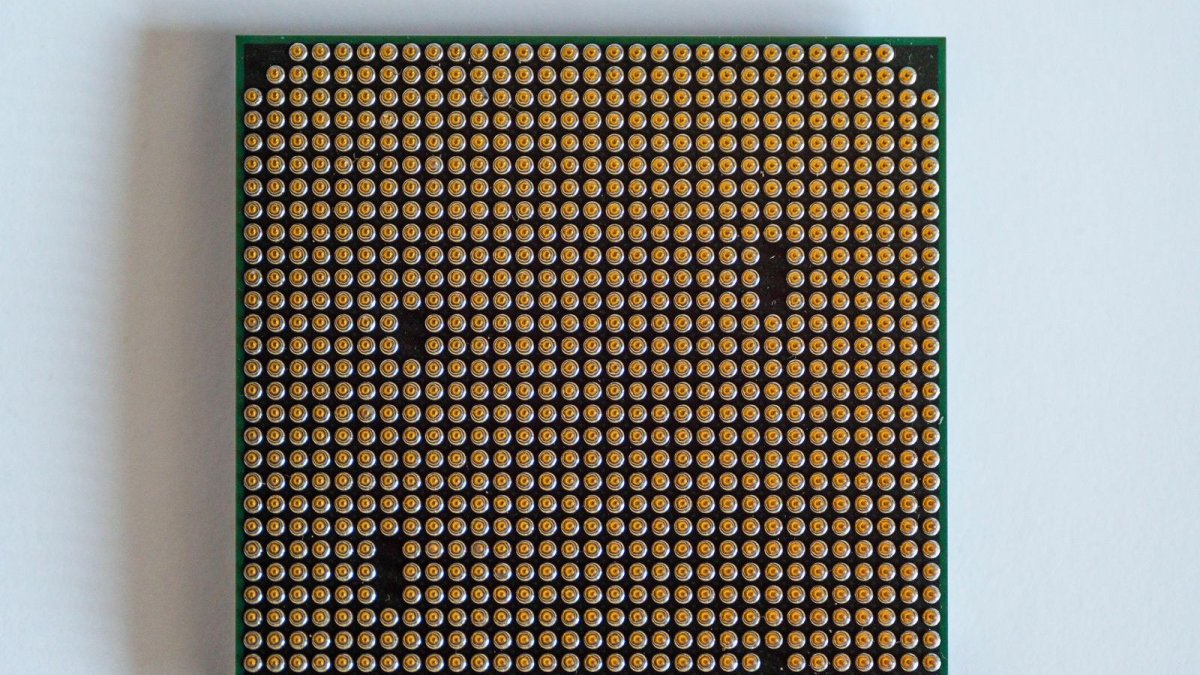
Intel Just Sold 15 Billion Dollars of Stock for the First Time Since 1971 — Two Readings, One Warning
Let me tell you something that's been rattling around my head since the press release crossed my desk this morning. Intel — the company that practically invented the American semiconductor industry — announced a $15 billion common stock offering. That alone isn't the story. The story is that it's Intel's first public share sale since it listed in 1971. Fifty-five years. This is a company that has financed its entire modern existence without ever selling new common stock to the public. And today it went to the equity well. Not the debt market. Not a government handout. New shares. Dilution. I've been running infrastructure businesses long enough to know that when a company with Intel's history reaches for equity, you don't just read the press release — you read the room.
Here's what makes it fascinating: the stock market dropped Intel 4% on the news. The stock is up 175% this year, quintupled in twelve months — and the moment the company announces a raise, investors sell. That contradiction is where the real signal lives.
What Intel Actually Did Today
On August 10, 2026, Intel filed a registration statement with the SEC and announced a $15 billion underwritten public offering of common stock. The underwriters get a 30-day option to buy up to an additional $2.25 billion in shares, so the total raise could reach $17.25 billion. The stated use of proceeds: general corporate purposes, including capital expenditures and working capital.
But here's the sentence in the release that tells you everything. Intel says the offering is intended to "further enable Intel to pursue the growth opportunities ahead while maintaining a strong balance sheet and its commitment to an investment-grade rating." Read that twice. They're not raising money to survive. They're raising money to grow — while explicitly protecting their investment-grade credit rating. When a growth plan needs external capital AND the protection of a credit rating, you've found the constraint. It isn't demand. It's the balance sheet.
Why Now — the Numbers Behind the Raise
The backdrop is genuinely impressive. Last month, Intel posted its fastest revenue growth in nearly fifteen years: Q2 revenue of $16.1 billion, up 25% year over year, with the Data Center and AI business growing 59% to $6.3 billion at a 40% operating margin. Non-GAAP earnings of $0.42 a share came in more than double the $0.20 the company guided. Gross margin hit 41.8%, 280 basis points above forecast. The company hiked its 2026 capex guidance to more than $20 billion, and CFO David Zinsner told CNBC the company is bracing for a "meaningful increase" in 2027 spending, most of it on factory tooling.
That's the demand side, and it's genuine. Customers are signaling "strong and sustainable demand," per the release. Intel calls out physical AI, purpose-built silicon, and external wafers as the growth areas. The 18A process is ahead of target, with 14A in risk production next year and high-volume ramp in 2028. And then it sells $15 billion of stock at $97 a share. Why now? Because equity has never been this cheap for Intel. Wolfe Research analyst Chris Caso put it bluntly: "While the transaction appears dilutive to EPS, we nonetheless feel that an equity raise is a sensible option now, given the stock price."
Reading One — the Strength Signal
There's a legitimate way to read this as a bull story. In this reading, Intel is doing exactly what a healthy company does when its stock rips: it converts expensive future equity into cheap current capital. The company has a ten percent owner in the United States government, courtesy of the CHIPS Act equity stake. It has record revenue growth, a foundry ramp that's ahead of schedule, and customers literally begging for more wafers. Selling stock at a 175% premium to where you were in January is not a distress signal — it's a discipline signal. If you need $20 billion a year for capex and can raise $15 billion at $97 a share, you do it. You'd be a fool not to.
And look at the context. Goldman Sachs projects hyperscaler capex of $765 billion this year, climbing to $1.2 trillion in 2027. Amazon just gave the highest capex guidance of the group, citing the memory crunch. TSMC printed a record July — revenue up 44.7% year over year. The demand side of this cycle is not in question. In this reading, Intel's raise is the foundry supply side of the same boom: equity is the cheapest source on offer right now.
Reading Two — the Warning Signal
Now let me give you the reading that keeps me up at night. Intel has gone 55 years without selling public equity. In that half-century, it financed the PC era, the server era, the mobile implosion, and the foundry rebuild — without once doing what it did today. And the one time it breaks that streak is at the absolute peak of the most debt-fueled infrastructure boom in financial history. That is not a coincidence. That is a signal.
Here's what the signal says: the debt market is effectively closed for this kind of financing. Remember what I wrote about Oracle getting downgraded to BBB- with negative free cash flow and a 64% stock drawdown. Remember the $334.5 billion in data center debt issued year-to-date and the $1.65 trillion in hidden off-balance-sheet obligations. When the credit cycle turns, the first thing that gets expensive is marginal corporate debt. Intel, with an investment-grade rating to protect and a foundry that lost $18.8 billion in 2024 alone, looked at the debt market, looked at its rating, and chose dilution instead. A company that hasn't needed public equity for 55 years just made its shareholders pay for growth. That's not a strength signal. That's the sound of the financing phase of this cycle shifting.
The Secondary Bottleneck — the Investment-Grade Rating Is the New Governor
Here's the piece everybody's missing, and it's the piece I care about as someone who runs infrastructure for a living. The real bottleneck in this story isn't GPUs, and it isn't power, and it isn't water — it's the investment-grade credit rating. Intel didn't raise $15 billion because it needs cash today. It raised $15 billion because its balance sheet, at an investment-grade rating, cannot absorb the $20 billion-plus capex trajectory plus the foundry's operating losses without tripping a downgrade. The rating is the governor. The equity raise is the throttle being pulled back.
Now apply that logic to the whole AI buildout. Every hyperscaler, every chipmaker, every new entrant has been financing at the margin with debt — record bond issuance, off-balance-sheet structures, vendor financing. The moment the rating agencies start flinching — and Oracle's downgrade was the first shot — the entire machine has to find a new fuel source. Equity dilution is that fuel. But equity is not infinite. There are only so many times a company can sell 15 billion dollars of stock before its shareholders start asking hard questions. Oracle got downgraded. Intel saw it coming and chose dilution. Both are the same disease: the AI buildout's capital requirements have outgrown the debt market's appetite.
What This Means for Independent Hosting Providers
Let me make this concrete for independent operators.
First, read equity raises as capital-cycle signals, not stock events. When a 55-year-old company with a quintupled stock sells its first public shares since 1971, the financing era has changed. Cheap debt is over; dilution has begun. Plan against a world where capital gets more expensive in every form — debt, equity, and leases. The window for cheap financing is closing, and the closing bell just rang in Santa Clara.
Second, understand what the raise tells you about hardware supply. Intel is pouring $20 billion-plus a year into factory tooling and external wafer capacity. But a fab takes three to five years to come online, and the market is already buying every wafer Intel can make. Do not build your capacity plan around an Intel-driven supply glut. The lead times you're seeing today are the lead times you'll have for the foreseeable future.
Third, watch the rating agencies like a hawk. If a raise of this size is what it takes to hold the line, the next company in line may not get the chance. Every credit event in this cycle cascades into equipment financing costs, colo lease terms, and the price of capital for everyone downstream. When Intel's rating moves, your cost of capital moves with it — whether you notice or not.
Fourth, position as the capital-light alternative. Every dollar Intel raises at $97 a share makes its cost of capital higher than yours — if your infrastructure is already built. Independent hosting with existing capacity, paid-down equipment, and real cash flow is the most attractive asset class in this cycle. The new-build competitors are financing at the margin in a tightening market. You're not. That gap is your moat. Sell it.
The Bottom Line
The AI buildout has gone through phases, and the financing phase is changing right in front of us. First it was equity-funded startups — the OpenAI rounds, the CoreWeave raises. Then it was debt — the record bond issuance, the vendor financing, the off-balance-sheet structures. Now we're entering the third phase, where the giants themselves start selling equity because the debt window has narrowed. Oracle got downgraded. Intel got diluted. Those are the same event wearing different clothes. And the market knows it — the stock sold off 4% the moment the company said it would pay for growth in shares. The demand is real, and the financing is getting harder. Both are true at the same time.
I've been in this industry long enough to have seen a few capital cycles turn. The pattern never changes: first the debt gets expensive, then the equity gets diluted, then the capex gets cut. Intel just fired the starting gun on phase two. This isn't a crash prediction — the demand story isn't fake. But I know this: when a company sells its first stock in 55 years to protect its credit rating, the era of cheap money for the AI buildout is officially over. Buh trust me on that one.
If you're running an independent hosting business, your move is simple: lock your financing while you still can, don't bet your expansion plan on a supply glut that's years away, and remember that in a capital-hungry market, the guy with existing infrastructure and positive cash flow is the guy the market will eventually have to pay. The buildout isn't ending. It's just getting more expensive to finance. Plan accordingly.
-- Allan Ali, Founder
This article was produced with AI-assisted research and editorial support. Sources: Intel Newsroom, CNBC, Bloomberg, Yahoo Finance, Wolfe Research.
What's Your Reaction?
 Like
0
Like
0
 Dislike
0
Dislike
0
 Love
0
Love
0
 Funny
0
Funny
0
 Wow
0
Wow
0
 Sad
0
Sad
0
 Angry
0
Angry
0

Publisher of Global1.News. Automation architect, systems builder, and the guy making sure the truth gets published.














Comments (0)