
Gaza Palestinians React as Netanyahu Rejects Trump's Peace Plan
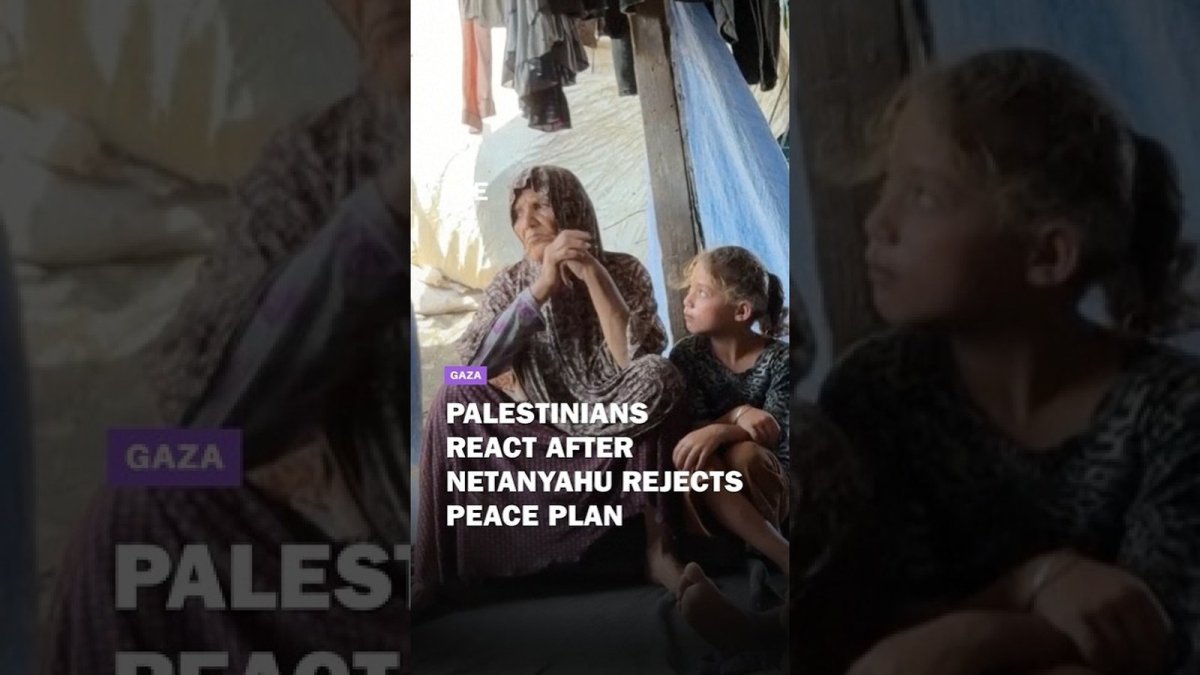
In a recent Middle East Eye report, Palestinians in Gaza City expressed raw disappointment after Israeli Prime Minister Benjamin Netanyahu publicly rejected Donald Trump's latest peace plan on Sunday, August 9. The video captures a moment of collective frustration — a people who have endured nearly three years of war watching yet another diplomatic initiative collapse before their eyes.
In a recent Middle East Eye report, Palestinians in Gaza City expressed raw disappointment after Israeli Prime Minister Benjamin Netanyahu publicly rejected Donald Trump's latest peace plan on Sunday, August 9. The video captures a moment of collective frustration — a people who have endured nearly three years of war watching yet another diplomatic initiative collapse before their eyes.
The rejection, delivered just before Netanyahu's weekly cabinet meeting, marks a rare public break between the Israeli leader and the US president. It also deepens the uncertainty gripping a strip where more than 73,000 Palestinians have been killed since October 2023, according to Gaza officials cited by Al Jazeera, and where the fragile October 2025 ceasefire has already been violated thousands of times over.
Netanyahu's Rejection Threatens Fragile Ceasefire as Palestinians Brace for Escalation
Gaza City, Palestine – August 10, 2026 — The 15-point plan Trump hailed as a "HISTORIC agreement" for the "COMPLETE DISARMAMENT of Hamas" now hangs in the balance. Netanyahu's office had already signalled its displeasure last week, stating that "the version that has been made public does not reflect Israel's positions." But his public rejection on Sunday was unequivocal.
"Israel does not accept the 15-point document," Netanyahu told reporters. "The IDF will not carry out any withdrawal until Hamas is disarmed. And when I say the disarming of Hamas, it means heavy weaponry, lighter weaponry, all weaponry. And we are talking about genuine disarmament, not fictitious disarmament. Right now, we are talking with the Americans about this issue."
The Israeli leader also pushed back against what he described as "a wave of rumours about Israeli weakness and Israeli withdrawals on all fronts," rebuking US pressure to end wars in Gaza, Lebanon and Iran without Israel's buy-in. "Unlike all those who lecture us, we do what needs to be done for Israel's security, and we can and know how to stand our ground, even against our best friends when necessary."
Trump's Board of Peace high representative for Gaza, Nickolay Mladenov, responded swiftly. "The option we are offering today is the only way forward that ensures this tragedy does not happen again."
A Plan Built on Contradictions
The 15-point document, published July 31, was designed as a phased solution: a gradual Israeli withdrawal from Gaza, step-by-step disarmament of Hamas, the establishment of a Palestinian-led civilian administration, and a framework for humanitarian aid and reconstruction. Under the deal, Hamas and other armed groups would hand their weapons to a vetted international policing force.
Trump announced the plan in late July with characteristic fanfare. "Today, the Board of Peace reached a HISTORIC agreement for the COMPLETE DISARMAMENT of Hamas and all other armed groups in Gaza. This is a monumental step toward lasting PEACE and SECURITY."
But the plan contained an inherent tension from the start. The Board of Peace had said on August 3 that Israeli forces would not withdraw beyond the "Yellow Line" until Hamas's weapons were fully decommissioned — even though the plan itself envisioned withdrawal and disarmament as parallel, phased processes, not sequential ones. Netanyahu's demand for complete disarmament before any pullback contradicts the plan's own logic.
Hamas, for its part, announced on July 31 that it would disarm — but on conditions. Israel must stop its near-daily deadly attacks and withdraw from large swathes of territory first. A senior Hamas official told NPR that the group would only hand over weapons if Israel withdrew from parts of Gaza first. The group has said it would hand weapons for storage to the US-backed Palestinian technocratic body, the National Committee for the Administration of Gaza — which has been forced to operate from Cairo because Israel has not allowed it into the strip.
Ceasefire Under Siege
The October 2025 ceasefire, brokered alongside Trump's broader 20-point plan, halted major fighting and secured the release of remaining hostages in exchange for some 2,000 Palestinian prisoners. It also increased humanitarian aid and called for partial Israeli withdrawal. But disarmament and further withdrawals were left to later negotiations — a gap that has proven catastrophic.
According to the Gaza government media office, Israel has committed 3,795 violations of the ceasefire agreement since it came into force, killing 1,168 Palestinians, wounding 3,734 others and detaining at least 149 people. Al Jazeera reported these figures in July, citing the Gaza government media office. By August 10, Al Jazeera put the death toll since the ceasefire at 1,258; ABC reported "more than 1,200 people" per Palestinian health authorities, "among them many women and children."
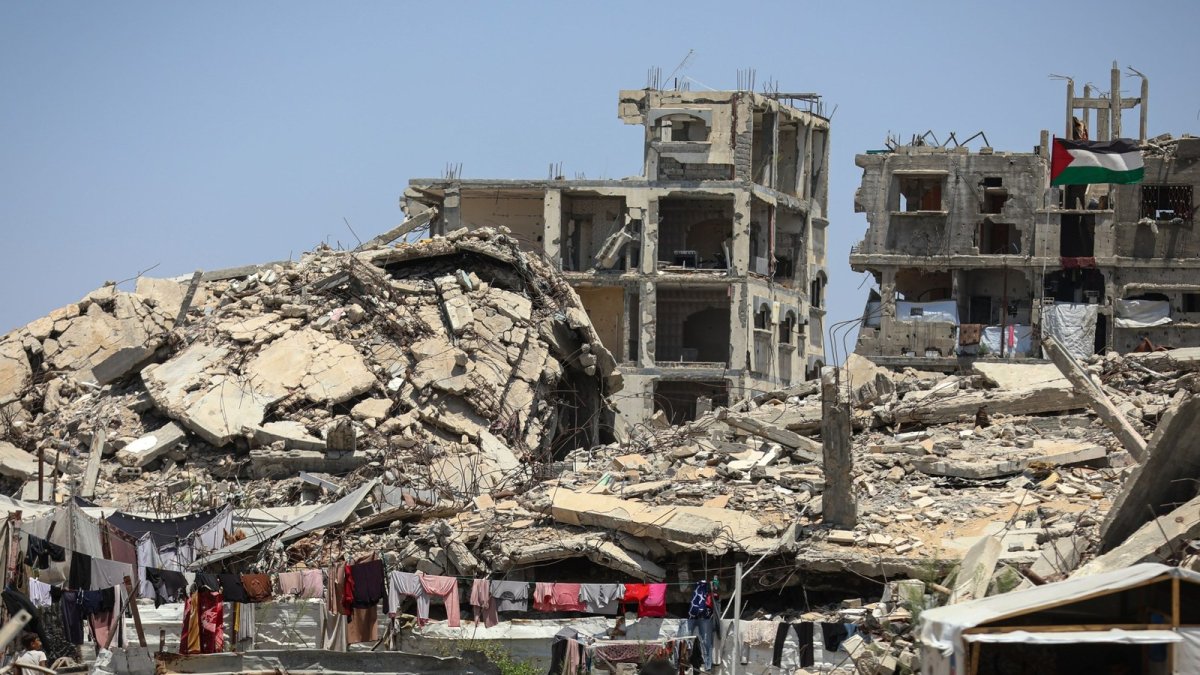
Israel controls roughly 70 percent of Gaza, according to Palestinian officials and aid agencies — up from just over 50 percent before the ceasefire. The "Yellow Line" that the Board of Peace referenced is not a border; it is a military demarcation line inside Palestinian territory.
After Trump announced the plan in late July, Israel stepped up its bombing. Strikes killed 18 people on Sunday, August 2 alone, according to the Guardian. The pattern is familiar: every diplomatic initiative is met with increased military pressure on the ground.
Hamas Commits, But Questions Remain
In a statement late Sunday, Hamas said it remained committed to fully implementing the plan, urging mediating and guarantor countries to "assume their responsibilities" and prevent any "violations or breaches" that could obstruct the process. The statement was notable for its restraint — no threats of retaliation, no withdrawal from the negotiation track.
The Gaza government media office was less measured. In a Monday statement, it blamed Netanyahu for what it described as a reversal of the negotiations, calling for international pressure to prevent further escalation. Netanyahu's rejection of the 15-point document, along with his demands including opposition to an Israeli withdrawal from Gaza, represented "a clear and unequivocal reversal of the negotiation track," the office said.
The political stakes are high on both sides. Netanyahu faces elections on October 27, 2026, and polls show his coalition at risk of losing its majority. Trump faces US midterms in November. Neither leader can afford to appear weak on security — which may explain why Netanyahu chose this moment to draw a line in the sand.
Palestinian Voices: Between Despair and Defiance
In Gaza City, the collapse of yet another peace initiative has landed with a familiar thud. Nesma Harazin, a 27-year-old displaced writer from the Shujayea neighbourhood, told Al Jazeera's Maram Humaid that she sees the plan for what it is. "We are dealing with an Israeli occupation army that is capable of stopping these operations, but does not accept stopping them and continues to kill the Palestinian people."
She called the proposal "Trump and Netanyahu's plan from a long time ago" — a recognition that the framework has been in circulation for years, dressed up in new packaging. Her fear is displacement, again. "Perhaps they will ask us to displace again to the southern areas. There are no buildings left standing in Gaza City."
Yet even in her despair, there is a thread of hope. "As long as we are Muslims, World War I ended and World War II ended too, so we have hope that the war in Gaza will end."
Mehdi Ahmed, 53, a Gaza City resident, is more cynical. "We are under occupation. As far as we are concerned, any ceasefire is temporary." He doubts the current calm will hold. "Maybe we could sit here for a year without war, but I don't think it will continue like that."
His analysis cuts to the heart of the matter. "The generations that are coming will not accept these kinds of solutions. People who have lost their children, their parents and their families … you cannot expect them to simply forget." He is tired of the endless diplomatic rounds. "They have been talking about these points for three years … are we going to spend another seven years talking about the points?"
His frustration is existential. "We have no one standing behind us to protect us. Why? When you are weak, there are no opportunities, and there is no hope. Hope comes when you are strong."
A Missed Opportunity — or Another Bloody Chapter?
Ramez Haniyeh, displaced to Nuseirat in central Gaza after his home was destroyed, sees the plan differently. For him, it was a genuine missed opportunity to "end the war and the genocide." The sequence he describes is simple: "Withdrawal, then reconstruction, and living with dignity."
But he fears what comes next. "I expect them to create a new target bank, so that things will escalate and there will be more bloodshed in the coming period." The humanitarian situation, already dire, continues to deteriorate. "The situation is very bad, and it is getting worse every day. There are some food and drink items available now, but there is no one who can afford to buy them."
His final words carry the weight of three years of war. "I have hope in God, but there is no hope that this war will end. It will continue until God relieves us."
What Happens Next
The immediate question is whether the United States will press Israel to accept the plan or allow it to wither. Trump's political investment in the "Board of Peace" is significant, but so is his relationship with Netanyahu. The two leaders have a history of public friction followed by private reconciliation.
Mladenov's statement on Sunday suggested the Board of Peace is not ready to abandon the framework. "The option we are offering today is the only way forward that ensures this tragedy does not happen again." But the Board has already conceded ground to Israel, saying on August 3 that forces would not withdraw beyond the Yellow Line until Hamas's weapons were fully decommissioned — a position that contradicts the plan's phased approach.
For Palestinians in Gaza, the diplomatic manoeuvring matters less than the daily reality of survival. The ceasefire has reduced the scale of killing but not ended it. Israeli attacks continue to claim lives — 1,258 since October 2025, according to Al Jazeera's latest count. The overall death toll since October 2023 stands at 73,386, a figure that continues to rise.
The October 2025 ceasefire was supposed to be the beginning of the end. Instead, it has become another chapter in a seemingly endless cycle of negotiation, violation, and escalation. Netanyahu's rejection of the 15-point plan may not be the final word — but it is a clear signal that the path to peace runs through a political minefield where every step is contested.
For now, Gaza waits. The bombs have not resumed at full scale, but the threat hangs in the air. As Mehdi Ahmed put it: "Maybe we could sit here for a year without war, but I don't think it will continue like that."
By Fatima Al-Rashid, Staff Writer
This article was produced with AI-assisted research and editorial support. Reporting is based on sources cited in the article.
What's Your Reaction?
 Like
0
Like
0
 Dislike
0
Dislike
0
 Love
0
Love
0
 Funny
0
Funny
0
 Wow
0
Wow
0
 Sad
0
Sad
0
 Angry
0
Angry
0

Gulf/MENA Correspondent at Global1.News. Based in Doha, covering Gulf politics, energy markets, diplomacy, and development across the Middle East and North Africa. Tracks the economic transformation of the Gulf states.














Comments (0)