
Indonesia Fires: A Super El Niño Warning for Latin America
The air in the waiting room of the Sungai Durian Health Clinic is thick with the sound of small, persistent coughs. Outside, a grey-brown haze blots out the midday sun, and fine ash falls like a grim snow over the fields of Kubu Raya, West Kalimantan. A mother holds her toddler close, her own eyes red and watering, as she waits for the doctor to see her child for the third time this month.
The air in the waiting room of the Sungai Durian Health Clinic is thick with the sound of small, persistent coughs. Outside, a grey-brown haze blots out the midday sun, and fine ash falls like a grim snow over the fields of Kubu Raya, West Kalimantan. A mother holds her toddler close, her own eyes red and watering, as she waits for the doctor to see her child for the third time this month. This is the human face of Indonesia's catastrophic 2026 wildfire season—a disaster fueled by a "super" El Niño that is now peaking over the Pacific. But the smoke drifting over this clinic is not just an Indonesian tragedy; it is a harbinger. For Latin America, a region already reeling from drought and floods tied to the same climate phenomenon, Indonesia's burning peatlands offer a stark, urgent preview of what may come.
Indonesia's Toxic Haze: A Super El Niño Warning for Latin America
Kubu Raya, West Kalimantan – Indonesia, August 28, 2026 — Emergency crews are racing against time to contain wildfires that have been burning for more than a month across the Indonesian archipelago, spreading from the dense rainforests of Sumatra to the peatlands of Kalimantan, and reaching as far east as Sulawesi, Java, and Papua. According to an Al Jazeera English video report published on August 27, 2026, the blazes have consumed tens of thousands of hectares, blanketing entire provinces in a thick, hazardous haze. Reporter Jessica Washington, embedded in West Kalimantan, documented the crisis from inside a health clinic where babies and young children repeatedly seek treatment as weeks of toxic smoke and falling ash make it difficult to breathe. The scale is staggering: nearly 95,000 hectares were damaged in July alone, and more than 300,000 hectares have burned so far in 2026, with over 900 hotspots detected across the nation. As President Prabowo Subianto deploys dozens of helicopters, aircraft, and water pumps alongside thousands of personnel, the question echoing from the burning fields is no longer whether Indonesia can cope—but what this super El Niño portends for a world watching, particularly for Latin America.
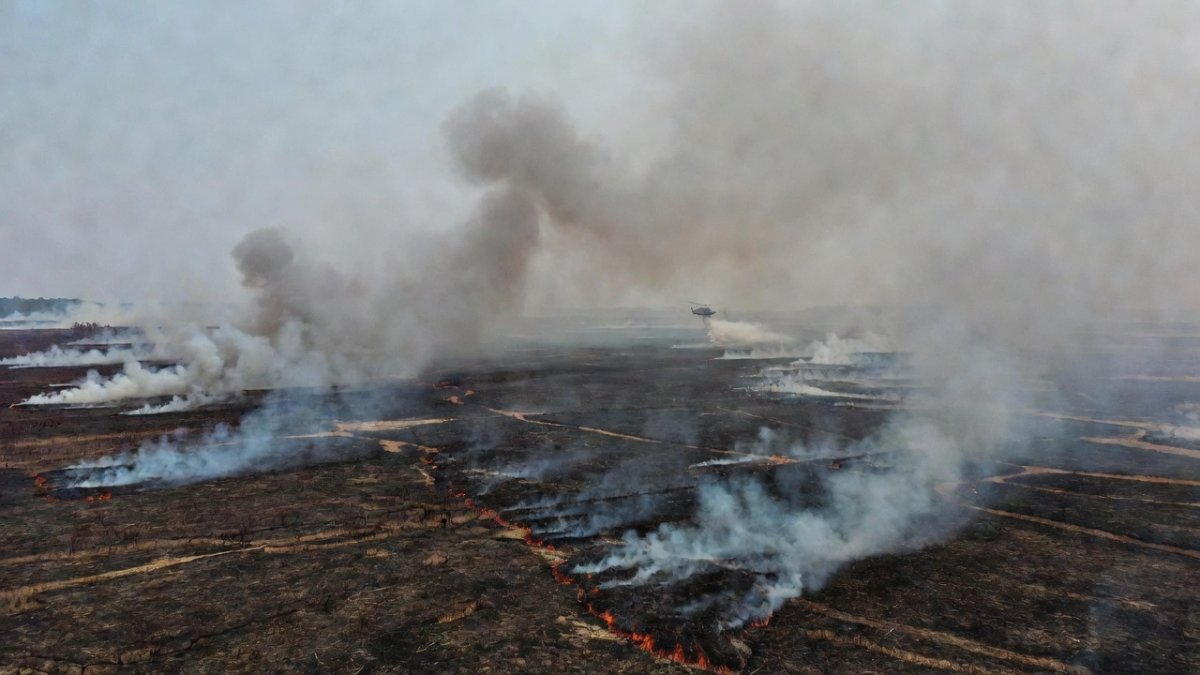
A Month of Fire: Indonesia's Burning Peatlands
The numbers coming out of Indonesia are nothing short of apocalyptic. The Ministry of Environment and Forestry reports that more than 300,000 hectares have been scorched in 2026, with nearly 95,000 hectares destroyed in July alone—a single month that rivals entire fire seasons in other nations. Fires are actively burning across 87 districts and municipalities spread over seven provinces: Jambi, Riau, South Sumatra, West Kalimantan, Central Kalimantan, South Kalimantan, and East Kalimantan. Satellite monitoring has detected over 900 hotspots, a figure that continues to climb as the dry season tightens its grip. Volunteer firefighter Anas Dwi Wahyu Kurniawan, who has been on the front lines for weeks, told reporters the situation is "very serious," comparing the scale directly to the devastating 2016 fires that choked Southeast Asia for months. President Prabowo Subianto has responded with a massive mobilization: dozens of helicopters and fixed-wing aircraft conducting water bombing runs, hundreds of water pumps deployed to critical peatland areas, and approximately 13,000 personnel dispatched across six provinces. Cloud seeding operations are underway to coax rain from stubbornly dry skies. The mechanism of destruction is well understood: in Kubu Raya, West Kalimantan, dried-out peatlands—drained for agriculture—are burning underground, smoldering for weeks and releasing enormous volumes of carbon and particulate matter. These peat fires are notoriously difficult to extinguish, requiring not just water but the saturation of the soil itself.
The Health Emergency: Three Million Exposed
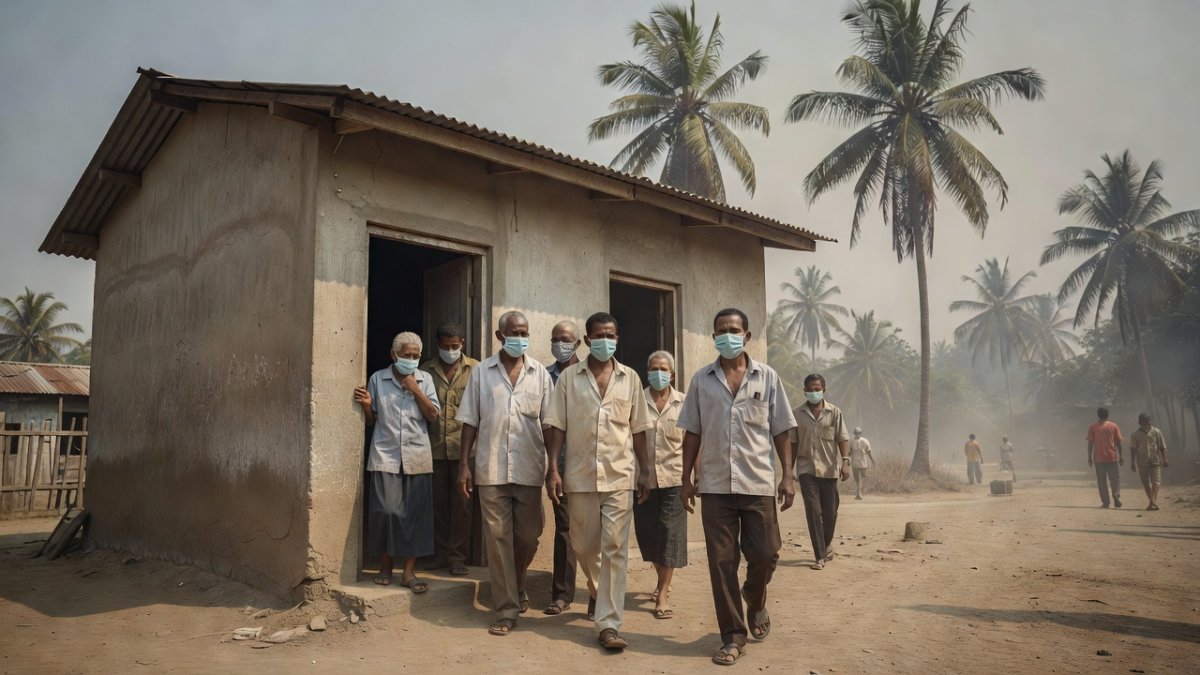
The human toll of this environmental catastrophe is being measured in hospital visits and labored breaths. Indonesia's Health Ministry, led by Minister Budi Gunadi Sadikin, has issued a stark warning: approximately 3 million people are exposed to wildfire smoke, with 3 million people in 37 districts and municipalities directly in the path of the hazardous haze. The ministry is urging residents to wear masks and monitor air quality as emergency rooms overflow. In West Kalimantan alone, ER visits for respiratory symptoms have spiked to about 5,000 people per week since July—a tenfold increase from the 500 weekly visits recorded in the first half of the year, according to health ministry data. Dr. Muhammad Arief Trihapsoro of the Sungai Durian Health Clinic described the daily reality: "Every day, between 50 and 70 people come in" with persistent coughs and breathing difficulties. Parents bring their children repeatedly as symptoms reappear and worsen with each new wave of smoke. The clinic, like many across the affected provinces, is treating babies and young children who are most vulnerable to the fine particulate matter known as PM2.5. These microscopic particles penetrate deep into lung tissue, triggering acute respiratory infections that are especially dangerous for children, pregnant women, the elderly, and those with pre-existing asthma or lung conditions. The Pan American Health Organization (PAHO) and WHO have long warned that wildfire smoke PM2.5 raises the risk of such infections, a warning now being tragically realized in Indonesian clinics.
Super El Niño: The Climate Ceiling
Beneath the smoke and ash lies a climatic driver that has turned a bad fire season into a regional disaster. UK forecasters reported on August 21, 2026, that the current El Niño is set to be the most intense for over a century, with record sea-surface temperature anomalies of more than 3°C forecast in the coming months. To put that in perspective, a typical El Niño raises sea-surface temperatures by just 1-2°C. This "super" El Niño is expected to peak in September, meaning the worst may be yet to come. For Indonesia, the phenomenon has suppressed rainfall to near-record lows, extending the dry season well into October and making rains unlikely before November. The result is a landscape primed for combustion: dried-up riverbeds, desiccated vegetation, and peatlands that have become vast underground coal seams waiting for a spark. In Kubu Raya, the peat is so dry that fires are burning deep below the surface, resurfacing days after firefighters believe they have extinguished them. The interaction between this natural climate cycle and human-caused climate change is creating a feedback loop—warmer oceans fuel stronger El Niños, which in turn dry out ecosystems that release massive carbon stores when burned, further warming the planet. For scientists, the 2026 Indonesian fires are not an anomaly but a preview of a hotter, more volatile future where the climate ceiling is raised ever higher.
What This Means for Latin America
While Indonesia burns, Latin America is already feeling the whip of the same super El Niño, and the warnings from PAHO/WHO's Natural Hazards Monitoring are dire. On August 21, 2026, OCHA reported that the Government of Honduras declared a state of emergency in 75 municipalities due to worsening El Niño-associated drought. Since August 18, 71 municipalities have been under Yellow Alert and 88 under Green Alert, as water sources dry up and crops fail. The projection is catastrophic: 1.8 million people—one-fifth of Honduras's population—are expected to face Crisis or worse acute food insecurity between August and October 2026, including 60,000 people at Emergency levels. Meanwhile, Costa Rica is dealing with the opposite extreme: a national emergency has been declared in nine flood-affected areas including Guatuso, Turrialba, Sarapiquí, Limón, Pococí, Siquirres, Talamanca, Matina, and Guácimo. More than 700 people are in shelters, 145 schools have closed, and eight tropical waves have passed through between July 20 and August 18, dumping relentless rain. Brazil, which celebrated a historic low in Amazon forest fires in 2025—just 3.1 million hectares burned, an 80% decline from 2024 and the lowest since records began in 1985—is now facing rising drought risk in 2026. The Belo Monte hydropower plant has had its water usage rules relaxed on the Xingu River, and Amazon rivers are dropping at alarming rates. The common thread is El Niño, a phenomenon that does not respect national borders.
Transboundary Smoke: No Country Breathes Alone
The smoke from Indonesia's fires is not staying within its borders. According to a Guardian report from August 25, 2026, haze is reaching Malaysia, with Singapore on high alert. On that day, IQAir ranked Kuala Lumpur as the most polluted city on Earth, with Jakarta a close second. Malaysia and Brunei are set to raise the issue at ASEAN, reviving a decades-old diplomatic battle over transboundary haze. The science of smoke travel is well established: particulate matter can be carried thousands of kilometers by prevailing winds, blanketing entire regions in toxic air. This is a lesson Latin America knows intimately. During severe Amazon fire seasons, smoke from the Brazilian rainforest has been detected in cities as far away as São Paulo, Buenos Aires, and even the Andes, turning day into night and sending respiratory patients to hospitals. The Indonesian experience underscores a fundamental truth: no country breathes alone. For Latin American nations, the transboundary nature of wildfire smoke demands regional cooperation on air-quality monitoring, health surveillance, and early warning systems. The ASEAN experience—where haze agreements have often failed due to sovereignty concerns—offers both a cautionary tale and a template for what not to do. As the super El Niño tightens its grip, the smoke from one nation's fires can become another nation's health emergency.
Voices from the Ground
Behind the statistics are human stories that capture the desperation of this crisis. A resident of Kubu Raya, who has lived in the area for 15 years, told reporters: "I have lived here for 15 years … I have never experienced a fire like this before." The sentiment is echoed by Suwadi, a local farmer who asked, "What about babies, the elderly, and pregnant women?" as he watched smoke curl over his fields. Dr. Muhammad Arief Trihapsoro, the clinic doctor, sees the toll daily: parents bringing children in for the third or fourth time, their coughs worsening with each visit. Volunteer firefighter Anas Dwi Wahyu Kurniawan described the front-line reality: crews working without adequate protective equipment, no portable oxygen, and limited water supplies as they battle fires that seem to multiply overnight. Salma, a mother of two, was seen carrying buckets of water near her farmland, trying to protect her small plot from the advancing flames—a futile gesture against a fire that has already consumed hundreds of thousands of hectares. The psychological toll is equally severe: children who cannot play outside, families who cannot open windows, and a constant, choking anxiety that the air they breathe is poisoning them. These voices from the ground are not just Indonesian—they are the voices of every community that will face the next super El Niño, from the dry corridors of Central America to the floodplains of the Amazon.
The Root Cause: Land, Fire and the Palm Oil Economy
To understand why Indonesia burns, one must look at the economics of land. Slash-and-burn clearing remains the cheapest and most widespread method for preparing land for agriculture, particularly for palm oil plantations. Indonesia is the world's largest palm oil producer, and the demand for this commodity drives the relentless expansion of plantations into forested and peatland areas. The Guardian reported that four corporations are currently under investigation in West Kalimantan for their role in igniting fires on their concessions. The pattern is familiar: land is drained, dried, and burned, releasing carbon that has been stored for millennia. Peat drainage is the critical enabler—by lowering the water table, it turns a naturally fire-resistant wetland into a tinderbox. This land-management system, designed for maximum short-term profit, has now met its climate ceiling. The same dynamic plays out in Latin America, where deforestation for cattle ranching, soy, and palm oil in the Amazon, Cerrado, and Pantanal creates the conditions for catastrophic fires. The 2025 Brazilian success in reducing Amazon fires to a historic low—3.1 million hectares, an 80% decline—shows that policy and enforcement can work. But the 2026 El Niño threatens to undo that progress, as drought dries out even protected areas. The lesson from Indonesia is clear: without addressing the root cause of fire—the economic incentives that drive land clearing—no amount of firefighting will be enough.
The Bottom Line — What Comes Next
As the super El Niño peaks in September, the outlook for Indonesia is grim. Rains are unlikely before November, meaning the dry season will continue to bake the landscape for at least two more months. The worst may be yet to come, with fire crews already stretched thin and hotspots multiplying. ASEAN diplomacy will intensify as Malaysia and Brunei push for action, but past agreements have proven toothless in the face of sovereign economic interests. For Latin America, the Indonesian crisis is a warning shot across the bow. The same El Niño that is drying Indonesia's peatlands is already causing drought in Honduras, floods in Costa Rica, and water stress in Brazil. The region must invest in early warning systems that can predict fire risk months in advance, protect and restore peatlands and wetlands that act as natural firebreaks, and build health surveillance systems that can detect and respond to smoke-related illness spikes. Deforestation-linked fire prevention must become a regional priority, learning from Brazil's 2025 success while preparing for the climate volatility that El Niño brings. The common thread is undeniable: Honduras, Brazil, and Indonesia are all in the path of a super El Niño that is testing the limits of human adaptation. The fires in West Kalimantan are not a distant tragedy—they are a preview of what awaits Latin America if it does not heed the warning. The mother in the clinic, holding her coughing child, is a face that could appear in any city or village from Tegucigalpa to Manaus. The time to act is now, before the smoke reaches our own shores.
By Elena Vasquez, Staff Writer
This article was produced with AI-assisted research and editorial support. Reporting is based on sources cited in the article.
What's Your Reaction?
 Like
0
Like
0
 Dislike
0
Dislike
0
 Love
0
Love
0
 Funny
0
Funny
0
 Wow
0
Wow
0
 Sad
0
Sad
0
 Angry
0
Angry
0

Latin America Correspondent at Global1.News. Based in Mexico City, covering politics, economics, energy, and culture across the region. Brings an on-the-ground perspective to stories spanning from the Rio Grande to Patagonia.














Comments (0)