
Indonesia welcomes its first aircraft carrier, prompting debate over cost and military ambitions
Indonesia welcomed a former Italian warship into its fleet on Friday, marking a new chapter for the archipelago’s navy and its disaster‑relief capabilities.
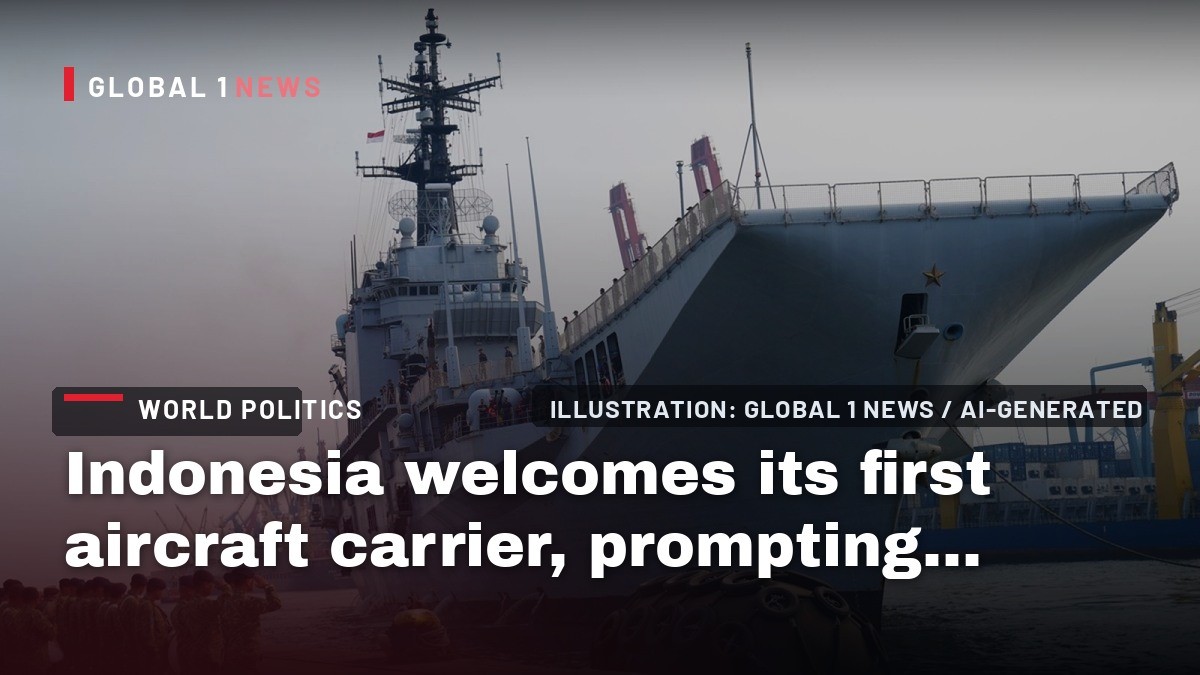
Indonesia welcomed a former Italian warship into its fleet on Friday, marking a new chapter for the archipelago’s navy and its disaster‑relief capabilities. The 41‑year‑old vessel, once known as the ITS Giuseppe Garibaldi, arrived at the Tanjung Priok seaport in North Jakarta amid a formal military ceremony. While the ship’s sleek silhouette evokes the power of distant carrier fleets, Indonesian officials stress that its primary role will be humanitarian and maritime support rather than high‑intensity combat.
From Italian Service to Indonesian Flag
The Garibaldi was retired by Italy in 2024 after decades of service. In March of this year, Italy agreed to transfer the carrier to Indonesia, a move that also helps Rome pursue broader defense cooperation in Southeast Asia. By gifting the ship, Italy avoids the expense of decommissioning it and hopes to open doors for future sales of submarines and aircraft.
Indonesia’s navy chief, Admiral Muhammad Ali, said the carrier will be commissioned as KRI Sriwijaya, a name that honors the historic Srivijaya empire—a maritime kingdom that once dominated trade routes across the region. The vessel will retain the capacity for short‑takeoff and vertical‑landing aircraft, as well as a sizeable complement of helicopters, potentially up to fourteen depending on size.
Strategic Ambitions Under President Prabowo
President Prabowo Subianto has placed defence development among the top priorities of his administration. Over recent years he has advocated for the purchase of submarines, frigates, fighter jets and missiles, and has sought deeper security ties with a range of partners. The acquisition of an aircraft carrier fits within this broader push to expand Indonesia’s maritime capabilities.
Yet the president also frames the carrier as a tool for non‑military missions. In a recent disaster‑management briefing he highlighted the ship’s potential to combat forest and peat‑land fires that generate hazardous haze across Southeast Asia, and to serve as a mobile platform for drones and helicopters during floods, earthquakes and volcanic eruptions that regularly affect the nation’s thousands of islands.
Cost Concerns and Parliamentary Scrutiny
The financial dimension of the project has drawn sharp attention. Indonesia’s Finance Ministry approved a financing package of $450 million for the carrier program in 2025. However, members of parliament warn that the total expense could be considerably higher. TB Hasanuddin of Commission I estimated that retrofitting alone might reach 16 trillion rupiah, roughly $900 million.
These figures raise questions about fiscal sustainability, especially as the country confronts slowing growth, weaker state revenue and widening budget constraints. The president’s government is also funding an ambitious free nutritious meals program and other costly social initiatives, prompting tighter scrutiny of large‑scale defence spending.
Operational Realities and Expert Views
Operating an aircraft carrier is notoriously expensive, requiring not only the initial refurbishment but also ongoing costs for personnel, maintenance, fuel, weapons systems and supporting infrastructure. Muhammad Fauzan Malufti of the Center for Strategic and International Studies cautioned that policymakers must assess genuine operational needs versus symbolic aspirations.
He pointed to Thailand’s own carrier, HTMS Chakri Naruebet, as a cautionary tale. Thailand’s ship has spent much of its service life docked due to budgetary and operational constraints. Fauzan warned that without transparent planning, the benefits of Indonesia’s carrier could be outweighed by the costs, suggesting that funds might be better allocated to expanding the fleet of frigates.
Balancing Defence Priorities
Military analyst Khairul Fahmi of the Institute for Security and Strategic Studies echoed the sentiment that carriers are not a top priority for Indonesia’s defence posture. He emphasized the nation’s need for submarines, frigates and asymmetric weapons to protect its extensive maritime sovereignty against illicit activities and potential adversaries.
Nevertheless, Fahmi acknowledged that an aircraft carrier can serve as a potent symbol of national power and a versatile platform for a range of missions. If Indonesia seeks to position itself as a major maritime nation, the carrier could reinforce that identity while supporting humanitarian assistance and disaster response.
Regional Implications and Maritime Identity
Indonesia’s entry into the exclusive club of Southeast Asian nations with an aircraft carrier—joining Thailand—carries both strategic and cultural resonance. The naming of the ship after the Srivijaya empire links modern naval ambition with a historic legacy of maritime trade and cultural exchange that shaped the region. This gesture underscores a broader narrative of Southeast Asian countries asserting their maritime heritage in the face of evolving security challenges.
At the same time, the carrier’s intended use as a mobile command centre for helicopters and drones reflects a pragmatic adaptation of a traditionally combat‑oriented platform to the archipelago’s unique geography. By leveraging the ship’s size and versatility, Indonesia hopes to improve coordination across its dispersed islands, enhancing both defence readiness and disaster‑relief reach.
Looking Ahead: Opportunities and Risks
As KRI Sriwijaya prepares for commissioning next week, the nation stands at a crossroads. The vessel offers a tangible boost to Indonesia’s maritime presence and disaster‑response toolkit, yet it also imposes a substantial financial and logistical burden. The coming months will reveal how effectively the navy can integrate the aging carrier into its operational doctrine and whether the anticipated benefits materialise.
For the people of Indonesia, the carrier symbolizes both hope and caution. It promises a stronger response to natural calamities that have long scarred communities, while also reminding citizens and lawmakers alike to weigh national pride against practical stewardship of public resources. The balance struck here may set a precedent for how Southeast Asian nations modernise their fleets while honouring the Buddhist principle of right intention—acting for the common good rather than mere display.
This article was produced with AI-assisted research and editorial support. Reporting is based on the source material cited below. Sources: Khaosod English; khaosodenglish.com; Global1.News (18 September 2026).
By Ann Srisawat, Staff Writer
What's Your Reaction?
 Like
0
Like
0
 Dislike
0
Dislike
0
 Love
0
Love
0
 Funny
0
Funny
0
 Wow
0
Wow
0
 Sad
0
Sad
0
 Angry
0
Angry
0

Southeast Asia Correspondent at Global1.News. Based in Bangkok, covering Thai and Southeast Asian politics, economy, technology, and culture. Deep regional perspective on one of the world's most dynamic regions.















Comments (0)