
Pride or practicality? Indonesia receives first aircraft carrier amid fears of upkeep cost
Indonesia has taken a significant step in expanding its maritime capabilities with the arrival of its first aircraft carrier, a vessel that once served the Italian navy as the ITS Giuseppe Garibaldi.
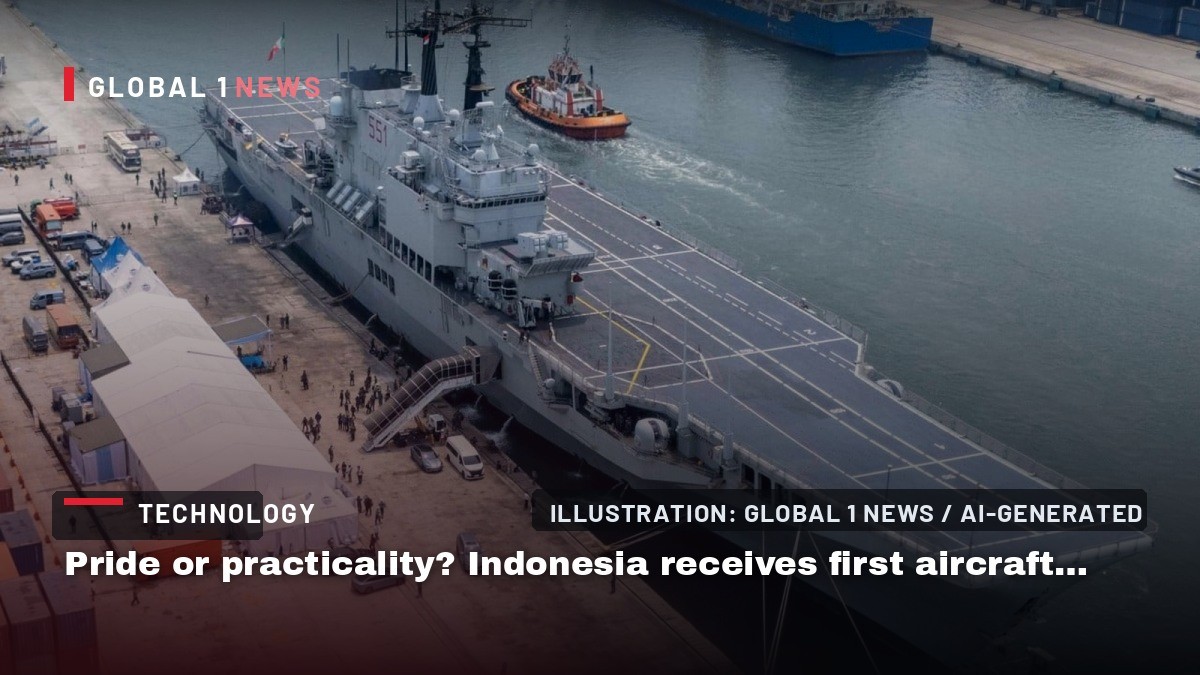
Indonesia has taken a significant step in expanding its maritime capabilities with the arrival of its first aircraft carrier, a vessel that once served the Italian navy as the ITS Giuseppe Garibaldi. The 41‑year‑old ship entered Tanjung Priok, the main naval base in North Jakarta, under a military ceremony that underscored both the symbolic and practical dimensions of the acquisition. While the government frames the carrier as a tool for enhancing maritime security and disaster response, the financial commitment—US$450 million already approved—has already sparked debate among lawmakers about the long‑term fiscal implications of operating such a complex platform.
Historical context and the ship’s legacy
The carrier that now sails under the Indonesian flag was originally commissioned by Italy in the early 1980s. Its age—more than four decades—places it among the older generation of carriers that were designed during the Cold War era, when naval aviation emphasized short take‑off and vertical landing (STOVL) capabilities. The ship’s original configuration allowed it to operate a limited air wing of fixed‑wing aircraft and a complement of helicopters, a design that remains relevant for Indonesia’s archipelagic geography.
Retrofitted for contemporary use, the vessel retains the ability to host short take‑off and vertical landing aircraft as well as a sizable helicopter contingent. The Indonesian Navy chief, Admiral Muhammad Ali, highlighted that the carrier can accommodate “14 helicopters or more, depending on their size,” indicating flexibility in configuring the air complement for a range of missions—from anti‑submarine patrols to humanitarian assistance.
Strategic rationale behind the acquisition
Indonesia’s decision to acquire an aircraft carrier reflects a broader strategic calculus aimed at reinforcing its maritime domain awareness across a vast archipelago of more than 17,000 islands. The navy’s stated intent to use the ship “primarily for military operations other than war” signals a focus on non‑combat missions such as disaster relief, maritime patrol, and presence operations that deter illicit activities in the region’s busy sea lanes.
Admiral Muhammad Ali’s remarks that the carrier “could also be deployed for combat missions if necessary” suggest that the platform is intended as a strategic reserve, capable of projecting power should the security environment deteriorate. This dual‑use posture aligns with Indonesia’s need to balance deterrence with the practicalities of budgetary constraints and the nation’s traditionally defensive defence posture.
Financial commitments and legislative scrutiny
The Indonesian government has earmarked US$450 million for the carrier programme, a figure that has already been approved by the parliament. However, the allocation has not gone unchallenged. Some lawmakers have warned that the final cost could exceed the approved budget, reflecting concerns over the long‑term sustainability of operating a vessel that requires extensive maintenance, crew training, and periodic upgrades.
Operating costs for an aircraft carrier typically encompass fuel, spare parts, and the salaries of a sizable crew, as well as the procurement and upkeep of the air wing. While the source material does not provide specific figures for these recurring expenses, the legislators’ cautionary stance underscores the broader fiscal debate within Indonesia about prioritising defence spending against other national priorities such as infrastructure and social welfare.
Projected service life and operational scope
According to Admiral Muhammad Ali, the carrier is expected to remain in service for another 15 to 20 years. This projected lifespan suggests that the navy anticipates a substantial return on investment, provided that the vessel can be kept operationally relevant through periodic refits and upgrades. The capacity to host a flexible mix of helicopters also expands the ship’s utility beyond traditional carrier roles.
In practice, the carrier could be deployed for a range of missions that leverage Indonesia’s extensive coastline. These might include rapid response to natural disasters—a frequent occurrence in the region—by transporting relief supplies and medical teams, as well as conducting maritime patrols to counter piracy, illegal fishing, and smuggling. The ability to operate STOVL aircraft adds a layer of aerial surveillance and rapid reaction capability that can be critical in remote maritime zones.
Regional implications and diplomatic signals
The arrival of an aircraft carrier in Jakarta sends a clear diplomatic signal to neighboring states and regional powers. While the carrier’s primary role is framed in non‑combat terms, its presence enhances Indonesia’s standing as a maritime nation capable of contributing to regional security initiatives. This development may also influence Indonesia’s participation in multilateral exercises and its role within the Association of Southeast Asian Nations (ASEAN) security framework.
Moreover, the transfer of the vessel from Italy, facilitated by an agreement reached in March, reflects ongoing defence cooperation between Jakarta and Rome. Such partnerships can broaden Indonesia’s access to technical expertise, training opportunities, and potential future procurement options, thereby strengthening its overall defence industrial base.
Operational challenges and readiness considerations
Integrating a legacy carrier into a navy that has not previously operated such a platform presents several operational challenges. Crew training is a primary concern; operating a carrier demands specialised skills in flight deck management, aircraft handling, and ship‑board logistics. The navy will need to develop or acquire training programmes, possibly in collaboration with foreign partners, to ensure that personnel can safely and efficiently manage carrier operations.
Maintenance of an aging hull also poses risks. The carrier’s 41‑year service history implies that structural fatigue, outdated systems, and the need for modernisation are likely. Addressing these issues will require a sustained investment in shipyard capabilities, spare parts procurement, and possibly the integration of newer technologies to keep the platform interoperable with modern naval assets.
Future outlook and broader defence posture
Indonesia’s acquisition of its first aircraft carrier marks a milestone in the nation’s maritime ambition, but it also sets a precedent for future defence procurement decisions. The balance between symbolic prestige and practical utility will be closely watched by both domestic stakeholders and regional observers. If the carrier proves effective in non‑combat roles—particularly in disaster response and maritime security—its perceived value may justify the initial outlay and any subsequent cost overruns.
Conversely, should operational costs spiral or the vessel’s capabilities become limited by its age, the programme could become a cautionary tale about the challenges of integrating legacy platforms into modern fleets. The next 15 to 20 years will therefore be decisive in evaluating whether this bold step enhances Indonesia’s strategic resilience or becomes a financial burden that outweighs its intended benefits.
This article was produced with AI-assisted research and editorial support. Reporting is based on the source material cited below. Sources: South China Morning Post; scmp.com; Global1.News (18 September 2026).
By Kenji Tanaka, Staff Writer
What's Your Reaction?
 Like
0
Like
0
 Dislike
0
Dislike
0
 Love
0
Love
0
 Funny
0
Funny
0
 Wow
0
Wow
0
 Sad
0
Sad
0
 Angry
0
Angry
0

Japan Correspondent at Global1.News. Tokyo-based voice covering Japanese politics, technology, economy, and culture. Tracks the intersection of tradition and innovation in one of the world's most dynamic societies.













Comments (0)