
Colombia's 7.4 Earthquake: 265 Dead, National Emergency Declared
The Ground Shook. The Nation Stood Still. Folks, let me tell you something. When the earth moves beneath your feet, everything else stops. And on Monday, August 10, 2026, the ground didn't just move in western Colombia—it roared. A magnitude 7.4 earthquake, the strongest tremor to hit the country in
The Ground Shook. The Nation Stood Still.
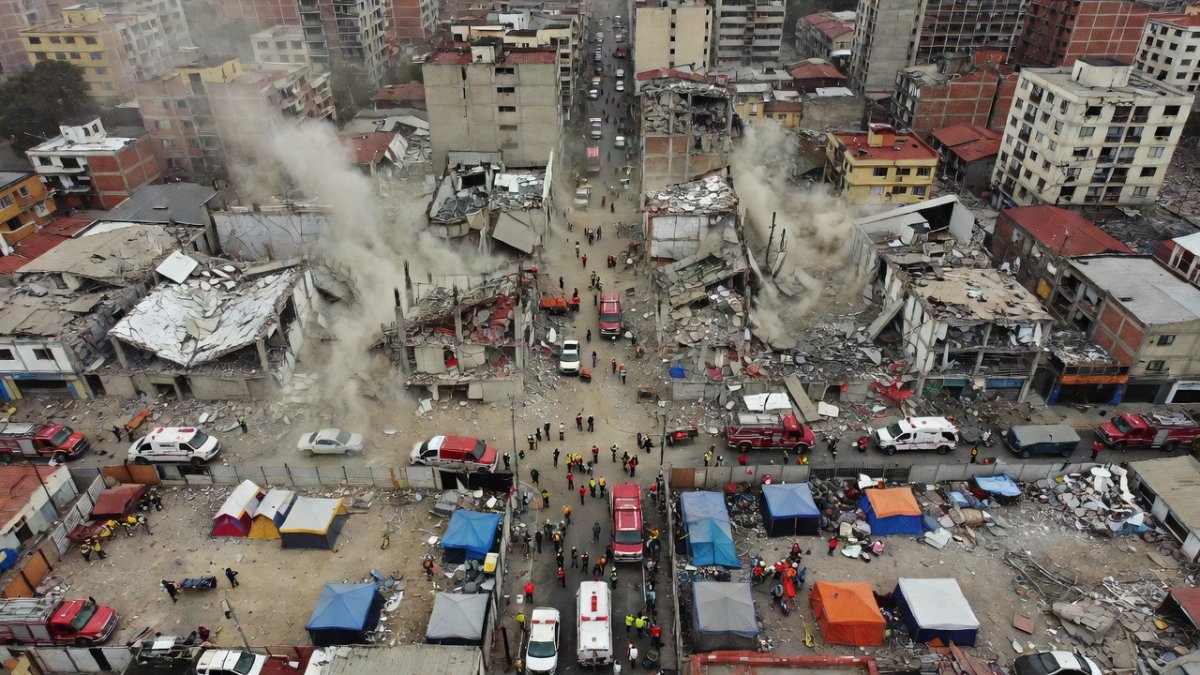
Folks, let me tell you something. When the earth moves beneath your feet, everything else stops. And on Monday, August 10, 2026, the ground didn't just move in western Colombia—it roared. A magnitude 7.4 earthquake, the strongest tremor to hit the country in a decade, tore through the Choco region near San Jose del Palmar, roughly 400 kilometers west of Bogota. It struck at a depth of about 107 kilometers, deep enough to send shockwaves rippling across borders, felt in at least four countries, including Ecuador. But the epicenter wasn't the story. The story is what happened next: a death toll that climbed by the hour, a new president tested just three days into his term, and a nation digging through rubble with bare hands and headlamps.
This wasn't a drill. This wasn't a warning. This was a catastrophe unfolding in real time, and the numbers are still moving. According to authorities, the death toll rose from 132 on Monday evening to 224, then 234, then over 250, and by Thursday, August 13, it had reached 265. More than 3,500 people are wounded. More than 4,100 are reported missing. And those figures, folks, vary by source and by hour. That's what a disaster looks like when it's still happening.
A City in Rubble: The Human Toll
Let's talk about what those numbers mean. Behind every digit is a family, a neighbor, a child. The quake flattened entire blocks in cities like Cali, Pereira, Quibdo, Manizales, and Armenia. According to officials, about 1,600 buildings were damaged, and at least 61 were completely destroyed. Not cracked. Not leaning. Gone. Reduced to piles of concrete and twisted metal. In Pereira, rescue workers spent 12 grueling hours carving a small opening into the debris to free 32-year-old Daniela Largo, her arm pinned beneath the wreckage, according to CBS News. A doctor administered IV fluids as crews worked through the night. She was pulled out alive late Tuesday. That's the miracle. But for every Daniela, there are hundreds still waiting.
And the waiting is agonizing. Search efforts have entered what officials are calling the "final phase" as the toll reached 265. That's a polite way of saying hope is running out. Emergency workers and volunteers, armed with headlamps and shovels, have been digging through rubble at night, calling out names, listening for voices. In Cali and Pereira, a nighttime curfew was declared to keep the streets clear for rescue operations. Hospitals in five cities are on red alert. At least six airports—Manizales, Quibdo, Armenia, Cartago, Buenaventura, and Pereira—suspended operations for damage assessment. This is a region under siege, not by an enemy, but by the very ground it stands on.
The New President's First Test
Now, let's talk about leadership. Colombia's new president, Abelardo de la Espriella, was sworn into office just three days before the quake. Three days. He barely had time to unpack his desk before the earth decided to test him. And folks, I've seen leaders crumble under far less pressure. But de la Espriella didn't crumble. He declared a state of emergency—a national emergency—and immediately led an earthquake response meeting in Bogota. He didn't hide. He didn't deflect. He stood in front of the nation, rolled up his sleeves, and vowed the government would respond.
That's the kind of leadership that matters in a crisis. But here's the hard truth: a declaration on paper doesn't move rubble. It doesn't heal wounds. It doesn't bring back the missing. What it does is open the door for resources, for international aid, for a coordinated response. And that response, according to the government, has been slow to arrive. International aid began arriving more than 48 hours after the quake. Forty-eight hours. In a disaster, that's an eternity. The UN World Food Programme has begun mobilizing food assistance and cash-based response, but for the families sleeping in the streets, for the injured waiting in overcrowded hospitals, every hour counts.
Aftershocks and the Ring of Fire
Let's get technical for a moment, because understanding the science helps us understand the stakes. Colombia sits along the Pacific Ring of Fire, a seismically active zone that wraps around the Pacific Ocean like a belt of dynamite. Tremors are common here. But quakes above magnitude 6? Rare. This one was a 7.4. And it didn't come alone. According to seismologists, at least 21 aftershocks followed within hours, including two early ones measuring 2.8 and 4.8 magnitude. The ground kept shaking, folks. Just when people thought it was over, the earth reminded them it wasn't.
There was one piece of good news: no tsunami threat. The quake's depth—about 107 kilometers—helped dissipate some of the energy, and the Pacific warning systems stayed quiet. But that's cold comfort when your home is dust. To put this in perspective, consider the 1999 quake near Armenia, a magnitude 6.2 that killed more than 1,100 people. This one was stronger. The fact that the death toll hasn't surpassed that yet is a testament to better building codes and faster response—but the numbers are still climbing, and the missing list is still long.
The Rescue Effort: Grit, Grace, and Grief
I want to take a moment to honor the rescuers. These are not soldiers in some distant war. These are neighbors, firefighters, volunteers, students—people who ran toward the danger when every instinct told them to run away. In Pereira, they worked through the night, their headlamps cutting through the darkness like fireflies in a graveyard. They didn't stop for food. They didn't stop for rest. They stopped only when they found someone alive, or when they found someone they couldn't save.
The rescue of Daniela Largo is the story that will be told for years. Twelve hours. A small opening carved by hand. A doctor leaning in to administer IV fluids. Her arm pinned, her body trapped, her spirit unbroken. When they pulled her out, the crowd erupted. That's the moment that defines humanity—not the disaster, but the response. But for every Daniela, there are hundreds of families still waiting for news. The missing list stands at more than 4,100. Some will be found. Some won't. And that's the brutal arithmetic of an earthquake.
International Aid: Too Little, Too Late?
Here's where I have to speak plainly, folks. The Colombian government requested international assistance, and the UN World Food Programme began mobilizing. But international aid didn't start arriving until more than 48 hours after the quake. Two days. In a disaster zone, that's the difference between life and death. I'm not here to point fingers at any single organization—logistics in a disaster are a nightmare, and the airports were shut down for assessment. But the families in Quibdo and Cali don't care about logistics. They care about food, water, medicine, and shelter. And they needed it yesterday.
The good news is that aid is now flowing. The WFP is distributing food and cash assistance. International teams are joining the search. But the "final phase" of search efforts is a sobering phrase. It means officials are shifting from rescue to recovery. It means the focus is turning from finding survivors to accounting for the dead. That's not giving up. That's the grim reality of a disaster of this scale. And as the toll reaches 265, with more than 3,500 wounded, the nation is bracing for the final count.
What You Can Do Right Now
Folks, I'm not going to end this report with a shrug and a "thoughts and prayers." That's not who I am, and that's not what this moment demands. If you're watching from Atlanta, from anywhere in the world, you have power. You have resources. And you have a choice. Here's what you can do:
First, donate to verified relief organizations. The UN World Food Programme is on the ground and needs funding for food and cash transfers. Organizations like the Colombian Red Cross are coordinating rescue and medical efforts. Do your research, make sure your money goes to groups with a proven track record, and give what you can. Even a small amount can buy a meal, a blanket, a dose of medicine.
Second, stay informed. This story is still developing. The death toll is still climbing. The missing list is still long. Follow reliable news sources—Al Jazeera, CNN, BBC, Reuters, France 24, CBS News, RTE, The Guardian, NYT, Euronews—and don't rely on social media rumors. Share verified information. Amplify the voices of those on the ground.
Third, advocate. Ask your representatives what your government is doing to support Colombia. Push for faster, more robust international response. Disasters don't wait for bureaucracy, and neither should we. The Pacific Ring of Fire doesn't care about borders, and neither should our compassion.
Finally, remember the names. Daniela Largo, pulled from the rubble after 12 hours. The 265 confirmed dead. The 4,100 missing. The 3,500 wounded. These aren't statistics. They're people. And they're counting on us to not look away.
The Ground Will Settle. The Work Won't.
Colombia is a nation that has known hardship. It has known violence, conflict, and loss. But it has also known resilience. This earthquake didn't break that spirit—it revealed it. In the darkness of the rubble, there was light. In the chaos of the response, there was order. In the grief of the families, there was hope. And in the leadership of a president just three days into his term, there was resolve.
The ground will settle. The aftershocks will fade. The headlines will move on. But the work of rebuilding—of healing, of remembering—will go on for years. And that work belongs to all of us. Not just Colombians. Not just governments. All of us. Because when the earth shakes, it doesn't ask for permission. And when it does, we have to be ready to answer.
Stay strong, Colombia. Stay informed, everyone else. And don't you dare look away.
By Jessica Ali, Staff Writer
This article was produced with AI-assisted research and editorial support. Sources: Al Jazeera, CNN, BBC, Reuters, France 24, CBS News, RTE, The Guardian, NYT, Euronews, USGS.
What's Your Reaction?
 Like
0
Like
0
 Dislike
0
Dislike
0
 Love
0
Love
0
 Funny
0
Funny
0
 Wow
0
Wow
0
 Sad
0
Sad
0
 Angry
0
Angry
0

Editor-in-Chief at Global1.News. Atlanta-based journalist who cuts through the BS and tells it like it is. Lead anchor, host, and the voice you hear when the spin stops and the truth starts.









Comments (0)