
Hyderabad Fake Doctors Crackdown: 11 Arrested, 26-Year Scam Exposed
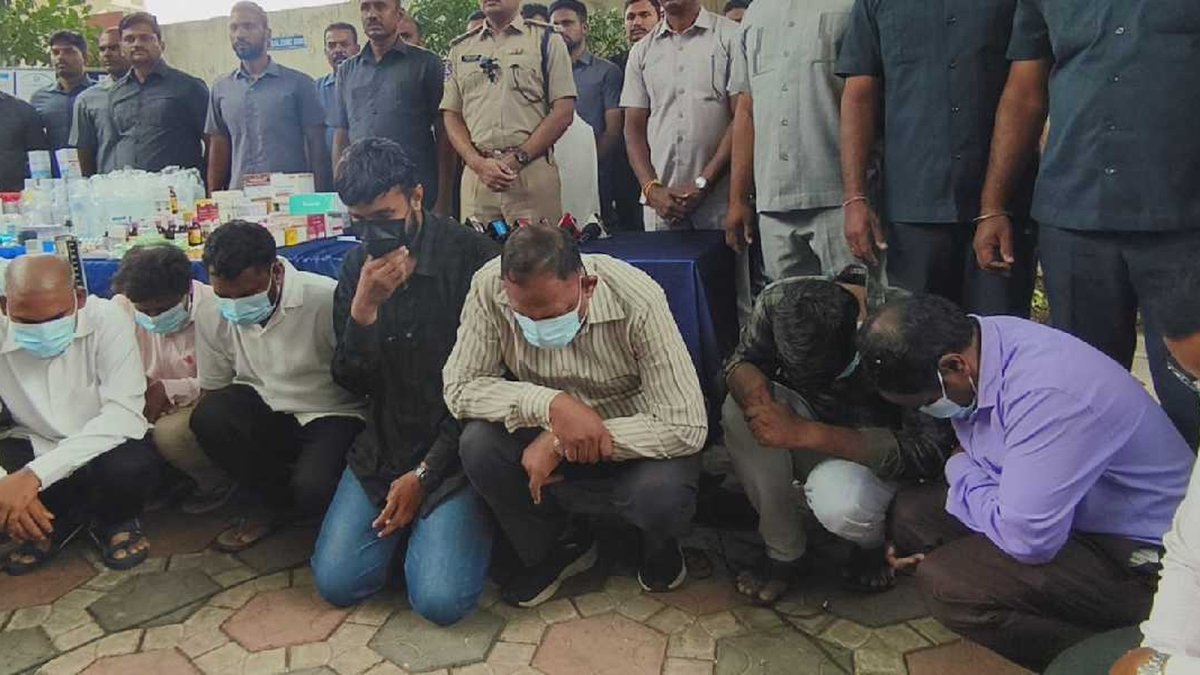
In a coordinated special operation on August 25, 2026, the Hyderabad Police Commissioner's Task Force, alongside local police, arrested 11 individuals accused of posing as qualified medical doctors. The sweep, split between six arrests in the Secunderabad zone and five in the Jubilee Hills zone, has exposed a deeply entrenched network of unqualified practitioners who allegedly treated between 50 and 100 patients per day, charging Rs 50 to Rs 200 per consultation.
In a coordinated special operation on August 25, 2026, the Hyderabad Police Commissioner's Task Force, alongside local police, arrested 11 individuals accused of posing as qualified medical doctors. The sweep, split between six arrests in the Secunderabad zone and five in the Jubilee Hills zone, has exposed a deeply entrenched network of unqualified practitioners who allegedly treated between 50 and 100 patients per day, charging Rs 50 to Rs 200 per consultation. This crackdown is not an isolated incident but a stark indicator of a systemic failure in India's medical regulatory framework, a problem quantified by the World Health Organization (WHO) a decade ago when it found that 57.3% of those practising allopathic medicine in India lacked a formal medical qualification.
Operation "Clean Medicine": How 11 Unqualified Practitioners Ran Clinics for Decades in Hyderabad’s Top Neighborhoods
Hyderabad, Telangana – August 27, 2026 — The arrest of 11 individuals on charges of practising medicine without valid qualifications has sent shockwaves through Hyderabad's healthcare ecosystem. The accused, operating in areas as diverse as the Old City, Chilkalguda, Jubilee Hills, and Manikeshwar Nagar, were not street-side quacks but established clinic operators who had integrated themselves into the fabric of their communities. According to an official statement from Vaibhav Gaikwad Raghunath, DCP of the Commissioner's Task Force, Telangana, the accused allegedly used fake degree certificates and forged doctor certificates to legitimise their practices. The seizures from the Secunderabad zone alone paint a chilling picture of the scale of operations: 277 injections, 933 tablets, 12 glucose bottles, 70 syringes, 16 ointments, 57 syrups, 5 rubber stamps bearing doctors' names, and 9 prescription pads, alongside stethoscopes and BP machines.
The 11 cases have been registered across multiple police stations, with two each at Mudarnagar, Chilkalguda, and in the Old City area, and one each at Jubilee Hills, Filmnagar, Borabanda, Ramgopalpet, and Domalguda. This geographic spread—from the upscale Jubilee Hills to the dense lanes of the Old City—demonstrates that the problem of medical quackery is not confined to underserved areas but pervades all strata of Hyderabad's urban landscape. The accused allegedly treated patients with saline drips, glucose bottles, and prescription medicines, often administering injections and suturing wounds, all without a single day of formal medical training.
The 26-Year Scam: M Srinivas and the Lower Tankbund Clinic
The most egregious case is that of M Srinivas, who ran the Sai Ram Clinic near Lower Tankbund for an astonishing 26 years without any valid qualification. Srinivas, who studied BZC (Botany, Zoology, Chemistry), worked as a compounder in hospitals in the Jangaon and Hanamkonda districts for approximately six years before setting up his own practice. During his decades-long illegal operation, he administered saline, glucose, and injections, and prescribed medicines to unsuspecting patients. The police seized a stethoscope, BP machine, injections, syrups, and ointments from his clinic. The fact that a man with no medical degree could operate a clinic for over a quarter-century in a city like Hyderabad—home to premier institutions like AIIMS and Osmania Medical College—raises serious questions about the efficacy of local regulatory oversight and the vigilance of the Telangana State Medical Council (TGMC).
This case is particularly damning when viewed against the backdrop of India's regulatory framework. The National Medical Commission (NMC) Act, 2019, which governs medical education and practice in India, explicitly makes practising modern medicine without MBBS registration an offence. Yet, Srinivas's operation survived multiple state and central government policy changes, suggesting that enforcement at the grassroots level remains abysmally poor. The TGMC has claimed to have filed over 300 FIRs in its anti-quackery drive, with Telangana Today reporting more than 400 FIRs against fake doctors in roughly the last year, including raids and clinic shutdowns. However, the persistence of a 26-year-old illegal practice indicates that these drives, while aggressive, are reactive rather than proactive, often catching offenders only after decades of harm.
Fake Certificates and Expired Medicines: The Nilagiri Prasad Case
Perhaps the most audacious case is that of Nilagiri Prasad, who ran a family clinic near Badi Masjid in Chilkalguda for eight years. Prasad, who studied BHMS (Bachelor of Homeopathic Medicine and Surgery), worked as a compounder in the Eluru district for approximately ten years before presenting himself as an MBBS doctor, claiming to be a specialist in general medicine and paediatrics. To lend credibility to his fraud, Prasad obtained a fake MBBS certificate from the "Indian Alternative Medical Council"—an institution that does not exist in any recognised medical registry—alongside a BHMS certificate and a mark-list memo. The police also seized some expired medicines from his clinic, indicating that he was not only practising illegally but also endangering lives with potentially harmful, outdated pharmaceuticals.
This case highlights a critical loophole in India's medical regulation: the proliferation of unrecognised "medical councils" that issue fraudulent degrees. The WHO's 2016 report, "The Health Workforce in India," which found that 57.3% of allopathic practitioners lacked qualifications, also noted that in rural areas, only 18.8% of allopathic doctors were actually qualified. While India's health ministry initially rubbished the WHO finding, it later accepted the data, acknowledging the scale of the quackery problem. The "Indian Alternative Medical Council" is a prime example of how these fraudulent bodies operate, exploiting the public's trust in official-sounding names to legitimise unqualified practitioners. The NMC Act, 2019, was supposed to streamline medical regulation, but the persistence of such fake councils suggests that the implementation has been uneven at best.

The Homemade Dermatologist: Adan Samdani and the Psoriasis Gel
One of the most dangerous cases in the crackdown is that of Adan Samdani, who presented himself as a dermatologist despite having studied only up to the intermediate level. Samdani ran his father's clinic at Nallagutta for four years, during which he allegedly treated patients for skin conditions, including psoriasis. The police seized two packets of a homemade petroleum gel made from calcium powder, zinc oxide, and other materials, which Samdani used as a psoriasis treatment, along with three packets of Musa powder, medicines, and injections. This case is particularly alarming because dermatological conditions require precise diagnosis and treatment; a homemade gel with unverified ingredients could cause severe adverse reactions, including infections, chemical burns, or worsening of the underlying condition.
Samdani's case underscores the broader issue of how former compounders—para-medical aides who assist qualified doctors—often "upgrade" themselves into full-fledged practitioners. The common thread running through the 11 arrests is that many of the accused were former compounders who leveraged their familiarity with medical settings to deceive patients. S Lingaiah, who ran the Surya Clinic in Manikeshwar Nagar for 15 years, was a former compounder in the Nagarkurnool district who had discontinued a BA degree. Peddapatla Sadanand, a compounder in Hyderabad hospitals, started his Sai Ram Clinic in Chilkalguda in 2024, administering saline, injections, and prescription medicines without any qualifications. Chintaluri Ramesh, who holds a BA degree, worked as a compounder for seven years before running the Sarojini Poly Clinic in Manikeshwar Nagar for three years as a general and family physician.
The Economics of Quackery: 50-100 Patients a Day at Rs 50-200
The financial model of these illegal operations is staggering. The accused allegedly treated between 50 and 100 patients per day, charging Rs 50 to Rs 200 per patient. Even at the lower end of this range, a fake doctor seeing 50 patients a day at Rs 50 each would earn Rs 2,500 daily, or approximately Rs 75,000 per month—tax-free and unregulated. At the higher end, with 100 patients at Rs 200 each, the monthly income could reach Rs 6,00,000. This economic incentive explains why quackery persists despite the risk of arrest. The first-wave arrests, reported by Telangana Today on August 25, included D Rama Shekar Reddy (43), R Sudhakar (38), M Bharathi (44), K Mahesh Rao (43), P Bala Narasimha (52), and Mohd Abdul Vali (54), with raids conducted at Rahmath Nagar, Venkatagiri, Film Nagar, and Borabanda. Equipment worth approximately Rs 53,000 was seized, and some of these accused had even given surgical stitches to patients.
This economic analysis is critical for understanding why the problem persists. The Indian healthcare system, particularly in urban centres like Hyderabad, faces a severe shortage of qualified doctors, especially in primary care. The WHO's 57.3% statistic is not just a number; it represents millions of Indians who, due to cost, accessibility, or convenience, choose to consult unqualified practitioners. The accused in this case charged a fraction of what a qualified MBBS doctor would charge, making them attractive to lower-income patients. However, the cost of this "cheap" healthcare is often paid in misdiagnosis, improper treatment, and, in some cases, death. The police appeal for the public to report unqualified practitioners to the nearest police station is a step in the right direction, but it places the burden of vigilance on patients who may not have the knowledge to distinguish between a qualified doctor and a fake one.
Regulatory Failure and the TGMC's Anti-Quackery Drive
The Telangana State Medical Council (TGMC) has been at the forefront of the anti-quackery drive, with The Hindu reporting over 300 FIRs filed and Telangana Today documenting more than 400 FIRs against fake doctors in the last year. These numbers suggest a robust enforcement mechanism, yet the fact that clinics like Srinivas's Sai Ram Clinic could operate for 26 years indicates that the drive is not reaching all corners of the state. Practitioners have also protested some inspections, creating a contentious environment where regulatory actions are met with resistance. The Indian Express has framed this sweep as part of a series of Hyderabad enforcement actions—fake ghee, fake spices, fake Osmania biscuits, and now fake doctors—suggesting a broader crackdown on counterfeit goods and services in the city.
However, the regulatory framework itself is part of the problem. The NMC Act, 2019, established the National Medical Commission to replace the Medical Council of India, with the aim of improving medical education and practice standards. Yet, the Act's implementation has been slow, and State Medical Councils like the TGMC often lack the resources and manpower to conduct proactive inspections of every clinic in their jurisdiction. The case of Nilagiri Prasad, who obtained a fake MBBS certificate from the "Indian Alternative Medical Council," highlights the need for a centralised, verifiable registry of medical qualifications that patients and police can easily access. Without such a system, quacks will continue to exploit the information asymmetry between them and their patients.
The Bottom Line
The arrest of 11 fake doctors in Hyderabad is a victory for law enforcement, but it is a drop in the ocean of India's quackery problem. The WHO's finding that 57.3% of allopathic practitioners lack qualifications is a damning indictment of the country's healthcare regulation, and the TGMC's 300-400+ FIRs, while commendable, are insufficient to address the scale of the issue. The cases of M Srinivas, who operated for 26 years, and Adan Samdani, who treated psoriasis with a homemade gel, are not anomalies but symptoms of a system that prioritises reactive enforcement over proactive prevention. For Indian patients, the lesson is clear: verify your doctor's credentials before accepting treatment. For policymakers, the message is equally stark: the NMC Act, 2019, must be implemented with vigour, and a national, publicly accessible database of qualified medical practitioners is no longer a luxury but a necessity. The 11 arrests in Hyderabad are a start, but they must be followed by systemic reform to ensure that no Indian is ever again treated by a fake doctor.
— By Dr. Raj Patel, Staff Writer
This article was produced with AI-assisted research and editorial support. Reporting is based on sources cited in the article.
What's Your Reaction?
 Like
0
Like
0
 Dislike
0
Dislike
0
 Love
0
Love
0
 Funny
0
Funny
0
 Wow
0
Wow
0
 Sad
0
Sad
0
 Angry
0
Angry
0

India/South Asia Correspondent at Global1.News. Analytical voice with a background in science and health journalism. Based in New Delhi, covering Indian politics, education, healthcare, technology, and policy. Breaks down complex data into clear, actionable reporting.














Comments (0)