
Four Tanker Fires Reported in Hormuz as CENTCOM Calls the Route Clear
Iran says four oil tankers caught fire in the Strait of Hormuz on 30 October, a claim the Associated Press and Reuters could not verify, while the top US commander in the region insisted the southern shipping lanes are clear and safe.
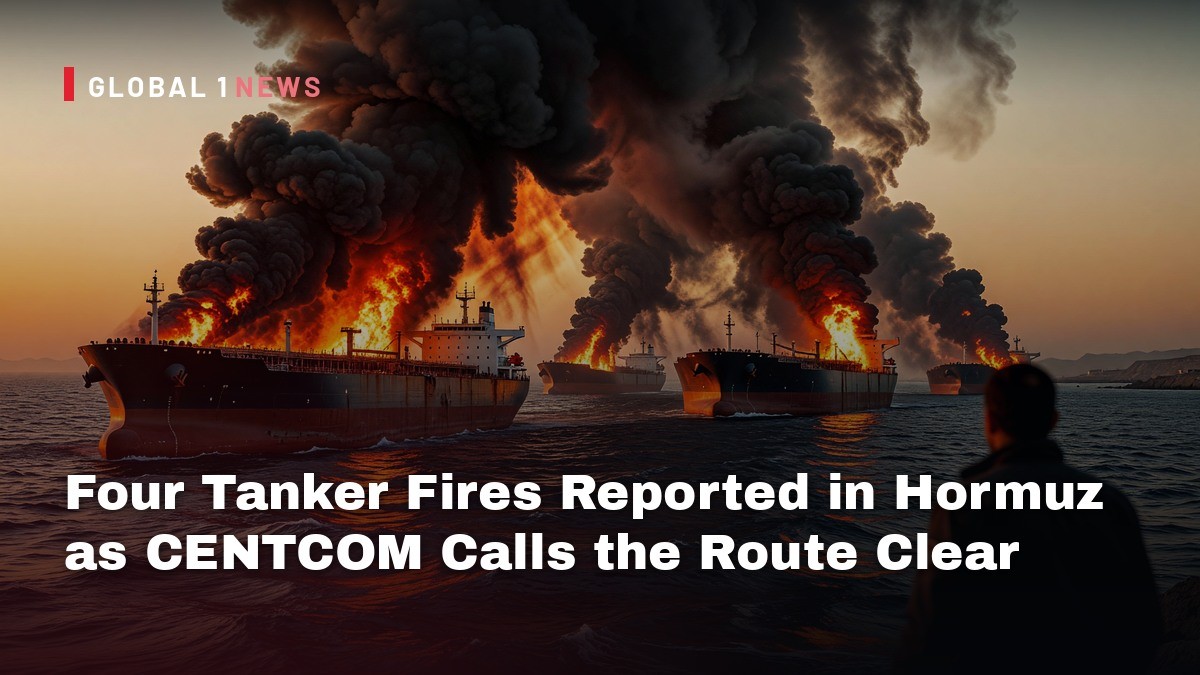
Iran's Revolutionary Guard says four oil tankers caught fire and exploded in the Strait of Hormuz on 30 October. The Associated Press and Reuters both say they could not verify that claim. The same day, the top US commander in the region said the southern shipping lanes are clear of Iranian mines and safe to navigate.
Four Tanker Fires Reported in Hormuz as CENTCOM Calls the Route Clear
DUBAI, United Arab Emirates — The Strait of Hormuz carried four separate official accounts of its own day, and they do not reconcile. Iran counted burning tankers. Britain's maritime monitor logged a single projectile. Oman reported a rescue at sea. Washington reported an open, cleared and safe commercial route. All four statements were issued within hours of each other on 30 October, and no authority has produced evidence that settles which account describes the water.
Four Fires, Four Accounts, One Strait
The Iranian claim escalated in stages. Early on 30 October the Revolutionary Guard referred to two tankers halted after "incidents". Iran's regular navy then said two oil tankers were damaged and caught fire after striking naval mines. The Guard's navy said three other tankers caught fire after striking mines in the strait. By its latest statement, the count had reached four. No authority has identified any of the vessels, and none has reported deaths aboard them.
The only crew figure published on the day came from Oman, which evacuated 25 people from a different ship. UKMTO, the British military's maritime trade office, recorded one projectile strike. Admiral Brad Cooper, commander of US Central Command, said on camera that the southern lanes are clear of Iranian mines.
What Iran Says Happened
The Guard's account, carried by Iranian state media, is that the tankers were on what Tehran calls unauthorised routes. In its latest statement, the IRGC Navy said a fourth vessel, a tanker carrying more than 2 million barrels of crude oil, had hit a mine, suffered a powerful explosion and was burning. An earlier statement said one of the tankers, also carrying 2 million barrels, had struck a naval mine.
The IRGC claimed the vessels had switched off their navigation and positioning systems and ignored repeated radio warnings. Its report did not identify the ships and gave no details about the crews. Tehran has repeatedly warned vessels against passing through the strait without its permission, and said last month that ships attempting to pass without authorisation would face "destruction". Iran has asserted control over much of the waterway since the United States and Israel launched the war on 28 February.
What the British Navy Recorded
UKMTO logged something narrower. It reported that a crude oil tanker was struck by an "unknown projectile" while completing an outbound transit of the waterway. Earlier, the agency said a vessel was hit by an unknown projectile on its port side about 40 nautical miles (74 km) south of Iran's Lavan Island, causing a fire on board. The crew were reported safe and there was no reported environmental impact.
UKMTO said the ship was exiting along the southern route, the corridor Washington has encouraged international shipping companies to use. Crucially, the agency did not attribute the strike to anyone, and it does not track who fires the projectiles that hit vessels. It was not immediately clear whether the ship UKMTO recorded was among the four the IRGC described. CBS reported that the timing of the monitor's advisory suggested it could have been a separate incident altogether.
What Oman Found in the Water
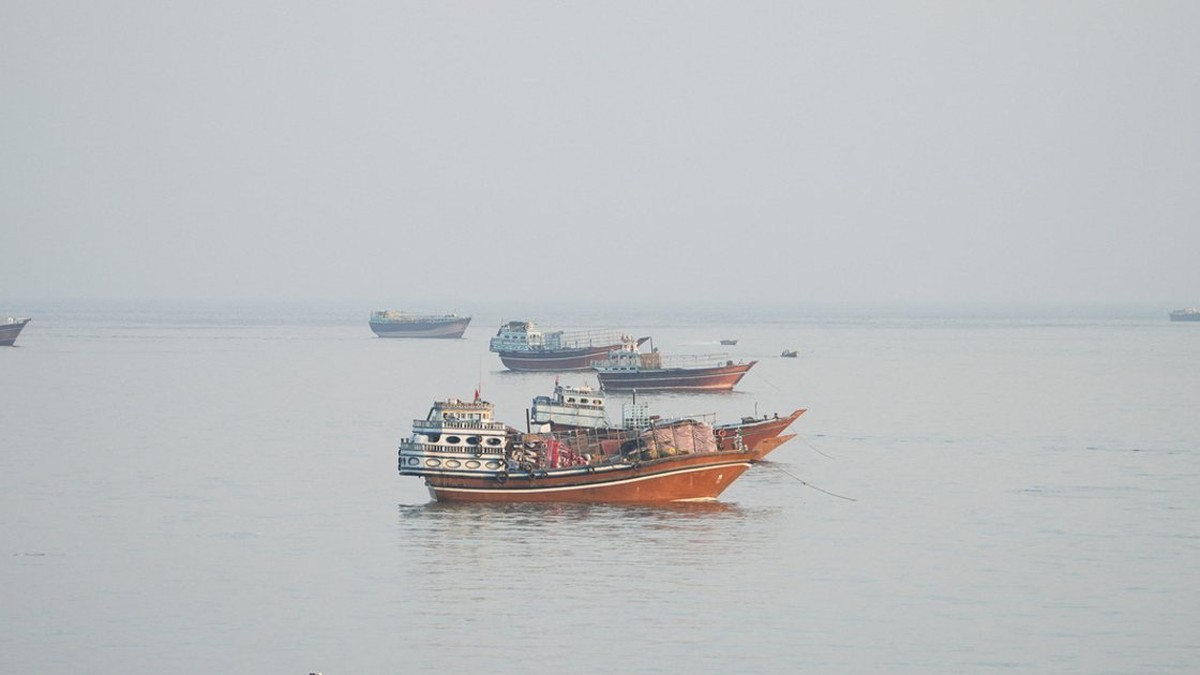
Oman's navy evacuated 25 crew members from a Panama-flagged commercial vessel after it was targeted and a fire broke out on board, the Omani Maritime Security Center said in a statement on 30 October. The rescue was carried out about 1.6 nautical miles off the coast of Musandam Governorate, the northern tip of Oman that juts into the centre of the strait. Crew members were "provided with the necessary medical care", the navy said. No injuries were stated.
The Omani statement stands on its own: a flag, a crew count, a position, a medical note. It does not name the vessel. It does not describe a cause. It does not place the ship inside Iran's account of four tankers on unauthorised routes. The Associated Press reported that it is unclear whether the incident is related to the fires Iran described, and no authority reporting on 30 October established that link.
The Admiral Who Says the Route Is Clear
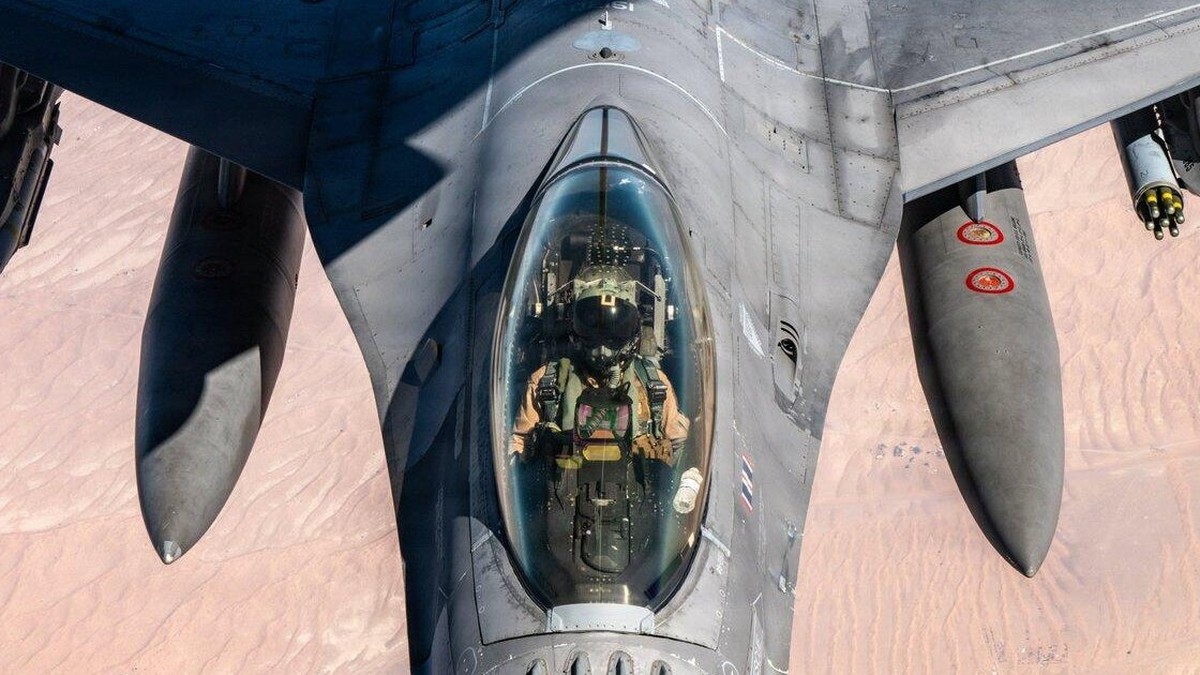
Admiral Brad Cooper, commander of US Central Command, said in a video posted on social media on 30 October that Iran's navy is "at the bottom of the sea" and that southern commercial shipping lanes through the strait are clear of Iranian mines and safe to navigate. He said the United States had helped Gulf partners export more than 1.5 billion barrels of crude oil since the summer, while the US naval blockade had prevented Iran from exporting any oil through the strait.
Cooper said he had recently flown over the strait and seen US military "assets in the air and on the water". "What I didn't see," he said, was Iran's IRGC "out there at all". He went further: the Guard had "patrolled the Strait of Hormuz and surrounding waters for decades, harassing and threatening and seizing commercial vessels at will, but they were not out there because Iran's navy is all at the bottom of the sea." He renewed the claim, made by President Donald Trump and the Pentagon since late August, that US forces "successfully cleared the strait's internationally recognized primary transit routes of Iranian sea mines". Iran's claims the same day contradict all of it.
A Record Month for Attacks on Shipping
The figures for October do not agree either, and both sets are on the record. Al Jazeera's tally of UKMTO data found at least 35 attacks on shipping in the Gulf and the Strait of Hormuz in October, the worst month since the war began, with March second at about 30. CBS News, citing UKMTO, reported "just over 30 attacks" in October, with only March reporting even 30, and noted there were twice as many attacks in October as in September.
On the war total, UKMTO data carried by Al Jazeera puts it at at least 144 reported attacks since 28 February across the strait, the Gulf of Aden and the Sea of Oman. CBS, citing the same agency, put the total of reported incidents at 145. What is not disputed is the traffic. UKMTO recorded 122 outbound and 155 inbound transits in the week ending 28 October, roughly 70 percent below pre-war levels but up from 114 and 127 the previous week. Since 6 July, 59 of the 81 projectile strikes in the region came along the southern route.
The Price of Four Fires
Brent crude rose to $112.33 a barrel on 30 October, up 1.38 percent on the previous day, according to TradingEconomics. Over the month the benchmark gained 9.79 percent, and it stood 73.43 percent higher than a year earlier. Al Jazeera reported Brent at its highest since April, up more than 60 percent on its pre-war level.
The oddity is that supply has recovered. Crude exports from the Gulf averaged 24.6 million barrels per day in the week to 18 October, above the pre-war average, according to the market intelligence firm Kpler. Adi Imsirovic, a lecturer in energy systems at the University of Oxford, told Al Jazeera: "The market is doing exactly what it is supposed to do: It is telling us there is plenty of prompt oil, but there is no end to this war in sight -- in fact ... escalation is very likely." ExxonMobil reported on 30 October that quarterly profits had more than doubled to $15.4 billion from $7.5 billion a year earlier.
Trump Says It Will Be Wrapped Up Soon
President Donald Trump, speaking ahead of the 3 November midterm elections, said on 30 October that he believed the war with Iran will end soon, without saying how. "It's going to get wrapped up soon," Trump told Kansas City radio station KCMO. "We need a guarantee there'll never be a nuclear weapon."
Trump has previously said the United States would not strike Iran before the elections. US media reported that Washington has warned Gulf allies to prepare for potential military action after 3 November. The Wall Street Journal reported that Trump was briefed on options for renewed attacks on 29 October. The same day, Senator Chris Murphy said he had been briefed on the war plan and described it as "insane". Trump offered no mechanism for ending the war beyond the phrase. The Pentagon's Defense Casualty Analysis System lists 23 US service member deaths since February: 11 killed by enemy fire, 12 in non-hostile circumstances.
The Diplomats in Tehran
Qatari mediators, working with US officials, returned to Tehran on the morning of 30 October in an apparent bid to revive the ceasefire agreed in June. A source familiar with the diplomacy told CBS News the mediators were there to convey the latest edits to a draft proposal, and that there were indications of progress. A draft had been presented the previous Sunday, with a response from Iran expected by the weekend.
Days earlier the mediators delivered a letter from Vice President JD Vance to Iran's security chief, Mohsen Rezaei, proposing renewed talks, according to US media. Iranian sources told Al Jazeera that Tehran had received the letter and suggested the Qatari delegation had come to collect its answer, with a possible meeting within a week in Doha or Istanbul. Tasnim, the semi-official agency close to the IRGC, said Iran had not yet replied and would not drop its core conditions: an end to the US blockade of Iranian ports, eased sanctions and access to frozen assets abroad.
The War Beyond the Water
The fighting did not stay at sea. Yemen's Houthis targeted the presidential palace in Aden with two missiles on 30 October, a police official told AFP, and witnesses saw ambulances entering the compound. Col. Majed al-Nazili, spokesman for Yemen's Saudi-backed military, said the group attacked the port city with ballistic missiles without causing casualties. The Saudi-led coalition said it intercepted a Houthi drone in the Mecca region and a ballistic missile over southern Saudi Arabia. Houthi spokesman Yahya Saree denied any operation against Saudi territory, saying the group targets only oil facilities and military bases.
The United Arab Emirates said no new leakage had been detected from the tanker GEM NO. 2 after a spill in its waters, and that the source had been stopped, according to the state agency WAM. In Seoul, German Chancellor Friedrich Merz put Europe's extra energy bill from the war at more than 100 billion euros ($112bn). "This conflict cannot be resolved militarily," he said.
What Is Not Established
Several things are on the record as claims and nothing more. That four tankers burned is Iran's claim, unverified by the Associated Press or Reuters, with no vessel, flag or crew identified. That mines caused the fires is also Iran's claim; UKMTO logged a projectile and no independent investigation has been reported. No casualty figure for the tankers has been issued by any authority.
Whether Oman's evacuation of 25 crew connects to Iran's four-vessel claim is unclear. Whether UKMTO's projectile strike is one of the four is unclear. That Iran's navy has been destroyed is Cooper's assertion, and Iran's claims the same day contradict it. Iran's state media also said its forces downed and captured an MQM-170 US drone over Qeshm island, which Reuters could not verify and the US military did not immediately address. CENTCOM did deny a separate Iranian claim that Iran destroyed an unmanned US vessel, stating on X: "All U.S. military unmanned surface vessels in the Middle East are accounted for, including a squadron of advanced sea drones on patrol in the Strait of Hormuz."
By Jessica Ali, Staff Writer
This article was produced with AI-assisted research and editorial support. Sources: Associated Press, Reuters, CBS News, Al Jazeera, UK Maritime Trade Operations, US Central Command, Oman Maritime Security Center, Tasnim and WAM. Photographs: Reuters (the strait from Musandam, Oman) and a US Central Command handout via CBS News. Covers on Global 1 News are composited in-house from source photography.
What's Your Reaction?
 Like
0
 Dislike
0
 Love
0
 Funny
0
 Wow
0
 Sad
0
 Angry
0

Editor-in-Chief at Global1.News. Atlanta-based journalist who cuts through the BS and tells it like it is. Lead anchor, host, and the voice you hear when the spin stops and the truth starts.












Comments (0)