
Amid India–China Border Tensions, Mega Hydel Project in Arunachal Pradesh Faces Local Heat
In the waning days of October 2026, the Indian state of Arunachal Pradesh—an area that shares a contested frontier with the People’s Republic of China—has become the focal point of a dual security dilemma.
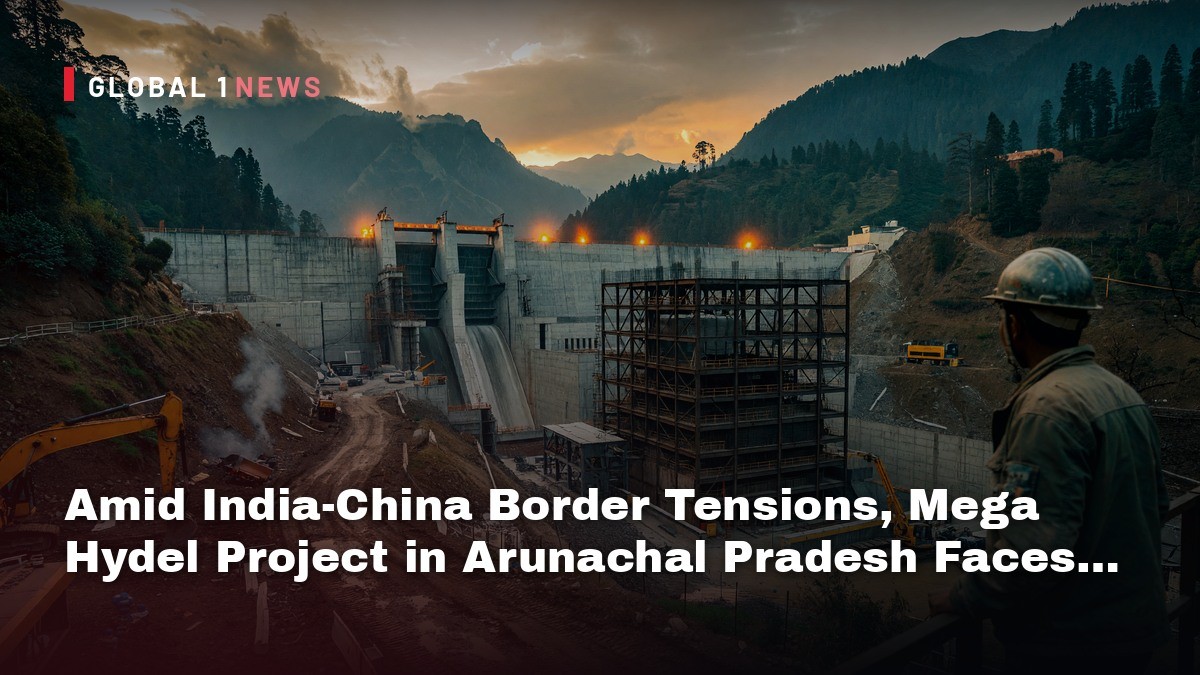
In the waning days of October 2026, the Indian state of Arunachal Pradesh—an area that shares a contested frontier with the People’s Republic of China—has become the focal point of a dual security dilemma. On one hand, the Indo‑Tibetan Border Police reported ongoing face‑offs with Chinese forces at “several locations in Arunachal,” prompting New Delhi to deploy more than 2,500 security personnel, including central armed forces, to the region. On the other hand, a long‑standing controversy over the Upper Siang Multipurpose Storage Project has erupted into violent protests, underscoring how infrastructure, environmental stewardship, and strategic geopolitics intersect in this Himalayan frontier.
Strategic Context of the Upper Siang Project
The Upper Siang Multipurpose Storage Project, slated to generate 11,200 MW of hydropower, is positioned on the Siang River in Arunachal’s Upper Siang district. The river, known as the Yarlung Tsangpo in Tibet, originates in China’s Tibet Autonomous Region before entering India as the Siang, flowing onward through Assam as the Brahmaputra and eventually reaching Bangladesh. The Indian government frames the dam as a critical element of national interest, emphasizing its capacity to regulate water flow, mitigate floods, and bolster energy security. Moreover, officials have highlighted the project as a strategic countermeasure to China’s upstream 60,000 MW hydropower scheme at Medog, which sits just across the border in Tibet.
From a geopolitical perspective, the dam is presented as a means to blunt Chinese control over a transboundary river that feeds into the Brahmaputra basin—a river system that underpins agriculture, fisheries, and livelihoods for millions downstream. By asserting physical presence on the Siang, New Delhi seeks to reinforce its claim over the contested territory while simultaneously securing a lever over water resources that could otherwise be leveraged by Beijing.
Local Opposition and Indigenous Rights
Indigenous opposition to the Upper Siang dam predates the current flare‑up by more than four years. The Adi and Galo tribal communities, whose ancestral territories span the Siang valley, have repeatedly voiced concerns about submergence of land, displacement of villages, and irreversible ecological damage. In September 2026, the Arunachal Pradesh Cabinet approved a high‑level committee—headed by Rural Development Minister Ojing Tasing and including BJP legislators Alo Libang and Oni Panyang—to coordinate pre‑feasibility survey (PFS) activities. The committee’s mandate includes technical assessments of hydrology, geology, and broader impacts, but it also bears responsibility for engaging local residents.
Local organizations such as the Siang Indigenous Farmers’ Forum (SIFF) and the Adi Baane Kebang United (ABKU) have demanded prior and informed consent before any drilling or survey work proceeds. They estimate that 27 villages could be completely submerged if the dam proceeds, threatening the agrarian livelihoods, river‑dependent economies, and cultural cosmology of the Adi people. The protests on October 23—when a 12‑hour shutdown was called across Siang, Upper Siang, and East Siang districts—reflected these anxieties, culminating in vandalism of police stations, government offices, and residences of BJP leaders.
Escalation of Protest and State Response
The October 23 shutdown turned violent after police employed tear gas to disperse demonstrators. Subsequent clashes saw the vandalization of a police station, government offices, and the homes of local BJP legislators, including Oni Panyang, who was tasked with coordinating the PFS. Authorities responded by filing multiple police cases against protest organizers and invoking anti‑terror legislation to arrest several activists. Among those targeted was Adi lawyer Ebo Mili, a prominent protest figure, who was charged with violence and conspiracy. The deployment of security forces, originally intended for border patrols, to facilitate survey activities has deepened mistrust among the indigenous population, as noted by Mili.
On October 13, protest groups submitted a memorandum‑cum‑ultimatum to the state administration, decrying alleged police excesses and demanding a halt to PFS activities until their grievances were addressed. The failure of the administration to adequately respond to these demands contributed to the escalation witnessed later in the month. As of October 30, tension remains high in villages surrounding the proposed dam site, with ongoing police cases and a palpable sense of insecurity among residents.
Environmental and Technical Concerns
Beyond the sociocultural dimensions, the Upper Siang valley is recognized as ecologically fragile. The region’s geology is prone to glacial lake outburst floods, a risk underscored by the catastrophic breach in Sikkim in 2023. Such events have heightened local fears that a large‑scale dam could exacerbate downstream flooding or suffer structural failure. The pre‑feasibility survey, which assesses technical feasibility, hydrology, and geology, is intended to identify these risks. However, critics argue that the survey itself—particularly drilling activities—poses immediate environmental hazards and further destabilizes the terrain.
The Indian government maintains that the project will proceed only after a thorough feasibility assessment, followed by the preparation of a Detailed Project Report (DPR), environmental and forest clearances, a social impact assessment, and public hearings. Nonetheless, the timing of the security deployment and the rapid progression from pre‑feasibility to potential DPR preparation have been perceived by locals as a circumvention of due process, fueling the perception that strategic imperatives are being prioritized over environmental safeguards.
Implications for Indo‑China Relations
The Upper Siang dam must be understood within the broader context of India‑China border tensions that have intensified throughout 2026. While the Indian Ministry of Defence has clarified that the recent deployment of 2,500 security personnel in Arunachal Pradesh is unrelated to the dam controversy, the coincidence of heightened border skirmishes and domestic unrest creates a feedback loop. Beijing’s claim over approximately 90,000 sq km of territory that includes Arunachal Pradesh amplifies the strategic significance of any infrastructure project that asserts Indian sovereignty over the contested river basin.
China’s own 60,000 MW Medog hydropower project on the Yarlung Tsangpo, situated just upstream of the proposed Upper Siang dam, underscores a competitive dimension in water resource control. By advancing its own dam, India seeks to pre‑empt Chinese dominance over the river’s flow, thereby securing a geopolitical foothold. However, the domestic backlash illustrates the delicate balance New Delhi must strike between strategic imperatives and the consent of local populations whose lives are directly impacted by such mega‑infrastructure.
Prospects for Resolution and Policy Recommendations
Looking ahead, the trajectory of the Upper Siang project will hinge on the interplay between strategic calculations, environmental assessments, and indigenous rights. A credible path forward would require the Indian government to deepen its engagement with tribal stakeholders, ensuring that prior and informed consent is obtained in line with international best practices on indigenous rights. Transparent dissemination of the pre‑feasibility findings, coupled with an independent environmental impact review, could mitigate mistrust.
Moreover, integrating the perspectives of think tanks such as the Korea‑based Asan Institute for Policy Studies or the Korea Development Institute (KDI) on transboundary water governance could provide comparative insights, given their experience with river basin negotiations in East Asia. By aligning the Upper Siang initiative with broader regional frameworks for water security and by foregrounding the cultural and ecological stakes for the Adi and Galo peoples, India can transform a potential flashpoint into a model of cooperative, security‑sensitive development.
This article was produced with AI-assisted research and editorial support. Reporting is based on the source material cited below. Sources: The Diplomat; thediplomat.com; Global1.News (31 October 2026).
By Prof. David Park, Staff Writer
What's Your Reaction?
 Like
0
 Dislike
0
 Love
0
 Funny
0
 Wow
0
 Sad
0
 Angry
0

East Asia/Technology Correspondent at Global1.News. Seoul-based voice covering Korean politics, technology, business, and culture. Analyzes how technology and geopolitics intersect across East Asia.











Comments (0)