
Hormuz on the Brink: Washington, Tehran and Oman Close In on a Deal to Reopen the World's Most Dangerous Waterway
US, Iran and Oman near an interim deal to reopen the Strait of Hormuz, with new shipping lanes, fee-free transit and mine clearance under discussion. Traffic has fallen to eight vessels daily from 130 pre-war. Brent crude sits near $90 a barrel as Trump signals a possible breakthrough within days.
Behind the Scenes of the Oman-Mediated Talks
Tehran announced on August 6 that it had agreed coordinates for new shipping routes through the Strait of Hormuz with Oman, a development that could ease one of the Middle East's most volatile flashpoints. By the next day Iranian officials described the broader deal to reopen the strait as on the verge of finalization. Oman has long served as mediator because its territorial waters also run through the narrow passage that once carried one-fifth of global oil supplies in peacetime.
The proposed interim agreement builds on the June 17 memorandum of understanding between Iran and the United States. That document gave commercial vessels 60 days of charge-free transit while negotiators sought wider peace terms. Vague language about control sparked fresh disputes, and the latest talks now focus on what happens once those 60 days expire.
Iranian Foreign Ministry spokesman Esmaeil Baghaei called the Oman discussions positive and centered on safe inbound and outbound lanes that respect sovereign rights. Deputy Foreign Minister Kazem Gharibabadi insisted the inbound lane must stay entirely under Iranian control while part of the outbound lane could remain under Omani oversight. US officials have rejected any arrangement requiring Iranian approval or tolls for transit.
Trump's High-Stakes Gamble
President Donald Trump struck an optimistic note on August 4, telling reporters negotiations were moving along very nicely and that a decision would come within 48 hours. He warned that the strait would open soon or face the threat of major strikes. On August 7 he added that he expects the conflict with Iran to conclude pretty soon and does not believe high energy prices can last much longer.
Trump reportedly decided over the August 1-2 weekend against what he had described as the largest US military attack since World War II. Concerns over dwindling defensive munitions and the risk of higher domestic petrol prices ahead of the November 2026 midterms appear to have influenced that choice. He later stated that Iran called because it did not want to face such an attack.
US Secretary of State Marco Rubio has kept the Hormuz talks separate from wider nuclear diplomacy, noting the immediate focus remains restoring free navigation while the larger nuclear issue stays on a separate track. Washington continues to demand total freedom of commercial navigation without Iranian tolls or pre-approval requirements.
Shipping Routes and Control Disputes
Axios reported negotiators are moving toward a compromise in which ships entering the Gulf would use a northern lane through Iranian waters while vessels leaving would travel a southern lane in Omani waters coordinated with Iran. The arrangement would last 60 days with no transit fees charged. Discussions also include clearing naval mines from the center of the strait.
Reuters, citing a senior Iranian source, said Tehran has already dropped its original demand for full control over both directions but is unlikely to shift further. Iranian state media described the talks as entering a new phase with a bilateral understanding within reach and a possible middle corridor under consideration.
The Associated Press reported that service fees linked to maritime security and environmental protection are also on the table, along with lifting the US blockade on Iranian ports. One Omani proposal draws on the Strait of Malacca model where neighboring states ask ships to voluntarily fund navigation and protection measures.
The Economic Pressure Mounting
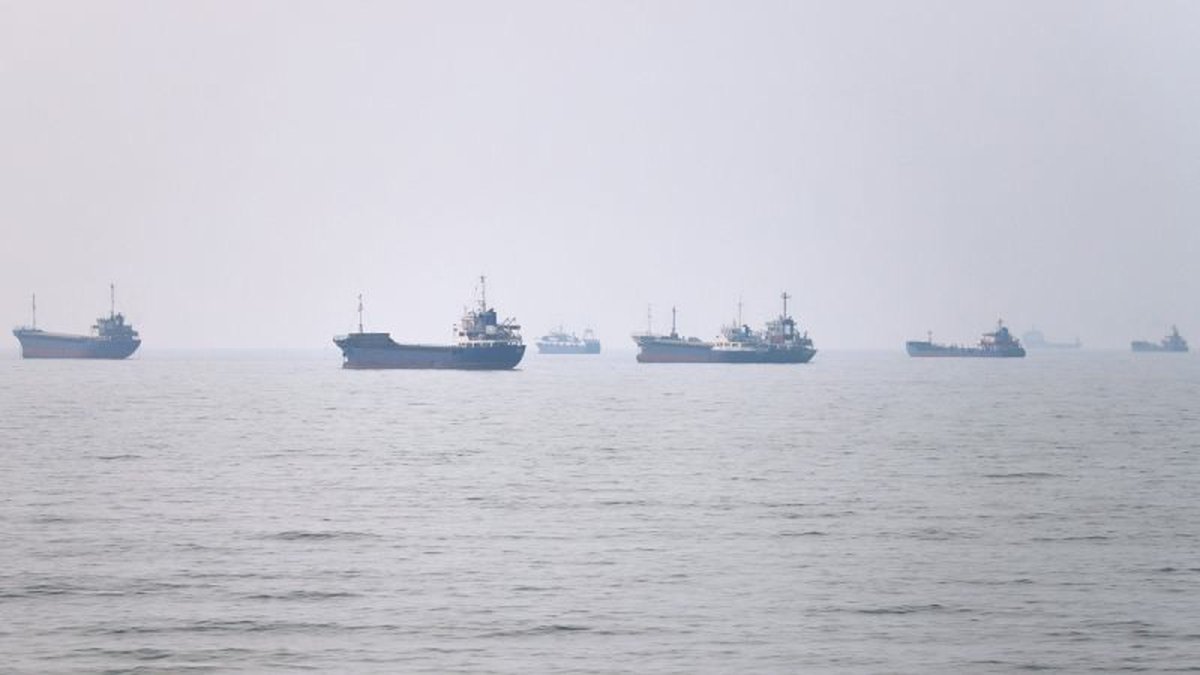
Commercial traffic remains heavily disrupted. Only eight vessels transited the strait on August 3 compared with roughly 130 ships per day before the war. Oil analysts warned that continued disruptions could deplete national stockpiles at record rates and push energy prices higher still.
Brent crude traded around $88-90 a barrel in early August. CNBC noted that Trump's August 5 remarks signaling a deal was close drove oil prices lower and sent stocks soaring. Esfandyar Batmanghelidj of the Bourse & Bazaar Foundation observed that many vessel owners will not use the channel without explicit US authorization, returning leverage to Washington.
The June 17 ceasefire aimed to create breathing room for broader negotiations on Iran's nuclear program. Any new interim deal must resolve lingering disputes over routes and control before that 60-day window closes.
Iran's Concessions and Remaining Hurdles
Iran continues to deny direct talks with Washington and frames all discussions as bilateral with Oman. Sepah News quoted an official saying US military threats remain the main obstacle. Tehran has already shown flexibility by abandoning its demand for complete two-way control.
US officials told the Associated Press that any temporary arrangement must restore the previous system where no party controls the lanes or the ability to transit. Trump has flatly rejected Iranian charges, stating he will not allow them to impose fees on vessels.
Clearance of naval mines and possible security-related service fees remain under discussion. Both sides appear to recognize that an agreement must uphold Iran's sovereign rights while meeting Washington's insistence on predictable, non-discriminatory passage.
Regional Flashpoints Complicating Matters
The UK Maritime Trade Operations agency reported a cargo ship struck by an unidentified projectile off Oman on August 4. Two days later an oil tanker reported two explosions while transiting nine nautical miles southeast of Khasab; the vessel and crew were unharmed. Iran's Tasnim News Agency attributed explosions heard on Qeshm Island to forces intercepting hostile targets.
Houthi attacks on Saudi tankers continued on August 6, and the Red Sea remains disrupted. A Houthi missile strike on a military camp between Hadramawt and Marib killed 16 people, according to a Yemeni military source. UNIFIL recorded 113 projectiles fired by Israeli forces in southern Lebanon on August 5, the highest daily total since June 21.
Rome talks between Lebanon and Israel ended without agreement on a verification mechanism, with an eighth round expected in early September. These overlapping conflicts keep the region on edge even as Hormuz talks advance.
Expert Voices on a Fragile Peace
Trita Parsi of the Quincy Institute for Responsible Statecraft noted that Washington's historic interest centers on whether ships can pass freely, predictably and without discrimination rather than on who administers the lanes. David Des Roches, former director of Arabian Peninsula affairs at the Pentagon, said any deal will likely reflect that Iran cannot simply be excluded from managing a waterway along its coast.
Abas Aslani of the Center for Middle East Strategic Studies told Al Jazeera the region feels like a high-speed roller-coaster. A Hormuz deal would be a good start but will not magically solve all issues, he said, though it could allow both sides to return to implementing the June memorandum before pursuing a final nuclear agreement.
What Comes After the 60-Day Window
Negotiators are racing to lock in an interim framework before the original 60-day period expires. The arrangement would test whether the northern and southern lane compromise can deliver stable traffic without fees or pre-approvals.
Success would lower immediate energy-price pressure and create space for wider diplomacy. Failure risks renewed threats of large-scale strikes and further spikes in global oil costs. Readers should watch for the next statements from Oman, any UKMTO incident reports, and Brent crude movements over the coming week.
By Jessica Ali, Staff Writer
This article was produced with AI-assisted research and editorial support. Reporting is based on sources cited in the article.
What's Your Reaction?
 Like
0
Like
0
 Dislike
0
Dislike
0
 Love
0
Love
0
 Funny
0
Funny
0
 Wow
0
Wow
0
 Sad
0
Sad
0
 Angry
0
Angry
0

Editor-in-Chief at Global1.News. Atlanta-based journalist who cuts through the BS and tells it like it is. Lead anchor, host, and the voice you hear when the spin stops and the truth starts.














Comments (0)