
US Polysilicon Tariff, Price Floors Target China's Dominance
Washington has imposed a 15% tariff and minimum import prices on polysilicon, challenging China's 90% share of global output. Beijing responded with drone export curbs, sanctions on seven US firms, and its first foreign-trade national security investigation, ahead of Xi Jinping's expected Septemb...
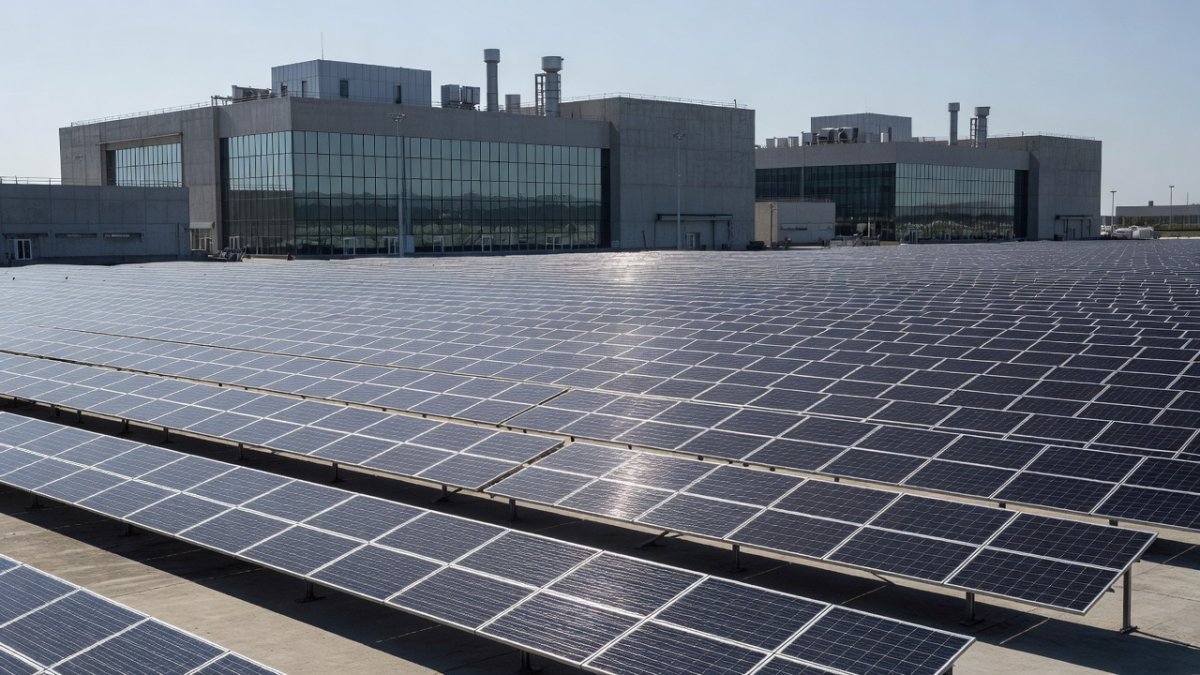
US Slaps 15% Tariff and Price Floors on Polysilicon to Break China's Grip
Washington has moved directly against China's near-monopoly on polysilicon, the hyper-pure silicon that underpins both the global solar panel and semiconductor industries. In a proclamation signed on Thursday, US President Donald Trump imposed a 15 per cent tariff on polysilicon and related products, set to take effect after 120 days, alongside a series of minimum import prices designed to shield American producers from Chinese competition.
Commerce Secretary Howard Lutnick framed the action as an industrial-policy pivot. "We're setting prices so that the Chinese can't dump any more, and we're setting tariffs to say build it here," he said. "We need the foundational products made here." The proclamation argues that "without a secure and reliable domestic supply of polysilicon, the United States cannot sufficiently produce semiconductors."
Tags: US-China trade war, polysilicon tariff, Section 232, solar supply chain, semiconductor materials, China export controls, drone restrictions, price floors, Xi-Trump summit, trade retaliation
The Numbers Behind China's Polysilicon Monopoly
The tariff lands at the centre of one of the starkest asymmetries in global manufacturing. China accounted for more than 90 per cent of worldwide polysilicon output as of 2024, while the United States share of global production capacity has collapsed from 50 per cent in 2005 to less than 2 per cent today, according to figures cited in the US proclamation.
Polysilicon, derived from quartz, is the essential foundational material for two industries at the heart of the current US-China rivalry: solar panels and advanced chips. The measure was launched under Section 232 of the Trade Expansion Act of 1962, following a Commerce Department national security investigation opened in July 2025 — the same legal lever Washington has used on steel, aluminium, copper and pharmaceuticals.
Beijing had anticipated the move. On Wednesday, Chinese Foreign Ministry spokesman Lin Jian warned that "protectionism will not make the US more competitive," a pointed rebuttal delivered a day before the proclamation was signed.
China's Response: Drone Curbs, Sanctions and a First-Ever Investigation
China's retaliation came first, and it was layered. The Ministry of Commerce on Wednesday announced tighter export controls on drones and related technologies, sanctions against seven US companies, and the launch of Beijing's first foreign trade-related national security investigation — a mechanism created under China's Foreign Trade Law but never before deployed.
The new probe targets imported printing and office equipment that relies on foreign-made software, a category that sweeps in major US technology firms including Microsoft and HP. Beijing said the measures responded to US actions, including sanctions on 43 Chinese companies under a forced labour law and Federal Communications Commission bans on imports of new Chinese drones, robots and power inverters.
One sanctioned entity, Arizona-based testing laboratory Compliance Testing LLC, said the action came as "a bit of a surprise." Its president, Michael Schafer, insisted the firm's work supports US security interests: "There are critical products which are manufactured and also tested in foreign adversary countries."
An Expanding Economic Toolkit Since 2020
Analysts read the breadth of Wednesday's package as evidence that China's countermeasure machinery has matured. Since 2020, Beijing has assembled a legal architecture — the Export Control Law, the Unreliable Entity List, the Anti-Foreign Sanctions Law and the Foreign Trade Law — that gives it a menu of calibrated responses rather than a single blunt option.
"The multiple actions that China undertook underscore the breadth and depth of China's retaliatory toolbox," said Wendy Cutler, senior vice-president at the Asia Society Policy Institute, noting the "sharp contrast" with Beijing's more limited responses during Trump's first term.
The most dramatic demonstration of that toolkit came in April 2025, when China imposed sweeping export restrictions on seven rare earths, triggering supply disruptions and temporary factory shutdowns around the world before an October truce averted a full-blown crisis. Kyle Sullivan of the US-China Business Council argued the latest package "looks fairly restrained," adding that "Beijing had considerably more painful options available and didn't use them."
Analysts See Calibration, Not Escalation — For Now
The pattern in recent days is a spiral of tit-for-tat measures that both capitals insist they did not start. Washington sanctioned 43 Chinese firms and moved against Chinese drones, robots and power inverters; Beijing answered with export controls, company sanctions and its first national security investigation; Washington then hit polysilicon with tariffs and price floors.
Yet neither side has allowed the disputes to derail preparations for Chinese President Xi Jinping's expected visit to the United States in September. Last week, Vice-Premier He Lifeng held a video call with Treasury Secretary Scott Bessent and US Trade Representative Jamieson Greer to finalise economic deliverables for the trip while raising concerns about each other's measures.
A senior US official struck a warning note, saying "expanding the cycle of retaliation will not produce a durable solution," while Cutler argued Washington's polysilicon action put Beijing on notice that "stabilisation should not be taken for granted." Sourabh Gupta of the Institute for China-America Studies framed the moment in longer terms: "This past half-decade will come to be remembered many decades hence as the seminal moment that launched the modern age of China's economic statecraft."The economics of the exchange cut both ways. For Washington, the minimum import price programme creates a "protected domestic market" that lets US producers "compete free from global distortions," but it also raises costs for American solar installers and chip fabs that currently buy Chinese material at a fraction of domestic prices. For Beijing, the drone controls are calibrated to bite without severing a sector where China supplies the overwhelming share of global commercial drones — a restraint that analysts said preserves room for de-escalation before September.
What It Means for Japan and Asia's Supply Chains
For Japan and the wider Asia-Pacific region, the polysilicon fight is not a distant American dispute. Japanese solar manufacturers and electronics suppliers sit downstream of the same Chinese feedstock that Washington is now trying to reroute, and the minimum import price programme could ripple through module costs across Asia even as it shields US producers.
The measures also reinforce a structural reality Tokyo has been preparing for since the rare earth shock of 2025: critical materials are now instruments of statecraft. Japan's own push to diversify supply chains — for polysilicon, rare earths and semiconductor inputs — gains urgency as Washington and Beijing both weaponise their positions in the materials stack.
For Japanese exporters, the immediate question is diversion: if Chinese polysilicon is priced out of the US market, surplus volumes could flood Asia, depressing input prices for Japanese buyers in the short term while deepening long-term dependence on Beijing — precisely the outcome Washington's price floors are designed to prevent.
What to Watch For
The 120-day runway before the tariff takes effect leaves a window for negotiation ahead of the Xi-Trump summit in September. Watch for whether Beijing escalates against US chip equipment makers or rare earth buyers, whether Washington adds derivative products such as wafers and modules to the tariff scope, and how Japanese and South Korean electronics firms respond to shifting polysilicon flows.
The deeper signal is structural: both sides now treat materials supply chains as strategic terrain, and the calibrated restraint of this week's exchanges may not survive the next provocation. For Asia's manufacturers, the era of cheap, frictionless Chinese inputs is over — the question is what replaces it.
By Kenji Tanaka, Staff Writer
This article was produced with AI-assisted research and editorial support. Reporting is based on sources cited in the article.
What's Your Reaction?
 Like
0
Like
0
 Dislike
0
Dislike
0
 Love
0
Love
0
 Funny
0
Funny
0
 Wow
0
Wow
0
 Sad
0
Sad
0
 Angry
0
Angry
0

Japan Correspondent at Global1.News. Tokyo-based voice covering Japanese politics, technology, economy, and culture. Tracks the intersection of tradition and innovation in one of the world's most dynamic societies.














Comments (0)