
Hamas Accepts Disarmament Roadmap as Israel Withholds Endorsement
Hamas accepted a phased disarmament roadmap under Trump's Board of Peace plan, but Israel has not endorsed it. The deal links decommissioning to Israeli withdrawal, with verification and regional mediators at its core.
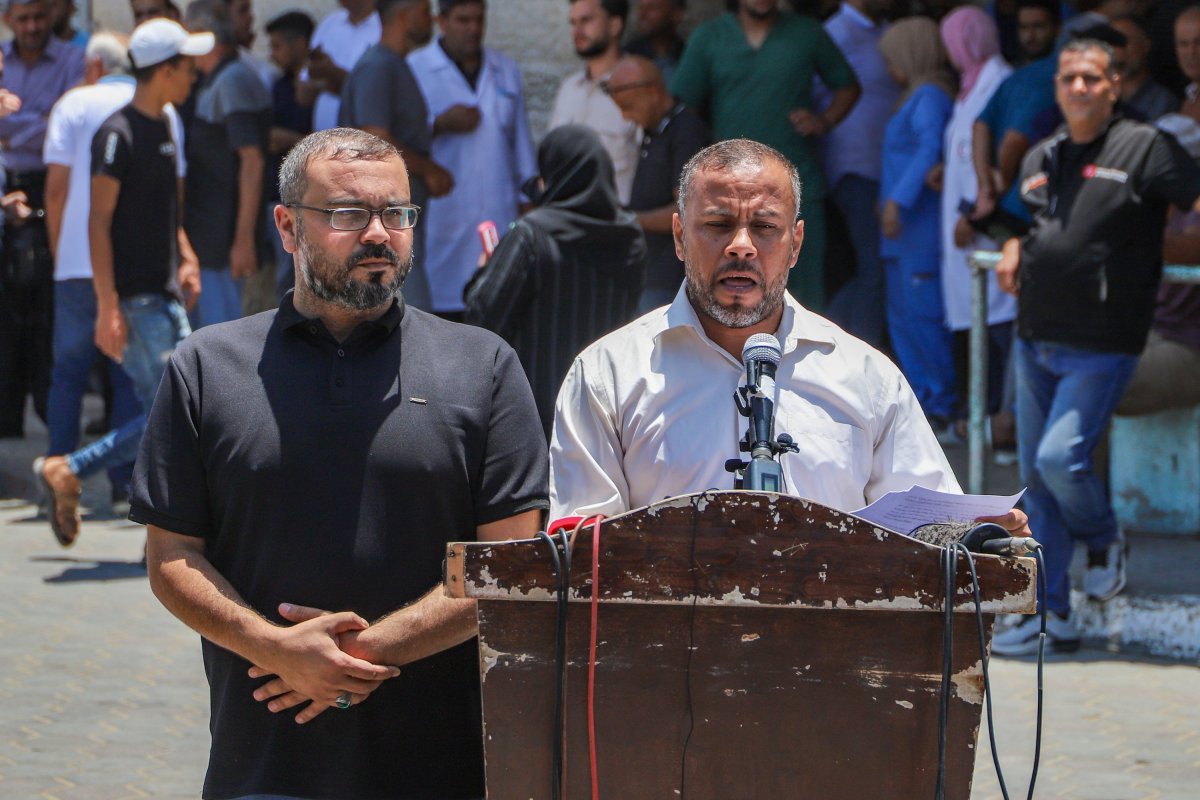
Hamas has accepted a U.S.-backed roadmap for the phased disarmament of its military wing and the transfer of Gaza to a technocratic Palestinian administration, a breakthrough President Donald Trump hailed as a "monumental step" toward ending the war. But Israel's refusal to endorse the agreement — and its insistence on complete demilitarisation as a precondition — has cast immediate doubt over whether the plan can survive.
Hamas Accepts Disarmament Roadmap; Israel's Rejection Threatens Gaza Ceasefire's Next Phase
Istanbul – July 31, 2026 — The agreement, announced by Trump in a social media post on Thursday night and confirmed by Hamas officials on Friday, emerged from months of closed-door negotiations in Cairo under the auspices of the Board of Peace (BoP), the multinational transitional body established by Trump and backed by UN Security Council Resolution 2803. It commits Hamas to handing over its weapons to a Palestinian interim authority as Israeli forces withdraw in carefully structured phases — a linkage that lies at the heart of both the deal's promise and its fragility.
The Roadmap: What Hamas Has Accepted
Hamas's agreement, reached with Egyptian, Qatari and Turkish mediators, covers what Trump called the "complete disarmament" of Hamas and other armed groups in Gaza. The BoP described the roadmap as a "historic breakthrough": "For the first time, Hamas officially has committed to an actionable plan for relinquishing all its weapons, which will be followed by Israeli withdrawal from Gaza." According to a Hamas source cited by Reuters, many of the weapons would be held by Palestinian authorities rather than delivered into Israeli hands.
The group has nonetheless attached a firm condition. "We will not take any action regarding disarmament prior to Israel's withdrawal from the strip," Ghazi Hamad, a member of the Hamas negotiating team, told Al Jazeera. "The agreement contains a clear provision stating that Israel must commit to and implement its obligations. If Israel does not implement the agreement, neither will we," he told Agence France-Presse.
Nickolay Mladenov, the Bulgarian diplomat serving as the BoP's high representative for Gaza, described the deal as hard-won: "It took months of very difficult negotiations to get here. There were several points when I did not believe we would make it. What the agreement says matters. What happens next matters even more. Implementation and verification have to be real. Withdrawal must move in lockstep with decommissioning."

Israel's Rejection: Scepticism or Veto?
Israel had not officially responded to the agreement as of Friday morning, but the signals from Jerusalem were unambiguous. Far-right National Security Minister Itamar Ben-Gvir dismissed the framework: "The only solution in Gaza to which Israel is willing to be a partner is encouraging emigration and destroying Hamas – no other resolution." Israel's Channel 13 quoted officials describing the deal as having "no chance" and as a "desperate attempt" by Hamas to play for time.
An Israeli official told Reuters that Israel demands "the complete disarmament of Hamas, including the removal of weapons from Gaza and the complete demilitarisation of the strip as a precondition for any process," adding that the plan did not "provide a satisfactory response to these demands." Another official, speaking to Newsweek, called the roadmap the "first genuine opportunity" for progress — only to add: "To Israeli ears, Hamas' words meaning nothing."
The US official who briefed the press on Thursday night conceded that Israel was "very sceptical that Hamas will disarm," but warned that Trump would be "very, very disappointed" if Israel failed to meet its obligations. Whether that disappointment translates into pressure on Jerusalem is the open question; Trump's personal investment in the 20-point plan gives Washington leverage, but compelling an ally to accept a deal it deems dangerous would test even this president's transactional style.
The Verification Puzzle: Sequencing and Reciprocity
The agreement's architecture is designed to avoid the pitfalls that have stalled the ceasefire since it came into force in October 2025. The roadmap would usher in an initial 14-day period in which "military activity ceases," according to a BoP official, during which an international verification committee (IVC) would oversee compliance by both sides. "The whole point of this is the sequencing, the verification and the reciprocity, less [about] timetables," the official told the Guardian. "If something isn't adhered to, the next step isn't compelled."
The logic is that neither side must move first in a way that leaves it exposed. Hamas will not disarm before Israeli withdrawal; Israel will not withdraw before disarmament begins. The IVC is meant to certify progress at each step. But verification requires physical presence, and here the plan's operational reality is thin: the 13 NCAG members have so far been barred by Israel from entering the strip, Palestinian police training has yet to start, and ISF troops volunteered by Morocco and Kosovo have yet to arrive.
Rajan Menon, professor emeritus at the City College of New York, captured the central risk: linking disarmament to Israeli withdrawal "will get complicated because it's not clear that Israel will fully withdraw from Gaza." The Israeli precondition of full demilitarisation before any process may be fundamentally incompatible with the phased reciprocity the roadmap demands.
Regional Mediators: Cairo, Doha and Ankara's Stakes
Trump thanked Egypt, Qatar and Turkey for their mediation, and their fingerprints are all over the arrangement. Cairo hosted months of negotiations and has long sought a Gaza order that does not collapse into renewed conflict on its border. Qatar has unique channels into Hamas's political leadership, giving Doha leverage no other mediator can match. Turkey has positioned itself as a defender of Palestinian political legitimacy, a role that complicates but also enables its utility as an intermediary.
Each mediator has a stake in the plan's success. A relapse into war would send displacement toward Egypt, jeopardise Gulf reconstruction investment, and undermine Ankara's regional ambitions. But the mediators' leverage over Israel is limited: Cairo and Doha can press Hamas, yet they cannot compel the Israeli government to accept a deal it views as strategically unsound.
The Governance Transition: NCAG and the Technocratic Experiment
The roadmap's ultimate ambition is to end Hamas's role as Gaza's governing authority without leaving an administrative vacuum. Earlier this month, Hamas dissolved its governing body — a significant concession after nearly two decades of rule — making way for the NCAG, a 13-member non-political committee ratified to manage public services under the BoP. The BoP's executive board includes US Secretary of State Marco Rubio, Jared Kushner, Steve Witkoff and former British Prime Minister Tony Blair. The NCAG is meant to receive the weapons, coordinate with the ISF and preside over reconstruction.
But the committee exists largely on paper. Its members have been barred from entering Gaza, leaving the NCAG unable to assume its functions. Trump has described the agreement as "a critical step towards Gaza finally being governed by a new Palestinian government" that will work closely with the Board of Peace, with Israel securing "the security it deserves." Without NCAG's presence, trained Palestinian police or ISF deployment, the technocratic experiment remains an organisational chart awaiting implementation.
Strategic Implications for the Middle East
If implemented, the deal would reshape not only Gaza but the wider regional order. It would mark the first time a major Palestinian armed faction voluntarily relinquished its arsenal in exchange for a political horizon — a precedent beyond Gaza's borders. It would also reinforce Washington's emerging model of Middle East diplomacy: the Board of Peace, an American-chaired body with UN Security Council backing, effectively supersedes traditional peace-process structures as the primary framework for Israeli-Palestinian affairs.
Arab states are watching closely. Morocco and Kosovo's willingness to contribute to the ISF signals deepening security cooperation with the American-backed vision for Gaza, while Egypt, Qatar and Turkey compete for influence. Reconstruction economics hover over the entire enterprise: Gaza's rebuilding requires billions in international funding, investment will not flow without a credible security guarantee, and that guarantee depends on the very disarmament Hamas has only now — conditionally — accepted.
The war's toll frames every calculation. More than 73,000 Palestinians have been killed in Gaza since October 2023, including over 1,200 since the ceasefire, according to Gaza's Hamas-run Ministry of Health, with nearly 4,000 more injured. The Hamas-led attack on southern Israel killed more than 1,200 people and saw 251 taken hostage. The United Nations said last week the overall situation remains "brutal."
What Happens Next
The coming days are the critical window. If the IVC can be stood up, military activity ceases and both sides begin to move — even tentatively — the plan may gain momentum. If Israel withholds endorsement, Hamas has made clear it will suspend its commitments: "If Israel does not implement the agreement, neither will we," Hamad warned.
Washington expects Israeli compliance, and Trump's authorship of the 20-point plan — the framework that produced last October's ceasefire and the exchange of hostages for Palestinian prisoners — raises the cost of an Israeli veto. But Israeli domestic politics cut the other way: Ben-Gvir's dismissal reflects a governing coalition in which far-right parties hold effective veto power over concessions to the Palestinians. The gap between the scheme on paper and its ground-level reality remains enormous.
Mladenov's admonition is worth remembering. "There were several points when I did not believe we would make it," he said. "What the agreement says matters. What happens next matters even more." The roadmap now exists. Whether it becomes a route or another dead end in Gaza's long corridor of tragedy depends on a government in Jerusalem that has yet to say yes.
By Malik Hassan, Staff Writer
This article was produced with AI-assisted research and editorial support. Reporting is based on sources cited in the article.
What's Your Reaction?
 Like
0
Like
0
 Dislike
0
Dislike
0
 Love
0
Love
0
 Funny
0
Funny
0
 Wow
0
Wow
0
 Sad
0
Sad
0
 Angry
0
Angry
0
Middle East Correspondent at Global1.News. Based in Beirut, covering politics, conflict, energy, and society across the Middle East. Brings context and depth to a region often reduced to headlines.











Comments (0)