
Haitian Dancers Turn to the Spirit of Bois-Caïman to Resist Gang Violence
In Port-au-Prince, twenty dancers gathered for 'Dance is Life' to show that culture survives the gangs controlling most of Haiti's capital. Choreographer Pascale Durosier draws on the Bois-Caïman ceremony that freed the nation, turning revolutionary heritage into art, identity and resistance.
In a leafy garden in Port-au-Prince, twenty dancers gathered on a Saturday afternoon with a simple but defiant message: culture and music are resilient even when a city is under siege. Their performance, called "Dance is Life," was a declaration that Haiti's artistic identity cannot be silenced by the gangs that control most of the capital. For choreographer Pascale Durosier, the event was personal — a chance to show that dance remains the language of a people who once danced their way to freedom.
Haitian Dancers Turn to the Spirit of Bois-Caïman to Resist Gang Violence
Port-au-Prince, Haiti — The drums that carried Haiti's ancestors through the Bois-Caïman ceremony in 1791 are still beating. In the shadow of a security crisis that has left the majority of Port-au-Prince in the hands of armed groups, a community of dancers is reaching back into that revolutionary heritage to keep the nation's soul alive — and to show the world that even in the darkest hours, art refuses to surrender.
Dance as a Language of Survival
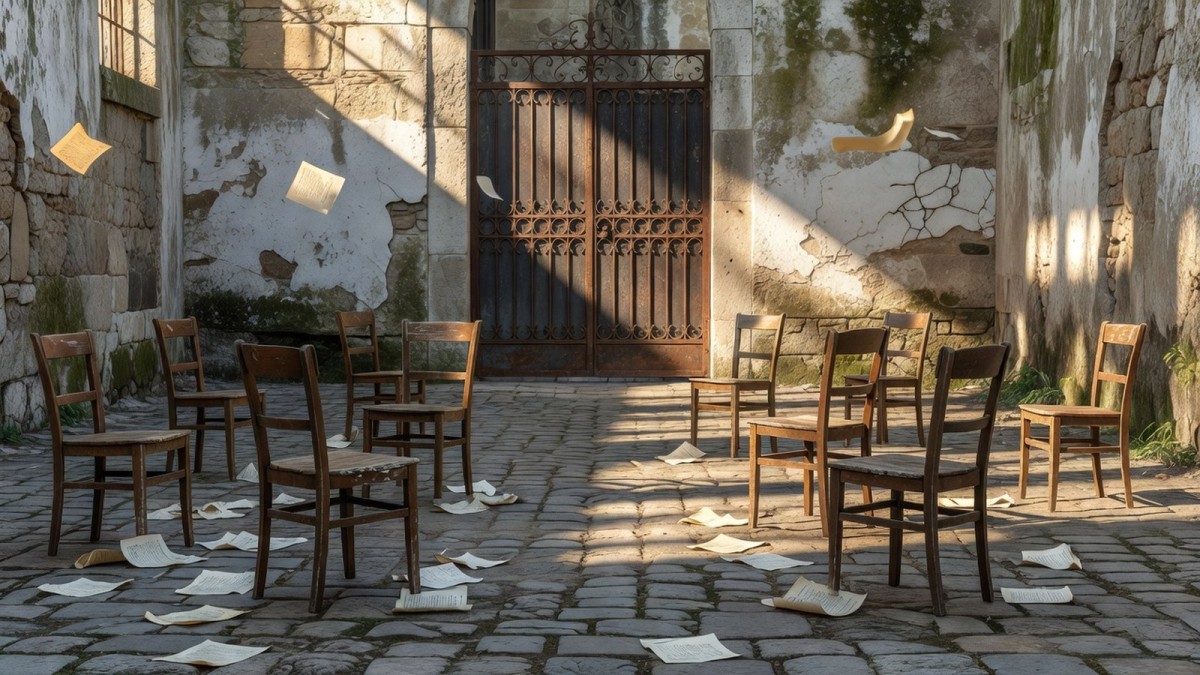
Pascale Durosier has spent her life teaching bodies to speak. As a choreographer and dance teacher in Port-au-Prince, she has watched her city transform over the years from a bustling cultural hub into a patchwork of armed checkpoints and abandoned streets. But when the guns fall silent for a few hours, she gathers her students in gardens, courtyards, and any open space that feels safe enough for movement.
"I always say that dance is my language, how I can express what's deep inside, what I can't speak out loud," Durosier said after the performance. "It's my way of coping with the situation."
The "Dance is Life" event was captured on video by Pierre Luxama of the Associated Press, who documented the twenty dancers as they moved through a choreography that blended traditional Haitian movements with contemporary expression. The garden setting was intentional — a deliberate choice to reclaim public space from the gangs that have made so much of the capital off-limits to ordinary citizens.
For the performers, many of whom have lost friends and family members to the violence, the rehearsal process itself became a form of therapy. They arrived each day not knowing if they would make it home safely, yet they kept coming. The dance floor, even one made of packed earth and scattered leaves, became a sanctuary where fear could be transformed into something beautiful.
Durosier's work is part of a broader movement of choreographers and dance teachers across crisis-affected cities who understand that art is not a luxury but a necessity. When words fail, when politics disappoint, when security forces cannot protect you, the body still remembers how to move. The body still knows how to resist.
Bois-Caïman: The Ceremony That Freed a Nation
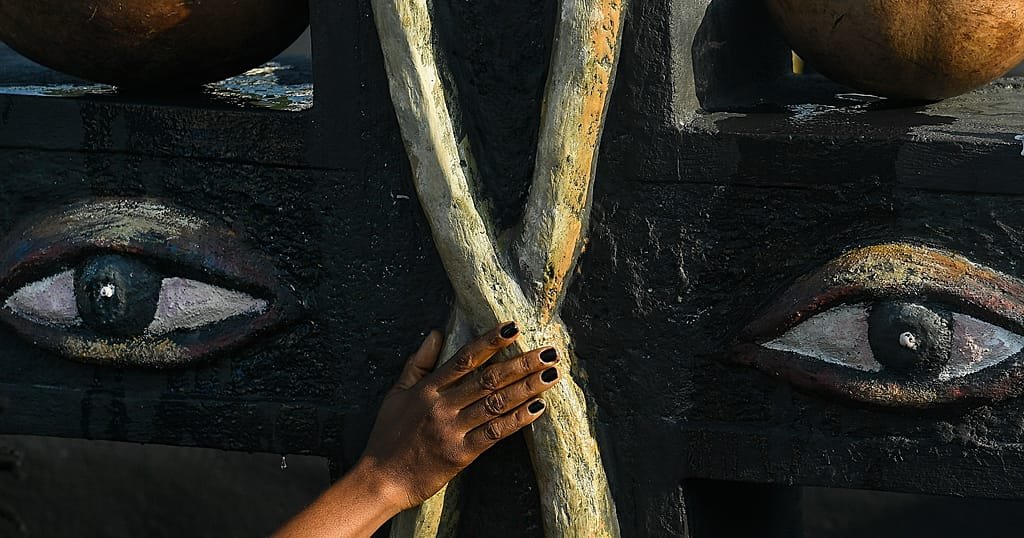
The performance was inspired by one of the most powerful moments in human history: the Bois-Caïman Vodou ceremony of August 1791. On that night, in a forest in the northern part of the island, enslaved Africans gathered under a stormy sky to invoke the spirits and pledge themselves to a rebellion that would change the world forever.
That ceremony led to the only successful slave revolt in history. By January 1, 1804, Haiti had declared its independence, becoming the first free Black republic in the Western Hemisphere and the second independent nation in the Americas after the United States. The revolution sent shockwaves through the colonial powers of Europe and inspired freedom movements across the African diaspora for generations to come.
"It's in our blood. We feel the drums; we feel the connection with music," Durosier said, explaining why the Bois-Caïman story resonates so deeply with her dancers today. "It was through dance. So, dance for me is a revolution."
At Bois-Caïman, the Petro dance was performed, the drums pounded, and all the spirits were present. The ceremony was led by a Vodou priest named Dutty Boukman, who is said to have declared that the enslaved people of Saint-Domingue must cast off the yoke of their oppressors. The revolution that followed was not just a military campaign — it was a spiritual awakening, a cultural declaration that African people would no longer be treated as property.
For Durosier and her dancers, the connection between that revolutionary moment and their own struggle is unmistakable. "Dance, for Haitians, has to mean power. Dance has to be identity, to know who you are," she said. In a country where gangs now hold more power than the state, remembering that dance once helped topple an empire is not nostalgia — it is strategy.
Vodou's West African Roots
To understand the power of Haitian dance, one must understand Vodou — a religion born in West Africa and carried across the Atlantic by enslaved people. Vodou melds Catholicism with animist beliefs and has no official leader or credo. It is a living faith, practiced in homes and temples across Haiti, adapting to the needs of its practitioners while remaining rooted in ancient traditions.
At the center of Vodou is a single God known as "Bondye," meaning "Good God" in Creole. But Bondye is distant, and communication with the divine happens through more than 1,000 spirits known as the lwa. Each lwa has its own personality, its own colors, its own foods, and its own dances. To invoke a lwa is to dance its dance, to feel its rhythm in your bones.
The roots of Vodou run deep in West Africa, drawing from the traditions of Dahomey (present-day Benin), the Kongo kingdom, and the Yoruba people of what is now Nigeria. The West African Vodun tradition, from which Haitian Vodou descends, was carried across the Atlantic by enslaved people who refused to abandon their spiritual heritage even as they were forced to adopt the religion of their captors.
In Ouidah, Benin, the Door of No Return monument stands as a haunting reminder of the millions of Africans who passed through that coastal town on their way to the slave ships. The monument faces the Atlantic Ocean, toward the Americas, toward the descendants who would transform their ancestors' suffering into a new culture of resistance and resilience.
Benin now celebrates its Vodun heritage with an annual Vodun Days festival, drawing visitors from across the African diaspora who come to reconnect with the spiritual traditions that survived the Middle Passage. For Haitian dancers, this connection to West Africa is not abstract — it is felt in every drumbeat, every step, every movement that echoes the dances of their ancestors.
The Crisis Behind the Choreography
The crisis that has engulfed Port-au-Prince is staggering in its scale. The United Nations estimates that about 90 percent of the capital is under the control of criminal groups, with gangs expanding their attacks into surrounding areas and previously peaceful regions. The state's authority has collapsed in much of the country, replaced by the brutal rule of armed factions that tax, kidnap, and kill with impunity.
UN Secretary-General Antonio Guterres visited Haiti in June 2026, walking through streets that once bustled with commerce and now stand empty behind walls of razor wire. His visit came amid reports that more than 300,000 people have been displaced in Port-au-Prince alone — a record number — and that more than 1.5 million people are displaced nationwide. More than 2,300 Haitians have been killed in 2026 alone, according to UN figures.
The international response has been slow and inadequate. A UN Gang Suppression Force has been authorized, with Chad deploying two battalions to help restore order, but the force remains underfunded and understaffed. Humanitarian agencies are struggling to meet even the most basic needs of the displaced population, with funding shortfalls forcing cuts to food distribution, healthcare, and shelter programs.
In such a context, one might ask why dance matters. But those who work in humanitarian emergencies understand that art is not separate from survival — it is essential to it. When people lose their homes, their livelihoods, and their loved ones, they also lose their sense of identity. Dance, music, and cultural expression help restore that identity, reminding people who they are and why their lives have meaning.
Durosier's dancers are not naive about the dangers they face. They know that a rehearsal could be interrupted by gunfire, that a performance could be targeted by gangs who see public gatherings as threats. But they also know that to stop dancing would be to surrender something irreplaceable. As Durosier put it, the dance floor is where Haitians remember who they are — and that memory is a form of resistance in itself.
Dance and Identity Across the African Diaspora
Vodou dances are ritualistic folklore dances that originate from African dance traditions, characterized by live drumming, rhythmic footwork, and vibrant costumes. The yanvalou dance, one of Haiti's most famous Vodou dance forms, involves undulating movements of the spine and shoulders that mimic the flow of water — a dance of healing and connection to the spirits.
These traditions are not unique to Haiti. Across West Africa, dance remains a vital form of cultural expression and spiritual practice. In Senegal, the sabar and mbalax traditions use polyrhythmic drumming and intricate footwork to celebrate life's milestones and connect communities. The griot tradition, which preserves history through music and storytelling, has parallels in Haiti's own oral traditions and ceremonial practices.
The African diaspora has always preserved its culture through movement. When enslaved people were stripped of their languages, their religions, and their families, they held onto their dances. Those dances evolved, merged, and adapted, but they never disappeared. Today, from Port-au-Prince to Dakar to New York, the rhythms of Africa continue to pulse through the bodies of the descendants of those who survived the Middle Passage.
For African readers, the story of Haitian dancers resisting gang violence through Vodou-infused choreography resonates deeply. It is a reminder that the connections between Africa and its diaspora are not merely historical — they are living, breathing, and moving. When Haitian dancers perform the yanvalou, they are dancing a dance that their ancestors brought from West Africa centuries ago.
Haitian dancers in the diaspora have also played a crucial role in keeping these traditions alive. From Montreal to Miami to Paris, Haitian dance companies teach the next generation the movements of their ancestors, ensuring that the cultural heritage of the world's first Black republic continues to thrive beyond its borders.
An Election Season Under the Gun
Haiti's long-delayed elections are finally scheduled, with the first round set for August 30, 2026, and a possible second round on December 6, 2026. Voter registration opened in July 2026, and the Organization of American States and CARICOM have both pledged support for Haiti's security and election efforts. But the question on everyone's mind is whether elections can be free and fair when gangs control most of the capital.
The international community has invested significant resources in preparing for the elections, but many Haitians remain skeptical. How can people vote when they cannot safely leave their neighborhoods? How can candidates campaign when they risk being kidnapped or killed? How can the results be trusted when the state cannot even secure a single polling station?
Despite these challenges, the cultural community remains hopeful. Durosier and her dancers see the elections as an opportunity, however imperfect, to begin rebuilding the country's institutions. They believe that a government with even a modicum of legitimacy could begin to address the root causes of the crisis — poverty, inequality, and the collapse of public services.
But they also know that elections alone will not solve Haiti's problems. The country needs a comprehensive approach that addresses security, economic development, and social cohesion. And at the heart of that approach must be a recognition of Haiti's cultural identity — the very identity that the dancers are fighting to preserve.
"We are not just victims," Durosier said. "We are a people with a history, with a culture, with a spirit that has survived everything. The world needs to see that. We need to see that ourselves."
What to Watch For
As Haiti moves toward its December elections and beyond, the question is whether initiatives like "Dance is Life" will grow into a broader cultural movement. Durosier hopes to expand her program, reaching more young people who have been affected by the violence and giving them an alternative to joining gangs or fleeing the country.
Support from national and international cultural organizations will be crucial. UNESCO has long recognized the importance of intangible cultural heritage, and there are signs that international donors are beginning to understand that supporting the arts is not a luxury but a necessity in crisis situations. The role of the arts in peaceful resistance has been documented around the world, from South Africa's anti-apartheid movement to the Arab Spring.
For Pascale Durosier and her dancers, the next chapter is uncertain but not without hope. They continue to rehearse, to perform, to teach. They continue to believe that dance can heal wounds that politics cannot reach. They continue to honor the spirits of Bois-Caïman, who showed that a people united in purpose can overcome even the most powerful oppressors.
African audiences can follow Haitian cultural resilience through social media, through the work of diaspora organizations, and through the growing number of cultural exchanges between Haiti and African countries. The connections between the continent and its diaspora are strengthening, and dance is one of the most powerful bridges between them.
The message from that leafy garden in Port-au-Prince is simple but profound: art is a unifying force that transcends suffering. It reminds us that we are more than our pain, more than our circumstances, more than the violence that surrounds us. It connects us to our ancestors and to each other.
As Haiti prepares for its December elections, the dancers will be watching — and dancing. They know that the future is uncertain, but they also know that their ancestors faced far worse odds and prevailed. The drums of Bois-Caïman are still beating, and as long as they beat, Haiti's soul will not be silenced.
By Amara Diop, Staff Writer
This article was produced with AI-assisted research and editorial support. Reporting is based on sources cited in the article.
What's Your Reaction?
 Like
0
Like
0
 Dislike
0
Dislike
0
 Love
0
Love
0
 Funny
0
Funny
0
 Wow
0
Wow
0
 Sad
0
Sad
0
 Angry
0
Angry
0

West Africa/Sahel Correspondent at Global1.News. Dakar-based journalist covering politics, security, climate, and development across Francophone and Anglophone West Africa. Tells the stories of a region undergoing profound transformation.











Comments (0)