
South Korea's Nuclear Dilemma
The structure of global security has been changing in profound ways, and few nations feel the tectonic shifts more acutely than the Republic of Korea. With a major conventional war raging in Europe and the potential for armed conflict rising in East Asia, the post-Cold War assumption of a benign, unipolar order has evaporated. More critically for Seoul, the United States is no longer universally perceived as a reliable security guarantor by its allies.
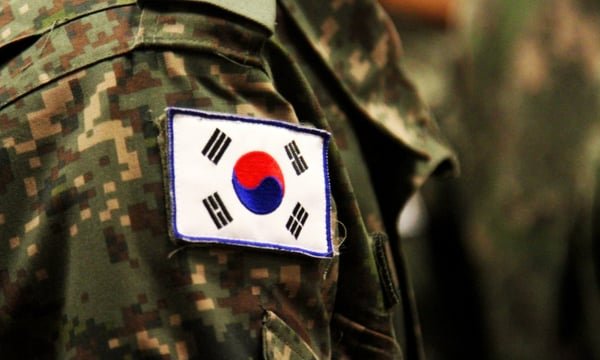
The structure of global security has been changing in profound ways, and few nations feel the tectonic shifts more acutely than the Republic of Korea. With a major conventional war raging in Europe and the potential for armed conflict rising in East Asia, the post-Cold War assumption of a benign, unipolar order has evaporated. More critically for Seoul, the United States is no longer universally perceived as a reliable security guarantor by its allies. This erosion of trust, coupled with North Korea’s expanding nuclear arsenal and its deepening military alliance with Russia, has forced a once-unthinkable question into the mainstream of South Korean political discourse: should Seoul acquire its own nuclear weapons?
The Paradox of Nuclear Deterrence
One of the most puzzling aspects of the contemporary global security architecture is that nuclear powers no longer seem to possess a coherent understanding of what their arsenals are for. Strategic capabilities are increasingly developed with conventional weapons, while nuclear deterrence fails to deter major conflict—a phenomenon that Rose Gottemoeller has referred to as "The Strange Defeat of Nuclear Deterrence." This paradox has a dangerous corollary: regional powers, observing that nuclear umbrellas are no longer waterproof, feel an increasing need to acquire their own deterrents. South Korea faces this dilemma very acutely. North Korea is not only increasing its nuclear arsenal but has also developed a significant alliance with Russia, even as Pyongyang has renounced unification and formally designated South Korea as its enemy.
The anxiety in Seoul is compounded by a geographic and strategic reality: the continental United States is now within reach of North Korean ballistic missiles. This fact fundamentally alters the calculus of extended deterrence. If Washington must risk San Francisco to save Seoul, the credibility of the American commitment inevitably comes into question. This is exacerbated by the diplomatic overtures of the Trump administration toward Kim Jong-un, which, according to an August 17, 2026 report in The New York Times, have strained the alliance with South Korea. The report notes that while the South Korean and United States militaries view their annual drills as more critical than ever, the political signals emanating from Washington regarding the defense of the peninsula have become increasingly ambiguous.
A General’s Proposal and Public Sentiment
The result of this strategic anxiety has been an intense and public debate in South Korea about the acquisition of nuclear weapons. On July 27, retired Lieutenant General Chun In-bum, a former commander of the Republic of Korea Army Special Warfare Command, published an article in the Korea Times that elaborated on a sophisticated proposal for Seoul to acquire a nuclear arsenal. Chun’s plan is not for an independent, go-it-alone program. Rather, he envisions a force that Seoul would own but which would be embedded in an integrated network of deterrence with the United States. This would resemble some of the deployments of U.S. nuclear weapons in Europe during the early Cold War, utilizing a dual-key system that would require the consent of both the host country and the United States for any launch.
Public sentiment appears to be ahead of the policy elite on this issue. Public surveys in South Korea have shown up to 80 percent support for acquiring a nuclear weapons capability. However, among South Korean policy elites, there is considerably less enthusiasm due to the potential consequences for the alliance with the United States, South Korea's adherence to the Nuclear Non-Proliferation Treaty (NPT), and the severe economic implications of such a move. Policymakers tend to prefer a "threshold capacity"—a posture whereby South Korea would have the technical capability to quickly develop nuclear weapons but would not actually do so while the alliance with the U.S. remains in place. This approach seeks to gain deterrent value from latent capability without triggering the full spectrum of diplomatic and economic consequences.
The Entrapment Versus Abandonment Dilemma
All of the proposed variants for strengthening deterrence face the classic dilemma of "entrapment or abandonment." Countries hosting U.S. nuclear weapons do not want a nuclear conflict to start without their consent, but they simultaneously want extended deterrence to be effective against adversaries. Conversely, the United States does not want to be embroiled in a nuclear conflict initiated by an ally without its explicit approval. The fundamental challenge is how to make nuclear deterrence credible to the adversary while balancing the risks in a manner acceptable to all parties involved.
The problem with General Chun's proposed scheme is that it does not resolve this fundamental dilemma; it merely repackages it. If the United States maintains escalation control, this amounts to a veto in a different form, undermining Seoul's sovereignty over its own defense. If South Korea had independent launch authority, then the United States could find itself in a nuclear conflict against its will, a scenario Washington would never accept. It is really unclear, therefore, whether the implementation of Chun's proposal or anything similar would solve the underlying problem of credibility. The proposal, while intellectually sophisticated, fails to bridge the inherent gap between allied control and independent assurance.
Operational Realities and the OPCON Precedent
The practical difficulties of such arrangements are illustrated by South Korea's long-running negotiations with the United States over the transfer of wartime operational control (OPCON) over ROK forces. This process, which has dragged on for two decades, highlights the immense complexity of command integration. OPCON transition requires highly coordinated intelligence and communication systems, interoperability of equipment, extensive joint training, and finely tuned relations between South Korean and American commanders. Nuclear decision-making would be exponentially more complex, involving the U.S. president and requiring flawless communication links. Given the geography of the Korean battlefield—where the forward edge of the battle area is just miles from the Seoul metropolitan area—decision times could be extraordinarily short, potentially measured in minutes rather than hours.
This operational reality underscores a critical point: a nuclear deterrent is not just a weapon; it is a command-and-control system. Building a reliable, survivable, and secure nuclear enterprise is a monumental undertaking. For South Korea, doing so while simultaneously maintaining an alliance with the United States would create a tangled web of command relationships that could prove unworkable in the chaos of an actual conflict. The OPCON experience suggests that even conventional command transitions are fraught with difficulty; the leap to shared nuclear control would be a qualitative change of immense risk.
Regional Repercussions and the China Factor
A South Korean nuclear arsenal, even if embedded in an alliance command structure, could significantly complicate the regional security environment. It could encourage Russia to enhance its support of North Korea and its sharing of technology with respect to nuclear delivery and control systems. Beijing would be likely to consider such a capability a direct threat to its own security. The decision to deploy the Terminal High Altitude Area Defense (THAAD) system in South Korea in 2016 provoked a major reaction from China, including the imposition of political and economic costs. Then-South Korean President Moon Jae-in managed to manage the fallout, but the episode demonstrated Beijing's willingness to punish Seoul for security decisions it deems threatening.
A South Korean nuclear arsenal is likely to provoke an even more serious reaction from China. This could include comprehensive economic sanctions, increasing military deployments along the border, and potentially the deployment or retargeting of Chinese nuclear forces against South Korea. Furthermore, such a move could rekindle the nuclear debate in Japan, leading to further nuclear proliferation in Northeast Asia. The security dilemma would spiral: South Korea's quest for security would likely decrease the security of the entire region, potentially triggering a cascade of nuclearization that would fundamentally destabilize the East Asian order.
The NPT, the 123 Agreement, and the Cost of Proliferation
It is also difficult to predict how North Korea would react to a South Korean nuclear arsenal. While deterrence of a North Korean nuclear attack would certainly be enhanced, it could provoke even more acceleration of North Korea's efforts to develop a secure nuclear capability that could also strike the United States. It would not necessarily inhibit low-level attacks below the threshold of direct armed conflict, such as cyberattacks or artillery barrages. Moreover, it would change the narrative of a democratic South Korea acting in conformity with international law versus a rogue North Korean state if Seoul were to abandon its commitments to the NPT.
Leaving the NPT is not just a reputational or technical issue; it has profound legal consequences. While South Korea would no longer be obliged to forego the manufacture or possession of nuclear weapons, the United States would be constrained under Article I of the NPT not to transfer possession or control over nuclear weapons to South Korea or provide any nuclear assistance. The civil nuclear technology cooperation between the United States and South Korea—the "123 Agreement" of 2015—would be in jeopardy. This would have devastating effects on South Korea's civilian nuclear energy sector, which is a major component of its economy. The economic and diplomatic isolation that would follow would likely outweigh any security benefits gained from a domestic arsenal.
A Path Forward Without Proliferation
There is little immediate prospect that General Chun's ideas can become policy. The political, economic, and diplomatic costs are simply too high. But that does not mean that there are no paths forward to strengthen deterrence. The integration of U.S. nuclear weapons and conventional forces into operational planning, nuclear consultation, integration of early warning systems, intelligence sharing, missile defense, and various signals regarding the commitment to extended deterrence and no tolerance of North Korean aggression could strengthen stability without crossing the nuclear threshold.
If South Korea feels it can no longer rely on the United States, then it could develop its own nuclear deterrent. But it would have to face the consequences, which may include international isolation, severe strains on (or even the collapse of) the South Korea-U.S. alliance, and a more hostile international security environment. The debate in Seoul is a symptom of a deeper crisis in the global security architecture. The answer, however, is not to abandon the non-proliferation regime, but to reinforce the credibility of extended deterrence through concrete institutional and operational measures. The alliance must adapt to the new strategic reality, but it must do so without dismantling the very norms that have prevented catastrophic nuclear war for seven decades.
This article was produced with AI-assisted research and editorial support. Sources: The Diplomat, Tribune Content Agency, The Korea Times, The New York Times.
By Prof. David Park, Staff Writer
What's Your Reaction?
 Like
0
Like
0
 Dislike
0
Dislike
0
 Love
0
Love
0
 Funny
0
Funny
0
 Wow
0
Wow
0
 Sad
0
Sad
0
 Angry
0
Angry
0

East Asia/Technology Correspondent at Global1.News. Seoul-based voice covering Korean politics, technology, business, and culture. Analyzes how technology and geopolitics intersect across East Asia.














Comments (0)