
Global Food Crisis Deepens as El Niño Threatens Mexico's Tortillas and Harvests
In a recent DW News report, population ecology Professor Tim Benton warned that climate change and geopolitical conflict are pushing the global food supply chain to a breaking point, with next year's El Niño potentially triggering even more extreme weather and catastrophic crop losses.
In a recent DW News report, population ecology Professor Tim Benton warned that climate change and geopolitical conflict are pushing the global food supply chain to a breaking point, with next year's El Niño potentially triggering even more extreme weather and catastrophic crop losses. For Mexican families, this is not an abstract academic concern—it is the reality of paying nearly 30 pesos for a kilo of tortillas in several states, watching reservoirs in Sinaloa dry up to critical levels, and facing the prospect of even higher prices at the tortillería and the tianguis in the coming months.
Global Food Crisis Deepens as El Niño Threatens Mexico's Tortillas, Corn Harvests, and Economic Stability
Mexico City, Mexico — The convergence of a warming planet, geopolitical tensions, and an impending El Niño is creating a perfect storm for global food security, and Mexico is standing directly in its path. The DW News report featuring Professor Tim Benton of the University of York highlights that the June 2026 heatwave in Europe—the fastest-heating continent—alone destroyed an estimated 9 million tons of grain, a stark preview of what climate volatility means for food systems worldwide. Benton's warning that "large-scale conflict" could emerge from food insecurity resonates deeply in Mexico, where the staple of the national diet, the tortilla, is becoming increasingly unaffordable for millions.
The Global Picture: A System Under Siege
The numbers coming out of international institutions paint a grim picture. The UN Food and Agriculture Organization (FAO) reported that its Food Price Index rose to 131.1 points in July 2026, up from 130.3 in June, marking its highest level in over three years. This upward trajectory is not an anomaly; it is a trend line that economists at JPMorgan warn could lead to "massive global food crises," projecting global food inflation to accelerate from 2.8% in the first half of 2026 toward 5% in the first half of 2027. The FAO has issued a stark warning that disruptions in critical chokepoints, such as the situation in the Strait of Hormuz, could trigger a severe global food price crisis within six to 12 months unless governments act decisively to protect supply chains.
The World Meteorological Organization (WMO) has placed the probability of a 2026 El Niño at 80-90%, describing it as a potential once-in-a-generation event. The most recent El Niño, in 2023-24, was already one of the five strongest on record, and analysts suggest a severe new event could add around 0.7 percentage points to global food inflation when its effects peak. Professor Benton told DW that the combination of extreme weather and geopolitical threats requires "fundamental changes" to make food supplies more stable and resilient. For Mexico, a nation that imports millions of tons of yellow corn annually—primarily from the United States—these global shocks translate directly into domestic price pressures and food security risks.
Mexico's Corn Dilemma: Imports, Drought, and the Tortilla Price
Mexico finds itself in a precarious position as one of the world's largest corn buyers. The country imports millions of tons of yellow corn each year, mainly from the United States under the framework of the USMCA/T-MEC trade agreement, while domestic white corn production—the essential ingredient for tortillas—struggles against persistent drought. This structural dependency means that when global grain prices spike or supply chains are disrupted, Mexican consumers feel the impact almost immediately at their local tortillería.
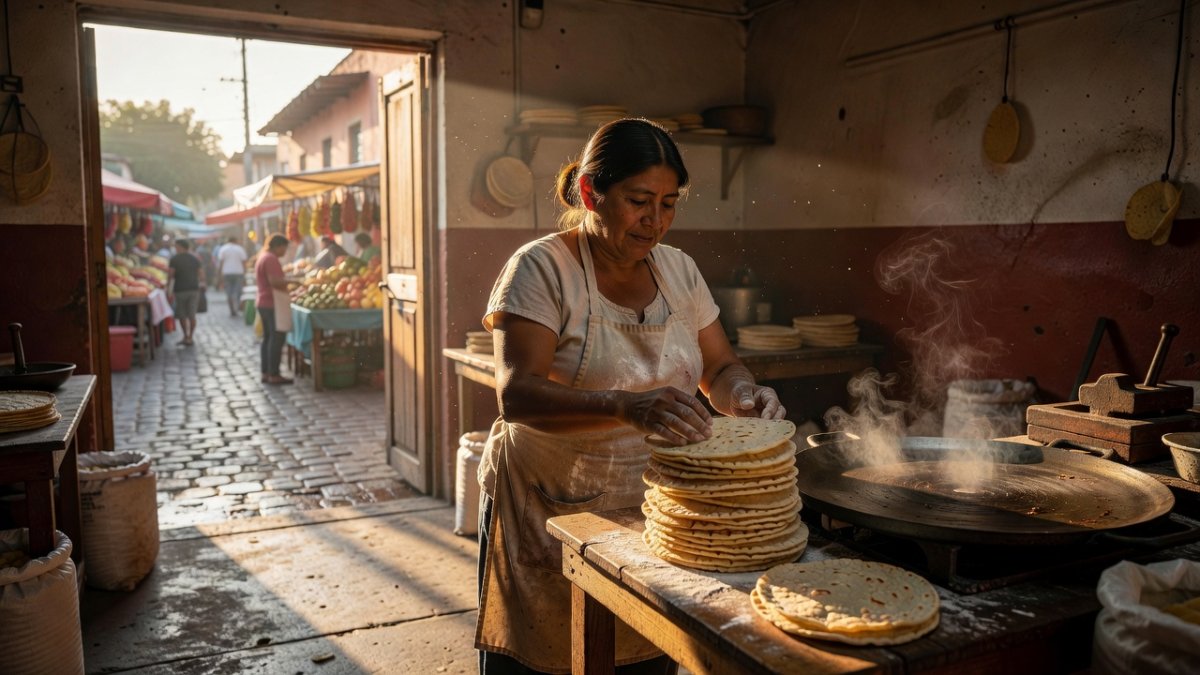
The Asociación Nacional de Pequeños Comerciantes (ANPEC) reports that tortilla prices have already reached 30 pesos per kilo in several states, driven by higher production costs and inflation. This is not merely an economic statistic; it is a cultural and social flashpoint. The tortilla is the backbone of the Mexican diet, a staple present at every meal in colonias, ejidos, and urban centers alike. When its price rises, it disproportionately affects low-income families who spend a larger percentage of their income on basic foodstuffs. In response to the spike, the Mexican government recently introduced a temporary 50% tariff on exports of white corn used in basic food, a measure designed to contain domestic prices and ensure that Mexican-grown corn stays in Mexico rather than being sold to higher-paying international buyers.
Sinaloa's Water Crisis: A Regional Catastrophe with National Implications
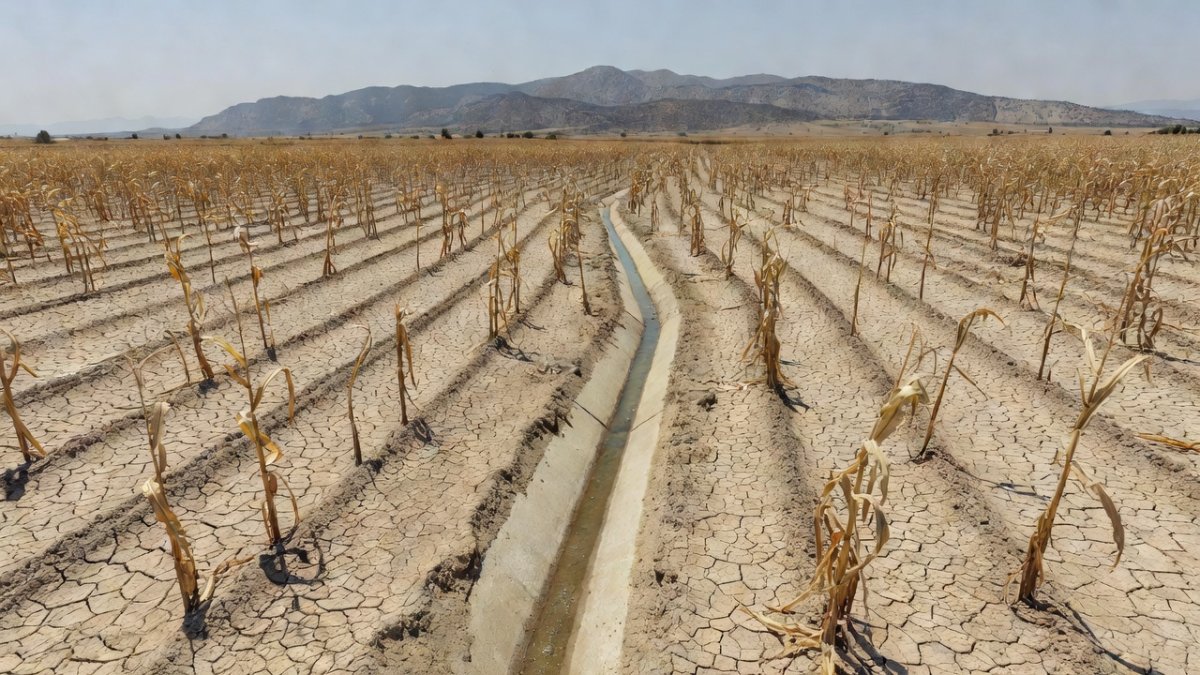
Nowhere is the climate threat more acute than in Sinaloa, Mexico's agricultural heartland and the country's leading producer of corn and other staple crops. The region is in the grip of a severe water crisis, with reservoirs at only 12-18% capacity. This is not a slow-moving inconvenience; it is an existential threat to the region's farming economy. Agricultural groups in Sinaloa report that irrigation systems function at only 35% efficiency, and they have urgently called on the government to declare water scarcity a national security issue.
The drought, linked to El Niño conditions, is driving up production costs for corn and milk across northwestern Mexico. Campesinos in Sinaloa face a brutal choice: plant with the knowledge that water may not be available to bring the crop to harvest, or leave fields fallow and lose their income for the season. The ripple effects extend far beyond the farm gates. Dairy farmers are struggling to feed their cattle, and the cost of milk is rising in urban markets. The Mexican government, through the Secretaría de Agricultura y Desarrollo Rural (SADER) and the Comisión Nacional del Agua (CONAGUA), says it is working on measures to support farmers and strengthen water resource management, but for the families already feeling the pinch, these promises offer little immediate relief.
Impact on Mexican Communities: From the Campo to the Colonia
The human cost of this crisis is measured in the daily decisions of ordinary Mexicans. In the colonias of Mexico City, Guadalajara, and Monterrey, mothers are stretching their grocery budgets, buying fewer tortillas or substituting with cheaper alternatives. Tortillería owners, many of whom operate on razor-thin margins, are caught between rising wholesale corn prices and customers who cannot afford to pay more. In Iztapalapa, one of Mexico City's most populous boroughs, neighborhood tortillerías have raised their prices several times this year, and each increase pushes another set of regulars to buy by the half-kilo or switch to supermarket brands.
In rural Sinaloa, the crisis is even more acute. The ejido system, which has structured Mexican agriculture since the revolution, is under immense strain as communal farmers watch their crops wither. The campesinos who feed the nation are themselves facing food insecurity, a bitter irony that underscores the fragility of the entire system. The drought has also exacerbated migration pressures, as young people leave farming communities for cities or the United States in search of work, further eroding the social fabric of rural Mexico. The connection between food insecurity and social unrest that Professor Benton highlighted in the DW report is not hypothetical for these communities; it is a lived reality that threatens to boil over.
Reactions and Responses: Government Action and Institutional Limits
The Sheinbaum administration has moved to address the crisis, but its options are constrained by both global market forces and domestic structural issues. The temporary 50% tariff on white corn exports is a direct intervention aimed at keeping domestic supply stable, but it has drawn criticism from some agricultural exporters who argue it penalizes Mexican producers. The government has also pledged support for farmers in Sinaloa and other drought-affected regions, with SADER announcing programs to improve irrigation efficiency and provide financial assistance to affected producers.
However, experts argue that these measures, while necessary, are insufficient to address the scale of the challenge. The FAO's warning that progress on reducing hunger is fragile—645 million people faced hunger in 2025, down roughly 43 million from 2022, but price shocks could reverse that progress—applies directly to Mexico. The country's reliance on US corn imports under USMCA/T-MEC makes it vulnerable to trade policy shifts and climate disruptions in the United States as well. Consumer groups like PROFECO have been monitoring tortilla prices, but their ability to influence market dynamics is limited. The fundamental issue, as Professor Benton noted, is that the global food system requires systemic change, not just emergency patches.
What to Watch For: El Niño's Peak and the Road Ahead
As Mexico heads into the critical autumn and winter months, all eyes are on the development of El Niño. If the WMO's 80-90% probability materializes into a severe event, the impact on Mexican agriculture could be devastating. The peak effects are expected to hit in late 2026 and early 2027, coinciding with key planting and harvest seasons for corn and other staples. Farmers in Sinaloa and other northwestern states are making planting decisions now, and without adequate water, the 2027 harvest could be significantly reduced, driving prices even higher.
The upcoming USMCA/T-MEC review also looms large. Mexico's dependence on US corn imports is a point of vulnerability, and any disruption in cross-border agricultural trade would have immediate consequences for food prices. The Mexican government's decision to impose the white corn export tariff signals a shift toward protecting domestic food security, but it remains to be seen whether this is the beginning of a longer-term strategy to reduce import dependence or a temporary measure. For Mexican families, the coming months will be a test of resilience. The tortilla, a symbol of national identity and sustenance, has become a barometer of economic anxiety. As Professor Benton warned, the link between food insecurity and conflict is historical and profound. Mexico's challenge is to navigate this global crisis without allowing it to become a domestic one.
The path forward requires more than emergency measures. It demands investment in water infrastructure, support for small-scale farmers, and a rethinking of the agricultural policies that have left Mexico dependent on imports for its basic food security. The Sheinbaum administration has an opportunity to build a more resilient food system, but time is short and the stakes could not be higher. For the families in colonias and ejidos across the country, the hope is that their government and the international community will heed the warnings before the next crisis hits. The global food system is under siege, and Mexico is on the front lines.
By Rosa Martinez, Staff Writer
This article was produced with AI-assisted research and editorial support. Reporting is based on sources cited in the article.
What's Your Reaction?
 Like
0
Like
0
 Dislike
0
Dislike
0
 Love
0
Love
0
 Funny
0
Funny
0
 Wow
0
Wow
0
 Sad
0
Sad
0
 Angry
0
Angry
0

Latin America/Andes Correspondent at Global1.News. Based in Bogota, covering politics, environment, energy, and social movements across the Andean region. Passionate about environmental journalism and communities protecting their land.














Comments (0)