
Gulf of Paria widens as Trinidad pours oil on troubled Venezuelan waters
Venezuela has formally demanded information and compensation from Trinidad and Tobago over a May 1 oil spill in the Gulf of Paria, a claim Port of Spain disputes as a minor, contained 10-barrel incident. Sharon Sahatoo examines the diplomatic fallout.
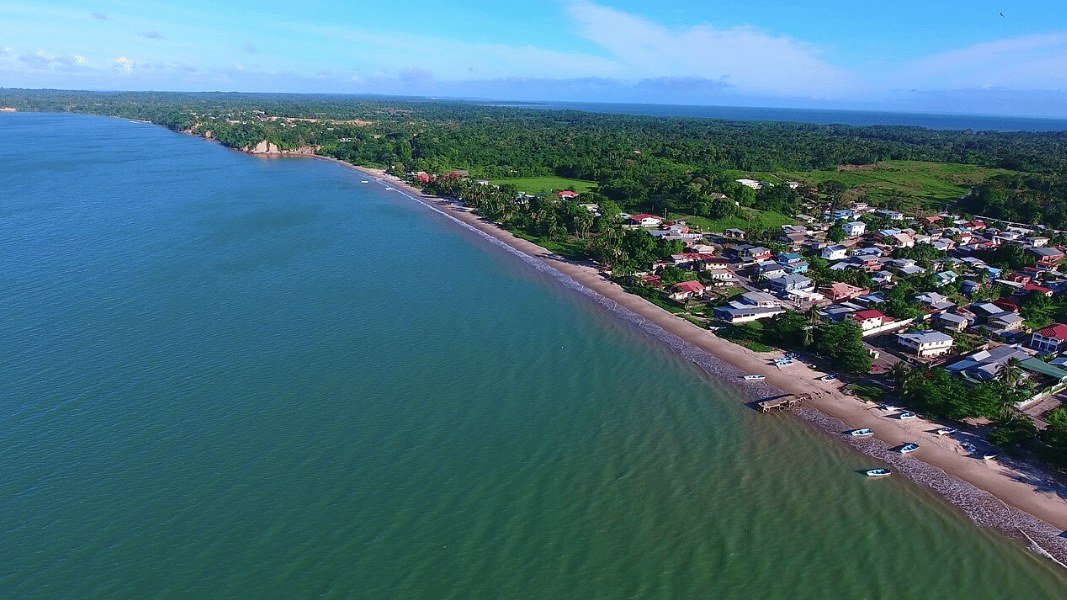
Gulf of Paria widens as Trinidad pours oil on troubled Venezuelan watersThe Gulf of Paria, that shared inland sea that has long bound Trinidad and Venezuela in a complicated embrace of commerce, culture and now, increasingly, conflict, is once again the centre of a diplomatic storm. Venezuela has formally demanded information and compensation from Trinidad and Tobago over a May 1 oil spill that Caracas insists originated in our waters and risks serious environmental damage to the delicate ecosystems we both call home. Port of Spain, for its part, is pushing back firmly, describing the incident as a minor, quickly contained 10-barrel spill that posed no threat to anyone’s coastline.It is a familiar dance of accusation and denial, but the stakes have never felt higher. The formal demand, front and centre in regional coverage today, comes after months of simmering tension, satellite imagery, and the kind of diplomatic language that suggests patience in Caracas is wearing thin. For those of us who have watched this relationship ebb and flow for decades, this feels less like a passing squall and more like a shift in the tide.
A spill that refused to stay quiet
Let us rewind to the beginning, because the timeline matters. On May 1, 2026, an oil spill was detected in the Main Field in the Gulf of Paria, an area that has been a historic producer for Petrotrin, our state oil company. According to the Ministry of Energy and Energy Industries (MEEI), the spill was stopped the same day, the facility repaired, and operations returned to normal the very next day. The official line from Port of Spain has been consistent: only 10 barrels were released, and the incident was fully contained within hours.Energy Minister Dr Roodal Moonilal has insisted the spill posed no threat to Venezuela’s environment, framing it as a minor operational hiccup rather than an environmental catastrophe. And on the surface, 10 barrels does sound small. But here is the rub: neither the T&T Government nor Petrotrin disclosed the incident publicly until Venezuela raised the matter formally. That silence, that gap between the event and the acknowledgment, has amplified the tension in ways that barrel counts cannot capture.Venezuela, understandably, took note. By May 9 and 10, Caracas was denouncing the spill, claiming it caused serious environmental damage in the coastal areas of Sucre and Delta Amacuro states, as well as in the shared waters of the Gulf of Paria. The Venezuelan Foreign Ministry issued a formal letter to the international community detailing what it described as severe risks to marine and coastal environments, including mangroves and wetlands that are vital to the region’s biodiversity. They went further, stating that the spill affected approximately 647 square miles of the Gulf of Paria. That is not a puddle. That is a significant swath of shared waterway.Gil’s demand lands in Port of Spain
By May 18 to 20, Venezuela’s Foreign Affairs Minister, Yván Gil, had moved from denunciation to demand. He formally requested information from Trinidad and Tobago about the spill and, crucially, compensation for the fallout. TeleSUR footage from his press conference shows Gil calling for international compensation from our country, framing the spill not as an accident but as a matter of state responsibility. The language was pointed, the tone firm.Now, months later, that demand remains front and centre. The story Caribbean360 is carrying today, sourced from regional wire coverage including the Trinidad Guardian and CNC3, confirms that Gil is still pressing the issue. He wants answers. He wants accountability. And he is not shy about taking the matter to the international community if he does not get them.For Trinidadians, this is a delicate moment. We are a nation that prides itself on diplomacy, on being the bridge between the Caribbean and Latin America. But we are also a nation whose economy is anchored by the energy sector, and any suggestion that our operations are causing harm to our neighbours cuts to the core of how we see ourselves as a responsible regional player.The satellite imagery complication
Just when it seemed the May spill might fade into the background, June brought a fresh complication. On June 12, Venezuela demanded urgent clarification over what it described as a new alleged spill, citing satellite imagery that appeared to show a hydrocarbon leak drifting toward Venezuelan waters. The imagery, according to reports from UPI and the Daily Post, showed a slick moving in a direction that would take it across the maritime boundary.Trinidad and Tobago responded by deploying coast guard units, air surveillance and drones to assess the situation. The Government’s position was that it was taking the matter seriously, that it would investigate thoroughly, and that it would not allow any threat to the environment to go unaddressed. But the very fact that we had to scramble to respond to satellite imagery, rather than proactively disclosing the situation, did little to ease the suspicion in Caracas.Venezuela signalled that it may pursue international legal channels if responsibility is established. That is not an idle threat. In a region where maritime boundaries are often contested and resources are finite, the prospect of a formal legal challenge is a serious one. It could set a precedent for how environmental disputes are handled in the Caribbean, and it could complicate an already fraught relationship between Port of Spain and Caracas.A shared sea, a complicated history
To understand why this matters so deeply, you have to understand the Gulf of Paria itself. It is not just a body of water; it is a lifeline. It is rich in biodiversity, home to mangroves, wetlands and fisheries that sustain coastal communities on both sides. It is also a working waterway, used for shipping, fishing and, of course, oil and gas extraction. For generations, Trinidadians and Venezuelans have looked across this gulf at each other, sharing not just water but family ties, trade and, at times, tension.The relationship between Port of Spain and Caracas has been complicated for years. The Venezuela crisis has sent waves of migration across that gulf, with thousands of Venezuelans seeking refuge and opportunity in Trinidad. That has brought its own pressures, from housing to healthcare to social services. There have also been long-standing questions about maritime boundaries, about fishing rights, about who owns what beneath the waves. And then there is the broader regional context: Venezuela’s ongoing claims in the Essequibo region with neighbouring Guyana have kept territorial and energy disputes tense across the Caribbean.In that context, an oil spill is not just an environmental issue. It is a political issue, a diplomatic issue, a trust issue. When Venezuela looks across the gulf and sees a slick, it does not see 10 barrels. It sees a pattern of neglect, a lack of transparency, a neighbour who is not taking its concerns seriously. And when Trinidad looks back, it sees a government that is quick to blame, slow to provide evidence, and eager to use the spill as a diplomatic cudgel.What happens next?
The formal demand for information and compensation is not going away. It is being carried by regional media today, and it will continue to be a point of friction until it is resolved. The question is how Port of Spain responds. Will we provide the information Venezuela is seeking? Will we entertain the compensation claim? Or will we continue to insist that the spill was minor, contained and harmless?There is a case to be made for transparency. If we have nothing to hide, then sharing the full details of the May 1 incident, including the response timeline, the containment measures and the environmental monitoring, could go a long way toward de-escalating the situation. It would show that we are serious about our responsibilities as a neighbour and as a steward of the shared environment.But there is also a case for caution. If we open the door to compensation for a 10-barrel spill, what precedent does that set? Could it invite further claims, further scrutiny, further demands? And in a region where resources are scarce and budgets are tight, the prospect of paying out significant sums to Venezuela, a country with its own complex political and economic challenges, is not an attractive one.The bigger picture for the Caribbean
This dispute is bigger than Trinidad and Venezuela. It is a test case for how small island developing states handle environmental disputes with larger neighbours. It is a reminder that the energy sector, which brings so much revenue and development to our region, also brings risk. And it is a warning that climate change and environmental degradation do not respect borders.For the wider Caribbean, the Gulf of Paria is a bellwether. If we cannot manage our shared resources responsibly, if we cannot communicate openly about spills and incidents, if we cannot build trust across maritime boundaries, then what hope is there for the larger challenges we face together, from hurricane season to rising sea levels to the transition away from fossil fuels?The people of Trinidad and Tobago deserve answers. The people of Venezuela deserve answers. And the Gulf of Paria, that beautiful, troubled, shared sea, deserves better than to be a battleground for diplomatic point-scoring. It deserves to be a place of cooperation, of mutual respect, of shared stewardship.For now, the ball is in Port of Spain’s court. The demand has been made, the evidence has been presented, and the world is watching. How we respond will shape not just this dispute, but the future of our relationship with Venezuela and our standing in the region. Let us hope we choose wisely.By Sharon Sahatoo, Staff WriterThis article was produced with AI-assisted research and editorial support. Reporting is based on sources cited in the article.
What's Your Reaction?
 Like
0
Like
0
 Dislike
0
Dislike
0
 Love
0
Love
0
 Funny
0
Funny
0
 Wow
0
Wow
0
 Sad
0
Sad
0
 Angry
0
Angry
0

Sharon Sahatoo
Caribbean Correspondent at Global1.News. Based in Port of Spain, Trinidad, covering Caribbean politics, economy, energy, climate, and culture. Amplifying the voices and stories of the Caribbean region.










Comments (0)