
Gulf of Paria Spill Dispute Puts Shared Waters Under Fresh Scrutiny
The Incident Unfolds in the Main Soldado Field Heritage Petroleum Company Limited emerged from the 2018 restructuring of Petrotrin as Trinidad and Tobago’s primary state-owned upstream operator.
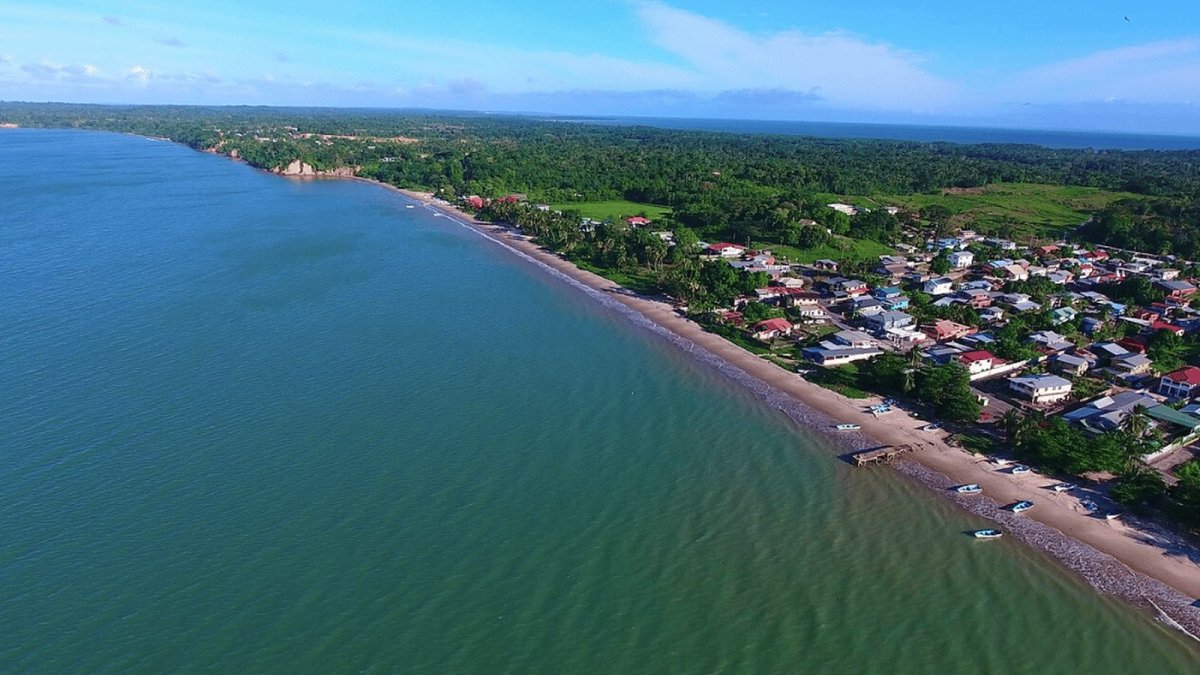
The Incident Unfolds in the Main Soldado Field
Heritage Petroleum Company Limited emerged from the 2018 restructuring of Petrotrin as Trinidad and Tobago’s primary state-owned upstream operator. The company now manages the majority of the country’s offshore platforms in the Gulf of Paria, including the Main Soldado Field where Riser Platform No. 2 is located. On 1 May 2026 the release was detected at 0725 hours, prompting immediate activation of the company’s spill response plan under Ministry of Energy and Energy Industries oversight.
Coastal residents in villages along Trinidad’s south-western peninsula first heard of the release through local radio bulletins and messages passed along the fishing wharves at Point Fortin and Cedros. Many expressed quiet concern over the possibility of oil reaching the nearshore waters they use daily for bathing and small-scale crab harvesting. Although authorities described the incident as minor and contained, the arrival of international media queries and Venezuelan statements quickly turned local attention toward questions of water safety and the coming tourist season along the gulf beaches. Families who rely on weekend visitors for extra income wondered whether reports of the spill would keep holidaymakers away, even as officials insisted the impact remained limited to the offshore platforms.
Offshore spill response in these waters typically begins with deployment of floating containment booms to limit surface spread, followed by application of approved chemical dispersants and continuous aerial and vessel-based monitoring. The Ministry authorised dispersant use at 0950 hours, consistent with established procedures for containing hydrocarbon releases before they reach sensitive coastal zones. Modelling by Trinidad and Tobago authorities indicated potential movement across the maritime boundary, yet the operator reported the event as limited in volume and quickly contained.
Caracas Issues Formal Demand for Information and Compensation
Venezuela’s formal request arrived weeks after the 1 May incident, aligning with Caracas’s established pattern of raising environmental concerns in boundary areas. Foreign Minister Yvan Gil’s statement referenced potential effects across 1,625 square kilometres and twelve wetland systems, framing the matter within Venezuela’s broader record of asserting claims over shared marine spaces.
Venezuela’s compensation request would most likely travel first through formal diplomatic notes and the existing bilateral energy working groups rather than immediate court action. Precedents in the wider Caribbean show that states have sometimes turned to the Cartagena Convention’s oil-spill protocol or regional environmental commissions when cross-border damage is alleged, though outcomes have varied. For Trinidadian readers the 1,625 square kilometre figure and references to twelve wetland systems signal the scale Caracas attaches to potential nursery-ground effects, yet they also highlight how shared marine spaces complicate straightforward attribution. Understanding these numbers requires recognising that both nations continue to rely on parallel sampling rather than a single joint assessment process.
The timing intersects with ongoing bilateral energy discussions, including the Dragon gas project and maritime boundary negotiations that have continued despite political shifts. Existing cooperation agreements between the two nations cover joint seismic work and safety protocols in the gulf, yet the compensation demand introduces a new layer to these talks. Trinidad and Tobago officials have noted that information exchange remains the immediate priority while technical assessments continue.
Port of Spain Strongly Disputes the Scale of the Claim
Criticism has centred on the interval between the 1 May detection and public disclosure, with observers questioning why details emerged only after Venezuelan authorities raised the issue. The Ministry of Energy and Energy Industries has presented the response as prompt, citing early modelling, dispersant approval and containment measures as evidence of effective management.
Trinidad and Tobago’s reputation as a steady regional energy supplier rests on the ability to demonstrate that spills are handled with technical rigour and timely disclosure. Heritage Petroleum’s operational record therefore carries weight beyond this single event, because international partners watch how state-owned operators balance production targets with environmental accountability. Any perception that information was slow to reach the public could influence the terms offered in future licensing rounds, particularly when bidders compare the Gulf of Paria with jurisdictions that publish spill data more rapidly. Maintaining investor confidence now depends on clear evidence that containment measures and data-sharing protocols function as intended.
The contrast between the reported 10-barrel release and Venezuela’s reference to 1,625 square kilometres underscores the scale gap that now drives the diplomatic exchange. Port of Spain maintains that trajectory data do not support claims of widespread impact, while both sides have agreed to continue sharing findings from ongoing scientific work. This approach reflects the government’s effort to demonstrate transparency through technical documentation rather than immediate public statements.
Shared Ecosystems and Fishing Communities Face Uncertainty
The Gulf of Paria contains extensive mangrove ecosystems that function as primary nursery grounds for commercially important fish species. These habitats support the twelve wetland systems referenced in Caracas’s communication, which span both national jurisdictions and provide critical breeding areas for species that migrate across the shared waters.
Fishing families in the south-western villages have long measured their seasons by the health of the mangrove nurseries that line the gulf shoreline. A prolonged dip in landings or a sudden drop in market prices would quickly reach household budgets already stretched by fuel and gear costs. Grandparents still speak of the days when the same waters supplied both their tables and their children’s school fees, and younger fishers now watch salinity readings and the colour of the water with the same quiet attention. In the months ahead they will look for signs that juvenile fish are returning to the shallows, knowing that any sustained change in the shared ecosystem affects not only this year’s catch but the next generation’s prospects.
Because the gulf forms a single hydrological system without fixed national boundaries at sea, determining liability for any cross-border movement of hydrocarbons requires joint data collection. Trinidad and Tobago and Venezuela have historically coordinated on baseline environmental surveys in the area, yet the absence of a dedicated bilateral protocol for spill attribution leaves assessments dependent on parallel national investigations.
Longstanding Cooperation and Tension Shape the Response
Caribbean nations have addressed cross-border environmental incidents through established notification procedures under the Cartagena Convention and its oil-spill protocol. CARICOM has facilitated technical working groups on marine pollution response, drawing on experiences from earlier offshore events in the region to improve information-sharing timelines.
Other CARICOM energy producers have followed the exchange with interest, aware that stable supplies from the Gulf of Paria help anchor regional fuel arrangements. Neighbouring states see the value in predictable offshore governance that prevents small incidents from escalating into wider diplomatic friction. At the same time the episode underscores the need for clearer notification timelines across the Caribbean’s shared basins, where platforms sit close to maritime boundaries. How Trinidad and Tobago and Venezuela manage the technical follow-up will be read as a signal of whether existing cooperation frameworks can absorb environmental disputes without disrupting the steady flow of energy that supports households across the region.
Within the Gulf of Paria itself, historical energy cooperation dates back to joint exploration agreements that predate the current Dragon gas project. These arrangements have included shared safety standards and emergency contact protocols between operators on both sides of the boundary. The present incident tests whether existing channels can accommodate detailed environmental data exchange while broader maritime boundary talks continue.
Next Steps Centre on Technical Investigations and Dialogue
Readers should monitor the progress of joint technical investigations, particularly the exchange of water and sediment sampling results that will clarify any movement of material across the boundary. Data-sharing agreements already in place between the two energy ministries provide a foundation for this work, though the format and frequency of future releases remain under discussion.
Households that depend on the energy economy should watch for the next joint sampling reports and any updates on sediment analysis released through the Ministry of Energy and Energy Industries. The timing and detail of these publications will indicate whether the two sides are moving toward a shared understanding of movement across the boundary. Equally important will be any announcement of a formal notification protocol that builds on the Dragon gas arrangements. The manner in which these steps unfold will shape public confidence in the sector and, ultimately, the stability of jobs and revenues that reach every corner of Trinidad and Tobago.
Attention will also focus on whether the incident prompts a formal bilateral protocol for spill notification and compensation assessment, building on the cooperation frameworks already used for the Dragon gas project. For Trinidad and Tobago’s energy sector, the manner in which these technical and diplomatic steps unfold will influence perceptions of regulatory rigour among international partners and regional stakeholders alike.
By Sharon Sahatoo, Staff WriterThis article was produced with AI-assisted research and editorial support. Reporting is based on sources cited in the article.
What's Your Reaction?
 Like
0
Like
0
 Dislike
0
Dislike
0
 Love
0
Love
0
 Funny
0
Funny
0
 Wow
0
Wow
0
 Sad
0
Sad
0
 Angry
0
Angry
0

Caribbean Correspondent at Global1.News. Based in Port of Spain, Trinidad, covering Caribbean politics, economy, energy, climate, and culture. Amplifying the voices and stories of the Caribbean region.













Comments (0)