
Maharashtra FDA Issues First-Ever Rulebook For Blood Banks
Maharashtra’s blood banks now face the state’s first uniform compliance order, requiring every licensed facility to meet identical standards for testing, storage and staffing or risk licence action. Announced by FDA Commissioner Tukaram Mundhe, the directive covers hundreds of centres that.

Maharashtra’s blood banks now face the state’s first uniform compliance order, requiring every licensed facility to meet identical standards for testing, storage and staffing or risk licence action. Announced by FDA Commissioner Tukaram Mundhe, the directive covers hundreds of centres that collectively support India’s annual issuance of 20,776,128 blood component units. The move closes long-standing gaps that previously allowed inconsistent practices across government, charitable and private operators.
Maharashtra's Blood Banks Face First Uniform Rulebook — What Changes
Mumbai, Maharashtra – August 8 — The Maharashtra Food and Drug Administration has issued its first comprehensive compliance order covering every licensed blood centre and blood storage facility in the state, requiring immediate review of practices and corrective action where gaps exist.
The Order and Why It Is a First
Announced on August 7 by Commissioner Tukaram Mundhe, the directive compels every facility to review its existing systems and close compliance gaps. This marks the first time a single, uniform rulebook has been applied statewide to all facilities handling blood and its components.
Legal Framework Under the Drugs and Cosmetics Act 1940
Human blood and its components are notified as a drug under the Drugs and Cosmetics Act, 1940. No blood centre may collect, process, store or distribute blood without a valid licence. All licensed centres must follow the regulatory requirements listed in Schedule F, Part XII-B of the Drugs and Cosmetics Rules, 1945. Classifying blood as a drug equips regulators with enforceable licensing powers that extend beyond advisory guidelines, enabling suspension or cancellation of operations for violations and imposition of penalties. This framework directly supports Schedule F Part XII-B, which prescribes detailed standards for premises, equipment and personnel, ensuring documented compliance records subject to inspection. The order reinforces these provisions to achieve uniform implementation across Maharashtra while aligning with the National Blood Policy and the oversight role of the National Blood Transfusion Council.
Inspection Findings Prompted Statewide Action
FDA inspections of selected blood centres revealed that statutory requirements were not being fully followed. The new order addresses these shortfalls by mandating consistent application of infrastructure, staffing, testing and documentation rules. Non-compliance will invite strict action under the Drugs and Cosmetics Act and Rules, ensuring every facility meets the same baseline. The interaction strengthens coordination between Maharashtra FDA inspections and NBTC standards, including the 2020 donor selection criteria that define temporary and permanent deferrals, thereby reducing risks of transfusion-transmitted infections across diverse donor populations.
Inspections across Indian blood banks routinely expose documentation gaps in donor records, staffing shortfalls that leave technical and supervisory roles unfilled, and testing lapses that weaken frontline screening for transfusion-transmitted infections. With 4,205 registered blood banks nationwide—government facilities numbering 1,265 against 1,585 private ones—enforcement of the Drugs and Cosmetics Act 1940 has remained uneven because states possess differing capacities for regular oversight and follow-up under the National Blood Transfusion Council framework.
The Maharashtra FDA order signals that licence suspension or cancellation now carries concrete weight, compelling operators in major centres such as Nagpur, Nashik and Aurangabad to align practices with statutory requirements or risk losing authorisation to issue any of the 20,776,128 component units recorded annually across India.
Mandatory Testing and Storage Requirements
Every unit of blood must undergo testing for HIV, Hepatitis B, Hepatitis C, Syphilis and Malaria. Blood and components must be stored at prescribed temperatures with an unbroken cold chain: whole blood and red cell units at 2-6 degrees Celsius, platelets at 20-24 degrees Celsius with continuous agitation, and plasma in frozen storage. Separate quarantine facilities are required for suspected units. Blood bag labelling must follow prescribed formats, and records must be retained for the stipulated period. Standard operating procedures for component preparation are now compulsory. The mandatory five-disease testing panel forms the frontline defence against transfusion-transmitted infections, with each unit undergoing serological and molecular screening before release. Cold chain integrity adds another critical layer; any deviation across Maharashtra’s geography from Mumbai to Nagpur can render components unusable or hazardous. Quarantine procedures and precise labelling further ensure traceability, allowing rapid recall if post-donation issues emerge.
Staffing and Infrastructure Mandates
Licensed centres must maintain counselling rooms, quality control facilities and blood component processing facilities. Qualified staff must include medical officers, technical supervisors, blood bank technicians, nurses and counsellors in line with prescribed norms. Donor selection follows the revised 2020 criteria with temporary and permanent deferral guidelines. Biomedical waste management and regular self-audits are also required. The order requires blood donation camps to maintain adequate manpower, equipment, emergency services and post-camp reporting.
Staffing shortages of trained technicians and counsellors persist especially in smaller centres outside metropolitan hubs, making the mandated presence of qualified medical officers, technical supervisors, nurses and counsellors a direct response to operational realities. Counselling rooms and adherence to the 2020 donor selection criteria under the National Blood Transfusion Council become essential because they protect donor health through proper deferral decisions and sustain voluntary donation rates by building trust.
Infrastructure requirements for quality control laboratories, blood component processing facilities and fully equipped donation camps with emergency services and post-camp reporting raise the operating baseline for both government and private centres, ensuring consistent standards that integrate with the e-RaktKosh system developed by C-DAC for nationwide coordination.
e-RaktKosh Portal and Digital Transparency
All centres must update blood stock information daily on the e-RaktKosh portal. This Centralized Blood Bank Management System, developed by C-DAC under the Union Ministry of Health and Family Welfare, connects facilities nationwide. Daily stock updates enhance the system by feeding accurate data from every licensed centre, enabling hospitals in Pune, Nashik and Aurangabad to plan procurements efficiently and reducing emergency shortages that previously forced costly inter-state transfers. The digital layer also strengthens enforcement, as regulators can cross-reference reported inventories against physical audits to identify non-compliant facilities swiftly. For donors and patients, the integration fosters trust by demonstrating that units are tracked from collection to transfusion.
For citizens, the practical takeaway is straightforward: blood stock and camp schedules across Maharashtra can now be checked on the e-RaktKosh portal or its mobile interface before a hospital visit, reducing the frantic, family-led search for units that remains a familiar experience in Indian cities. Patients and relatives should also verify that the centre they approach holds a valid licence under the Drugs and Cosmetics Act, a detail the FDA order makes central to lawful operation.
Implications for India and the Bottom Line
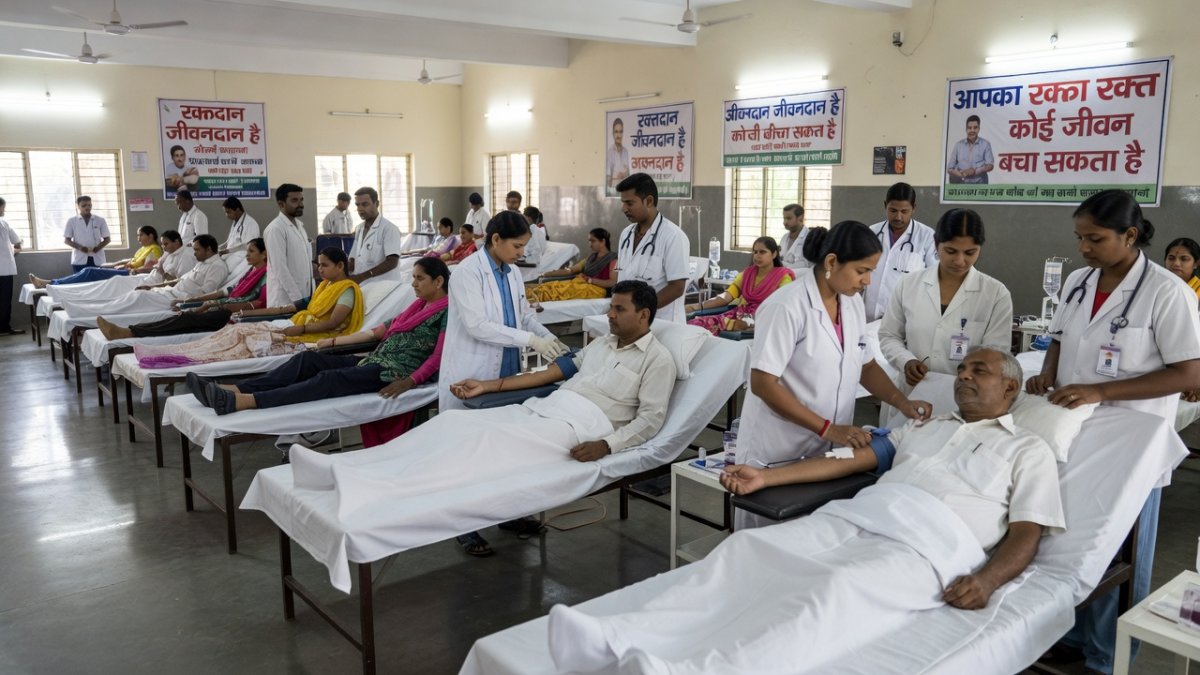
India currently has 4,205 registered blood banks, including 1,265 government, 1,252 charitable, 103 Red Cross and 1,585 private facilities. The Maharashtra order directly affects patients in cities such as Mumbai, Pune, Nagpur and Aurangabad who rely on timely, safe transfusions. Donors gain assurance that selection and testing standards are uniformly applied, while hospitals and taxpayers benefit from reduced risk of substandard practices and clearer accountability. The order’s emphasis on consistent standards across this mix ensures that patients receive the same safety assurances regardless of facility ownership, narrowing access gaps that have historically disadvantaged lower-income groups. By serving as a replicable template, Maharashtra’s approach could guide neighbouring states in harmonising practices with the National Blood Policy, ultimately strengthening the national transfusion network and easing pressure on the public exchequer through fewer adverse events and more efficient resource allocation. Commissioner Tukaram Mundhe stated that every donor and patient has the right to access safe, high quality and reliable blood and components, with the directive aiming to ensure uniformity, transparency, quality control and regulatory compliance across all blood centres in the state.
— By Dr. Raj Patel, Staff Writer.This article was produced with AI-assisted research and editorial support. Reporting is based on sources cited in the article.
What's Your Reaction?
 Like
0
Like
0
 Dislike
0
Dislike
0
 Love
0
Love
0
 Funny
0
Funny
0
 Wow
0
Wow
0
 Sad
0
Sad
0
 Angry
0
Angry
0

India/South Asia Correspondent at Global1.News. Analytical voice with a background in science and health journalism. Based in New Delhi, covering Indian politics, education, healthcare, technology, and policy. Breaks down complex data into clear, actionable reporting.















Comments (0)