
Fake Paneer Exposed: FSSAI 83% Failure Rate Hits Delhi-NCR
An India Today undercover operation conducted in February 2026 has exposed an organised network of fake dairy factories operating from Mewat in Haryana and districts of western Uttar Pradesh, flooding Delhi-NCR markets with adulterated paneer, milk and khoya. The investigation documented production units using soybean extract, palm oil, vanaspati, milk powder and Selkhadi (soapstone) to manufacture products sold at prices as low as Rs 80 per kg.
An India Today undercover operation conducted in February 2026 has exposed an organised network of fake dairy factories operating from Mewat in Haryana and districts of western Uttar Pradesh, flooding Delhi-NCR markets with adulterated paneer, milk and khoya. The investigation documented production units using soybean extract, palm oil, vanaspati, milk powder and Selkhadi (soapstone) to manufacture products sold at prices as low as Rs 80 per kg. FSSAI inspection data for April 2024 to March 2025 recorded an 83% failure rate for paneer samples tested across India, highlighting systemic gaps in enforcement that directly affect millions of consumers in the National Capital Region.
Fake Dairy Network Exposed: How Mewat and Western UP Supply Adulterated Paneer to Delhi-NCR
New Delhi, Delhi – August 8, 2026 — The sting operation traced the supply chain from hidden units in agricultural sheds and residential compounds in Mewat, Haryana, approximately 130 km from Delhi, through Shamli and Baghpat districts in Uttar Pradesh, to distribution points including Azadpur Mandi, Nangloi and Dwarka Mor in the capital. Traders openly quoted prices based on the proportion of soybean, milk powder and Selkhadi used, confirming that pure-milk paneer was not available in the region.
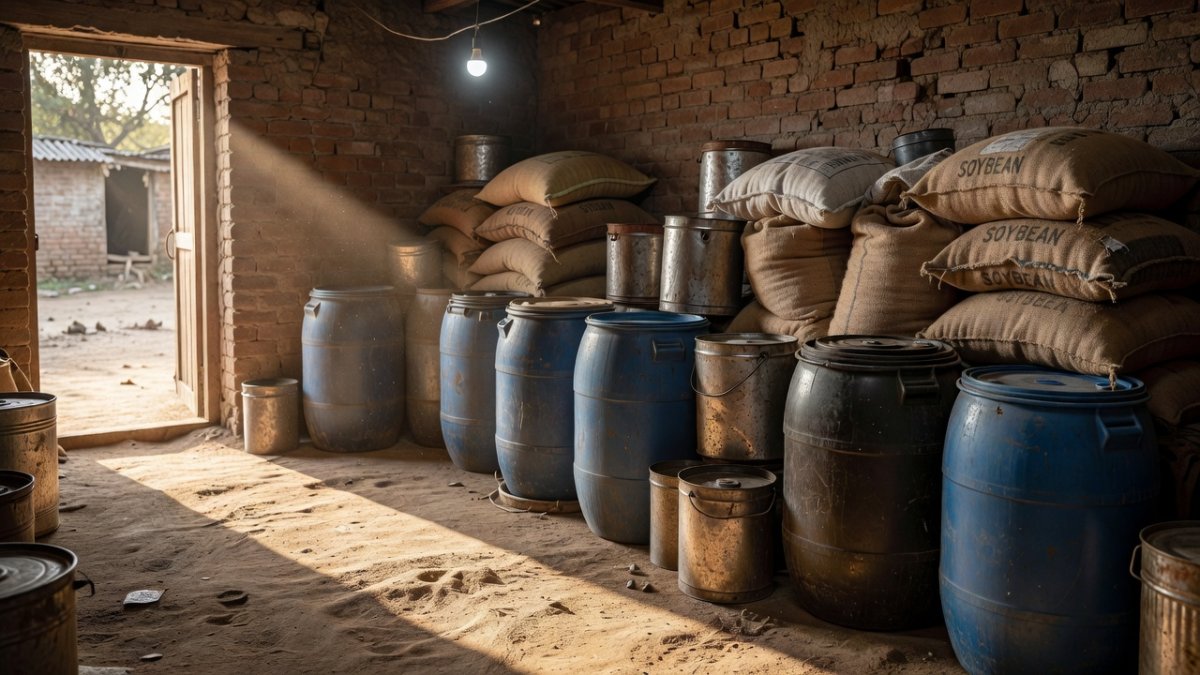
Illegal Manufacturing Units Operating in Mewat Villages
In Khedi Kalan village of Firozpur Jhirka, trader Mustafa offered three grades of paneer at Rs 190/kg, Rs 160/kg and Rs 120-130/kg. He explained that the lowest grades contained higher proportions of soybean extract, palm oil and Selkhadi. The team was taken to a factory inside a village sarpanch’s house where soybeans were soaked for 10-12 hours, crushed into soy milk, mixed with milk powder and boiled with refined oil. In Gurjar Nangla village, operator Safi quoted Rs 150/kg for soybean-based paneer, Rs 200/kg for refined-oil mixed product and Rs 290/kg for pure-milk paneer, while admitting cream was routinely removed from milk before adulteration.
Economics of Adulteration and Daily Production Volumes
At MK Industries, owner Haji Karar displayed an FSSAI licence number and supplied 3,400-4,000 kg of paneer daily to Gurgaon through 18-19 customers. Medium-quality paneer (half soybean, half milk) was priced at Rs 140/kg and third-grade “Ragdu” paneer at Rs 80/kg. Production economics show that genuine paneer requires 4.5-5 litres of full-cream milk or 6-7 litres of regular milk at approximately Rs 80 per litre, making the Rs 80/kg selling price impossible without heavy adulteration. Wedding-season demand in the region reached 1,200-1,300 kg daily, rising above 2,200 kg at peak periods.
India's Adulteration Problem in Numbers
India's dairy sector faces persistent adulteration challenges that extend far beyond isolated incidents in Mewat and western Uttar Pradesh. FSSAI data from April 2024 to March 2025 revealed an 83 percent failure rate in paneer samples tested nationwide, placing the product among the most frequently adulterated foods targeted in enforcement raids. This pattern reflects structural economic incentives: producing one kilogram of genuine paneer requires 4.5 to 5 litres of full-cream milk priced around Rs 80 per litre, rendering any retail price near Rs 80 per kilogram commercially unviable without substitution or dilution. The Rs 11 lakh crore dairy market therefore absorbs significant leakage through substandard supply chains that exploit seasonal spikes, such as the documented rise from 1,200-1,300 kilograms to over 2,200 kilograms daily during wedding seasons.
These volumes indicate coordinated scaling of adulteration practices to meet festival-driven demand in Delhi-NCR. The resulting distortion undermines price signals across both organised and unorganised segments, allowing non-compliant operators to undercut legitimate producers who incur full input costs. Persistent high failure rates in FSSAI surveillance underscore how economic pressures translate into widespread quality erosion rather than isolated lapses.
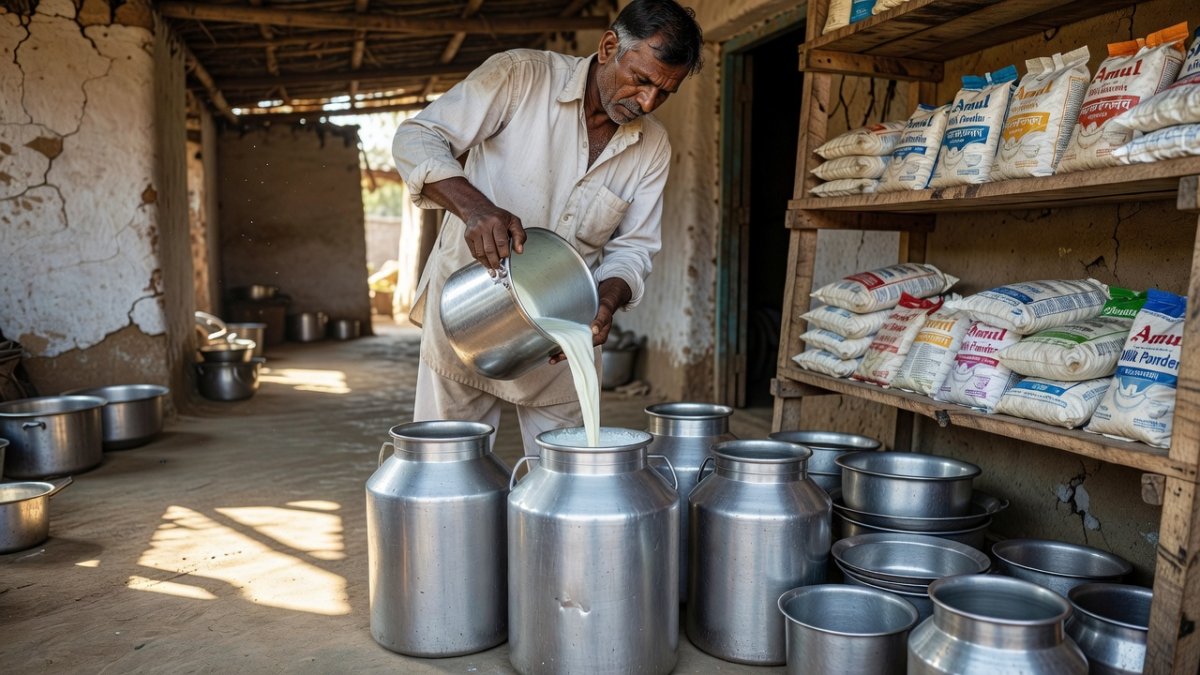
Parallel Operations in Shamli and Baghpat Districts
In Bhausni village, Shamli district, wholesaler Shokeen produced khoya using skimmed milk mixed with baking soda and Dalda (vanaspati) at a ratio of 1 kg ghee and baking soda per 30 kg skimmed milk. He supplied approximately 10 quintals of adulterated milk daily in three grades priced between Rs 35 and Rs 60 per litre, acknowledging that such products would fail government laboratory tests without “give and take” arrangements. In Dhanaura village, Baghpat district, Hashim manufactured synthetic khoya using 25 kg Selkhadi, 25 kg milk powder and Dalda to yield 92-97 kg of product, with two helpers capable of producing 500 kg daily at a monthly rate of Rs 27,000 when buyers supplied ingredients.
FSSAI Standards, State Bans and Regulatory Gaps
FSSAI regulations require paneer to be made exclusively from cow or buffalo milk meeting prescribed fat and moisture standards; products containing vegetable fats or plant proteins must be labelled as “dairy analogues”. India's food safety architecture centres on the Food Safety and Standards Authority of India under the Ministry of Health and Family Welfare, operating through the Food Safety and Standards Act, 2006. This framework mandates specific labelling for dairy analogues and sets compositional standards for milk products, yet enforcement remains fragmented across state Food and Drug Administrations. Recent actions include the Maharashtra FDA order of 30 July 2026, issued by Commissioner Tukaram Mundhe, which banned analogue paneer—the second such state-level prohibition after Chhattisgarh. FSSAI is simultaneously evaluating a nationwide analogue paneer prohibition to close regulatory gaps between central standards and local implementation capacity.
Investigations have highlighted recurring issues of compromised laboratory testing through informal "give and take" arrangements that weaken detection. These enforcement shortfalls allow supply chains from Haryana and western Uttar Pradesh to reach Delhi-NCR markets with minimal interruption. Strengthening coordination between FSSAI's central surveillance and state-level field capacity is therefore essential to translate existing statutory provisions into consistent market-level compliance.
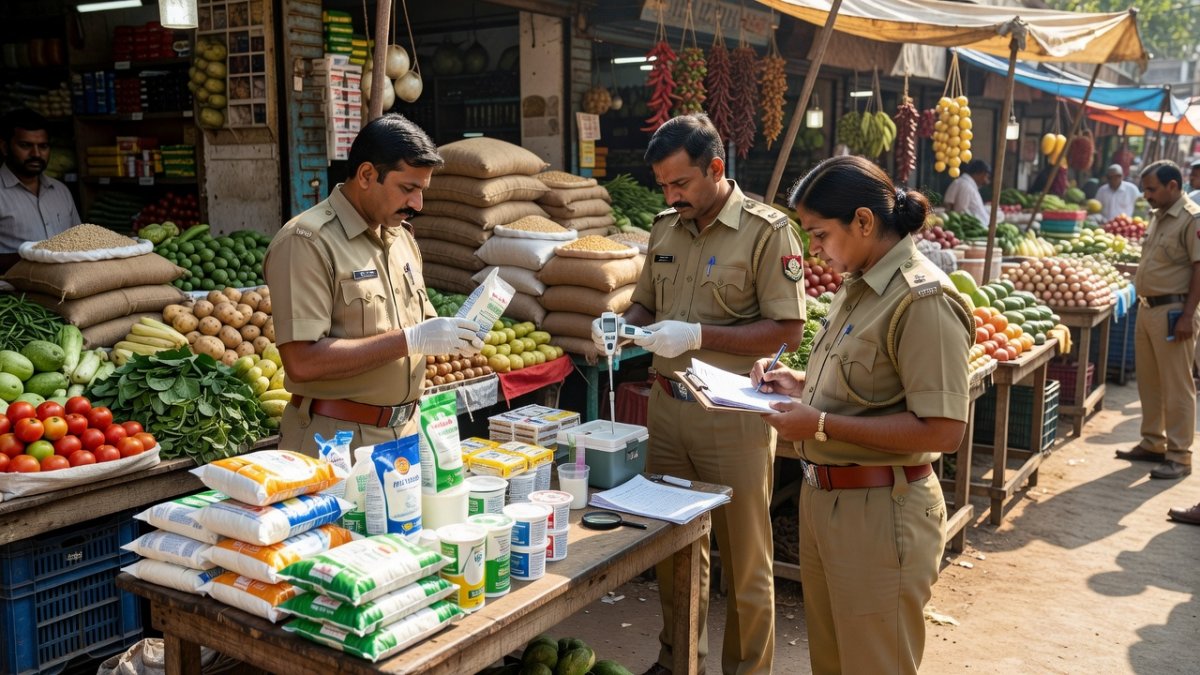
Health Risks from Industrial Adulterants
Selkhadi (soapstone/talc), an industrial mineral sourced from Delhi and used in cosmetics and manufacturing, was mixed into paneer and khoya. Regular consumption can damage the nervous system, kidneys, lungs and heart, increase cancer risk and harm unborn foetuses. Additional substitutions involving baking soda and vanaspati in milk further compromise nutritional integrity. Children, pregnant women, the elderly and households purchasing paneer and khoya for festivals and weddings face disproportionate exposure because these groups consume larger relative quantities during peak demand periods.
Consumers can reduce risk by sourcing from licensed dairies, verifying FSSAI licence numbers on packaging and using the authority's helpline 1800-11-2100. FSSAI's DART rapid test kits enable basic on-site detection of common adulterants. Residents' welfare associations can amplify protection through collective vigilance and awareness programmes that encourage routine verification of supplier credentials, thereby shifting market pressure toward compliant operators.
What This Means for India's Dairy Economy
As the world's largest milk producer, India relies on both organised players such as Amul and Mother Dairy and a vast unorganised sector to meet domestic demand. Mother Dairy has publicly supported state-level actions against analogue paneer, recognising that adulteration erodes consumer confidence across the entire dairy economy. The resulting healthcare burden and enforcement expenditure represent direct costs to taxpayers, while lost trust depresses willingness to pay premium prices for verified products.
Nationwide prohibition of analogue paneer combined with rigorous labelling enforcement could reshape market dynamics by raising compliance costs for non-genuine suppliers and rewarding transparent operators. Expanded FSSAI surveillance paired with enhanced state FDA capacity would further support this transition, helping restore integrity to supply chains serving Delhi-NCR and other urban centres.
The Bottom Line
The documented parallel dairy economy across Mewat, Shamli and Baghpat demonstrates that lakhs of Delhi-NCR residents are consuming products whose production costs and ingredient lists violate FSSAI standards. With 83% of tested paneer samples failing basic safety parameters and state-level bans already in place, the findings underscore the urgent need for strengthened monitoring, laboratory independence and accountability mechanisms within India’s food safety framework. Consumers in the capital region bear the health and economic costs of regulatory gaps that allow industrial minerals and vegetable fats to enter the dairy supply chain unchecked. — By Dr. Raj Patel, Staff Writer
This article was produced with AI-assisted research and editorial support. Reporting is based on sources cited in the article.
What's Your Reaction?
 Like
0
Like
0
 Dislike
0
Dislike
0
 Love
0
Love
0
 Funny
0
Funny
0
 Wow
0
Wow
0
 Sad
0
Sad
0
 Angry
0
Angry
0

India/South Asia Correspondent at Global1.News. Analytical voice with a background in science and health journalism. Based in New Delhi, covering Indian politics, education, healthcare, technology, and policy. Breaks down complex data into clear, actionable reporting.















Comments (0)