
Kylian Mbappé apologises after being dropped by Chinese brands for Mao Zedong comment
In the delicate arena of China‑centric brand management, the recent fallout surrounding French football star Kylian Mbappé underscores how swiftly cultural missteps can translate into geopolitical reverberations.
In the delicate arena of China‑centric brand management, the recent fallout surrounding French football star Kylian Mbappé underscores how swiftly cultural missteps can translate into geopolitical reverberations. The incident, triggered by a viral video in which Mbappé referred to Mao Zedong as “a Chinese dictator,” has ignited a cascade of sponsor withdrawals, media suspensions and public outcry. For observers of Chinese policy and the Party’s sensitivity to historical narratives, the episode offers a vivid case study of how national sentiment is weaponised by both state actors and commercial enterprises to enforce ideological boundaries, and how foreign figures must navigate an increasingly unforgiving symbolic terrain.
From a meme to a diplomatic flashpoint
The controversy began when a short video circulated online showing Mbappé describing the “funniest internet meme” involving his likeness as a superimposition onto “some guy – I think he’s a Chinese dictator.” The meme in question placed Mbappé’s face on an image of Mao Zedong, the founder of the People’s Republic whose legacy remains a tightly controlled element of Chinese collective memory. By invoking Mao as a “dictator,” Mbappé inadvertently breached a red line that the Party guards closely, given the historical trauma associated with Mao’s policies and the ongoing political sanctification of his image.
Mbappé’s subsequent apology—issued in French, Chinese and English—acknowledged that his comment “hurt many people in China and in Chinese communities around the world.” The multilingual format reflects an awareness that the offence extended beyond mainland audiences to the diaspora, a demographic that the Chinese state monitors closely for sentiment alignment. The apology, while sincere in tone, arrived after commercial partners had already begun severing ties, illustrating the rapidity with which the Chinese market can mobilise punitive responses.
Corporate fallout: brand zero‑tolerance policies
Two of China’s largest consumer‑goods firms—Dongpeng Beverage and Mengniu dairy—announced immediate termination of all cooperation with Mbappé. Dongpeng, which had featured AI‑generated images of the player in World Cup advertising, cited a “zero‑tolerance policy towards any behaviour that offends national sentiments.” Mengniu, alongside cheese maker Milkground, echoed the sentiment, emphasizing the need to distance themselves from the “offensive” remarks. The public statements from these firms align with a broader corporate strategy in China: to pre‑emptively demonstrate loyalty to the Party’s narrative in order to safeguard market access.
The reaction on Chinese social media was swift and extensive. A trending topic on Weibo titled “Dongpeng Beverage ends cooperation with Mbappé” amassed 430 million views, while users condemned the remarks as “extremely serious wrong remarks … crossed the red line.” Such online mobilisation not only pressures companies to act but also serves as a barometer of public sentiment, which the Party monitors to gauge the resonance of its ideological safeguards.
Media repercussions: La Liga’s broadcasting suspension
Beyond commercial fallout, the incident prompted state‑run media to take punitive action against the sport’s institutional partners. The state‑run digital newspaper The Paper reported that China Central Television (CCTV) had suspended all broadcasts of La Liga matches and removed advertisements featuring Mbappé. Although La Liga remained listed on CCTV’s online schedule for the weekend, the removal of on‑air advertising signals a clear signal to foreign leagues: any association with individuals deemed disrespectful to Chinese historical symbols will be curtailed.
Spain’s La Liga issued an apology, asserting that Mbappé’s comments were made in a personal capacity and did not represent the league. This diplomatic phrasing mirrors a pattern observed in previous incidents where foreign sports organisations seek to contain fallout by distancing institutional responsibility while preserving commercial ties. The suspension, however, demonstrates the Party’s capacity to leverage state broadcasters as an enforcement tool, reinforcing the message that cultural transgressions will be met with concrete media restrictions.
Historical precedent: the cost of political missteps
The Mbappé episode is not an isolated case. Past controversies involving global sports figures illustrate a consistent trajectory: remarks on Taiwan, Tibet or Hong Kong have precipitated sponsor withdrawals and broadcast bans. In 2023, former NBA player Dwight Howard faced a sponsor boycott after referring to Taiwan as a country in a video with the island’s president, prompting Beijing to brand the comment as a violation of its “One China” principle. Similarly, in 2019, Houston Rockets general manager Daryl Morey’s tweet supporting Hong Kong protests led to a year‑long suspension of NBA games on Chinese television and a cascade of sponsorship losses.
These precedents reveal a strategic calculus employed by the Chinese state: by targeting high‑profile foreign personalities, Beijing reinforces domestic narratives about sovereignty and historical continuity while signalling to multinational corporations the stakes of aligning with individuals who stray from sanctioned discourse. The pattern underscores how cultural symbolism—whether about Mao, Taiwan or Hong Kong—functions as a lever of geopolitical influence.
Public sentiment and the domestic narrative
Domestic reactions to Mbappé’s comment highlight the depth of public alignment with the Party’s historical narrative. A Beijing resident, Zhang Jingqi, expressed personal disappointment, stating that she “used to really enjoy watching Mbappé play” but “has lost that admiration” after the incident. Such testimonies, amplified on platforms like Weibo, illustrate how state‑shaped historical memory permeates everyday consumer attitudes, creating a feedback loop that pressures brands to act swiftly.
The Chinese foreign ministry’s statement, delivered by spokesperson Guo Jiakun, framed the issue as a matter of “words and actions that hurt the feelings of the Chinese people,” emphasizing that such offences will be met with “unanimous rejection from all sectors of Chinese society.” By invoking the collective sentiment, the ministry reinforces the notion that national dignity is a shared responsibility, thereby legitimising subsequent corporate and media actions as reflections of popular will rather than purely top‑down directives.
Strategic implications for foreign athletes and brands
For foreign athletes, the Mbappé case signals an urgent need to calibrate public communications with an awareness of Chinese historical sensitivities. Even off‑hand jokes can be amplified into diplomatic incidents when they intersect with taboo subjects such as Mao, Taiwan or Hong Kong. The rapid sponsor disengagement demonstrates that commercial partnerships in China are contingent on a clean cultural record; any perceived affront can trigger immediate contract termination, as seen with Dongpeng’s abrupt cessation of cooperation.
From a broader geopolitical perspective, the incident reaffirms China’s capacity to weaponise cultural narratives in pursuit of soft‑power objectives. By mobilising state media, regulatory statements and public sentiment, Beijing can enforce a domestic narrative that extends its influence over foreign entities seeking market access. Companies and sports organisations must therefore integrate cultural risk assessments into their China strategies, recognising that brand reputation in the Chinese market is inextricably linked to adherence to the Party’s historical line.
Long‑term outlook: the evolving red‑line calculus
Looking ahead, the Mbappé episode may prompt a tightening of the informal “red‑line” framework that governs acceptable discourse for foreign public figures. While the Party has historically been vigilant about references to Mao, the swift escalation to media bans and sponsor losses suggests a willingness to broaden enforcement to any perceived disrespect of core historical symbols. This could lead to a more proactive monitoring regime by Chinese regulators and an increase in pre‑emptive contractual clauses that allow brands to terminate agreements upon any breach of national sentiment.
For global sports leagues and brands, the lesson is clear: engagement with the Chinese market now demands not only commercial acumen but also a sophisticated understanding of China’s historical narrative management. Failure to navigate this terrain can result in immediate financial loss, reputational damage, and a chilling effect on future collaborations. As China continues to assert its ideological sovereignty on the world stage, the Mbappé incident stands as a cautionary exemplar of how a single meme can cascade into a multi‑layered geopolitical flashpoint.
This article was produced with AI-assisted research and editorial support. Reporting is based on the source material cited below. Sources: The Guardian China; theguardian.com; Global1.News (29 October 2026).
By Prof. Marcus Chen, Staff Writer
What's Your Reaction?
 Like
0
 Dislike
0
 Love
0
 Funny
0
 Wow
0
 Sad
0
 Angry
0
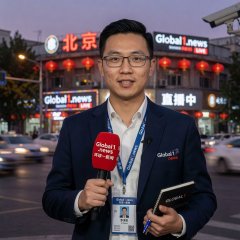
World Politics Analyst at Global1.News. Based in Beijing, covering US-China relations, global trade, and geopolitical strategy. Brings deep analytical perspective to the power dynamics shaping international affairs.










Comments (0)