
Gaani Festival Unites Benin's Peoples in Celebration of a Shared, Resilient Heritage
Thousands of people filled the streets of Nikki in northern Benin this week as the ancient Gaani festival returned for its 2026 edition, bringing together three peoples once divided by colonial borders. Dignitaries in ceremonial robes, royal horsemen and the King of Nikki himself led the celebration of a shared heritage that has survived centuries of change.
Thousands of people filled the streets of Nikki in northern Benin this week as the ancient Gaani festival returned for its 2026 edition, bringing together three peoples once divided by colonial borders. Dignitaries in ceremonial robes, royal horsemen and the King of Nikki himself led the celebration of a shared heritage that has survived centuries of change.
Gaani Festival Unites Benin's Peoples in Celebration of a Shared, Resilient Heritage
Nikki, Benin — For three days in late August, the historic Bariba capital became a living stage for one of West Africa's most significant cultural gatherings, as the Baatonou, Boo and Waasangari peoples reaffirmed the unity that colonisation once fractured.
Three Peoples, One Kingdom: The Roots of Gaani
To understand Gaani, you must first understand the beautiful complexity of the people who keep it alive. This is not a festival of one tribe, one language, or one history. It is a celebration of three distinct peoples — the Baatonou, who are the indigenous Bariba; the Boo, who have guarded the administrative traditions of the kingdom for generations; and the Waasangari, whose very name means "those who came from elsewhere." Together, they form the soul of the ancient Bariba kingdom, and together they gathered in Nikki this week to honour what their ancestors built.
Prince Sime, Cultural Mediator for the Royal Court of Nikki, explained the delicate architecture of this society. The kingdom operates on a power-sharing arrangement that has held for centuries: the Waasangari hold royal political power, while the Boo and Bariba hold administrative power within the Kingdom. It is a system of checks and balances that predates many modern constitutions, and it is the reason Gaani has survived when so many other traditions have faded.
The territory these peoples once called home was vast, stretching across what is now Nigeria, Benin, Togo, Burkina Faso and reaching all the way to Ghana. Imagine that for a moment — a single cultural universe spanning half of West Africa, connected by trade routes, marriage alliances and a shared reverence for the throne of Nikki.
Then came colonisation. The Europeans drew their straight lines across maps, splitting families, languages and loyalties. The Baatonou, Boo and Waasangari found themselves citizens of different nations, separated by borders that meant nothing to their grandmothers. But here is the remarkable thing: they never forgot each other. They never forgot the kingdom that once united them.
This week, in the dusty streets of Nikki, they came home. They came from Benin, from Nigeria, from Niger and beyond, to stand together under the gaze of their King and remember who they are. Prince Sime told Africanews that the festival is not merely a performance for tourists — it is a living covenant between the peoples, a promise that the unity of the kingdom will outlast any border.
The power-sharing arrangement between the clans remains intact to this day, a testament to the wisdom of their ancestors. The Waasangari may sit on the throne, but they cannot rule without the Boo and Bariba, and the Boo and Bariba cannot claim the crown. It is a balance that has kept the kingdom stable through wars, famines and the chaos of the modern age.
Rituals, Horsemen and the Sacred Drum
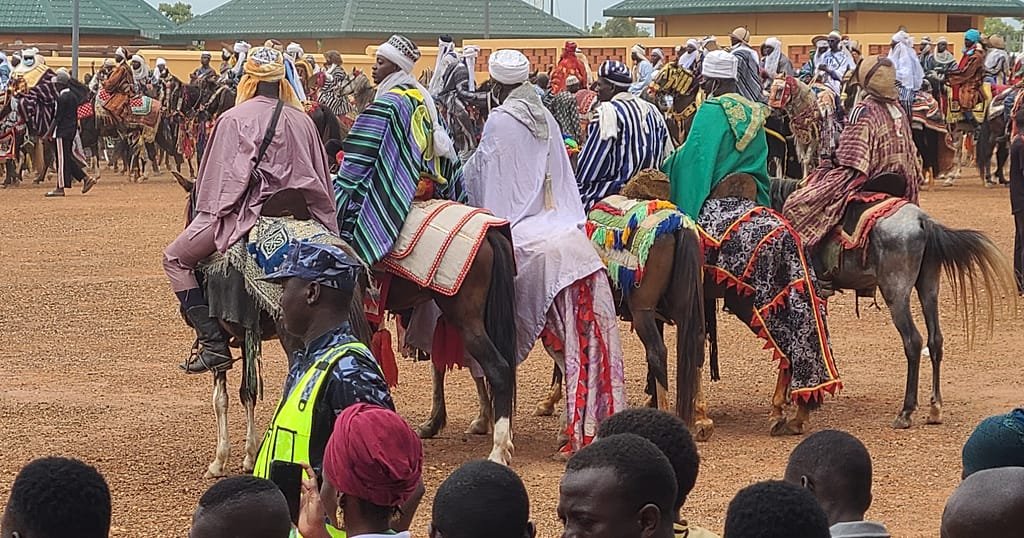
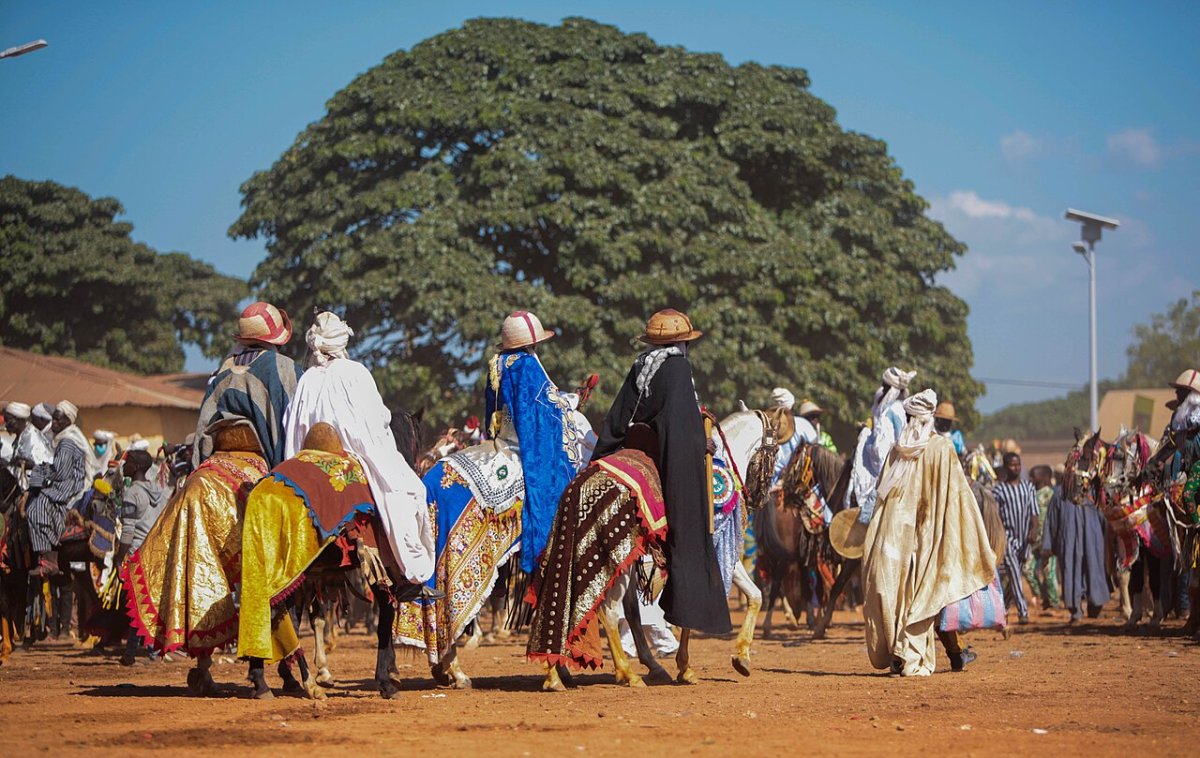
If you have never seen the horsemen of Nikki, let me try to paint the picture for you. They come thundering into the festival square on horses adorned with colourful cloth and brass ornaments, their riders dressed in flowing robes that catch the late August wind. These are not performers playing a role — they are the descendants of warriors, carrying the martial tradition of the kingdom into the 21st century.
The horsemen's parade is the highlight of Gaani, the moment when the crowd surges forward and the dust rises thick and golden in the afternoon light. Each rider circles the square, saluting the King and the assembled dignitaries, before galloping off to make room for the next. It is chaotic, it is glorious, and it is utterly timeless.
But the horses are only part of the story. The sacred drum ritual is the spiritual heart of the festival, a ceremony that connects the living to the ancestors who founded this kingdom in the 16th century. When the drum beats, the crowd falls silent. Even the children stop their running and their laughing. For a few moments, you can feel the weight of four hundred years pressing down on the square.
The act of pledging allegiance to the King is equally solemn. One by one, the chiefs and nobles approach the throne, bow low, and speak their loyalty in voices that carry across the crowd. It is a public declaration, witnessed by thousands, that the bonds of the kingdom remain unbroken.
The festival is considered living heritage by those who participate in it, and you can see why. This is not a museum piece or a re-enactment. It is a functioning system of governance, spirituality and social cohesion that has adapted to every challenge history has thrown at it. The blend of Hausa, Muslim and animist cultural elements is seamless — a reminder that African societies have always been cosmopolitan in their own way.
The festival square in Nikki was packed with thousands of people accompanying dignitaries in ceremonial attire, each robe and headwrap telling its own story of rank, clan and lineage. The colours were staggering — deep indigos, brilliant whites, rich earth tones — and the air was thick with the smell of grilled meat, incense and the sweat of dancing bodies.
Nikki's Royal Court and a New Prince
At the centre of it all stands the imperial court of Nikki, headed by Emperor Sero Torou, the custodian of a monarchy that has outlived empires, colonial administrations and post-independence governments. The Emperor's presence at Gaani is not ceremonial in the weak sense of that word — it is essential. Without the King, there is no festival. Without the throne, there is no kingdom.
This year, the court made history. On August 25, 2026, the first day of the festival, Romuald Wadagni was elevated to Prince of the Imperial Court of Nikki, a title that carries immense prestige and responsibility. The ceremony was attended by dignitaries from across the region, and the joy in the crowd was palpable.
Mayor Akiilou Bio Madougou of Nikki spoke of his pride in the festival. "It is a source of pride that this jewel has been created to enhance the prestige of the chieftaincy, the monarchy, and the imperial court of Nikki," he told Africanews. For the people of this town, the elevation of a new prince is not just a local matter — it is a signal that the monarchy is alive, relevant and ready for the future.
The monarchy's central role in maintaining unity cannot be overstated. In a region where ethnic tensions have sometimes flared, the throne of Nikki stands as a neutral arbiter, a symbol of belonging that transcends clan loyalties. The King is the father of all, regardless of whether they are Waasangari, Boo or Baatonou.
Prince Sime, in his role as Cultural Mediator, works tirelessly to ensure that the traditions of the court are understood and respected by younger generations. He is the bridge between the old and the new, the interpreter who explains to a smartphone-wielding teenager why the sacred drum must be treated with reverence.
The elevation of Wadagni also signals something else: the court is willing to embrace new blood, to bring in figures from the modern world of politics and business to strengthen the institution. It is a strategy of survival, and it is working.
A Festival That Draws a Region
Walk through the streets of Nikki during Gaani and you will hear a dozen languages. Visitors from Benin, Niger, Togo, Nigeria and beyond filled the town this week, turning it into a crossroads of West African culture. The guesthouses were full, the restaurants ran out of food, and the market stalls did a roaring trade in cloth, jewellery and traditional medicines.
The economic boost for Benin's northern region is significant. Hoteliers, transporters, food vendors and artisans all benefit from the influx of visitors, and local officials are well aware of the festival's value. But the money is almost secondary to the cultural significance of what is happening here.
Nikki is the historical capital of the Bariba kingdom, a town that has known greatness for centuries. When the Gaani festival takes place, the town reclaims its role as the centre of a cultural universe that extends far beyond Benin's borders. The communities present in six different countries are all represented here, their delegations bearing gifts and greetings for the King.
The timing of the festival follows the ancient calendar: Gaani traditionally falls on the 12th day of the 3rd lunar month of the Bariba calendar. This year, that sacred date landed on August 25, and the celebrations continued through August 27, three days of ritual, music and reunion.
For the diaspora — the sons and daughters of the kingdom who now live in Cotonou, in Lagos, in Paris or New York — Gaani is a pilgrimage. They save their money, arrange their leave, and make the journey home to stand in the dust and remember who they are. The festival puts Nikki on the global map in a way that no government campaign could achieve. Delegations from six different countries, including Togo and Nigeria, make the journey each year, carrying greetings for the King and gifts for the court.
Living Heritage in a Modern Nation
Benin is a country that has learned to celebrate its culture. In recent years, the government has invested heavily in festivals and heritage sites, recognising that tradition is not a burden but an asset. The Gaani festival sits at the heart of this cultural renaissance, a flagship event that draws attention to the country's rich northern heritage.
The growing recognition of traditional festivals across West Africa is a hopeful sign. From the Vodun Days in Ouidah, which celebrate the spiritual traditions of the south, to the Saint-Louis Jazz Festival in Senegal, which blends music and history on the Atlantic coast, the region is rediscovering the power of its own stories. Gaani is part of this movement, a reminder that Africa's heritage is not just in museums — it is in the streets, in the drumbeats, in the galloping of horses.
Cultural preservation through celebration is not a passive act. It requires effort, resources and commitment. The people of Nikki know this, which is why they pour so much energy into Gaani year after year. They are not preserving a relic; they are nurturing a living thing.
The festival shows heritage as a bridge between generations. Grandparents explain the rituals to their grandchildren, who in turn record them on their phones and share them with friends across the world. The old and the new are not in conflict here — they are in conversation.
For Benin, a nation that has faced its share of political and economic challenges, Gaani is a source of pride and identity. It reminds Beninese people that their country is not just a random collection of borders drawn by colonial powers, but a land with deep roots and a glorious past.
The festival also carries a message for the wider world: that African traditions are not dying, not fading, not being replaced by globalised homogeneity. They are adapting, evolving and thriving.
What to Watch For
As the dust settles on the 2026 edition, the question on everyone's lips is what comes next. The continued growth of Gaani as a cultural tourism draw seems certain — the festival has been gaining international attention, and this year's edition was the largest yet. The challenge will be managing that growth without losing the authenticity that makes it special.
Benin's efforts to promote its northern heritage are likely to intensify in the coming years. The government has shown interest in developing Nikki as a cultural destination, and the success of Gaani provides a strong argument for investment in infrastructure, accommodation and transport links to the region.
Upcoming editions of the festival will follow the ancient calendar, with the date shifting each year according to the lunar cycle. Visitors who wish to attend should plan well in advance, as accommodation in Nikki is limited and fills up quickly.
The role of younger generations in carrying traditions forward will be crucial. This year, observers noted more young people than ever before participating in the rituals, learning the dances, and taking pride in their heritage. The elevation of a new prince, relatively young and connected to the modern world, is a sign that the monarchy is thinking about succession and continuity.
What this means for African cultural identity in a globalised world is profound. Gaani demonstrates that globalisation does not have to mean homogenisation. A young person can wear Nike shoes and still revere the sacred drum. They can use WhatsApp to organise the horsemen's parade. Tradition and modernity are not enemies — they are partners.
The people of Nikki have shown us something important this week. They have shown that heritage is not a burden from the past but a gift for the future. They have shown that unity can survive division, that memory can outlast borders, and that a kingdom founded in the 16th century can still speak to the challenges of the 21st. Gaani is not just a festival. It is a statement — and the world is listening.
This article was produced with AI-assisted research and editorial support. Sources: Africanews, Fraternité, Nasuba Infos, Gaani official site, Wikipedia.
By Amara Diop, Staff Writer
What's Your Reaction?
 Like
0
Like
0
 Dislike
0
Dislike
0
 Love
0
Love
0
 Funny
0
Funny
0
 Wow
0
Wow
0
 Sad
0
Sad
0
 Angry
0
Angry
0

West Africa/Sahel Correspondent at Global1.News. Dakar-based journalist covering politics, security, climate, and development across Francophone and Anglophone West Africa. Tells the stories of a region undergoing profound transformation.










Comments (0)