
Musk Just Surprised Memphis With a Fourth Data Center — So the City Hit Pause, and the Rest of America Is Loading the Same Gun
Memphis passed the first reading of a one-year data center moratorium after SpaceXAI sprung a fourth facility on the city. With 45 state measures and 194 local jurisdictions now restricting data centers, a hosting founder on the consent wall.
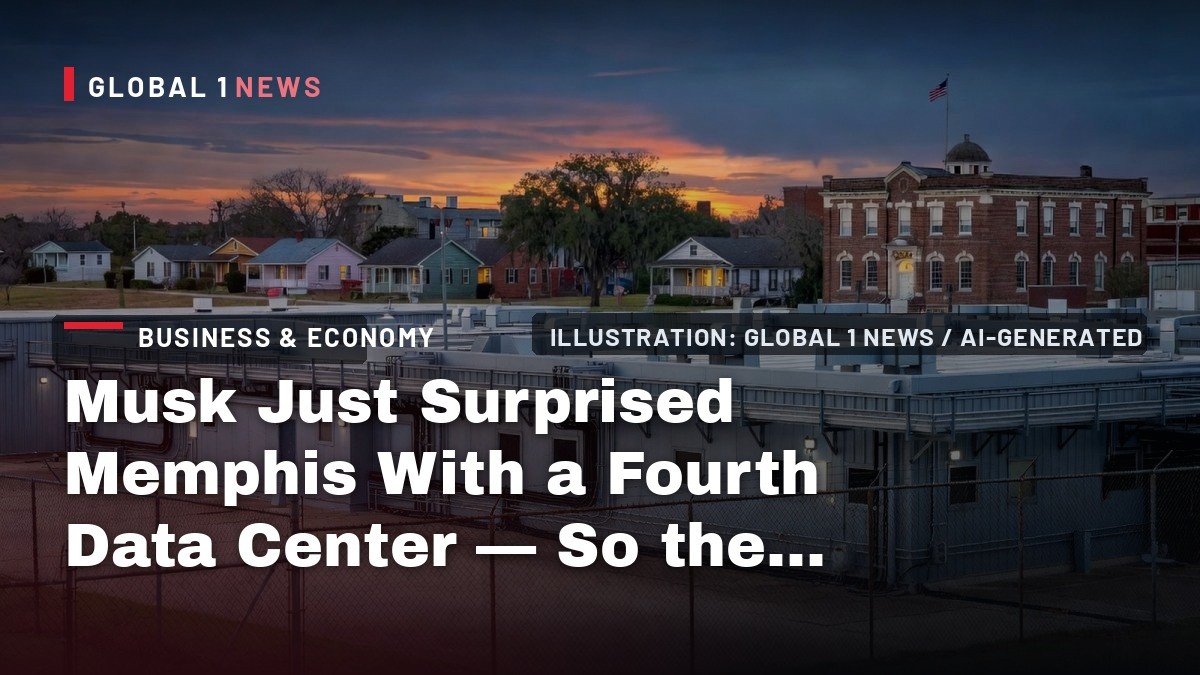
Musk Just Surprised Memphis With a Fourth Data Center — So the City Hit Pause, and the Rest of America Is Loading the Same Gun
Let me tell you something that's been sitting wrong with me all week. Elon Musk's SpaceXAI has been building in South Memphis for about two years now — first facility went into an old Electrolux plant near Boxtown, a historically Black neighborhood founded in 1863. The city had no real rules for data centers when the first one landed, so it didn't matter that there weren't any. It mattered a lot that SpaceXAI dropped in dozens of gas turbines without a permit. That triggered protests, a lawsuit, and the beginning of a very public fight.
Now Musk's company has announced plans for a fourth data center on land it already owns. And here's the part that broke the camel's back: the Memphis City Council found out about it after the fact, the same way everybody else did — from the announcement. Not from a briefing. Not from a permit application. From the news.
I've been running hosting infrastructure for over a decade, and I've watched this industry talk about community relations like it's a checkbox on a site-selection spreadsheet. Memphis is what happens when the checkbox comes due. On August 18, the council passed the first reading of a one-year moratorium on new data center construction — on the consent agenda, no discussion. The pause isn't anti-business. It's anti-surprise.
The Surprise That Broke the City's Patience
Councilmember JB Smiley Jr. cosponsored the moratorium along with Council Chairwoman Jana Swearengen-Washington and Councilmember Jerri Green, who is the Democrats' candidate for Tennessee governor. Smiley put it bluntly at the August 18 meeting: "I think the council deserves to be treated with respect by the folks who are pushing the data centers in our community. We can't say we represent people if we're not doing our job as the representatives of a group of people."
Swearengen-Washington framed it as due diligence: "We owe residents a full review of noise, environmental impact, and infrastructure strain." Green, during the afternoon committee session, was even more direct: "No more stepping on us without talking to us."
That's the whole story in four words, ent? The industry keeps treating communities like they're passive real estate. The communities keep finding out about billion-dollar projects — and the power plants, water draw, and transformer yards that come with them — from press releases. At some point, the people who actually have to live next to the buildout get tired of being the last to know.
The Chamber's "Leverage" Argument — and Why It's Missing the Point
Before the vote, the Greater Memphis Chamber — run by interim president and CEO Duncan Williams — issued a lengthy statement telling the council to vote no. The argument is worth reading, because it's the argument every data center advocate is going to make from now until the moratoriums stop:
"Memphis is uniquely positioned to lead the nation in responsibly hosting the data center industry... Across the country, communities are closing their doors to data centers, often because they lack the power infrastructure, water capacity, or logistical footprint to support them. Memphis has all three. That reality is not a vulnerability. It is leverage."
The chamber called the moratorium a surrender of leverage "at precisely the moment when Memphis's competitive position has never been stronger," and urged the council to "stay at the table and negotiate harder" instead of closing the door.
I get the argument. I really do. Jobs, tax revenue, data center payroll — Memphis needs all of it. But here's what the leverage framing misses: leverage is only leverage when the other side respects the person holding it. When a company announces a fourth facility on land you didn't know was earmarked, that's not negotiation. That's a heads-up. And a heads-up is not consent. The council's first reading passed with zero discussion — which tells you exactly how much patience the chamber's argument bought.
The Wave — 45 State Measures, 194 Local Jurisdictions, and Counting
Memphis is not an outlier. It's the mainstream now. The SAVRN U.S. Data Center Moratorium Tracker, refreshed August 17, counts 45 state-level measures across 36 states and 194 local jurisdictions with some form of restriction in play. Twelve states have a restriction actually in force, three more are under an active administrative pause, and seven have measures pending. This is not a fringe movement anymore — it is a zoning reality.
And the pace is accelerating, not slowing. Look at what landed in a single week in August: Independence County, Arkansas adopted a five-year moratorium — the longest in the state, citing water supply strain, in a county where no data center had even been proposed. The Cherokee Nation announced it will not permit hyperscale data centers on tribal or trust lands, after a task force survey found 64 percent of roughly 1,600 citizens opposed. Louisville's Metro Council voted 24-1 for a six-month pause that even covers conversions of existing buildings. Waxhaw, North Carolina voted unanimously for a 12-month halt on data centers and crypto-mining facilities — again, with no project on the table.
Then, on August 27, the Elkhart City Council in Indiana voted 9-0 to approve a moratorium on data centers and battery storage facilities that runs until December 2027. Nine to zero. That's not a close call — that's a city that has decided.
The No-Project Moratorium — Consent Is Now Preemptive
Here's the shift that should scare every developer and every host reading this: the new moratoriums don't need a bad project to justify them. Independence County banned data centers for five years with nothing proposed. Waxhaw paused crypto-mining with nothing proposed. These aren't reactions to a specific fight — they're preemptive withdrawals of consent. Communities have watched what happened everywhere else — the gas turbines without permits, the surprise fourth facilities, the water fights, the utility bill scares — and they've decided they'd rather set the rules before the trucks arrive than after the lawsuit.
That inverts the whole site-selection model. For the last two years, the constraint on AI buildout has been power, then transformers, then chips, then financing. Those are all things you can buy, borrow, or build around. Consent is not. You cannot buy a community's patience at any price — and you especially can't buy it back after you've spent it on surprise announcements.
The Secondary Bottleneck Nobody's Talking About — the Surprise Tax
Strip away the politics and the real structural issue is information asymmetry. In Memphis, the fourth facility was a surprise. In Bessemer, Alabama, the public learned about a data center deal after the fact — the Word In Black investigation flagged it as a pattern. Communities keep discovering that the "jobs and investment" they were pitched don't include the substation, the gas plant, the water draw, or the noise. Every surprise teaches a thousand neighbors a lesson, and every lesson becomes a moratorium vote.
Call it the surprise tax. It's the cost a developer pays in lost schedule when a council that was fine with project one and two learns about project four from the internet. It doesn't show up on any pro forma, but it shows up in the interconnection queue, in the permitting calendar, and in the years of delay that now define the buildout. The hyperscalers can throw $195 billion of capex at the problem, and it still won't buy back a city's trust once it's gone.
What This Means for Independent Hosting Providers
First, stop following the hyperscalers into pause zones. The biggest markets — Virginia, Texas, the Bay Area — are already the battlegrounds. The secondary markets that look cheap today will be the moratorium headlines in 18 months. When you're picking a colo region or a build site, check the local agenda before you check the power price. A site with a pending moratorium ordinance is a liability, not an opportunity.
Second, treat community engagement as a lead-time item, not a PR line item. The operators winning the permitting race right now are the ones who briefed the council, the water district, and the neighborhood association months before the announcement. If your project's first public appearance is a press release, you've already lost a year. Budget the outreach the same way you budget the transformers — it's now part of the critical path.
Third, watch the pause wave as a demand signal, not just a nuisance. When 194 local jurisdictions restrict data centers, the projects that do get approved carry a scarcity premium — and so does the hosting capacity near them. If you're in a region that's still open for business, that's a marketable asset. Say it plainly to your customers: the supply of new buildable data center capacity is shrinking everywhere, and your existing footprint is worth more every time another council votes nine to zero.
Fourth, be the transparent alternative. The entire industry is getting tarred by the surprise tax, and the fix is boring: publish your power draw, your water usage, your noise plan, and your grid interconnection docs before anyone has to ask. When every data center in the region is a fight, the one that showed its cards first is the one that gets the permit. That's not politics. That's just good operations.
The Bottom Line
Memphis didn't vote to ban data centers. It voted to stop being surprised by them. Elkhart voted nine to zero to figure out what it's actually hosting before it hosts more. And 194 local jurisdictions across the country have already made the same decision in one form or another.
Here's the truth bomb: the AI buildout doesn't end because the money runs out — it ends when the communities say enough. Power was the bottleneck everyone talked about. Chips were the bottleneck everyone priced in. Consent is the bottleneck nobody wants to admit, because you can't finance your way through it. You can only earn it, one honest conversation at a time. Start having them before the next surprise finds out about your project from the news.
— Allan Ali, Founder
This article was produced with AI-assisted research and editorial support. Sources: Memphis Commercial Appeal via Yahoo News (Aug 19, 2026), Word In Black (Aug 25, 2026), Memphis Flyer, SAVRN Data Center Moratorium Tracker (Aug 17, 2026), WNDU/Elkhart City Council (Aug 27, 2026).
What's Your Reaction?
 Like
0
Like
0
 Dislike
0
Dislike
0
 Love
0
Love
0
 Funny
0
Funny
0
 Wow
0
Wow
0
 Sad
0
Sad
0
 Angry
0
Angry
0

Publisher of Global1.News. Automation architect, systems builder, and the guy making sure the truth gets published.














Comments (0)