
From Vandalism to Voice: Graffiti Transforms Conakry's Walls Into Canvases for Change
Conakry, Guinea's bustling port capital, was once a city of gray, crumbling concrete and walls that spoke only of neglect. Today, those same walls have erupted into a riot of color, telling stories of heroes, musicians, and a nation's pride. What was once dismissed as vandalism is now embraced as a powerful art form, a movement led by a Senegalese-born visionary who has transformed the city into an open-air gallery for awareness and civic renewal.
Conakry, Guinea's bustling port capital, was once a city of gray, crumbling concrete and walls that spoke only of neglect. Today, those same walls have erupted into a riot of color, telling stories of heroes, musicians, and a nation's pride. What was once dismissed as vandalism is now embraced as a powerful art form, a movement led by a Senegalese-born visionary who has transformed the city into an open-air gallery for awareness and civic renewal.
From Vandalism to Voice: Graffiti Transforms Conakry's Walls Into Canvases for Change
Dakar, Senegal — The vision of one Senegalese artist is reshaping Guinea's capital, turning its crowded, concrete-heavy streets into a vibrant tapestry of social commentary and cultural celebration. This transformation is not an isolated phenomenon but a vital thread in a broader West African street art renaissance, one that traces its roots directly back to Dakar's pioneering graffiti culture of the late 1980s. In Conakry, the spray can has become a tool for dialogue, and the wall, a public forum.
The Artist Behind Conakry's Colorful Revolution
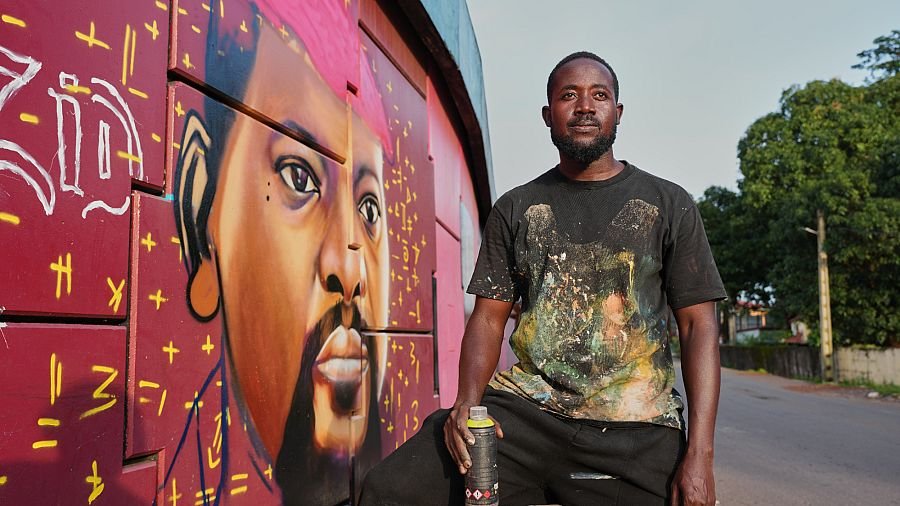
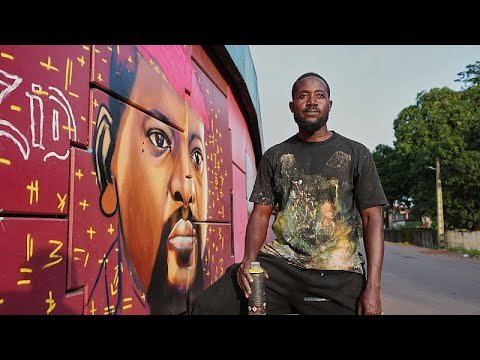
Omar "Chimère" Diaw is the quiet force behind this colorful revolution. A Senegalese-born graffiti artist, Diaw moved to Guinea in 2018 and found a landscape where graffiti was nearly nonexistent, a blank canvas waiting for a voice. He arrived not with a spray can and a chip on his shoulder, but with a mission to communicate, to educate, and to beautify a city that had long been overlooked.
His first major campaign was a public health intervention: murals dedicated to COVID-19 preventive measures. At a time when fear and misinformation were spreading faster than the virus, Diaw's art became a vital tool, translating complex health protocols into vivid, accessible images that resonated with the local population. It was a masterstroke that proved graffiti's power to do more than just decorate; it could save lives.
Diaw is a member of the collective Guinea Ghetto Graff, whose tag now appears on murals across the city, a signature of a new civic movement. His philosophy is one of patience and persuasion, a deliberate strategy to win hearts before making demands. "It was thought that graffiti was vandalism, something used to insult," Diaw explains. "But we came here with graffiti as something to raise awareness. So we had to seduce the population before creating graffiti as such — to denounce or demand."
This approach is visible in his practice. Diaw paints in broad daylight, and civilians and police don't bat an eye as artists unload dozens of paint cans and set up their ladders on busy thoroughfares. There is no sense of transgression, only of creation. The calm acceptance is a testament to the trust he has built, transforming an act once seen as rebellious into a respected public service.
The artist's work is a constant dialogue with the city. He observes, listens, and then translates the pulse of Conakry onto its walls, creating a visual language that is both beautiful and deeply meaningful. His art is not an imposition but an invitation, a conversation starter that has changed the very texture of urban life in the Guinean capital.
From Vandalism to Civic Pride
In Guinea, graffiti was once firmly dismissed as vandalism, the domain of disaffected youth and a sign of social decay. Diaw and his collective have systematically dismantled that perception, one mural at a time. By focusing on themes of awareness and celebration rather than insult, they have redefined the medium's purpose in the public eye, turning a symbol of rebellion into an emblem of civic pride.
The turning point came when the governor of Conakry gave Diaw freedom to create murals across the city — "carte blanche" to transform the urban landscape. This official endorsement was a seismic shift, legitimizing the art form and opening the doors for a citywide transformation. It signaled that the authorities saw graffiti not as a problem, but as a solution to urban blight and a tool for social cohesion.
The murals themselves are a celebration of Guinean identity. They depict legendary Guinean musicians, African independence leaders, and social figures, creating a pantheon of heroes on the city's walls. A striking portrait of West African resistance fighter Samory Touré has become a landmark mural, a daily reminder of the nation's defiant history and a source of inspiration for a new generation.
Even contemporary figures have found their place in this gallery. A mural of Guinea's military leader Gen. Mamadi Doumbouya drew large crowds as it took shape, sparking conversations about leadership and the nation's future. The public's engagement with these images demonstrates the profound connection between art and the collective consciousness of a people navigating a complex political landscape.
Conakry is a port city facing rapid urbanization, with a crowded, concrete-heavy landscape that often feels impersonal and harsh. Diaw's art offers a reprieve, injecting color and humanity into the urban sprawl. "The accessibility of graffiti makes it very effective for conveying messages," he notes. "If you want to rally people, you can make a mural where thousands pass by every day. People will understand, because beauty attracts."
Roots in Dakar: Senegal's Pioneering Graffiti Culture
To understand Conakry's transformation, one must look to Dakar, the undisputed cradle of West African graffiti. While modern graffiti began in the United States in the 1960s and 70s, it arrived in West Africa via Dakar, Senegal in 1988, thanks to a visionary artist named Amadou Lamine Ngom, known universally as "Docta." He is recognized as the region's first graffiti artist, a pioneer who planted the seeds for a movement that would span the continent.
In 1989, Ngom and fellow artists were commissioned for a Dakar street-cleaning awareness campaign, a landmark moment that immediately positioned graffiti as a tool for social good rather than mere vandalism. This early validation was crucial, setting a precedent that would influence artists like Diaw for decades to come. It established a tradition of purpose-driven art that prioritizes community messaging over individual expression.
Ngom's philosophy was revolutionary for its time. "I decided to do it in broad daylight," he said, "So as not to copy what's happening in the United States, Europe or elsewhere. To create graffiti that resembles the African reality, taking into account our reality, our values." This commitment to authenticity, to creating an art form that spoke to African experiences rather than importing foreign styles, became the cornerstone of the region's street art identity.
It was this master who mentored a teenage Diaw in Senegal, passing on not just the technical skills of the craft, but the philosophical foundation that art must serve its community. Ngom, who was 51 years old in late 2025, instilled in his young protégé the belief that graffiti could be a powerful force for education and social change, a lesson Diaw has carried with him from Dakar to Conakry.
In Senegal, graffiti has grown more assertive over the years and has become part of political messaging around anti-government protests. The art form has evolved from its early days of awareness campaigns to a potent tool for political expression, demonstrating its enduring relevance and its ability to adapt to the changing needs of society. This evolution is a direct legacy of Ngom's pioneering work, which proved that the streets could be a legitimate and powerful platform for public discourse.
Women, Youth, and the New Faces of Street Art
The movement in Conakry is not solely the domain of men. Mama Aissata "Mamiska" Camara stands out as one of the few women graffiti artists in Guinea, challenging gender stereotypes in a male-dominated field. Her presence on the scene is a powerful statement, proving that creativity and the courage to claim public space are not bound by gender. She is an inspiration to young girls who see in her a reflection of their own potential.
Camara's work, like that of her peers, is inspiring a new generation of young artists who see the walls of their city as a canvas for their own aspirations. The project has become a magnet for youth, offering a constructive outlet for their energy and creativity. It is a powerful counter-narrative to the idleness and frustration that can plague urban youth, providing them with a sense of purpose and belonging.
Local officials now see graffiti as a tool for social cohesion and urban renewal. By beautifying neglected neighborhoods and creating shared points of pride, the murals are helping to stitch together the social fabric of a diverse and rapidly changing city. The art is not just decorative; it is a civic project that fosters a sense of ownership and collective identity among residents.
This phenomenon is not unique to Conakry. Across the continent, African street artists are using murals to address pressing social and environmental issues. In Nairobi, the Maasai Mbili collective uses its art to raise awareness of climate change, deforestation, and pollution, proving that the movement is a continent-wide force for advocacy and education. From Accra to Lagos, walls are becoming platforms for change.
The growing acceptance of street art across West Africa signals a cultural shift. What was once considered a sign of urban decay is now recognized as a valuable cultural asset, a marker of a city's vibrancy and its engagement with contemporary issues. This new respect is opening doors for artists and creating new opportunities for cultural expression and economic development.
Residents Speak: Art That Touches Hearts
The true measure of this movement's success lies in the reaction of Conakry's residents, who have embraced the art with open arms. Ousmane Sylla, a driver who navigates the city's chaotic streets daily, speaks for many when he says, "It really touches our hearts to see these paintings. It reminds us of old Guinean musicians, it reminds us of history. Graffiti is good for Africa, it's good for this country, it's good for everyone. I like it, and it changed the face of our city."
Sylla's words capture the profound emotional connection that the murals have forged with the public. They are not just pretty pictures; they are vessels of memory and identity. For older residents, the images of legendary musicians evoke a sense of nostalgia for a golden age of Guinean culture, while for the young, they serve as a vibrant introduction to their own heritage.
The art has become a part of the city's daily rhythm, a source of conversation and contemplation. People gather around murals as they take shape, discussing the subjects and the messages. The walls have become a public square for the exchange of ideas, a place where history, culture, and contemporary life intersect in a riot of color.
This emotional resonance is the key to the art's power. By tapping into collective memory and national pride, the murals have transcended their role as mere decoration to become a vital part of the city's soul. They are a daily affirmation of Guinean identity, a visual reminder of the nation's rich cultural heritage and its resilient spirit.
The transformation is not just aesthetic; it is psychological. The city that was once defined by its gray concrete is now defined by its vibrant stories. The walls no longer enclose; they communicate. They have given the people of Conakry a new sense of pride in their surroundings and a new way of seeing their own city.
What the Future Holds for African Street Art
Diaw's work in Conakry is far from finished. He continues to expand his canvas, addressing new and complex issues. His graffiti in Guinea has also addressed migration issues, a topic of immense relevance in a region where the dreams and dangers of the journey north are a constant undercurrent in daily life. His art gives a visual voice to the hopes and heartbreaks of a generation on the move.
The broader African street art renaissance shows no signs of slowing down. From the pioneering work of Docta in Dakar to the contemporary movements in Conakry, Nairobi, and beyond, the continent is asserting its creative voice on a global stage. This is not a borrowed art form but a distinctly African expression, rooted in local realities and values, yet speaking a universal language of beauty and protest.
The potential for creative-economy growth and urban tourism is immense. Cities like Conakry are becoming destinations for art lovers, attracting visitors eager to see the open-air galleries that have transformed once-neglected neighborhoods. This new cultural capital can drive economic development, creating jobs for artists and supporting local businesses in the areas where the murals are most concentrated.
Graffiti has become a permanent voice for African communities, a medium through which they can speak truth to power, celebrate their heroes, and articulate their dreams. It is a democratic art form, accessible to both the creator and the viewer, and it has proven its power to shape public opinion and foster social change. The walls of Africa are no longer silent; they are singing.
The legacy of artists like Ngom and Diaw is secure. They have not only created art but have built a movement, mentoring a new generation of artists who will carry the torch forward. They have proven that a can of spray paint and a bold vision can transform not just a wall, but a city's image of itself. The future of African street art is bright, painted in the bold, unapologetic colors of a continent claiming its space and telling its own story.
By Amara Diop, Staff Writer
This article was produced with AI-assisted research and editorial support. Reporting is based on sources cited in the article.
What's Your Reaction?
 Like
0
Like
0
 Dislike
0
Dislike
0
 Love
0
Love
0
 Funny
0
Funny
0
 Wow
0
Wow
0
 Sad
0
Sad
0
 Angry
0
Angry
0
West Africa/Sahel Correspondent at Global1.News. Dakar-based journalist covering politics, security, climate, and development across Francophone and Anglophone West Africa. Tells the stories of a region undergoing profound transformation.











Comments (0)