
Total Solar Eclipse On August 12: Why The Rare Celestial Event Won't Be Visible In India
On August 12, 2026, the Moon will slide directly between the Earth and the Sun, casting a narrow shadow of totality across the Arctic and parts of Europe — a celestial spectacle that will mark the first total solar eclipse visible from mainland Europe in 27 years.
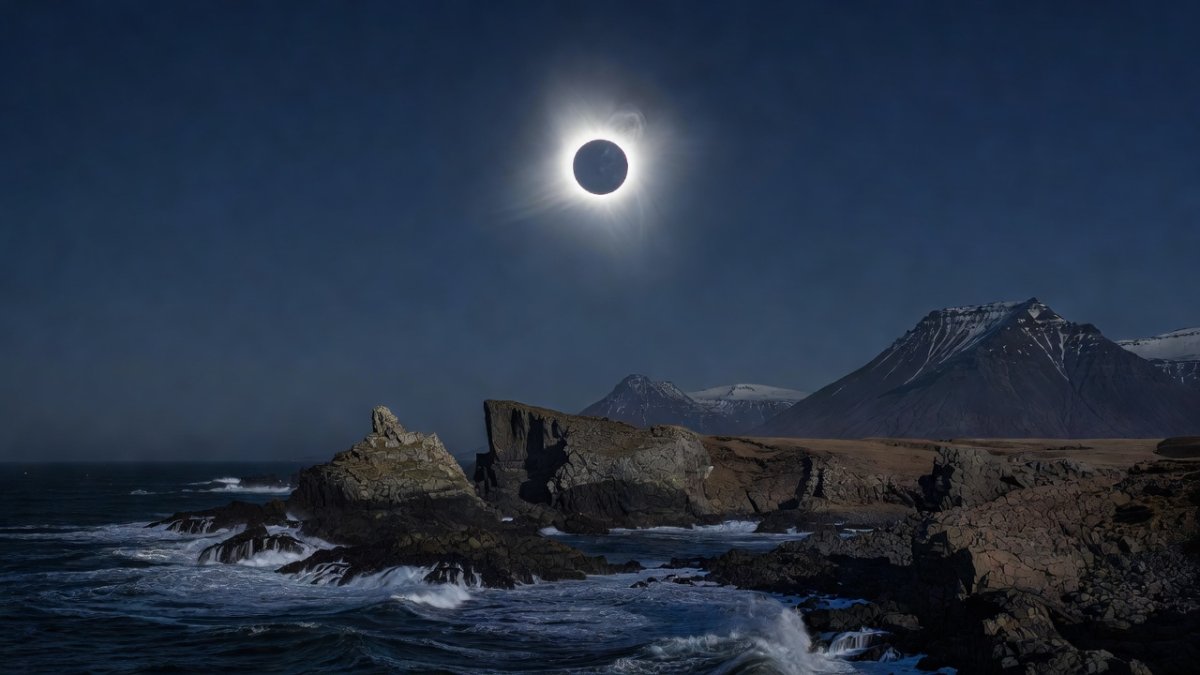
On August 12, 2026, the Moon will slide directly between the Earth and the Sun, casting a narrow shadow of totality across the Arctic and parts of Europe — a celestial spectacle that will mark the first total solar eclipse visible from mainland Europe in 27 years. Yet for the 1.4 billion people of India, the event will pass entirely unseen, a casualty of planetary geometry and the Earth's rotation. The eclipse peaks at 18:46 UTC, which translates to 00:16 IST on August 13 — deep in the Indian night, with the Sun firmly below the horizon across the entire subcontinent. This is not a matter of clouds or weather; it is a hard astronomical fact that no phase of the eclipse will be visible from Indian soil.
Total Solar Eclipse On August 12: Why The Rare Celestial Event Won't Be Visible In India
New Delhi, India – August 2026 — The total solar eclipse of August 12, 2026, is being billed as Europe's celestial event of the century, with an estimated 15 million people living within the path of totality and millions more expected to travel to Iceland and Spain for a glimpse of the corona. But for Indian skywatchers, the mathematics of time zones and the Earth's curvature have conspired to keep this spectacle out of view. The eclipse belongs to Solar Saros series 126, a family of eclipses that recurs every 18 years and 11 days, and its path of totality will cross the Arctic Ocean, Greenland, Iceland, the Atlantic Ocean, Portugal, northern Spain, and the Balearic Islands before fading toward the western Mediterranean. While Europe celebrates, India must wait — but the wait, as this analysis shows, is far from a scientific loss.
The Celestial Mechanics: A 27-Year Wait For Europe, A 121-Year Gap For Spain
The rarity of the August 12, 2026, eclipse cannot be overstated. Mainland Europe has not witnessed a total solar eclipse since August 11, 1999, when a path of totality swept across France, Germany, Austria, and Hungary. That 27-year gap ends on Wednesday, August 12, 2026, when the Moon's umbral shadow will trace a 200-kilometre-wide corridor across the North Atlantic and into the Iberian Peninsula. For Iceland, the event is even more extraordinary: it is the first total solar eclipse visible from the island nation since June 30, 1954, and the only one in the entire 21st century. The next total eclipse over Iceland will not occur until 2196 — a 170-year interval that makes this year's event a once-in-a-lifetime opportunity for Icelandic residents and the thousands of eclipse chasers expected to descend on Reykjavik and the remote fjords.
Spain's wait is even more dramatic. The last total solar eclipse visible from Spanish soil occurred on August 30, 1905 — a staggering 121-year gap. When the Moon's shadow crosses northern Spain on August 12, 2026, it will be the first time in over a century that Spanish cities like A Coruña, Bilbao, and Zaragoza experience the sudden darkness of totality. The maximum duration of totality will be approximately 2 minutes 18 seconds, relatively short compared with the 2024 North American eclipse (which reached 4 minutes 28 seconds) and the upcoming 2027 eclipse over North Africa (expected to exceed 6 minutes). At Scoresby Sund, Greenland, where the shadow first makes landfall, totality will last about 1 minute 46 seconds — a brief but scientifically valuable window.
Why India Misses Out: The UTC-to-IST Conversion And The Night Sky
The reason India will not see even a partial phase of this eclipse is rooted in the Earth's rotation and the timing of the event. The eclipse peaks at approximately 18:46 UTC on August 12, 2026. Converting to Indian Standard Time (IST), which is UTC+5:30, this corresponds to 00:16 IST on August 13 — just past midnight. At that hour, the Sun is below the horizon across the entire Indian subcontinent, from the Himalayas to Kanyakumari, from Gujarat to Arunachal Pradesh. The Moon's shadow will be sweeping across the North Atlantic and Europe, a region that is on the opposite side of the Earth from India at that moment. Simply put, the geometry of the Sun-Earth-Moon system places India in the night hemisphere during the entire eclipse, making any observation from Indian soil physically impossible.
This is not an anomaly but a recurring pattern in eclipse visibility. India's last total solar eclipse visible on land occurred on July 22, 2009, when the path of totality crossed Bihar, with the town of Taregna becoming a focal point for scientific observations. Scientists from the Aryabhatta Research Institute of Observational Sciences (ARIES) in Nainital, Uttarakhand, conducted detailed observations of the corona and the ionosphere during that event. The next partial solar eclipse visible from parts of India will occur on August 2, 2027, offering a preview of the celestial mechanics at play. But for a total eclipse on Indian soil, the wait extends to March 20, 2034 — an eight-year gap that will bring totality to parts of western and northern India.
The Science: What Researchers Study During Totality And The Aditya-L1 Connection
While the spectacle of totality draws millions of casual observers, the scientific value of a total solar eclipse is profound. During the brief minutes when the Moon fully obscures the Sun's bright disc, the corona — the Sun's outer atmosphere, which is normally hidden by the overwhelming glare of the photosphere — becomes visible to the naked eye and to scientific instruments. This is the only time when the corona can be studied in detail from the ground without the use of specialised coronagraphs. Observations during totality inform our understanding of solar wind, coronal mass ejections, and the Sun's magnetic field dynamics, all of which feed into space weather forecasting. This is not academic curiosity: solar storms can disrupt satellites, damage power grids, and interfere with communication systems, making accurate space weather prediction a matter of economic and national security.
India's stake in this science is growing. ISRO's Aditya-L1 solar observatory, positioned at the Sun-Earth Lagrange point 1 (L1), approximately 1.5 million kilometres from Earth, is currently studying the corona and solar activity in real time. Launched in September 2023, Aditya-L1 carries seven payloads, including the Visible Emission Line Coronagraph (VELC), which blocks the Sun's bright disc to image the corona continuously. While ground-based eclipse observations provide complementary data — particularly in the visible spectrum and during the brief moments of totality — Aditya-L1 offers a persistent, space-based view that no eclipse can match. The August 12, 2026, eclipse will provide a rare opportunity for coordinated observations between ground-based teams in Europe and space-based instruments like Aditya-L1, potentially yielding new insights into the Sun's dynamic behaviour.
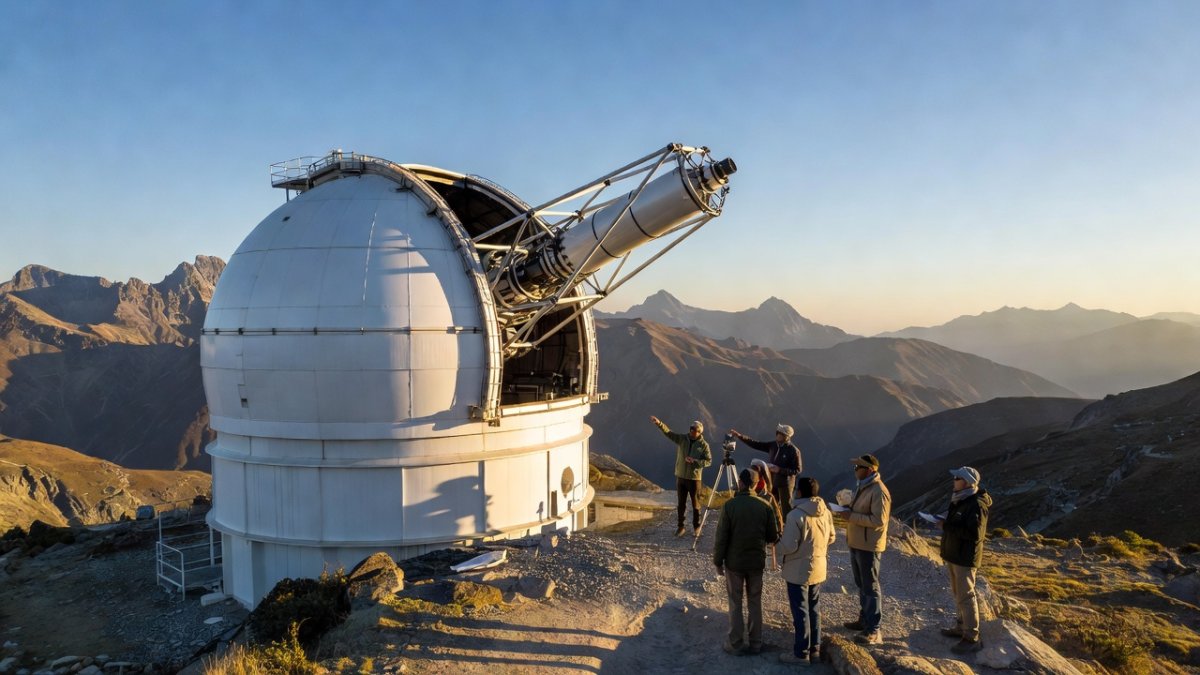
What This Means For India: The 2034 Eclipse, Taregna's Legacy, And Growing Outreach
The missed 2026 eclipse is not a scientific loss for India; it is a planning opportunity. The March 20, 2034, total solar eclipse will cross Indian territory, and the astronomical community is already preparing. The 2009 Taregna eclipse demonstrated India's capacity for large-scale scientific observation and public engagement. ARIES, along with the Indian Institute of Astrophysics (IIA) in Bengaluru and the Inter-University Centre for Astronomy and Astrophysics (IUCAA) in Pune, coordinated observations that yielded data on the corona's temperature and density structure. The 2034 eclipse will offer an even greater opportunity, with modern instrumentation and a more mature space programme in place.
In the interim, the August 2, 2027, partial solar eclipse will be visible from parts of India, providing a chance for schools, colleges, and amateur astronomy clubs to engage students in safe observation practices. Indian planetariums — including the Nehru Planetarium in New Delhi, the Birla Planetarium in Kolkata, and the M.P. Birla Planetarium in Chennai — have been at the forefront of eclipse outreach, organising viewing events and educational programmes. The growth of Indian astronomy outreach, supported by institutions like the Indian Space Research Organisation (ISRO) and the Department of Science and Technology (DST), reflects a broader trend: India's youth are increasingly interested in space science, driven by the success of Chandrayaan-3 and Aditya-L1. The 2026 eclipse, though invisible from India, will be live-streamed by international observatories and NASA, offering Indian students a virtual front-row seat to the science.
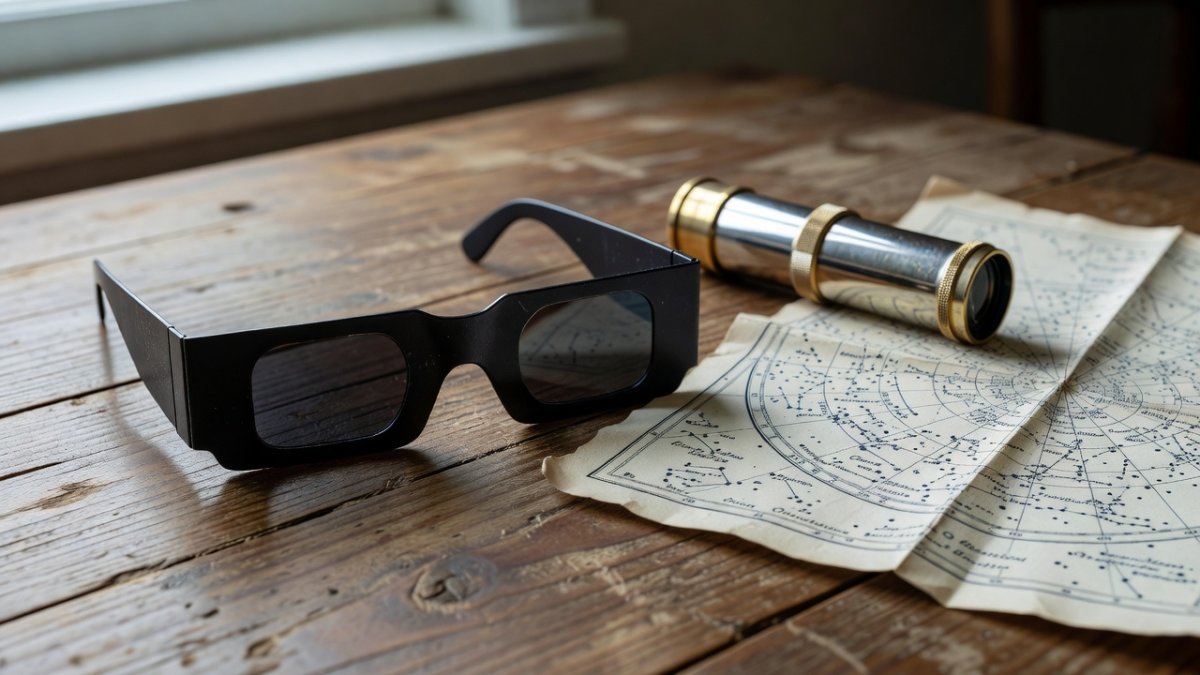
Eye Safety And Public Health: The ISO 12312-2 Standard And What Indian Educators Must Communicate
For those who will travel to Iceland, Spain, or Greenland to witness the eclipse, eye safety is paramount. The National Solar Observatory (NSO) warns that outside the path of totality, viewers see a partial eclipse or nothing at all — and looking at the Sun without certified solar filters can cause permanent retinal damage. The only safe moment for naked-eye viewing is during the brief minutes of totality itself, when the Moon fully obscures the Sun's disc. For all other phases, viewers must use eclipse glasses that comply with the ISO 12312-2 international safety standard. This standard ensures that the filters block 99.997% of visible light and 100% of ultraviolet and infrared radiation, protecting the retina from thermal and photochemical damage.
Indian health educators and science communicators have a critical role to play in disseminating this information. The 2027 partial eclipse will be visible from parts of India, and without proper guidance, there is a risk of unsafe viewing practices. The Ministry of Health and Family Welfare, in coordination with the Department of Science and Technology, should issue public advisories well in advance, emphasising the ISO 12312-2 standard and the dangers of using homemade filters, sunglasses, or exposed photographic film. The 2009 Taregna eclipse saw widespread public engagement, but also reports of unsafe viewing practices. The 2027 event must be different: a well-informed public is a safe public, and the astronomical community has a responsibility to lead that education effort.
The Bottom Line: A Missed Eclipse Is Not A Missed Opportunity For Indian Science
The August 12, 2026, total solar eclipse will be a historic event for Europe — a 27-year wait for the continent, a once-in-a-century spectacle for Iceland, and a 121-year gap for Spain. India will miss the visual spectacle, but the scientific and educational opportunities are far from lost. The eclipse will be live-streamed globally, and Indian researchers can participate in coordinated observations with European teams, leveraging Aditya-L1's space-based perspective. The 2027 partial eclipse and the 2034 total eclipse offer India its own celestial milestones, with the 2034 event promising to be a major scientific and public engagement opportunity.
For Indian students, the message is clear: astronomy is not about a single event but about a continuous engagement with the cosmos. The 2026 eclipse, though invisible from Indian soil, is a reminder of the Earth's place in the solar system and the precision of celestial mechanics. It is also a call to action for Indian institutions to prepare for 2034, to invest in solar physics research, and to build a culture of safe, informed skywatching. The Sun will not wait for India, but India's scientific community is ready to meet it on its own terms — in 2027, in 2034, and beyond.
— By Dr. Raj Patel, Staff Writer
This article was produced with AI-assisted research and editorial support. Reporting is based on sources cited in the article.
What's Your Reaction?
 Like
0
Like
0
 Dislike
0
Dislike
0
 Love
0
Love
0
 Funny
0
Funny
0
 Wow
0
Wow
0
 Sad
0
Sad
0
 Angry
0
Angry
0

India/South Asia Correspondent at Global1.News. Analytical voice with a background in science and health journalism. Based in New Delhi, covering Indian politics, education, healthcare, technology, and policy. Breaks down complex data into clear, actionable reporting.















Comments (0)