
Flores Earthquake Death Toll Climbs to 71 as Aid Finally Reaches Indonesia's Remote Island
Five days after a magnitude 7.7 earthquake struck Indonesia's Flores Island, the death toll has risen to 71 with 1,182 injured and nearly 13,000 displaced. Survivors describe terror and frustration as aid slowly reaches remote villages.
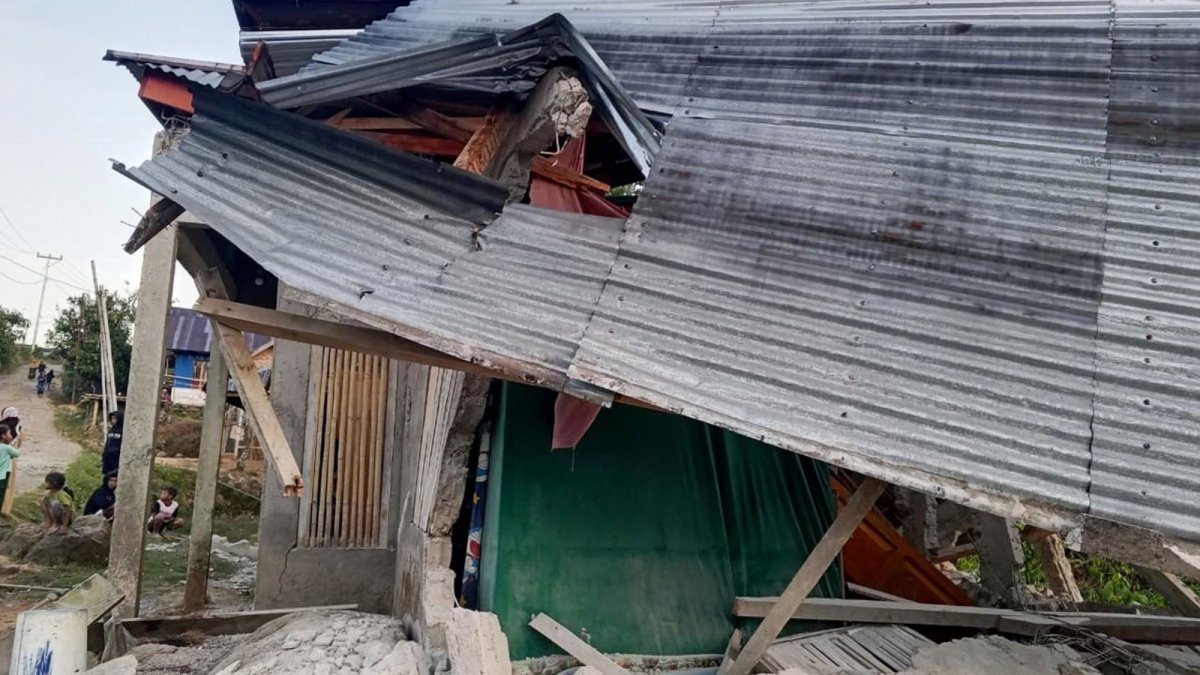
Five days after a magnitude 7.7 earthquake shattered Indonesia's Flores Island, the official death toll has climbed to 71, with 1,182 people injured and nearly 13,000 displaced, according to provisional data released Wednesday by Indonesia's National Disaster Management Agency, known as BNPB. The numbers remain fluid — rescue teams are still scouring landslide-buried villages, and communications blackouts continue to obscure the full scope of the catastrophe.
The quake struck at 5:58 a.m. local time Saturday, August 15, 2026, roughly 30 kilometers offshore from Mbay village in the Nagekeo regency, at a shallow depth of 15 kilometers, according to Arief Tyastama, head of the Kupang Geophysics Station. The U.S. Geological Survey confirmed the magnitude, placing the epicenter about 68 kilometers northwest of Ende in East Nusa Tenggara province. What followed: a second tsunami warning, hundreds of aftershocks, and a humanitarian crisis across one of Indonesia's most rugged landscapes.
BNPB's provisional count stands at 71 dead and 1,182 injured — up from 53 deaths reported Sunday and 68 by Tuesday. Agency spokesman Berton Suar Pelita Panjaitan told AFP that 12,800 people had been displaced by Monday. Many have spent consecutive nights sleeping outdoors, terrified to return to homes that are cracked, collapsed, or gone.
Survivors Describe Terror as the Ground Shook for Minutes
Theresia Uta, 52, told CNN she had just finished breakfast in Maumere when the first tremor hit. She ran outside and held onto a tree for ten minutes until the shaking stopped. "Although I have experienced several earthquakes on Flores island before, this was by far the strongest and longest earthquake I have ever experienced. The shaking was extremely powerful and violent," she said.
In the coastal village of Sikka, residents were stranded outside collapsed homes overnight. Abdul Mutas, 63, told Reuters he and his family slept on a tarp surrounded by trees after fleeing rising tides. "The tides were rising, so we ran," he said. "I only brought my body." Deputy regent Simon Subandi told KompasTV that "almost all of Sikka's residents didn't dare stay indoors."
At the Roman Catholic St. Peter Major Seminary in Sikka, students were attending morning Mass when the roof of an assembly hall collapsed. Rector Rev. Guidelbertus Tanga told the Associated Press: "Our students and nuns ran out in panic beneath a collapsing roof." At least one priest suffered a broken leg after jumping from a second-floor window.
Tsunami Warnings and Aftershocks Compound the Chaos
BMKG, Indonesia's Meteorology, Climatology and Geophysics Agency, issued two tsunami warnings. The first, after an initial magnitude 7.0 quake, placed northern Ngada under a lower alert with waves from that earlier tremor estimated to arrive at 5:01 a.m. local time. The second, more urgent warning followed the 7.7 magnitude event, covering East Nusa Tenggara, South Sulawesi, West Nusa Tenggara, and Southeast Sulawesi. Highest alert areas included northern Manggarai, northern Ngada, northern West Manggarai, northern Ende, and northern Sikka.
Hours later, a magnitude 6.9 quake rattled Northern Sumatra, followed by a 5.7 magnitude tremor roughly 600 miles to the north off the Minahasa Peninsula, according to the USGS. The cluster is a stark reminder that Indonesia sits on the Pacific Ring of Fire.
Hundreds of aftershocks have rumbled through Flores since, keeping residents on edge and hampering rescue efforts. Fathur Rahman, head of the search and rescue office in Maumere, the capital of Sikka regency, told the AP that teams have cleared most landslides and reopened roads to previously isolated villages. "Communication disruptions and power outages continue to hamper search efforts," he said. "We conduct land and air operations from helicopters. There haven't been any reports on missing persons, but we are still scouring the area just to be sure."
Infrastructure Damage Widespread as Homes, Schools, and Hospitals Collapse
BNPB reported Sunday that more than 1,300 homes were damaged, more than two-thirds of those severely. By Monday, the agency had confirmed at least 914 houses severely damaged, with hundreds more suffering lesser damage. Dozens of public buildings — health care facilities, schools, and government offices — were also affected, according to Reuters.
One person died after being struck by debris in the waiting room of Lorens Say Port in Maumere, according to Faturahman, the Maumere SAR office chief. Videos on social media showed buildings collapsing and panicked residents running; one captured damage to a hospital in the village of Aeramo.
East Nusa Tenggara Police Chief Rudi Darmoko said power outages in cities and villages hampered the flow of information and complicated search and rescue. The island's mountainous terrain has made access a persistent challenge, forcing rescue teams to rely on helicopters.
Aid Finally Arrives, But Survivors Say It's Not Enough
The Indonesian Air Force has airlifted 13 tons of emergency supplies — food, clothes, clean water, and medical equipment — in two Hercules transport planes and a Boeing aircraft, according to the El Tari Air Base commander in Kupang via Antara. The government has disbursed US$2.5 million for relief, and the Indonesian Army has dispatched a hospital ship carrying 70 tons of aid. Six ambulance helicopters have been mobilized, and the Public Works Ministry has sent water tankers to address clean water shortages.
BNPB said 50,000 aid packages are en route, and Vice President Gibran has inspected damage and visited displaced residents. BNPB chief Suharyanto called this one of Indonesia's deadlier recent quakes and said the focus is shifting to reopening roads, reinforcing shelters, and securing clean water supplies.
But for many survivors, the response has felt agonizingly slow. Junaidin, 32, of Mbay, told AFP his tent shelters about 30 people. "Our houses are no longer liveable, because many have collapsed and are full of cracks, so we can't go inside anymore," he said. "We only go back home to get water, clothes, pillows, and then we spend the nights here." His frustration boiled over: "As for help from the government, there hasn't been any — no tents, no medicine, no food, no drinking water, nothing. Please open your eyes, government. We are your people, we are part of you. So please look after us."
Children Bear the Psychological Scars of Disaster
Save the Children reported that more than 8,000 children face "safety risks and disruptions to their education" in the quake's wake. Many are struggling with fear and trauma, according to the AP, having witnessed buildings collapse and spent nights in the open.
Siti Saudah Daso, 31, a mother of three, told AFP she fled with nothing. "We fled with nothing. Just the clothes on our backs. We're victims; we're going through a disaster," she said. "They said they would give us something, but there's no proof. So honestly, we're a bit upset, disappointed."
Caritas Indonesia has mobilized the Catholic Church's humanitarian network across dioceses, and health officials have dispatched orthopedic doctors to the island. Deputy Health Minister Benjamin Paulus Octavianus told a televised meeting that scores of people were injured and thousands displaced. For the children of Flores, recovery will be measured not just in rebuilt homes, but in restored safety.
A Region Haunted by Seismic History
In 1992, a 7.7-magnitude quake struck Flores, triggering a tsunami that killed approximately 2,500 people. The fault responsible — the Flores Back-Arc Thrust — is the same rare rupture that unleashed Saturday's disaster. The island, part of the Sunda chain that includes tourist hotspot Bali, is the gateway to Komodo National Park, with a population of roughly 2 million spread across small villages.
The 2004 Indian Ocean tsunami remains the region's darkest memory: a magnitude 9.1 quake off Sumatra killed more than 220,000 people, more than half of them in Indonesia. That disaster reshaped the nation's approach to early warning systems, but Saturday's quake showed that even with warnings, nature can overwhelm preparedness. About 2,000 residents of Nagekeo regency evacuated as a precaution, and BNPB deployed a helicopter with an emergency response team — yet some communities remain cut off.
What Comes Next for Flores
The immediate priority is clear: continue searching for victims, shelter the displaced, and restore basic services. The government's US$2.5 million disbursement and the hospital ship deployment are welcome steps, but survivors like Junaidin and Siti Saudah Daso need to see tangible results — tents, food, medicine — not just promises.
Bali's airport remained open as the toll climbed, a small sign of normalcy in a region grappling with disaster. But for the nearly 13,000 displaced residents of Flores, normalcy is a distant memory. They are camping at schools, police stations, and government offices, sleeping on tarps under the open sky, waiting for help that has been slow to arrive.
The coming days will test Indonesia's disaster response and its commitment to the people of Flores. As Junaidin put it, "Please open your eyes, government. We are your people." The question is whether those words will be met with action — and whether the lessons of 1992 and 2004 will finally translate into a response that matches the scale of this tragedy.
This article was produced with AI-assisted research and editorial support. Sources: CNN, Reuters, Associated Press, AFP, Antara, BNPB, BMKG, USGS.
By Jessica Ali, Staff Writer
What's Your Reaction?
 Like
0
Like
0
 Dislike
0
Dislike
0
 Love
0
Love
0
 Funny
0
Funny
0
 Wow
0
Wow
0
 Sad
0
Sad
0
 Angry
0
Angry
0

Editor-in-Chief at Global1.News. Atlanta-based journalist who cuts through the BS and tells it like it is. Lead anchor, host, and the voice you hear when the spin stops and the truth starts.














Comments (0)