
Archbishop of Canterbury Commits to £100m Slavery Reparations Fund During Ghana Visit
CAPE COAST, Ghana — On the shores of Ghana's Atlantic coast, where the waves once carried away millions of Africa's sons and daughters into bondage, the leader of the Church of England has renewed her commitment to a controversial £100 million reparative justice fund.
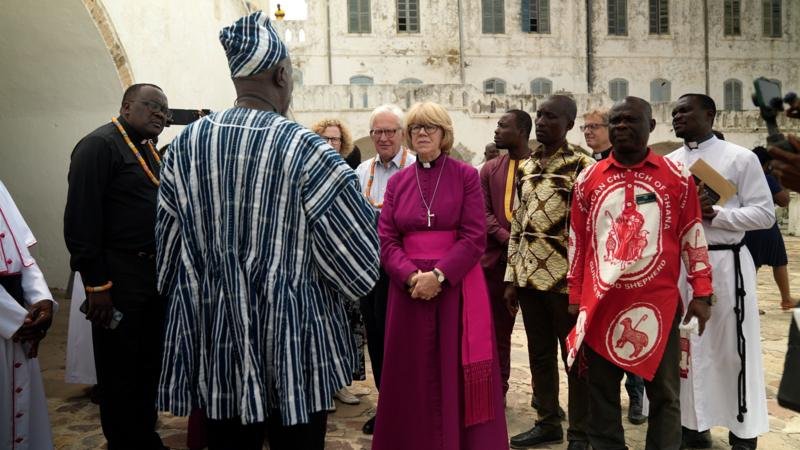
CAPE COAST, Ghana — On the shores of Ghana's Atlantic coast, where the waves once carried away millions of Africa's sons and daughters into bondage, the leader of the Church of England has renewed her commitment to a controversial £100 million reparative justice fund. It is a moment that resonates far beyond the stone walls of Cape Coast Castle — from Senegal's Goree Island to the plantations of the Caribbean, from the halls of Westminster to the villages of West Africa still feeling the weight of centuries of exploitation.
Dame Sarah Mullally, the Archbishop of Canterbury, made her pledge during her first pastoral visit to Africa since her installation in March. Standing in the dungeons where enslaved Africans were held before being trafficked to the Americas, she confronted the institution she leads with a reckoning that has been centuries in the making.
Archbishop Commits to £100m Reparations Fund in Ghana
Cape Coast, Ghana — The Archbishop of Canterbury has recommitted to the Church of England's £100 million fund for reparative justice, acknowledging on a visit to the infamous Cape Coast Castle that her church "played a part" in the horrors of the transatlantic slave trade.
Cape Coast Castle and the Door of No Return
Cape Coast Castle, which came under British control in the 1660s, stands as one of the most haunting memorials to the transatlantic slave trade in all of West Africa. Its whitewashed walls, seen from a distance, give little hint of the horrors within — cramped dungeons where men, women, and children were packed in chains, sometimes for months, awaiting the ships that would carry them to a life of enslavement in the Americas.
Above these dungeons, the Church of England built a chapel. The proximity of worship and human suffering was not lost on the Archbishop during her tour. "It completely throws you off balance and brings home the evil that was transatlantic slavery," she told reporters. "You can't help but be deeply moved by the horrific conditions that people were kept in and the way that they were treated."
The so-called "door of no return" — the final passage through which enslaved Africans stepped onto waiting vessels — has become a powerful symbol across the African diaspora. For Senegalese, it echoes the Maison des Esclaves on Goree Island, just off the coast of Dakar, where another such door faces the Atlantic. These are not historical relics from a distant past; they are living monuments to a system that reshaped the demographic, economic, and cultural landscape of an entire continent.
A Church Confronting Its Own History
The Church of England's involvement in the slave trade was not peripheral. Its missionary arm — the Society for the Propagation of the Gospel — ran slave-farmed plantations in the Caribbean to fund the spread of Anglicanism. Individual clergy members owned slaves. The Church received substantial donations from slave traders. For generations, the institution that preached salvation was deeply entangled in the business of human bondage.
"We played a part in the transatlantic slave trade. That is clear," Dame Sarah said in Cape Coast. "Part of the Christian belief in repentance is about action, so we are putting in place action to support those communities that feel the legacy of the slave trade."
The Church has previously issued apologies for its role, but three years ago it moved beyond words. Following an audit of its £8.4 billion historical endowment fund — which revealed large investments in the Royal African Company, the corporation that trafficked more enslaved Africans than any other single entity — the Church committed to establishing the £100 million fund.
The Reparations Fund: Progress and Opposition
The fund is designed to support "a programme of investment, research and engagement" in communities damaged by the enslavement of African people. While the amount — £100 million — represents just over one percent of the Church's total endowment, advocates see it as a critical first step toward broader institutional accountability.
Yet the fund has faced fierce opposition from within the Church itself. Some conservative factions have questioned the historical accuracy of the audit, arguing that the Church's complicity was overstated. Others have raised legal objections, warning that the fund could set a precedent leading to further compensation claims. Still others have mounted ideological objections, arguing that modern institutions should not be held responsible for the actions of their predecessors centuries ago.
Despite this internal resistance, the Archbishop has stood firm. Her visit to Cape Coast Castle — and her willingness to confront the physical evidence of her church's role — represents a significant escalation in her commitment to the fund. This is not an abstract theological debate taking place in London; it is a leader standing in the very chambers where the suffering occurred and declaring that words must become action.
Ghana's Leadership in the Global Reparations Movement
Ghana has positioned itself at the forefront of the global campaign for reparations. The West African nation, which launched the "Year of Return" in 2019 to mark 400 years since the first enslaved Africans arrived in Virginia, has been unrelenting in its calls for Western institutions and former colonial powers to acknowledge — and compensate for — their role in the slave trade.
Foreign Minister Samuel Okudzeto Ablakwa has been one of the most vocal proponents of this cause. He praised the Archbishop's visit as a turning point. "What the Archbishop of Canterbury is doing in Ghana on her current visit will begin to send the right signals," Ablakwa said. "And those who are either revisionists or who are obstructionists within the Church of England are going to start thinking twice."
Ablakwa's words carry a sharp edge. They reflect a growing impatience across the continent with what many see as performative apologies that lack substantive action. Across Africa — from Senegal to Nigeria, from South Africa to Kenya — civil society groups and governments alike are pushing for measurable commitments, not just statements of regret.
What This Means for West Africa: Senegal's Stake
For Senegal, this story is deeply personal. Goree Island, a UNESCO World Heritage site just twenty minutes by ferry from downtown Dakar, was one of the busiest slave-trading posts on the African coast. Between the 15th and 19th centuries, an estimated 10 to 15 million Africans passed through holding centres like the Maison des Esclaves — the Slave House — before being transported across the Atlantic.
The island draws tens of thousands of visitors each year, many of them African Americans and Afro-Caribbeans tracing their ancestry back to the continent. It is a place of pilgrimage, of education, and of unresolved pain. The Church of England's fund, if deployed effectively, could support heritage preservation, educational programmes, and economic development in communities like Goree that remain the living repositories of this history.
Senegalese historian and heritage advocate Dr. Fatou Sarr, who has spent decades studying the legacy of the slave trade in West Africa, has argued that reparative justice must go beyond financial compensation. "It must include the restoration of cultural memory, the rewriting of historical narratives that have been shaped by the oppressor, and meaningful investment in the communities that were systematically impoverished by slavery," she has written.
The Road Ahead: From Cape Coast to Canterbury
The Archbishop's visit to Cape Coast Castle is a powerful image — a white-robed religious leader standing in the dungeons where millions suffered, pledging her institution to repair. But the road from Cape Coast to meaningful implementation is long and uncertain.
The £100 million fund has yet to be fully disbursed, and its governance structure remains a subject of debate. Critics on both sides — those who say the fund does too little and those who say it does too much — continue to challenge its legitimacy. The internal opposition within the Church of England has not dissolved; if anything, it has become more organized since the fund was first announced.
Yet the momentum is building. Ghana's Foreign Minister has made clear that the international community is watching. Civil society organizations across West Africa are preparing to hold the Church accountable for the commitments it has made. And in Senegal, the conversation about what reparative justice should look like is being taken up by a new generation of activists, scholars, and community leaders who are no longer willing to accept symbolic gestures in place of structural change.
The stones of Cape Coast Castle do not speak. But they do not need to. The walls themselves tell the story, and the Archbishop of Canterbury has promised to listen — and to act.
By Amara Diop, Staff Writer
This article was produced with AI-assisted research and editorial support. Reporting is based on sources cited in the article.
What's Your Reaction?
 Like
0
Like
0
 Dislike
0
Dislike
0
 Love
0
Love
0
 Funny
0
Funny
0
 Wow
0
Wow
0
 Sad
0
Sad
0
 Angry
0
Angry
0

West Africa/Sahel Correspondent at Global1.News. Dakar-based journalist covering politics, security, climate, and development across Francophone and Anglophone West Africa. Tells the stories of a region undergoing profound transformation.













Comments (0)