
Ferry fire death toll hits 77
One more life has been added to the tragic tally of the MV June Aster disaster, as a survivor succumbed to injuries at a hospital in Palawan, the Philippine Coast Guard (PCG) confirmed yesterday.
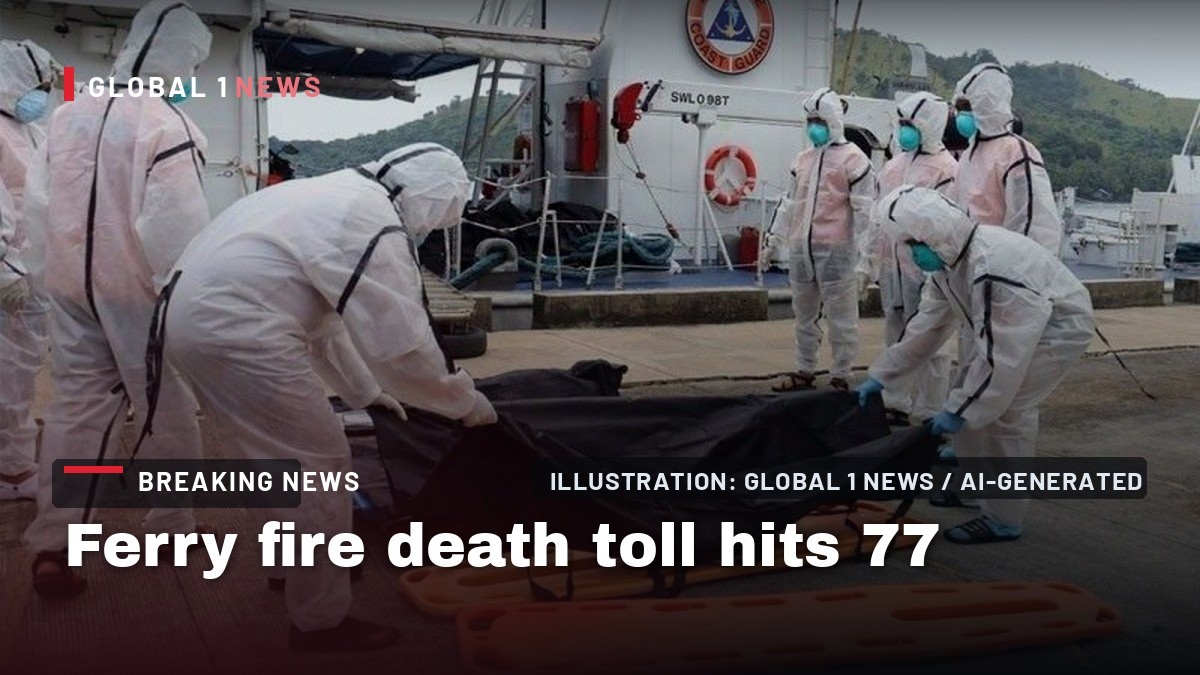
One more life has been added to the tragic tally of the MV June Aster disaster, as a survivor succumbed to injuries at a hospital in Palawan, the Philippine Coast Guard (PCG) confirmed yesterday. The death brings the confirmed fatalities to 77, while 43 people remain alive and 12 are still listed as missing. The loss reverberates through the barangays of the province, where families gather at sari‑sari stores and community centers to pray for the souls of the departed and to seek answers from authorities.
From the flames to the hospital: a timeline of loss
The MV June Aster caught fire on 9 September after an explosion erupted in its cargo hold. The blaze quickly engulfed the vessel, leaving passengers and crew scrambling for safety. Among the survivors was a crew member who later died at Culion Sanitarium General Hospital on Tuesday, according to PCG spokesperson Noemie Cayabyab. The death of this crewman underscores the lingering impact of the disaster, as injuries sustained in the inferno continue to claim lives days after the incident.
Survivors recount a chaotic scene: the ship’s public address system failed when the vessel lost power, leaving the captain, Roel Sarmiento, to shout warnings that many could not hear. Sarmiento later testified that he assisted passengers before feeling dazed and wandering aimlessly on land, “walking down a road until I arrived wherever.” His words paint a picture of the trauma that still haunts those who escaped the flames.
Human faces behind the numbers
Each of the 77 confirmed deaths represents a family whose livelihood and future have been abruptly altered. In many coastal barangays, the loss of a breadwinner means the difference between having enough rice for the month and facing hunger. The survivors, now 43 strong, carry physical scars and emotional burdens that will likely require long‑term medical care and counseling—services that are often stretched thin in remote provinces.
The 12 missing persons remain a source of anguish. Their families gather at the local church, lighting candles and holding vigil prayers, hoping for news that could bring either closure or renewed hope. In the Philippines, the collective grief of a community often becomes a rallying point for bayanihan, as neighbors pool resources to support those left behind.
Maritime safety under scrutiny
In the wake of the tragedy, the PCG has pledged to conduct both maritime safety and crime investigations. While the exact cause of the cargo‑hold explosion remains under review, the incident raises pressing questions about the enforcement of safety standards on passenger vessels that ply the archipelago’s waterways. The PCG’s role, alongside the Department of Transportation, is to ensure that ships meet stringent safety protocols, yet the June Aster fire suggests gaps that may have allowed a preventable disaster.
Experts and advocacy groups are likely to call for a thorough audit of vessel inspections, crew training, and emergency equipment. The failure of the public address system, for instance, points to a broader issue of inadequate maintenance that could jeopardize passenger safety in future voyages. As the investigation proceeds, the hope is that concrete recommendations will emerge to prevent another calamity.
Government response and accountability
President‑elect officials and members of Congress have expressed condolences, but the public is watching closely to see whether these words translate into actionable policies. The Senate and the House of Representatives have the authority to hold hearings on maritime safety, and the Office of the Ombudsman can investigate any alleged negligence or corruption that may have contributed to the disaster.
Meanwhile, the Philippine National Police (PNP) may be called upon to assist in locating the missing passengers, conducting search‑and‑rescue operations, and ensuring that any criminal liability—such as violations of safety regulations—is pursued. The coordination among these agencies will be a litmus test of the government’s commitment to protecting ordinary Filipinos who rely on sea transport for work, education, and family reunions.
Impact on the local economy
The June Aster tragedy has also shaken the local economy of Palawan and surrounding provinces. Ferry routes are lifelines for traders, OFWs returning home, and tourists seeking the province’s natural wonders. A disruption in services can affect the income of jeepney and tricycle drivers who ferry passengers to and from ports, as well as the vendors at market stalls who depend on the steady flow of travelers.
In the days following the fire, some ferry operators have temporarily suspended trips, prompting commuters to seek alternative, often more expensive, transport options. This shift can strain household budgets, especially for families already coping with the loss of a loved one. The ripple effect underscores how a single maritime accident can reverberate through multiple layers of the Philippine economy.
Community resilience and the road ahead
Amid the sorrow, stories of resilience emerge. Barangay captains have organized condolence gatherings, and local churches have arranged free meals for grieving families. Volunteers from nearby towns have offered to assist with the transport of the injured to hospitals, embodying the spirit of bayanihan that defines Filipino communities in times of crisis.
Looking forward, the families of the victims will likely seek legal recourse, possibly filing civil suits against the vessel’s owners or demanding compensation from the government for perceived lapses in safety enforcement. Such actions, while seeking justice, also serve to highlight systemic issues that need reform.
What the tragedy teaches us about maritime safety culture
The MV June Aster fire is a stark reminder that safety is not merely a checklist but a lived culture that must be ingrained in every stakeholder—from ship owners and crew to regulators and passengers. The failure of the public address system, the explosion in the cargo hold, and the subsequent loss of life point to a cascade of preventable failures that, if addressed, could save countless lives.
For the Philippines, an archipelagic nation where sea travel is a daily reality for millions, strengthening maritime safety protocols is a matter of national security and human dignity. As the PCG proceeds with its investigations, the hope is that its findings will translate into stronger regulations, better training for crew members, and more robust emergency equipment on board every vessel that sails our waters.
This article was produced with AI-assisted research and editorial support. Reporting is based on the source material cited below. Sources: Philstar.com; Global1.News (17 September 2026).
By Bella Reyes, Staff Writer
What's Your Reaction?
 Like
0
Like
0
 Dislike
0
Dislike
0
 Love
0
Love
0
 Funny
0
Funny
0
 Wow
0
Wow
0
 Sad
0
Sad
0
 Angry
0
Angry
0

Philippines/Southeast Asia Correspondent at Global1.News. Manila-based journalist covering Philippine politics, environment, maritime security, and social issues. Passionate about marine conservation and the communities protecting the Philippines' natural heritage.












Comments (0)