
‘Small-Yurt Diplomacy’ Prevails at Kyrgyzstan’s World Nomad Games
In early September 2026, the World Nomad Games returned to Kyrgyzstan, this time centering a significant portion of the festivities in the Kyrchyn Gorge of eastern Kyrgyzstan.
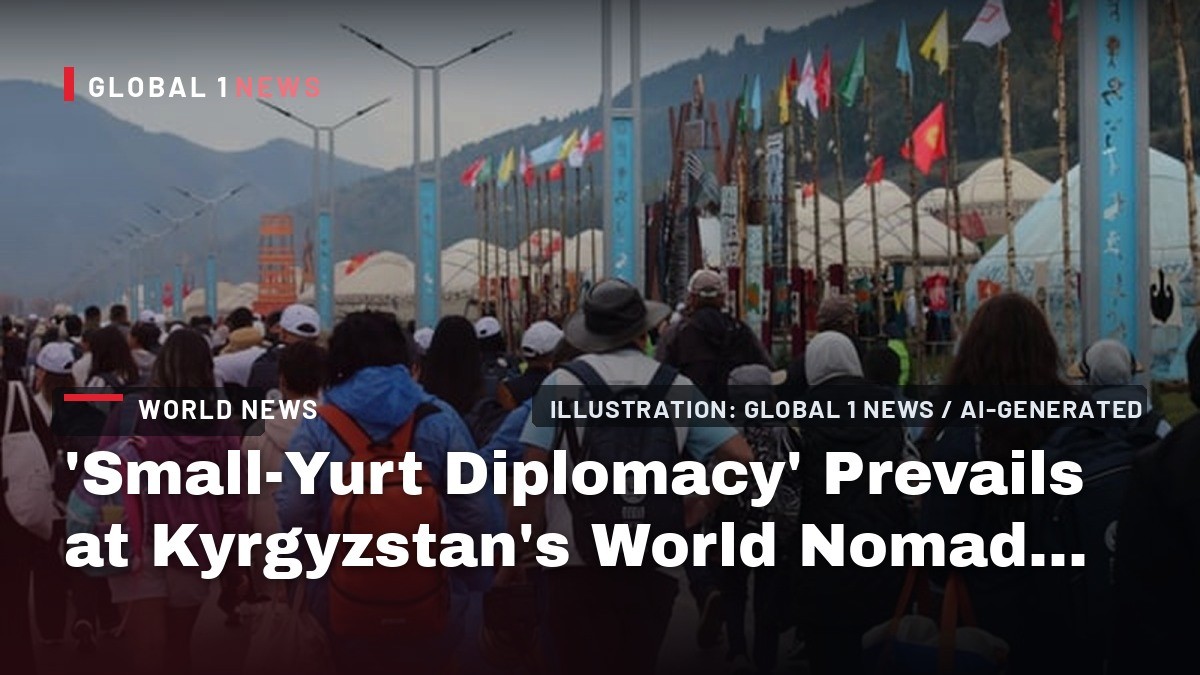
In early September 2026, the World Nomad Games returned to Kyrgyzstan, this time centering a significant portion of the festivities in the Kyrchyn Gorge of eastern Kyrgyzstan. The Games, originally conceived after the political upheavals of 2005 and 2010 as a vehicle to rehabilitate the nation’s international image and attract investment, now appear to have been re‑oriented toward a domestic audience, a shift that offers a fertile case study for scholars of Korean diplomatic practice and soft‑power strategy. By examining the way foreign governments and international organizations deployed “small‑yurt diplomacy” at the Games, we can discern broader patterns that echo South Korea’s own cultural diplomacy initiatives, from the promotion of K‑culture in Southeast Asia to the strategic use of diaspora networks in Central Asia.
Historical Context of the World Nomad Games
The World Nomad Games were first introduced in the wake of the 2005 and 2010 coups, which, according to independent researcher Dr. Arzuu Sheranova, shattered the trust of foreign investors and businesses. The Games were envisioned as a “kind of instrument” to improve Kyrgyzstan’s national image abroad, to revive tourism, and to signal stability. This original outward‑facing logic is evident in the Games’ emphasis on traditional sports such as eagle hunting, horseback archery, and tug‑of‑war, all designed to showcase Kyrgyz heritage to an international audience.
However, the 2026 edition reveals a recalibration. While the Ministry of Culture and the National Olympic Committee continued to promote the Games as a tourism catalyst, political scientist Emil Juraev notes that the Kyrgyz government has deliberately shifted its primary target to the domestic electorate, particularly in light of the upcoming 2027 parliamentary elections. This domestic focus aligns with a broader regional trend, where governments leverage cultural festivals to consolidate internal legitimacy while still courting external partners through ancillary diplomatic venues.
The Architecture of “Small‑Yurt Diplomacy”
At the Kyrchyn Gorge, foreign delegations erected temporary yurts that functioned as micro‑embassies, offering casual, face‑to‑face interaction with ordinary Kyrgyz citizens. The United States, for instance, presented an American yurt featuring lacrosse, corn hole, and American football, alongside a cardboard cutout of George Washington and a miniature prairie wagon. This blend of sport and historical iconography mirrors South Korea’s own use of pop‑culture “hanbang” spaces in overseas cultural centers, where K‑pop performances coexist with displays of Korean history and technology.
The European Union’s yurt aggregated eight member states under a single canopy, allowing visitors to sample German pastries, Norwegian goat cheese, Swiss fondue, and Spanish olives. Organizer Zarina Toichubekova, affiliated with a Kyrgyz‑German diaspora organization, framed the effort as a demonstration of “friendship and cultural connections between Europe and Kyrgyzstan,” emphasizing two‑way exchange. Such multilateral cultural showcases echo the EU’s “Europe Direct” model, which seeks to build people‑to‑people bridges alongside formal diplomatic outreach.
UNICEF’s Child‑Centric Approach
Distinct from the nation‑state yurts, the UNICEF yurt prioritized intergenerational engagement. Children played traditional Kyrgyz games while receiving information on child rights, nutrition, and sustainable water practices. UNICEF Kyrgyzstan’s Cholpon Zhanadylova highlighted the value of coupling healthy lifestyle promotion with cultural heritage preservation. This child‑focused diplomacy resonates with South Korea’s recent “Future Generations” program, which integrates educational content on human rights and environmental stewardship into cultural exchange activities in Central Asian schools.
The emphasis on children as diplomatic actors underscores a strategic shift: rather than courting foreign investors directly, the Games become a platform for shaping the perceptions of the next generation, a long‑term investment in soft power that parallels Korea’s “K‑Future” initiatives aimed at youth in neighboring countries.
Domestic Political Calculus Behind the Games
Emil Juraev observes that the Kyrgyz authorities timed the Games to coincide with a period of intensive infrastructure development, including projects completed just before the event. The Games, alongside the Shanghai Cooperation Organization summit, were positioned as legitimacy‑building exercises ahead of the 2027 elections. By delivering a high‑profile cultural spectacle that drew over 150,000 daily visitors—four times the attendance of previous editions—the government signaled competence and national pride to its electorate.
This domestic orientation does not preclude foreign engagement; rather, it creates a conduit through which external actors can access a captive local audience. The Games’ design, with its ethno‑village and regional cultural zones, ensures that foreign yurt operators interact primarily with Kyrgyz citizens rather than foreign tourists, thereby amplifying the impact of people‑to‑people diplomacy.
Implications for Korean Diplomatic Strategy
South Korea’s Ministry of Foreign Affairs (MOFA) has long recognized the utility of cultural diplomacy in Central Asia, where sizable Kyrgyz and Kazakh diaspora communities reside. The Korean yurt at the Games—though not detailed in the source material—would likely have followed a similar template: showcasing Korean language lessons, K‑pop performances, and technology exhibits, thereby reinforcing Korea’s brand as a modern yet culturally respectful partner.
Given the Games’ domestic focus, Korean diplomatic planners could calibrate future outreach to target youth and community leaders, mirroring UNICEF’s child‑centric model. Moreover, leveraging diaspora networks, as exemplified by the Kyrgyz‑German organization behind the EU yurt, could amplify Korean cultural messaging through trusted local intermediaries, a tactic already employed by the Asan Institute for Policy Studies in its “K‑Bridge” projects across Central Asia.
Assessing the Efficacy of Yurt Diplomacy
The immediate impact of the yurt installations can be gauged by the sheer volume of casual interactions: thousands of visitors engaged with each foreign pavilion over the week‑long festival. While the source material does not provide quantitative outcomes such as follow‑up visits or trade agreements, the qualitative feedback—curiosity about product origins, enthusiasm for learning about foreign traditions—suggests a fertile ground for long‑term relationship building.
For Korean policymakers, the lesson is clear: soft power gains are most durable when they are embedded in locally resonant cultural contexts. By situating Korean cultural content within the familiar setting of a Kyrgyz ethno‑village, the Korean yurt would have benefited from the same authenticity that made the EU and U.S. installations effective.
Future Trajectories and Scholarly Outlook
Looking ahead, the World Nomad Games are poised to become a recurring platform for both domestic political signaling and international cultural engagement. As Kyrgyzstan prepares for its 2027 elections, the Games will likely continue to serve as a legitimacy‑enhancing showcase, while foreign actors—Korea included—will refine their yurt diplomacy to deepen people‑to‑people ties. Scholars of Korean foreign policy should monitor how the Ministry of Foreign Affairs integrates lessons from Kyrgyzstan’s yurt model into its broader Central Asian strategy, particularly in coordination with think‑tanks such as the Korea Institute for International Economic Policy (KIEP) and the Korea Development Institute (KDI), which regularly assess the economic dimensions of cultural outreach.
In sum, the 2026 World Nomad Games illustrate a nuanced evolution of cultural diplomacy: from an outward‑facing image‑building exercise to a domestically anchored platform that nevertheless offers foreign actors a unique conduit to the Kyrgyz heartland. For South Korea, the event underscores the importance of aligning soft‑power initiatives with host‑nation priorities, leveraging diaspora networks, and engaging the next generation—principles that will remain central to Korea’s diplomatic playbook in Central Asia and beyond.
This article was produced with AI-assisted research and editorial support. Reporting is based on the source material cited below. Sources: The Diplomat; thediplomat.com; Global1.News (17 September 2026).
By Prof. David Park, Staff Writer
What's Your Reaction?
 Like
0
Like
0
 Dislike
0
Dislike
0
 Love
0
Love
0
 Funny
0
Funny
0
 Wow
0
Wow
0
 Sad
0
Sad
0
 Angry
0
Angry
0

East Asia/Technology Correspondent at Global1.News. Seoul-based voice covering Korean politics, technology, business, and culture. Analyzes how technology and geopolitics intersect across East Asia.









Comments (0)