
Fed Raises Rates for the First Time Since 2023, Defying Trump
The Federal Reserve raised its benchmark interest rate by a quarter point to 3.75-4 percent on Sept. 16, its first hike since 2023, in a unanimous vote that defied President Trump and sent the Dow down 631 points.
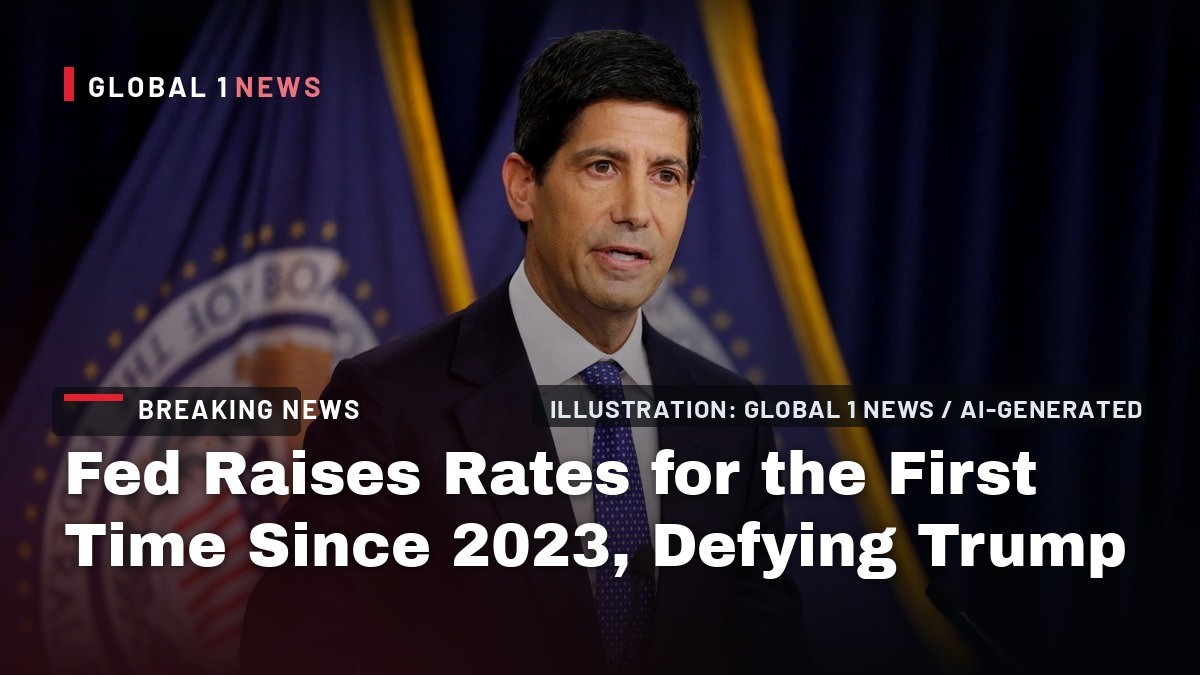
When the Federal Reserve raised interest rates on Wednesday it did so unanimously, and against the public wishes of the president who appointed its chairman. The quarter-point increase, the first in more than three years, put the central bank on a collision course with the White House less than seven weeks before the midterm elections, and it sent the Dow Jones Industrial Average down 631 points.
Fed Raises Rates for the First Time Since 2023, Defying Trump
Washington, D.C. — The Federal Open Market Committee's 12-0 vote lifted the target range for the federal funds rate to 3.75 percent to 4 percent, the first increase since July 2023.
A Chairman Trump Picked Raises Rates
The Federal Reserve raised its benchmark interest rate on Wednesday, the first increase since July 2023, delivering a quarter-point move that President Donald Trump had spent months publicly opposing. The decision came from a chairman Trump himself selected. Kevin Warsh, tapped in January 2026 to succeed Jerome Powell and confirmed after a federal investigation into Powell collapsed, took office in June. Trump had picked Warsh partly on the expectation he would deliver the lowest interest rates in the world, according to Euronews. On Wednesday, Warsh delivered the opposite. The Fed lifted the target range for the federal funds rate to 3.75 percent to 4 percent, up from 3.5 percent to 3.75 percent. The vote was unanimous, 12-0. The committee had been on hold all year, and in July three members had voted against holding, preferring a quarter-point hike, CNBC reported. Warsh, at his press conference, called the increase "a sober decision, serious decision, responsible decision."
What the Fed Actually Did
The mechanics of the move matter as much as the headline number. The decision was released at 2:00 p.m. EDT on Sept. 16, with an Implementation Note issued the same day. Interest on reserve balances rises to 3.90 percent from Thursday, the primary credit rate moves to 4 percent, and standing repurchase operations run at 4 percent, Euronews reported. Seven regional reserve banks requested the discount rate increase. The statement said the committee is continuing its policy of maintaining ample reserves in the banking system. The Fed generally does not move only once, CNBC noted, and it has two remaining meetings this year, on Oct. 27-28 and Dec. 8-9.
A Statement Stripped to Three Paragraphs
The Fed's statement ran three paragraphs, and its language left little room for ambiguity. "Economic activity is expanding at a solid pace," it read. "While uncertainty remains elevated owing, in part, to geopolitical developments, domestic spending has been resilient. Productivity growth is strong, and capital investment is robust. Job gains have kept pace with the workforce, and the unemployment rate has changed little." The third paragraph addressed prices directly: "Inflation remains elevated. Today's policy action will support a timelier return to the Committee's 2 percent goal. The Committee will deliver price stability." Euronews noted that by describing an economy in good health, the committee removed the argument that higher rates would damage growth. The statement's reference to "geopolitical developments" is its formulation for the war with Iran.
Inflation Is Too High and Has Been for Too Long
Warsh opened his press conference with a sentence that framed the entire decision. "The plain fact is that inflation is too high and has been for too long," he said, according to CNBC. He added: "We must be confident that underlying inflation is moving to our objective clearly and at sufficient speed. Today, the FOMC decided that this standard has not been satisfied." Warsh said this summer's inflation readings did not tell him underlying trends had improved. At Jackson Hole on Aug. 28, in a speech titled "In Our Time," he had laid out the case in detail: the PCE price index was running at 3.7 percent over 12 months, the six-month change was 4.1 percent, and 54 percent of goods and services in the PCE basket showed increases above 3 percent. "The responsibility for 65 months of sustained, elevated inflation sits squarely with the central bank," he said then. On Wednesday he said: "I said we will deliver stable prices. Today's decision is consistent with that."
The Dot Plot: One More Hike, Maybe Two
The Summary of Economic Projections, released alongside the decision, showed a committee that expects to keep going. Sixteen of 18 participants expected another rate increase this year; four of those saw two more as possible, and two expected the committee to stop at one hike, CNBC reported. Warsh submitted no dot, a practice he has followed since taking the job. The median projection for the federal funds rate at the end of 2026 rose to 4.1 percent, up from 3.8 percent in June; the 2027 median is also 4.1 percent, according to Fortune. Headline PCE inflation is projected at 3.7 percent for 2026 and core at 3.4 percent, each a tenth of a point higher than June. The Fed does not expect to reach its 2 percent target until 2029. The unemployment outlook was lowered to 4.1 percent for 2026.
The Bill Arrives: 631 Points and a 5% Ten-Year
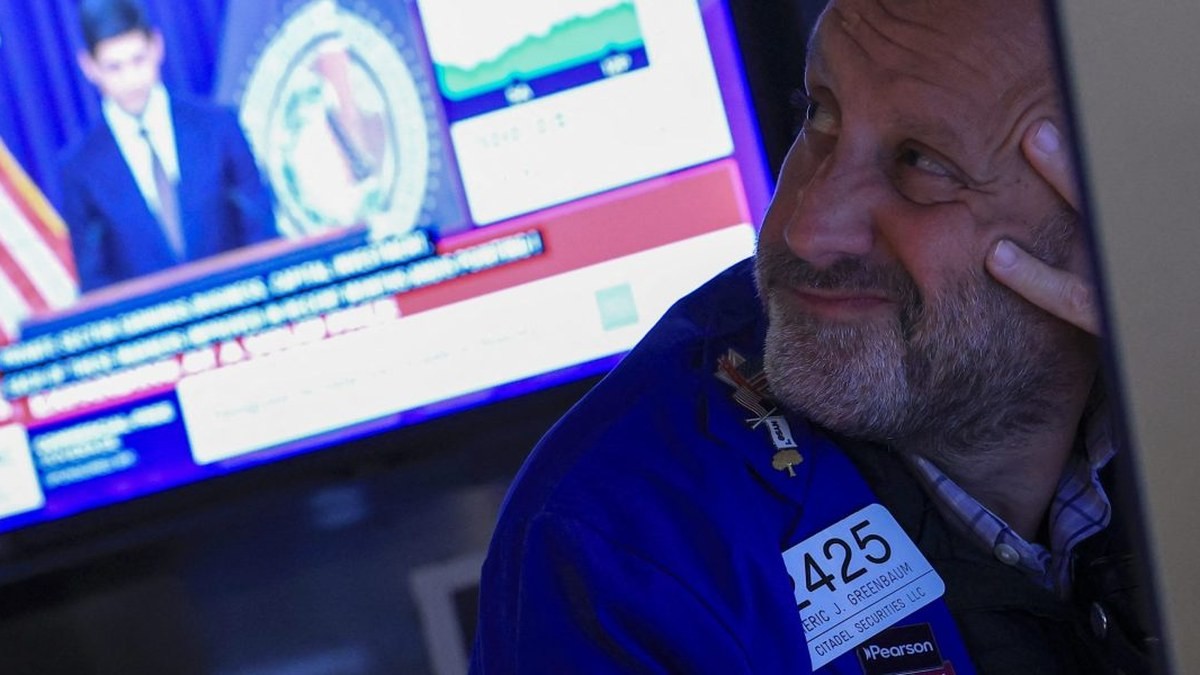
Markets repriced quickly. The Dow Jones Industrial Average closed down 631 points, or 1.2 percent, at 51,461.90, its worst single-day drop in months, according to Rolling Out. The S&P 500 fell 0.45 percent to 7,551.81, and the Nasdaq Composite slipped about 0.01 percent to 25,978.42. The 10-year Treasury yield pushed back above 5 percent, a level strategists call a major psychological threshold, after dipping below it earlier in the session; it hit an intraday peak of 5.041 percent, its highest since 2007, Kiplinger reported. The 2-year yield, most sensitive to Fed policy expectations, rose to 4.725 percent, a new 52-week high. The dollar index jumped 0.6 percent to its highest level since late July. The average 30-year fixed mortgage rate climbed to 7.22 percent, its highest since January 2025. CME FedWatch after Warsh's press conference put the odds of an October hike at 49 percent, up from 40 percent Wednesday morning.
Seven Weeks Before the Midterms
The decision landed less than seven weeks before the midterm elections, and the political calendar is now part of the calculation. Kay Haigh of Goldman Sachs said most FOMC members see a total of two hikes this year per the projections, and that the committee will likely skip October's meeting given its proximity to the midterms, PBS and the Associated Press reported. Jeffrey Roach, chief economist at LPL Financial, put the horizon differently: "If the economy keeps up like it has, the Fed is telling us that we may not see a cut until 2028," he told Fortune. Michael Pearce, chief U.S. economist at Oxford Economics, expects one more hike and then a stop. "We don't think this is the beginning of another major tightening cycle, and markets have too much tightening priced in over the coming year," he said. Brad Conger of Hirtle & Co. said the committee "sided with main street."
Trump's Answer: One Percent or Less
About two hours after the Fed's announcement, Trump posted on Truth Social. "Interest Rates in the United States should be 1%, or less, because we are the Best Credit in the World — BY FAR," he wrote. "LOWER THE INTEREST RATES FOR THE UNITED STATES OF AMERICA, AND FAST!" He also wrote that if the country stopped trading with every nation with which it runs a deficit, it would make at least 1.5 trillion dollars a year, calling the word deficit "nothing more than a fancy word for LOSS." Reuters reported it was Trump's most pointed, though still indirect, criticism yet of his hand-picked Fed chief; he did not name Warsh, give him a nickname or threaten retaliation. An unnamed person familiar with the matter said the president was redirecting his ire toward trading partners, which have little to do with the monetary policy decision. Less than two weeks before the decision, Trump had threatened to cut off trade with countries running surpluses with the United States if the Fed did not cut rates.
The War That Put the Fed in This Corner
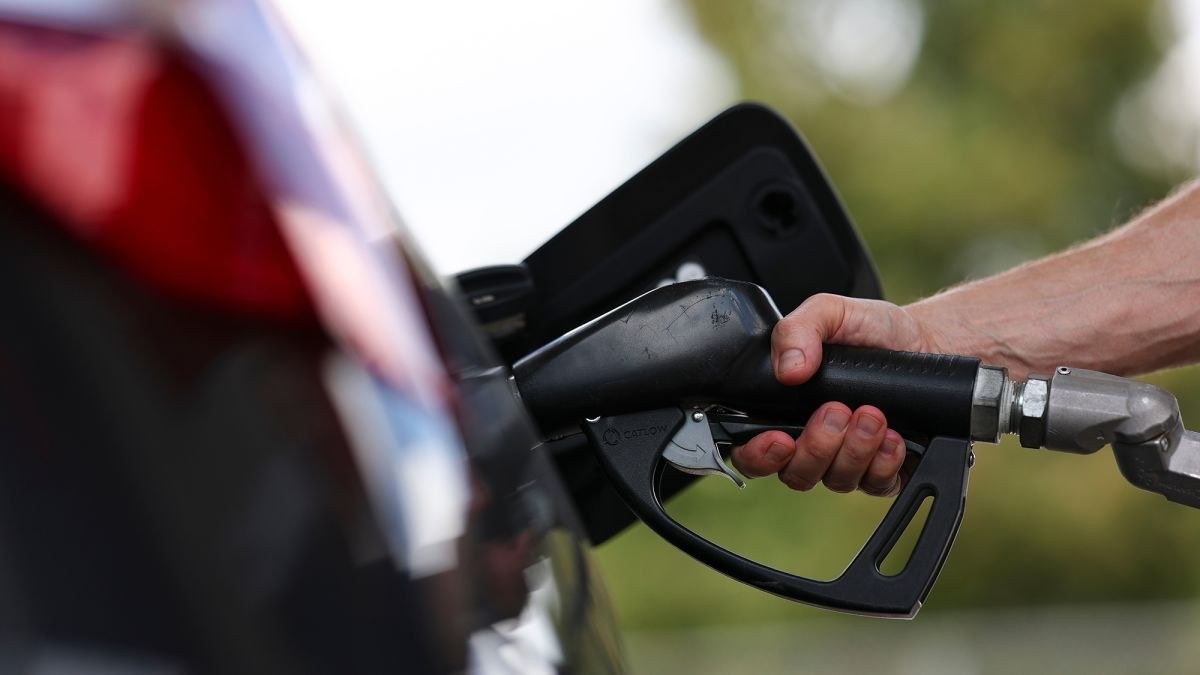
Trump announced "major combat operations" against Iran on Feb. 28, 2026. A large-scale U.S.-Israeli attack prompted Iran's near-closure of the Strait of Hormuz, which carries about one-fifth of global crude supply, ABC News reported. The ensuing war set off the largest oil supply disruption on record and prompted the release of hundreds of millions of barrels of reserve crude from emergency storage in dozens of countries. Brent crude hit $108 a barrel on Sept. 10, its highest settle since May 19. The average price of a gallon of gas in the U.S. was $4.22, according to AAA, a 41 percent jump since the war broke out. Warsh said tension in the Middle East contributed to the decision; he said the Fed generally looks through this kind of inflation, but officials weighed the cost of continuing to do so. The Fed's preferred measure, the PCE price index, was 3.7 percent in July compared with a year earlier, up from 2.3 percent in April 2025, just before Trump unveiled sweeping tariffs.
What Comes Next
The dot plot is a survey of participants, not a commitment, and no October hike has been confirmed. Futures pointed to a higher open on Sept. 17, TipRanks reported. Ed Yardeni cut his year-end S&P 500 target to 7,900 from 8,400, citing rising Treasury yields tied to energy prices. UBS said the projections point to a Fed that has "fundamentally reassessed" the real funds rate needed to restore price stability. Peter Navarro told NewsNation he "didn't think Kevin Warsh was the right guy" and called the decision "a bad decision." National Economic Council Director Kevin Hassett had told Fox News on Sept. 13 that inflation is getting better and the Fed does not need to raise rates, saying the president "100% respects the independence of Kevin Warsh" and would "100% support" the Fed's decision, while conceding Trump would not be "super happy" about a rate increase.
By Jessica Ali, Staff Writer
This article was produced with AI-assisted research and editorial support. Sources: The Federal Reserve, CNBC, Reuters, Fortune, PBS NewsHour and the Associated Press, Euronews, Kiplinger, Charles Schwab, Proactive Investors, Rolling Out, Quartz, TipRanks, CNN Business, ABC News, MarketScreener, The Hill, the Detroit Free Press and BondSavvy.
What's Your Reaction?
 Like
0
Like
0
 Dislike
0
Dislike
0
 Love
0
Love
0
 Funny
0
Funny
0
 Wow
0
Wow
0
 Sad
0
Sad
0
 Angry
0
Angry
0

Editor-in-Chief at Global1.News. Atlanta-based journalist who cuts through the BS and tells it like it is. Lead anchor, host, and the voice you hear when the spin stops and the truth starts.











Comments (0)