
Ex-Navy Officer Extradited in Fuel-Trafficking Case
Ex-Rear Admiral Fernando Farías Laguna, accused of leading a fuel-smuggling ring, arrives in Mexico from Argentina to face justice at El Altiplano maximum-security prison.
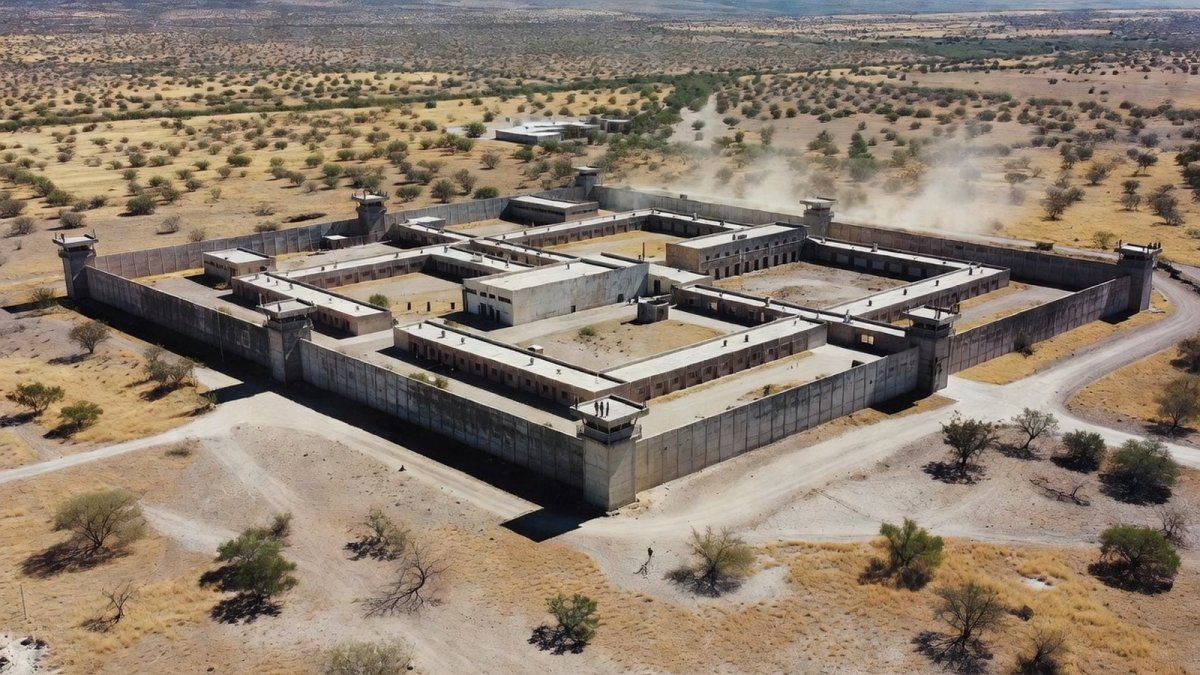
Extradited Navy Officer, Accused of Fuel-Trafficking, Arrives from Argentina to Mexico's Top Security Prison
The long arm of Mexican justice reached across the Southern Cone this week. Fernando Farías Laguna, the 47-year-old former Rear Admiral of the Mexican Navy (SEMAR) accused of masterminding a sophisticated fuel-trafficking network, landed at Mexico City International Airport (AICM) on Friday, August 21, 2026. His arrival closes a year-long international manhunt and opens one of the most significant corruption cases in the nation's recent history. Farías Laguna was expelled from Argentina, where he had been detained in April, and transferred to the custody of Mexican authorities. Upon landing, he was presented before a forensic doctor to certify his state of health before being transported to his new home: the Centro Federal de Readaptación Social Número 1, better known as El Altiplano, the maximum-security prison in Almoloya de Juárez, State of Mexico. The Fiscalía General de la República (FGR) confirmed the arrival via social media, stating that he "quedará a disposición de la autoridad judicial que lo requirió" (will remain at the disposition of the judicial authority that requested him). For families in the colonias of Tampico and port workers in Ensenada, this case is more than a headline. It is the story of institutions entrusted with protecting Mexico's borders and energy resources allegedly turned into instruments of private enrichment. The scheme, known as "huachicol fiscal," drained tax revenue that could have built schools, paved roads, or funded clinics. Now, the man accused of orchestrating it sits in the cellblock reserved for the country's most dangerous criminals.A Fugitive's Life in Buenos Aires Comes to an End
The arrest of Farías Laguna on April 23, 2026, in the upscale Palermo neighborhood of Buenos Aires was the culmination of a coordinated operation involving the FGR, the Secretaría de Seguridad y Protección Ciudadana (SSPC), SEMAR, and Interpol Argentina. The former admiral, who had been living under the false identity of "Luis Lemus Ramos" with a Guatemalan passport, was captured wearing shorts and a T-shirt during a routine Argentine Federal Police operation. He had entered Argentina on April 1, 2026, allegedly arriving from Colombia and settling into a short-term rental in Palermo. The arrest came after the FGR requested an Interpol red notice that made him wanted in 192 countries. Argentina's security minister, Alejandra Monteoliva, was unequivocal in her statement at the time: "He is under arrest and will be extradited. Argentina is not a haven for criminals." She noted that Mexico sought him for organized crime, fiscal fuel theft, and the "attempted homicide of Mexican officials." The return was not a simple handover. Mexico formally requested extradition on May 21 through the Secretaría de Relaciones Exteriores (SRE), at the behest of the FGR's Fiscalía Especial para Asuntos Internacionales. Attorney General Ernestina Godoy Ramos explained Thursday, August 20, that Argentine authorities ordered his expulsion after analyzing the evidence Mexico provided. It was an expulsion agreement rather than a formal treaty extradition, but the result was the same: Farías Laguna boarded a plane to Mexico City, with FGR representatives accompanying him.The "Huachicol Fiscal" Scheme: A Multi-Million Dollar Fraud
At the heart of this case is a crime that hits ordinary Mexicans where it hurts most: their wallets. The network Farías Laguna is accused of leading was not the traditional "huachicoleo" of tapping rural pipelines. Instead, it was a white-collar operation of staggering scale, designed to defraud the federal government of the Impuesto Especial sobre Producción y Servicios (IEPS), a special tax on production and services. According to the FGR, the scheme involved tanker ships arriving at ports like Tampico in Tamaulipas or Ensenada in Baja California, carrying hydrocarbons that were falsely declared as oils or lubricant additives. By mislabeling the cargo under different tariff fractions, the network evaded taxes and customs controls. The FGR alleges that public servants participated in the transport and distribution through legally constituted companies that supplied gas stations or were used to launder the illicit profits. The mode of operation, reconstructed by the Fiscalía Especializada en Materia de Delincuencia Organizada (FEMDO), reveals deep institutional infiltration. Cargo was registered under tariff fractions for additives and oils, which required customs agents and public servants to manipulate "pedimentos" (customs declarations), simulate inspections, and alter samples. The network operated across Baja California, Tamaulipas, Colima, Sonora, and Mexico City, touching multiple state governments and federal agencies. The scale of the seizures is breathtaking. So far, authorities have arrested 15 people related to the network, including 12 former public servants. They have confiscated 86 "pipas" (tanker trucks), 29 "autotanques" (fuel tankers), and 3 properties, with the product itself valued at more than 340 million pesos. In March 2025, a major blow was struck when authorities seized the ship Challenge Procyon, which was carrying approximately 10 million liters of diesel declared as a lubricant additive in Altamira, Tamaulipas. A similar volume was intercepted in Ensenada.
The Farías Laguna Brothers: "Los Primos" of the Navy
This case is deeply personal for the Mexican Navy, an institution that has long prided itself on being more disciplined and less corrupt than the Army. The scandal revolves around two brothers: Fernando and Manuel Roberto Farías Laguna, both high-ranking Navy officers who were referred to within the ranks as "Los Primos." Manuel Roberto, a Vice Admiral, was among the first to be arrested, along with other Navy personnel, civilian customs officials, and business figures. He was sent to El Altiplano, where his defense argues he is a scapegoat and has requested a case review. Fernando, the Rear Admiral, chose a different path. He fled Mexico in August 2024, flying to Florida and never returning. His departure came just one month after Rear Admiral Guerrero Alcántar met with Navy Secretary Ojeda Durán to report the corruption scheme. The murder of Guerrero Alcántar adds a chilling dimension to this saga. He was shot dead on November 8, 2024, in Manzanillo, Colima, while on vacation. Prosecutors believe the murder was orchestrated from within the Navy after he left a detailed report of his planned itinerary. The FGR has incorporated the homicide into the smuggling investigation, though no imputation has been made against the Farías brothers for the murder so far. The investigation has tracked financial movements from 2020-2021, including a September 2021 life insurance policy with contributions over 11.1 million pesos, deemed highly relevant when compared to his reported income.From Florida to El Altiplano: The Long Road to Justice
The timeline of this investigation reveals a methodical pursuit of justice. The case originated in 2024 from data shared by SEMAR to the FGR, leading to federal investigation files. Systematic operations to import fuel from the US have been documented since June 2023, and geolocation and communications data linked the brothers' phones to naval installations and strategic customs points like Guaymas, Dos Bocas, Ensenada, and Manzanillo between July 2023 and June 2025. On June 14, 2024, Guerrero Alcántar reported irregularities in maritime customs. By October 1, 2024, Ojeda Durán had left SEMAR, with Raymundo Pedro Morales Ángeles taking over. The investigation expanded between March and May 2025, and a video surfaced on May 10, 2025, denouncing the network. On August 18, 2025, a federal judge granted arrest warrants against 13 people for organized crime and hydrocarbon crimes. There were legal twists. On September 19, 2025, a judge granted a definitive suspension prohibiting his capture and imprisonment, but it was revoked on October 2, 2025. On November 6, 2025, he was summoned to a federal court in Almoloya de Juárez. Neither he nor his defense appeared, and he was declared a fugitive. An arrest warrant was issued, setting the stage for the Interpol red notice and his capture in Argentina.What This Means for Mexico's Fight Against Corruption
For the administration of President Claudia Sheinbaum, the case is a double-edged sword. It demonstrates a willingness to pursue corruption within the highest echelons of the armed forces — a legacy of the deep trust former President Andrés Manuel López Obrador placed in the military, including control of customs ports, a decision that now looks fraught with risk. On the other hand, the scandal deals a serious blow to the Navy's reputation, long seen as more disciplined than the Army. For the people of Tampico, where the port has been a lifeline for generations, and for the workers in Ensenada who see the ships come and go daily, this case raises uncomfortable questions about who was watching the docks. Attorney General Godoy has stated that the FGR is seeking new arrest warrants against shareholders, legal representatives, partners, and commercial links in six states, signaling that this investigation is far from over. As Farías Laguna settles into the same prison that has housed Mexico's most notorious criminals, the message from the FGR is clear: no one is above the law. For families who have felt the economic distortions of fuel theft, and for honest public servants who keep Mexico moving, his arrival is a small but significant victory. The road to justice is long, but for this former admiral, the journey has finally come to an end. This article was produced with AI-assisted research and editorial support. Sources: Mexico News Daily, EFE via Infobae, El País English, Milenio, Imagen Radio, Zeta Tijuana.Tags: Fernando Farías Laguna, huachicol fiscal, fuel trafficking, El Altiplano, SEMAR, FGR, extradition, Argentina, organized crime, hydrocarbons, Mexican Navy, Ernestina Godoy, corruption, customs fraud
By Rosa Martinez, Staff Writer
What's Your Reaction?
 Like
0
Like
0
 Dislike
0
Dislike
0
 Love
0
Love
0
 Funny
0
Funny
0
 Wow
0
Wow
0
 Sad
0
Sad
0
 Angry
0
Angry
0

Rosa Martinez
Latin America/Andes Correspondent at Global1.News. Based in Bogota, covering politics, environment, energy, and social movements across the Andean region. Passionate about environmental journalism and communities protecting their land.















Comments (0)