
Trillanes: Firm of VP Sara's husband got P319M from China
Former Senator Antonio Trillanes IV took to a press conference on Friday, October 2, 2026, to allege that a food company partially owned by Vice President Sara Duterte’s husband received more than P319 million from Chinese sources.
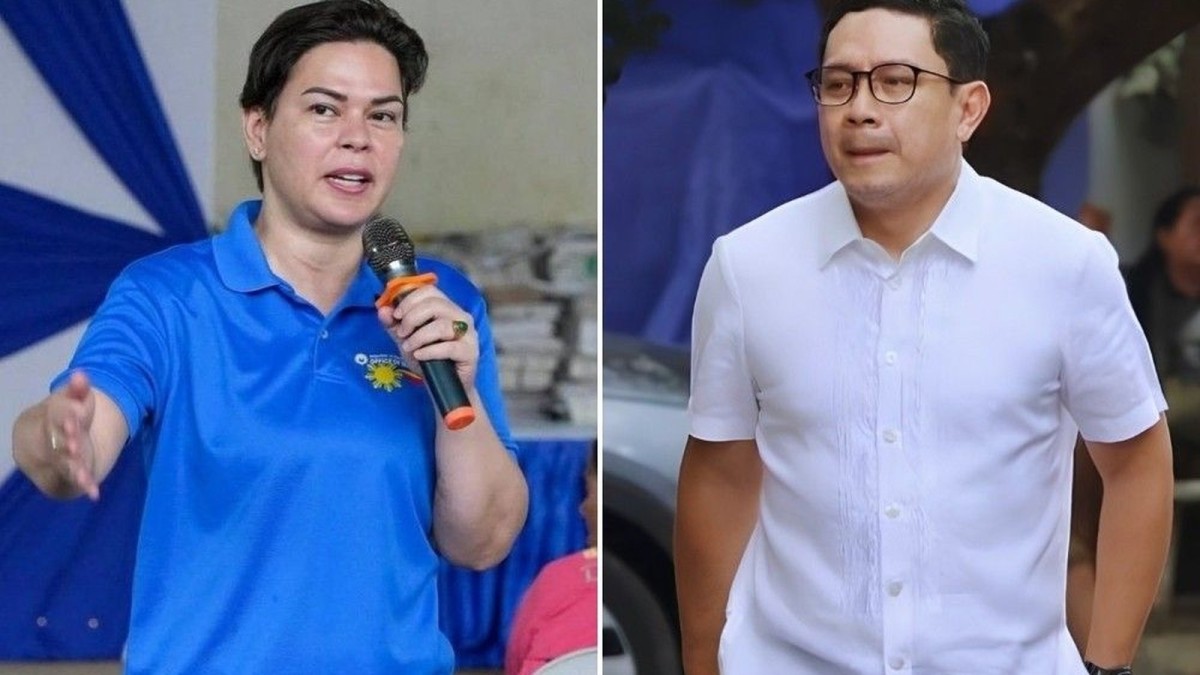
Former Senator Antonio Trillanes IV took to a press conference on Friday, October 2, 2026, to allege that a food company partially owned by Vice President Sara Duterte’s husband received more than P319 million from Chinese sources. Trillanes, who had just asked to be dropped as a witness in the vice president’s impeachment trial, said the alleged inflow of foreign money posed a grave national‑security risk and, on its own, should be enough to impeach and disqualify the vice president from public office. His claims have reignited a controversy that has shadowed the Duterte family since 2016, and they now hinge on a web of corporate filings, anti‑money‑laundering records and a nonprofit group tied to the vice president.
Background of the allegation
Trillanes framed his accusation as a matter of constitutional propriety. “It is illegal for a high‑ranking official to accept money from a foreign government,” he told reporters, adding that the vice president’s involvement could be “conjugal property” that must be declared under Philippine law. He said the flow of Chinese funds to a company linked to her husband, lawyer Manases “Mans” Carpio, carried “severe national‑security implications.” The former senator’s remarks came a day after House prosecutors formally dropped him as a witness, a move he said he requested to relieve the prosecution of further pressure.
Vice President Duterte has consistently denied any wrongdoing. In April, she dismissed Trillanes’s allegations as a revival of the same accusations she has faced for a decade, accusing him of being backed by a “machinery” intent on tarnishing her family’s reputation. Nonetheless, the new claims focus on concrete corporate documents, which Trillanes says will be presented at the impeachment trial.
The corporate link: Cale88 Foods Corp.
The centerpiece of Trillanes’s case is Cale88 Foods Corp., a company that, according to Securities and Exchange Commission (SEC) records, was partly owned by Carpio from 2021 to 2024. SEC Director Gerardo Del Rosario testified that Carpio’s stake rose to 47.5 percent in 2024 before disappearing in 2025. While the vice president herself has no direct ownership in Cale88, Trillanes argues that assets acquired by a spouse are considered conjugal property under Philippine law, and therefore must be disclosed.
Trillanes highlighted several red flags in Cale88’s filings. The company’s electricity bill averaged only P8,000 a month in 2023—a figure he said is insufficient to power a banana‑chip factory. Moreover, the firm reported no trade receivables or payables, indicating that all purchases and sales were settled in cash, a practice he likened to a “banana cue stall.” The firm’s sales trajectory also raised eyebrows: nil sales in 2021, a modest P20,000 in 2022, a jump to P23 million in 2023, and a surge to P150 million in 2024, before falling again in 2025 when the company listed only two employees.
Financial flows and the China connection
Trillanes asserted that more than P300 million entered Cale88’s accounts, far exceeding the company’s declared sales of P208.49 million. He questioned how the excess could be justified, noting that even if the firm purchased P200 million worth of banana chips, the deposit of P300 million would remain unexplained. The former senator said the alleged Chinese inflows would be proven at the trial.
Lead prosecutor Rep. Jinky Luistro confirmed that anti‑money‑laundering (AMLC) records submitted to the court include summaries of remittances to Cale88 from China and other countries. While she declined to disclose exact amounts, citing the sub‑judice rule, her acknowledgment lends procedural weight to Trillanes’s claim that foreign money entered the company’s accounts.
The nonprofit conduit: Tapang at Malasakit Alliance
In addition to the corporate angle, Trillanes presented evidence that the Tapang at Malasakit Alliance for the Philippines Inc., a Davao City nonprofit founded by Vice President Duterte, received a P150 million donation from the Embassy of the People’s Republic of China. The alliance lists Duterte as an incorporator, with trustees including “Maria Laarni Cayetano” (identified by Trillanes as the wife of Senator Alan Peter Cayetano) and “Jefry Tupas,” a staff member he described as trusted by the vice president.
The donation, according to the alliance’s financial statement, was earmarked for the construction of 13 classroom buildings. The project was coordinated with the Department of Education in Davao City and reportedly took place under an agreement with the Chinese embassy. The money was received in 2019 and the last tranche of P8.42 million was disbursed in 2020. The donation was publicly announced at the time, with news outlets covering a groundbreaking ceremony on October 5, 2018, where then‑Mayor Duterte, as Davao City mayor, stood with Chinese Ambassador Zhao Jianhua, who described the gift as appreciation for President Rodrigo Duterte’s China policy.
Legal and constitutional implications
If Trillanes’s allegations are substantiated, they could trigger several legal consequences. The 1987 Constitution prohibits public officials from receiving gifts, benefits or any form of compensation from foreign governments without congressional approval. Accepting a P150 million donation from a foreign embassy, even through a nonprofit, could be interpreted as a violation of this provision. Moreover, the alleged inflow of Chinese funds into a company linked to the vice president’s spouse raises questions under the Anti‑Money Laundering Act, which mandates reporting of suspicious transactions and foreign contributions.
Beyond the statutes, the political stakes are high. An impeachment complaint has already been filed against Vice President Duterte, and the emergence of new evidence could influence the Senate’s deliberations. The Senate, acting as an impeachment court, must decide whether the alleged conduct meets the threshold of “high crimes, misdemeanors, or betrayal of public trust” required for removal from office. Trillanes’s claim that the Chinese money alone is “enough to impeach” underscores the seriousness with which he views the matter.
Public reaction and the broader context
The allegations have sparked a wave of commentary across barangays, sari‑sari stores and social media platforms. Many ordinary Filipinos, still feeling the economic pinch from rising food prices, are questioning whether public officials are prioritizing personal or familial gain over national interest. Community leaders have called for transparency, invoking the spirit of bayanihan to demand that elected officials be held accountable.
At the same time, the controversy arrives amid a broader scrutiny of China‑Philippines relations. While the two countries have deepened trade and investment ties, concerns over sovereignty and foreign influence remain potent, especially in the wake of disputes in the South China Sea. The alleged flow of Chinese money into a company tied to the vice president’s family taps into these anxieties, prompting calls for a thorough investigation by the Department of Justice, the PNP and the Office of the Ombudsman.
What lies ahead
As the impeachment trial proceeds, the Senate will hear testimony from SEC officials, AMLC representatives and possibly the vice president herself. The outcome will hinge on whether the presented documents can conclusively link the Chinese funds to illicit intent or personal enrichment. Trillanes has pledged to disclose “everything he would have shared before the senator‑judges,” signaling that more evidence may surface in the coming weeks.
For ordinary Filipinos watching from their barangay halls and kitchen tables, the case is more than a political drama; it is a test of the nation’s commitment to transparency, rule of law and the democratic principle that no one, regardless of rank, is above the Constitution. As the story unfolds, the hope is that the process will be guided by facts, not partisan fervor, and that any wrongdoing—whether by a vice president, her spouse or associated entities—will be addressed with the same rigor that the Filipino people demand of their public servants.
This article was produced with AI-assisted research and editorial support. Reporting is based on the source material cited below. Sources: Philstar.com; Global1.News (02 October 2026).
By Bella Reyes, Staff Writer
What's Your Reaction?
 Like
0
Like
0
 Dislike
0
Dislike
0
 Love
0
Love
0
 Funny
0
Funny
0
 Wow
0
Wow
0
 Sad
0
Sad
0
 Angry
0
Angry
0

Philippines/Southeast Asia Correspondent at Global1.News. Manila-based journalist covering Philippine politics, environment, maritime security, and social issues. Passionate about marine conservation and the communities protecting the Philippines' natural heritage.












Comments (0)