
Europe's $3.5 Billion Fire Bill Is a Warning Latin America Must Heed
As Europe confronts its most ferocious wildfire season on record, with France alone surpassing 116,000 hectares burned and a staggering $3.5 billion restoration bill looming, the crisis carries urgent lessons for Latin America where shifting El Niño patterns now threaten to turn Brazil's dry season into a tinderbox.
As Europe confronts its most ferocious wildfire season on record, with France alone surpassing 116,000 hectares burned and a staggering $3.5 billion restoration bill looming, the crisis carries urgent lessons for Latin America where shifting El Niño patterns now threaten to turn Brazil's dry season into a tinderbox. The human cost echoes across continents, from evacuated families in Fontainebleau to vulnerable communities in the Amazon and Pantanal facing heightened respiratory threats and displacement. This is not merely a European disaster but a global warning that demands shared vigilance.
Europe's $3.5 Billion Fire Bill Is a Warning Latin America Must Heed
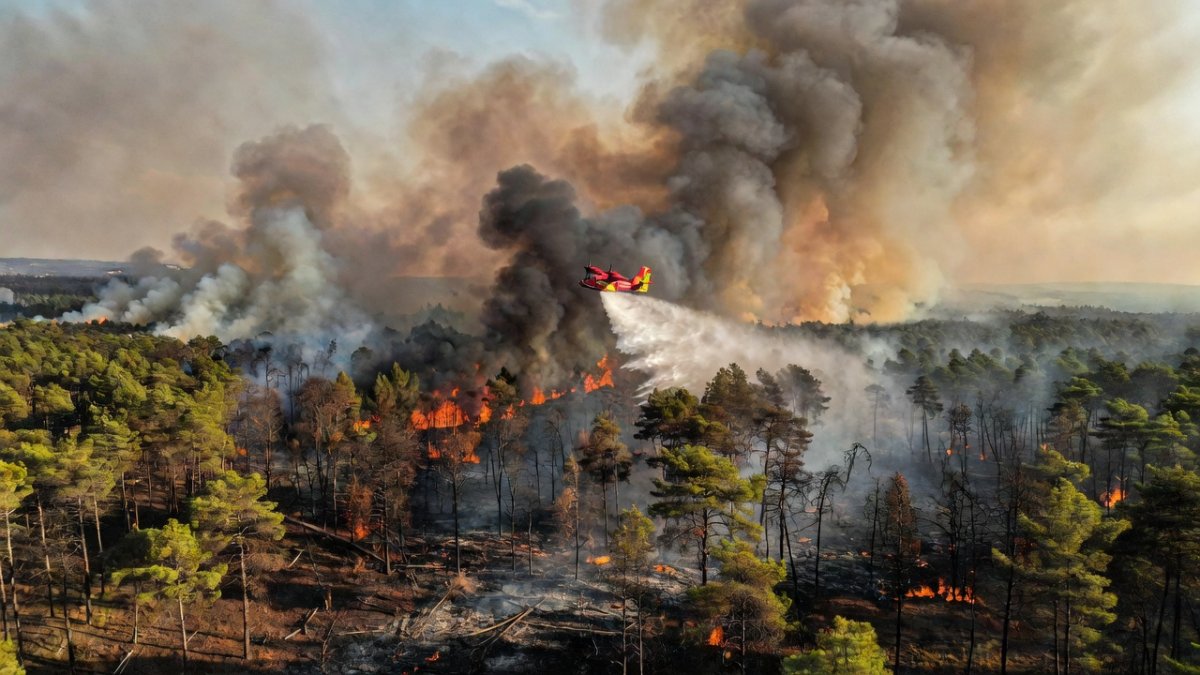
Fontainebleau, France — August 6, 2026 — The acrid smoke still hangs over the scorched edges of this UNESCO-listed forest just 60 kilometers from Paris, where flames devoured nearly 2,000 hectares in mid-July, the largest fire in its recorded history.
The Numbers Behind Europe's Burning Summer
France has burned more than 116,000 hectares in 2026, an absolute record since measurements began and a grim surpassing of both 2022 and the catastrophic 1949 season. Across the country, authorities logged over 14,000 vegetation fires, with the Landes wildfire that ignited July 22 alone consuming roughly 42,000 hectares, injuring 88 firefighters, and demolishing more than 240 buildings. Over 300,000 people were evacuated across France and Spain, including 250,000-plus in France, marking the largest peacetime evacuation since World War II. Nearly 500,000 hectares have burned across Europe since the fire season opened. The Tour de France Stage 21 on July 26 was shortened from about 110 kilometers to 89 kilometers as security forces shifted to fire zones. Insurers now face unprecedented claims volumes while households and businesses tally losses from property, crops, and tourism disruption. These figures dwarf the European Commission's prior €2.5 billion average annual impact estimate for the entire bloc, revealing how quickly climate-amplified extremes outpace institutional projections. Latin American observers note the same temperature spikes and drought signals now arriving via El Niño, underscoring why Brazil's current low burn totals offer only temporary relief before peak dry season intensifies.
Fontainebleau: A UNESCO Forest at the Front Line
Fontainebleau forest, a UNESCO World Heritage site famed for its biodiversity and proximity to millions of Parisians, suffered its worst recorded blaze between July 12 and 14 when roughly 2,000 hectares were reduced to ash. A flare-up on July 29 threatened renewed spread, forcing renewed containment efforts. The fire's scale stunned local officials who had never seen flames reach such intensity inside the historic woodland. Evacuations rippled through nearby communities, adding to France's total of over 250,000 displaced residents this season. The episode illustrates how even protected European landscapes are no longer insulated from megafire behavior once confined to more arid regions. For Latin America, the parallel is stark: Brazil's Amazon and Argentina's northern forests face analogous risks as El Niño transitions into stronger phases through early 2027, according to PAHO and WMO forecasts. Above-normal temperatures across much of the Americas will heighten drought in Central America, the Caribbean, and northern South America while boosting rainfall elsewhere. The Fontainebleau loss reminds us that cultural and ecological treasures require proactive defense, not reactive mourning, especially when Brazil's 2026 year-to-date burn of 2,104,476 hectares remains 93 percent below the 30.9 million hectare average yet sits on the cusp of its most dangerous months.
Arson and the Human Hand Behind the Flames
Authorities report that nearly 70 percent of Europe's fires were deliberately set, transforming what might have been manageable ignitions into landscape-scale disasters. In Greece, a 44-year-old man was arrested on Kefalonia for deliberately starting a blaze, while the Porto Germeno megafire destroyed over 100 homes and scorched about 10,000 hectares, killing two helicopter crew members in a mid-air collision on August 2. Nearly 500 firefighters battled that inferno with reinforcements from France and Romania. Spain saw over 63,000 people evacuated west of Madrid after two fires merged and consumed more than 6,000 hectares. These human-ignited events compound the meteorological drivers, revealing that technology and policy alone cannot suffice without addressing arson motivations. Latin American nations confront similar criminal fire patterns, as seen in the 2025 Amazon where deforestation spiked through deliberate burning despite overall burned area dropping to 3.1 million hectares. IBAMA, ICMBio, and INPE continue monitoring, yet the projected doubling of Amazon burned surface over the next 30 years from deforestation-climate interactions demands stronger enforcement. Europe's experience shows that without tackling the human hand, even advanced early-warning systems from Copernicus/EFFIS or NASA FIRMS will face overwhelming odds.
The Restoration Bill Comes Due
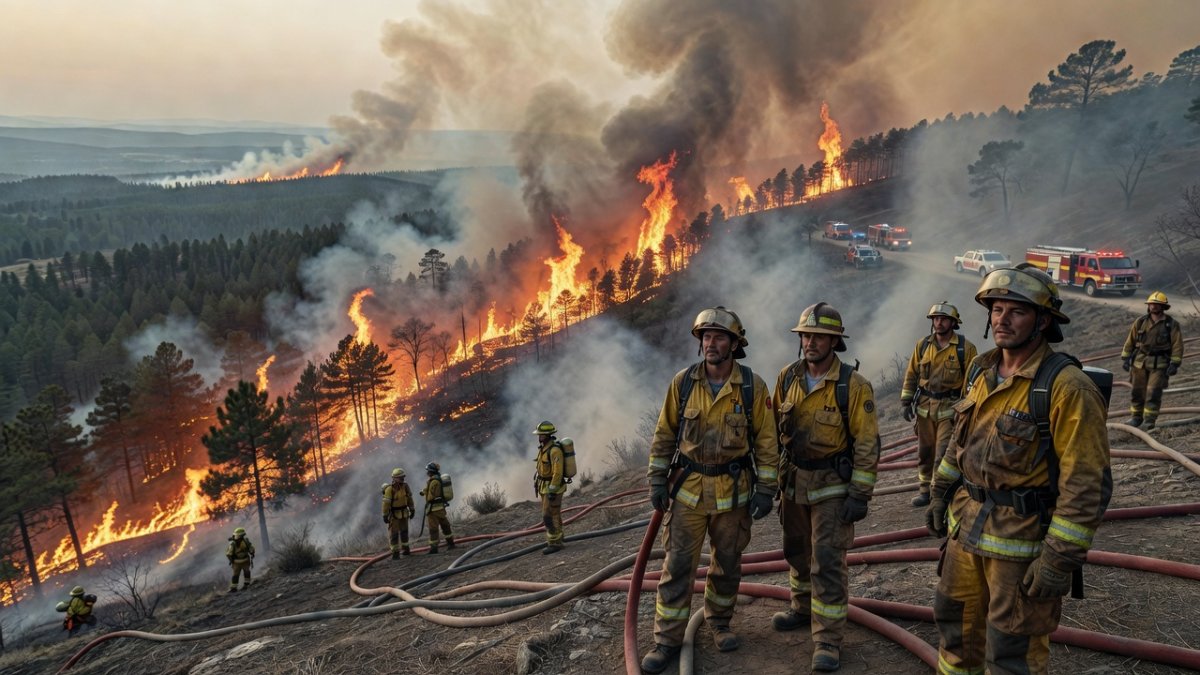
Financial Times analysis places the restoration bill for Europe's five most-affected countries at $3.5 billion, or €3.1 billion, far exceeding the European Commission's €2.5 billion average annual impact projection for the whole bloc. Insurers warn of record claims as property, crops, and tourism losses mount. The Airbus A400M Atlas military transport was converted into a large air tanker for the first time this season, highlighting the scramble for resources. Interior Minister Laurent Nuñez plans to convene industrial and governmental stakeholders to bolster France's firefighting capacity. These costs arrive alongside human trauma, including the 88 firefighters injured in the Landes blaze. For Latin America, the economic lesson is pressing: Chile's February 2025 fires killed 137 people and Bolivia's 2024 season scorched 12.6 million hectares, while the Pantanal 2020 event burned roughly a third of the world's largest tropical wetland. PAHO warns that El Niño will elevate risks of vector-borne diseases, heat-related illness, wildfire respiratory impacts, food insecurity, and displacement across the Americas. Brazil and Argentina currently show reduced burned areas at 2,104,476 and 566,398 hectares respectively, yet the intensifying dry season now arriving means preparation budgets must rise before restoration bills arrive.
What This Means for Latin America
PAHO's June 24, 2026 Public Health Situation Analysis highlights El Niño conditions transitioning with high probability of development persisting into early 2027, bringing above-normal temperatures and heightened drought risk to Central America, the Caribbean, and northern South America. WMO forecasts intensification that will increase heatwaves, droughts, and extreme weather. Brazil's peak dry season is arriving now, elevating fire risk despite 2026's 5,566 fires remaining far below the 63,436 average. Historical precedents like the 2020 Pantanal and Chile's 2025 tragedy demonstrate how quickly conditions can flip. The Amazon's 2025 burned surface of 3.1 million hectares, though down from 2024's record, coincided with deforestation spikes from criminal fires, and studies project the burned area could double in 30 years through deforestation-climate synergy. Argentina's 566,398 hectares burned this year sits 86 percent below its two-decade average, yet shared vulnerabilities mean Latin American agencies must accelerate coordination with European tools. CONAF in Chile and Brazil's INPE, IBAMA, and ICMBio already exchange data via GWIS, but the European bill underscores that underinvestment today guarantees far higher costs tomorrow.
Tools That Could Save the Next Fire Season
Europe deployed the Airbus A400M Atlas as a large air tanker for the first time in 2026, while satellite systems such as Copernicus/EFFIS, NASA FIRMS, and the 2025-launched FireSat provided critical mapping. Latin America possesses parallel infrastructure through INPE, IBAMA, ICMBio, and CONAF, yet integration remains incomplete. These platforms detected the Landes and Porto Germeno events early, enabling partial evacuations, yet arson-driven speed still overwhelmed responses. PAHO emphasizes that wildfire-associated respiratory impacts will rise under El Niño, making real-time data sharing essential for health systems from São Paulo to Santiago. Brazil's current low fire counts of 5,566 versus the 63,436 average demonstrate that monitoring works when paired with enforcement, but the dry season now unfolding requires scaling these tools immediately. Cross-continental learning, including France's planned stakeholder convening, could strengthen regional capacity before 2027 peaks. Without such investment, the $3.5 billion European precedent risks repeating across the Americas.
Voices from the Ground
At Cap Ferret, 79-year-old Benoît Bartherotte refused evacuation and used bulldozers to cut a 60-metre firebreak, saving the peninsula and earning the nickname "Robinson du Cap Ferret." He remarked, "If you have to go through all the administrative procedures, the patient always has time to die cured," capturing the frustration with bureaucratic delays amid fast-moving flames. Interior Minister Laurent Nuñez's upcoming meetings with industrial and governmental stakeholders aim to close such gaps in France's capacity. Similar ground-level urgency resonates in Latin America, where communities in northern South America face El Niño-driven drought that PAHO links to increased food insecurity and displacement. The 300,000-plus evacuations across Europe this season, including 250,000 in France, mirror the scale of potential movements if Brazil's Amazon and Pantanal ignite under hotter, drier conditions. These voices demand action that transcends borders, linking Fontainebleau's recovery to Amazonian resilience through shared satellite networks and rapid-response protocols.
The Bottom Line — What Comes Next
Europe's record 116,000-plus hectares burned in France and the $3.5 billion bill expose systemic underpreparedness that Latin America cannot afford to replicate. With El Niño expected to intensify through early 2027, Brazil's dry season peak and Argentina's northern zones require immediate scaling of INPE, IBAMA, ICMBio, and CONAF capabilities alongside Copernicus/EFFIS and FireSat integration. Nearly 70 percent arson rates in Europe highlight enforcement needs that criminal fire patterns in the Amazon already demand. The human evacuations, firefighter injuries, and health risks catalogued by PAHO and WMO call for cross-regional investment before restoration costs mount. By convening stakeholders now, as France's Interior Minister plans, and learning from both Europe's Airbus conversions and Latin America's monitoring successes, nations can blunt the next wave. The choice is clear: act with the urgency of Cap Ferret's bulldozer or pay the compounding bill later.
By Elena Vasquez, Staff Writer
This article was produced with AI-assisted research and editorial support. Reporting is based on sources cited in the article.
What's Your Reaction?
 Like
0
Like
0
 Dislike
0
Dislike
0
 Love
0
Love
0
 Funny
0
Funny
0
 Wow
0
Wow
0
 Sad
0
Sad
0
 Angry
0
Angry
0

Latin America Correspondent at Global1.News. Based in Mexico City, covering politics, economics, energy, and culture across the region. Brings an on-the-ground perspective to stories spanning from the Rio Grande to Patagonia.















Comments (0)