
Gunned Down on Camera: Cartel War's Deadly Reach
Cesar Gastelum, a comedy and lifestyle influencer with more than 500,000 TikTok followers, was shot dead at close range outside a KFC restaurant in the Tres Rios area of Culiacan on Tuesday evening — the latest killing of a social media figure amid Sinaloa's cartel war.
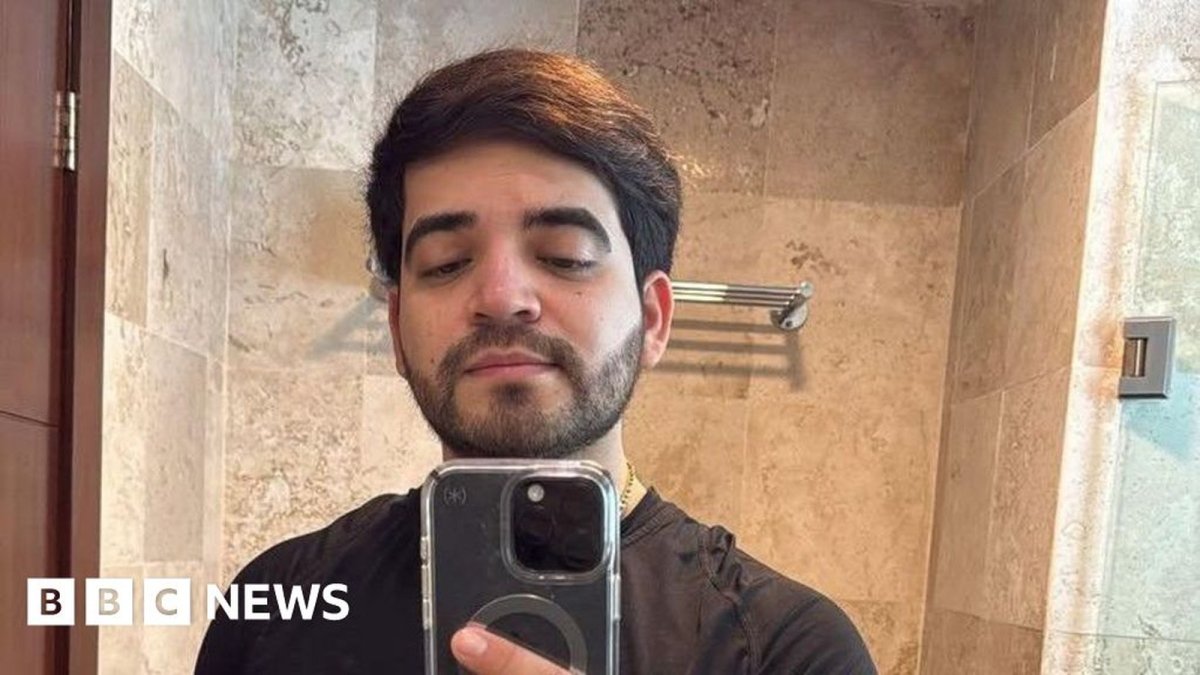
Cesar Gastelum, a comedy and lifestyle influencer with more than 500,000 TikTok followers, was shot dead at close range outside a KFC restaurant in the Tres Rios area of Culiacan on Tuesday evening. Two men on a motorbike approached while he livestreamed on social media with friends, and one fired at him before they fled. Gastelum and his companions wore bright orange coats and carried delivery bags, leading initial police responders to mistake the victim for a delivery driver. The killing adds to a string of attacks on social media figures amid the ongoing conflict between Sinaloa cartel factions that has made everyday movement in the city increasingly hazardous.
Gunned Down on Camera: Cartel War's Deadly Reach
Culiacán, Mexico — article continues...
Shot While Livestreaming: What Happened in Culiacan
Two assailants on a motorcycle pulled up to the fast food outlet in Tres Rios and shot Gastelum at close range as he stood with two friends. Police and forensic technicians from the Sinaloa state prosecutor's office cordoned off the scene, collected cartridge casings, and reviewed nearby CCTV footage for leads. No arrests have been reported, and the gunmen escaped without immediate identification.
The shooting was broadcast live, meaning the attack unfolded in real time for whoever was watching the stream. That footage has since circulated widely, turning a local crime scene into a national talking point within hours. For investigators it is a rare piece of evidence — yet the same exposure that makes the case impossible to ignore has not, so far, produced arrests.
Initial responders treated the case as a possible delivery-related incident because of the bright orange coats and bags, which postponed formal identification until social media profiles surfaced. This delay meant early investigative steps focused on routine street crime rather than the broader context of targeted violence. No suspects have been detained, and authorities have not released details on whether the gunmen were recognized from prior incidents or linked to known faction activity in the area.
An Influencer Economy Under Fire
Gastelum's death follows the killing of 23-year-old Valeria Marquez, who was shot dead last year while livestreaming at a beauty salon in another Mexican city. In December 2024, influencer Leobardo Aispuro, known as El Gordo Peruci, was also killed in an attack that police linked to cartel faction rivalries. Gastelum had posted images on Instagram showing himself at Aispuro's grave, highlighting how social media creators in Mexico often intersect with the same networks of violence that target them. These cases illustrate a pattern where individuals building audiences through comedy, lifestyle, and travel content face lethal risks tied to broader criminal disputes.
What makes these killings distinctive is how often the victims' own archives trace the danger. Creators build audiences through comedy or daily-life posts, yet the same geography, location tags and social circles that grow a following can place them inside the crosshairs of territorial disputes. For audiences across Mexico, the killing of an influencer is becoming a recognizable genre of violence — one in which the very tools used to build a career also record its end, and where state protection for public figures rarely arrives in time.
Livestreaming has turned some killings into immediate public records, supplying investigators with real-time footage yet rarely producing swift arrests. The recording itself becomes part of the case file — and part of the public trauma — but the distance between evidence and accountability remains wide. For the families of victims, the distinction between a solved crime and a watched one is the difference that matters.
The Cartel War That Defines Sinaloa
The September 2024 rupture between Los Chapitos and La Mayiza factions of the Sinaloa cartel has turned Culiacan and the surrounding region into a landscape of sustained violence. Gastelum's killing occurs within this environment, where public spaces such as restaurants and streets become sites of targeted attacks that spill over into civilian life. Sinaloa state authorities have documented dozens of such incidents since the split, underscoring how factional competition reshapes security for entire communities.
The rupture followed the arrest of Ismael "El Mayo" Zambada, the cartel's elder statesman, and quickly made Culiacan the main arena of clashes. Neighborhoods have fallen under shifting faction control, prompting businesses to close early and families to relocate when shootings intensify. Reports document hundreds of disappearances and killings across the state since the split, with security analysts noting that fragmentation has cost the cartel control over several established trafficking corridors.
SEDENA deployments have increased in response, yet the violence continues to spill into everyday spaces such as restaurants and streets. Residents describe altered commutes and restricted movement after dark, while local commerce contracts under the pressure of unpredictable attacks. The conflict's reach now affects not only direct participants but entire communities whose routines are reshaped by the need to avoid contested zones.
Who Investigates When the Cameras Are Off
The Sinaloa state prosecutor's office leads the inquiry into Gastelum's death, supported by municipal police in Culiacan and forensic teams examining physical evidence at the Tres Rios scene. Investigators have not confirmed prior threats against the influencer, and the absence of arrests leaves open questions about whether the attack stemmed from mistaken identity or deliberate targeting. Similar cases, including the Marquez and Aispuro killings, have produced limited public updates on prosecutions, reflecting persistent challenges in securing witnesses and advancing cases amid cartel influence in the region. Local reporting indicates that many residents hesitate to cooperate with authorities due to fears of retaliation.
What This Means for Culiacan's Communities
Families in Culiacan now navigate streets with heightened caution, avoiding certain neighborhoods as shootings become more frequent. The deaths of social media figures like Gastelum compound the sense that public visibility itself carries risk, affecting young people who turn to content creation for income in an economy strained by cartel-related instability. Community organizations and local health workers report increased anxiety and disrupted access to services, as violence interrupts medical care and daily routines. Without concrete progress on arrests or accountability, residents face continued uncertainty about when the cycle of targeted killings will subside.
Constant threat has altered school schedules, nightlife, and market hours as families weigh each outing against the chance of stray gunfire. Small businesses adapt by shortening hours or relocating stock, while local police and prosecutors manage rising caseloads with limited resources for witness protection. The risk that such violence becomes accepted as routine grows when arrests remain rare and public updates on cases stay scarce.
Similar pressures appear in other Latin American cities where cartel or gang activity fragments daily life and erodes trust in institutions. For many young Mexicans, influencer work once offered an alternative to traditional employment in strained economies, yet the recent killings show that path now carries its own exposure. Without clearer progress on accountability, residents continue navigating uncertainty over how long the current pattern will persist.
The Bottom Line
What separates this killing from the broader toll of cartel violence is the audience that watched it happen. A murder recorded in real time becomes harder to ignore, yet it does not automatically become easier to solve: the same fear that silences witnesses in Culiacan applies to cases that unfold on camera. Until arrests and convictions follow cases like Gastelum's, the message to creators and residents alike remains unchanged — visibility is not protection, and the cartel war's costs keep landing on ordinary lives.
For Mexico, the challenge is not only defeating the factions that fight over Sinaloa's routes, but rebuilding the trust that lets communities cooperate with investigators in the first place. Every killing that goes without resolution deepens that deficit, and every one captured on a phone screen reminds the country how far the violence has reached.
By Elena Vasquez, Staff Writer
This article was produced with AI-assisted research and editorial support. Reporting is based on sources cited in the article.
What's Your Reaction?
 Like
0
Like
0
 Dislike
0
Dislike
0
 Love
0
Love
0
 Funny
0
Funny
0
 Wow
0
Wow
0
 Sad
0
Sad
0
 Angry
0
Angry
0

Latin America Correspondent at Global1.News. Based in Mexico City, covering politics, economics, energy, and culture across the region. Brings an on-the-ground perspective to stories spanning from the Rio Grande to Patagonia.







Comments (0)