
Ethiopia acquires Russian fighter jets and air defence systems amid war in Tigray
Ethiopia’s defence landscape has taken a dramatic turn as the nation welcomed twelve Russian Su‑35 fighter jets, a move Prime Minister Abiy Ahmed hailed as a “milestone” for the country’s security.
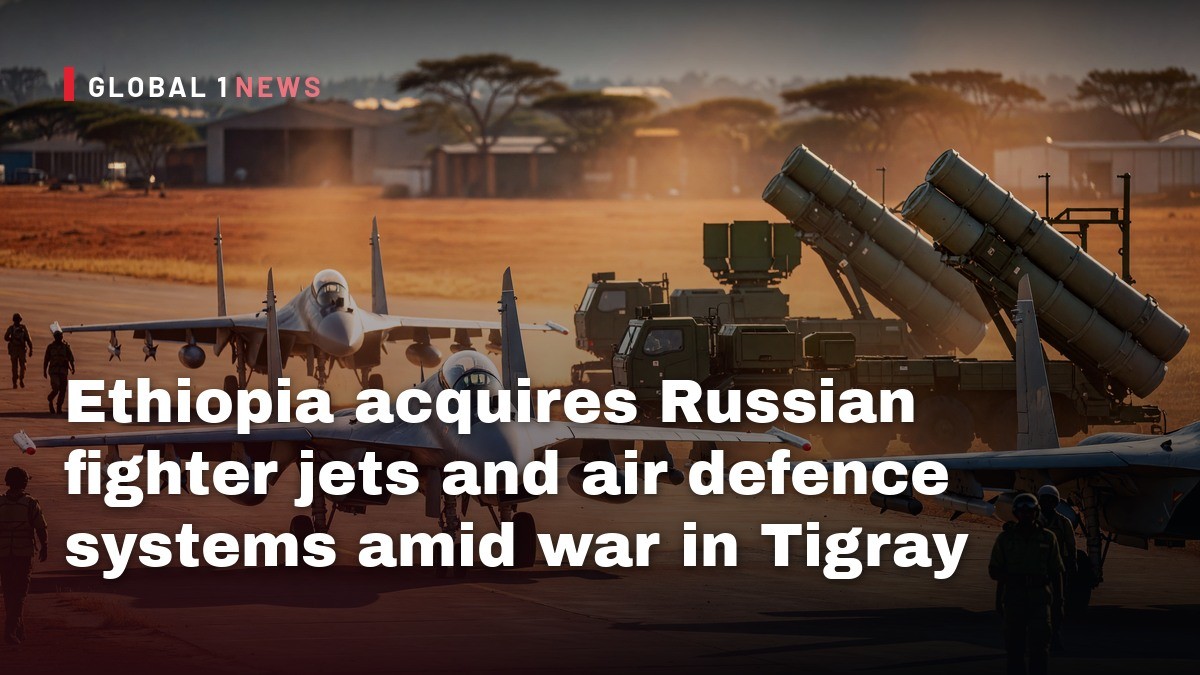
Ethiopia’s defence landscape has taken a dramatic turn as the nation welcomed twelve Russian Su‑35 fighter jets, a move Prime Minister Abiy Ahmed hailed as a “milestone” for the country’s security. Arriving amid fresh clashes in the northern Tigray region, the aircraft – together with planned S‑400 air‑defence systems – signal a new era of high‑tech warfare for a nation that has long relied on more modest military hardware. While the acquisition underscores Ethiopia’s growing strategic partnership with Moscow, it also raises questions about the broader implications for regional stability, especially as the conflict with the Tigray People’s Liberation Front (TPLF) threatens to spill over into neighbouring Eritrea.
From Moscow to Addis Ababa: The deal behind the jets
The Su‑35s arrived while Prime Minister Abiy Ahmed attended the Russia‑Africa summit in Moscow, where he described the delivery as arriving “ahead of schedule”. He reminded listeners that the agreement to procure the jets and the S‑400 air‑defence systems had been signed several years earlier, reflecting a long‑standing military partnership that began with a 2021 accord to train Ethiopian forces and upgrade technology.
Abiy framed the hardware as essential for safeguarding Ethiopia against “external threats”, positioning the jets as a deterrent against any nation that might seek to exploit the country’s landlocked status. He also highlighted the S‑400 systems, noting that Ethiopia plans to acquire four of these long‑range air‑defence units from Moscow, though the delivery timeline was not specified in the source.
What the Su‑35 brings to Ethiopia’s arsenal
The Su‑35 is a fourth‑generation fighter capable of both air‑to‑air and air‑to‑ground missions. According to the prime minister, the aircraft can detect and neutralise incoming cruise missiles at distances of up to 200 km, a range that dramatically expands Ethiopia’s defensive perimeter. Military analyst Qalaab Segatu emphasized the jet’s manoeuvrability and its powerful radar, which can “ensure air superiority and long‑range scanning”.
Segatu warned that the acquisition signals Ethiopia’s preparation for potential conflicts beyond its internal strife, suggesting the jets could be used in “possible wars with other countries, not just internal conflicts”. The combination of high‑performance fighters and the planned S‑400 systems, he argued, creates a “significant capability to protect and defend major cities and critical infrastructure such as the Renaissance Dam”.
Drones, drones, drones: A layered deterrent
While the Su‑35s dominate headlines, Abiy reminded his audience that Ethiopia’s defence strategy also hinges on unmanned aerial systems. The country has already employed drones from Turkey and China in recent operations, and the prime minister stressed the need to “build capacity not only with drones, but also with the fourth generation capabilities” of aircraft like the Su‑35.
This layered approach reflects a broader trend in African militaries, where low‑cost drones complement more expensive manned platforms. By integrating both, Ethiopia hopes to achieve a flexible deterrent that can respond to a range of threats, from insurgent groups to conventional air attacks.
The Tigray conflict: A catalyst for arms buildup
The fresh delivery of the jets coincides with a resurgence of fighting in northern Tigray, which began last month between the federal government and the TPLF. Both sides accuse each other of breaching a 2022 peace deal that ended a previous civil war. The renewed hostilities have drawn in neighbouring Eritrea, which Ethiopia alleges is supporting the TPLF—a claim Eritrea denies.
Abiy’s emphasis on “protecting the country from external threats” can be read against this backdrop. The proximity of the conflict to the Eritrean border and the historic rivalry over access to the Red Sea make the region a tinderbox where any escalation could draw in additional actors, including Russia, which has a vested interest in seeing its equipment employed.
Regional reverberations: How neighbours view Ethiopia’s new capability
Eritrea’s own security concerns are intertwined with Ethiopia’s new air power. The two nations have a fraught history, with Eritrea gaining independence in 1993 after a protracted war that left Ethiopia landlocked. Abiy has repeatedly described Ethiopia’s lack of direct sea access as an “existential question”, a sentiment that underscores the strategic importance of the Red Sea corridor for both countries.
For other Horn of Africa states, Ethiopia’s acquisition may prompt a reassessment of their own defence postures. The Su‑35’s long‑range detection capabilities and the prospective S‑400 systems could shift the balance of air power, compelling neighbours to consider similar upgrades or diplomatic measures to ensure their own security.
Russia’s expanding footprint in African security affairs
The delivery of the Su‑35s is part of a broader Russian strategy to deepen military ties across the continent. Since the 2021 training agreement, Moscow has positioned itself as a reliable supplier of advanced combat technology to African states seeking alternatives to Western arms markets. By providing Ethiopia with high‑end fighters and promising air‑defence systems, Russia not only secures a foothold in the Horn of Africa but also showcases its capacity to deliver sophisticated weaponry to non‑aligned partners.
Abiy’s description of President Vladimir Putin as a “close friend of Ethiopia” underscores the personal dimension of this partnership. Such relationships often translate into preferential treatment in future deals, potentially cementing Russia’s role as a key arms supplier for Ethiopia and other African nations looking to modernise their forces.
Looking ahead: What the jets mean for Ethiopia’s future
With the Su‑35s now in Ethiopian hands, the government faces the challenge of integrating them into an air force that has traditionally operated older platforms. Training pilots, establishing maintenance infrastructure, and ensuring a steady supply of spare parts will be critical to turning the aircraft into a functional deterrent.
Beyond the technical hurdles, the political calculus will be decisive. If the jets are deployed primarily to protect strategic assets like the Renaissance Dam and to deter external aggression, they may reinforce Ethiopia’s claim to regional stability. However, if they are used to intensify the campaign in Tigray, the conflict could widen, drawing in Eritrea and potentially other regional actors. The world will be watching how Abiy balances the promise of advanced combat technology with the responsibility of wielding such power in a volatile environment.
This article was produced with AI-assisted research and editorial support. Reporting is based on the source material cited below. Sources: BBC News Africa; bbc.co.uk; Global1.News (29 October 2026).
By Amara Diop, Staff Writer
What's Your Reaction?
 Like
0
 Dislike
0
 Love
0
 Funny
0
 Wow
0
 Sad
0
 Angry
0

West Africa/Sahel Correspondent at Global1.News. Dakar-based journalist covering politics, security, climate, and development across Francophone and Anglophone West Africa. Tells the stories of a region undergoing profound transformation.













Comments (0)