
Canada-U.S. Tariffs Loom as Provinces Dig In on Demands
In a recent CBC News report, Canadian negotiators are expressing growing fear that new U.S. tariffs will take effect on Wednesday, as Ottawa struggles to secure relief from Washington on existing sectoral tariffs while simultaneously trying to persuade provinces to lift restrictions on American...
In a recent CBC News report, Canadian negotiators are expressing growing fear that new U.S. tariffs will take effect on Wednesday, as Ottawa struggles to secure relief from Washington on existing sectoral tariffs while simultaneously trying to persuade provinces to lift restrictions on American alcohol. With the clock ticking toward the August 19 deadline, the federal government faces a mounting challenge in holding together a "Team Canada" approach against a Trump administration that sources say is deliberately driving a wedge between Ottawa and the provinces.
Provinces Dig In as U.S. Tariff Deadline Looms: Ottawa Fights for Deal on Multiple Fronts
Ottawa – This week — Canada-U.S. trade minister Dominic LeBlanc is set to meet virtually on Sunday afternoon with U.S. Trade Representative Jamieson Greer, their third meeting in a week, as negotiators on both sides of the border concede that a comprehensive agreement may be slipping out of reach. Multiple sources briefed directly on the negotiations and granted confidentiality to speak frankly told CBC News that some Canadian negotiators now fear there may be no way to avert the new 50 per cent tariffs from taking effect at 12:01 a.m. ET on Wednesday, August 19, 2026.
The Story: A Wednesday Deadline and $28 Billion in Goods at Stake
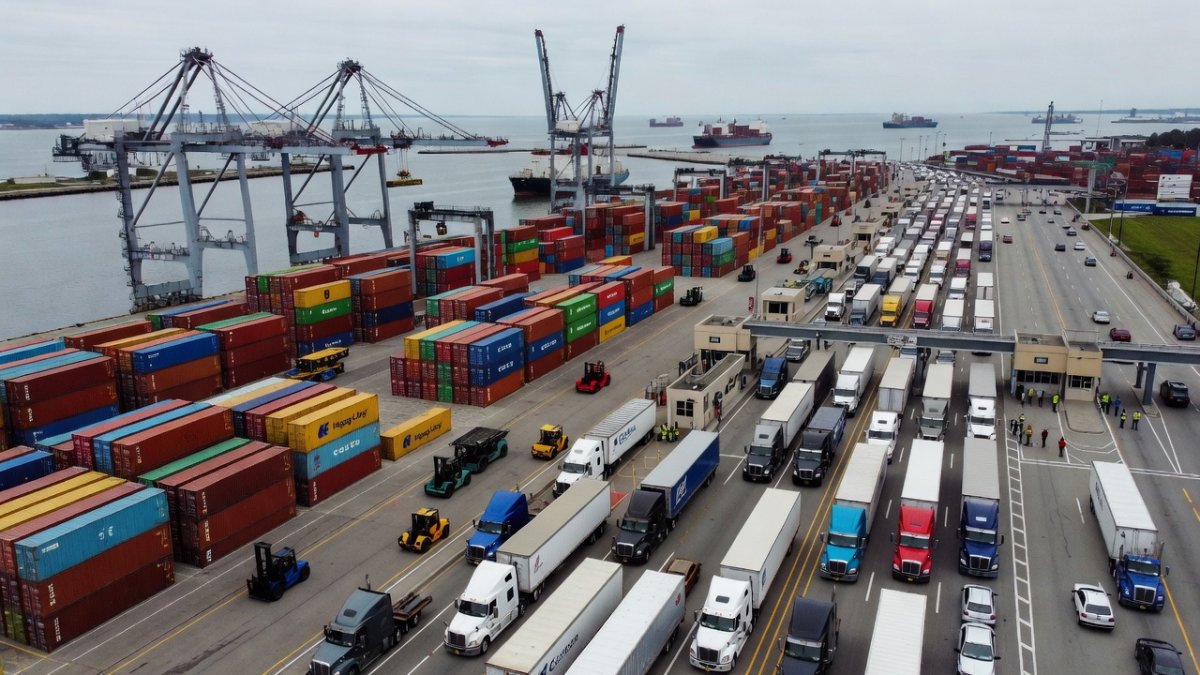
The new tariffs, announced under Section 338 of the U.S. Tariff Act of 1930 (Smoot-Hawley), cover Canadian motor vehicles, alcoholic beverages and dairy products — nearly $28-billion worth of Canadian goods, representing about five per cent of Canada's exports to the U.S. The three proclamations were signed by President Donald Trump on July 20, 2026, and include no exemption for USMCA-qualifying goods, a significant departure from previous trade disputes.
Ottawa's goal in recent weeks has been a "comprehensive agreement" with Washington that would drop the new tariffs while also lowering existing sectoral tariffs punishing the steel, aluminum, auto and lumber industries. Steel and aluminum currently face 50 per cent tariffs; autos face 25 per cent. The U.S. has so far not agreed to meaningfully reduce those sectoral tariffs already in place, and the two countries remain far apart on several issues, sources say.
Greer, speaking in Des Moines, Iowa, framed the dispute in stark terms: "For decades we have had major trade issues with Canada." He insisted the current situation "is not a trade war," but warned that if a country retaliates, "we're obviously not going to tolerate that." The Trump administration has made the resumption of U.S. alcohol sales in Canada a red line in negotiations, sources confirm.
Earlier this month, Canada's chief trade negotiator Janice Charette warned U.S. counterparts that the new tariffs would be a "cliff" in the talks. The Canadian Federation of Independent Business reports that two in five of its members are affected by U.S. tariffs, underscoring the economic stakes for small businesses across the country.

Canadian Context: The Federal-Provincial Wedge and Jurisdictional Battles
The core tension in these negotiations is fundamentally Canadian: the federal government can negotiate trade deals, but it cannot force provinces to lift alcohol boycotts that fall under provincial jurisdiction. Provinces and territories have been told Canada would have to make concessions on three issues: provincial bans on U.S. alcohol, dairy import quotas, and Canada's retaliatory tariffs on U.S. autos. Greer made the linkage explicit: "Those things have to be resolved, because that's the legal basis for those other tariffs."
The federal government has told provinces that American alcohol must return to shelves once a comprehensive deal is reached, but Ottawa is powerless to compel an end to the boycotts — the bans were set by each province individually. Only Alberta and Saskatchewan, which have privatized alcohol retail systems, have resumed selling U.S. booze. Every other province maintains its ban, creating a patchwork of compliance that complicates any federal negotiation.
A provincial source characterized the Trump administration as doing a "perfect job driving a wedge" between Ottawa and the provinces. "This was calculated. It'll be hard for 14 governments to come to a consensus," the source said. LeBlanc and Charette "reiterated the importance of a unified, Team Canada approach" during a virtual meeting with provincial and territorial trade ministers on Friday, but the message appears to be struggling to land as premiers defend their local industries.
The jurisdictional reality is stark: alcohol regulation is a provincial responsibility under Canada's Constitution Act, 1867, and premiers have shown little appetite to cede that authority. Quebec Premier Christine Fréchette stated flatly earlier this month: "The sale of alcohol falls exclusively under the jurisdiction of the Quebec government. Quebec, and Quebec alone, will make that decision." This constitutional reality means Ottawa must negotiate with 13 provincial and territorial governments, each with its own political pressures and economic priorities.
Impact on Canadians: Provinces Most Exposed and Workers on the Line
The stakes are unevenly distributed across the country, with British Columbia and Quebec facing the most significant exposure. About 13 per cent of B.C.'s exports and 10 per cent of Quebec's could be subject to the new levies if they take effect Wednesday. For B.C., the softwood lumber industry is the critical issue — Premier David Eby noted that "the softwood lumber sector is bigger than auto parts and steel combined in terms of the Canadian economy, and it needs to be front and centre at the table."
Workers in steel, aluminum, auto and lumber industries across Canada are watching these negotiations with trepidation. The existing 50 per cent tariffs on steel and aluminum have already caused significant disruption, and the 25 per cent auto tariffs threaten a sector that employs tens of thousands of Canadians in Ontario. The Canadian Federation of Independent Business says two in five of its members are affected by U.S. tariffs, a statistic that translates into real economic pain for small businesses from coast to coast.
The cost-of-living implications are also significant. If the new tariffs take effect, Canadian consumers could face higher prices on a range of goods, and the broader economic uncertainty could affect everything from housing affordability to employment prospects. The Bank of Canada will be watching these developments closely as it assesses the economic impact of a potential trade disruption on an already strained economy.
For British Columbia, the lumber dispute is existential. Eby reiterated Friday that his position "remains unchanged" from his earlier declaration that "there is not a chance in hell that U.S. alcohol is going back on the shelf in British Columbia." He framed the issue in terms of direct attack: "Our softwood lumber industry is under direct attack.... That issue needs to be addressed.... The federal government is well aware this is British Columbia's issue at the table." Sources say the current U.S. proposal does not include any meaningful reduction in softwood lumber tariffs, and the Trump administration wants lumber negotiated separately — a position B.C. rejects.
Reactions and Analysis: Premiers Draw Red Lines as Greer Holds Firm
Ontario Premier Doug Ford, speaking Thursday in Guelph, Ont., conditioned any concession on securing what he calls a "fair deal" addressing tariffs on key sectors. "If we get a fair deal that will protect our steel sector, our auto sector, our forestry sector, agriculture sector, manufacturing sector, then we'd be more than happy to bring booze back on the shelves," Ford said. His position reflects the political reality that Ontario's manufacturing economy is heavily exposed to U.S. tariffs, and any deal that fails to protect those industries would be politically untenable.
Quebec Premier Christine Fréchette struck an even firmer tone on Friday, declaring that no concessions should be made on supply management protecting Canadian dairy: "For us, it is essential to preserve supply management; we have made this a red line that must not be crossed." Sources say any deal with the U.S. will have to involve Canadian concessions on dairy, though specifics are not known publicly. This puts Ottawa in a difficult position: the U.S. is demanding dairy access, but Quebec is refusing to budge on supply management.
Quebec Economy Minister Bernard Drainville said following Friday's briefing that a big gap remains between Canada and the U.S. and "at the moment, there is no indication that Mr. Trump might postpone the application of the 50 per cent tariffs." His assessment aligns with the fears of negotiators who believe the U.S. is unwilling to extend Wednesday's deadline. One source said it is "critical" for provinces to come on side "quickly," as all indications are the U.S. will not grant an extension.
Greer's public statements in Iowa suggest little room for compromise. His insistence that the current situation "is not a trade war" while simultaneously demanding resolution of alcohol, dairy and auto retaliation issues indicates the U.S. position is firm. The Trump administration appears to be betting that provincial divisions will weaken Canada's negotiating position, and the early evidence suggests that bet may be paying off.
What Happens Next: Sunday Meeting, Wednesday Deadline, and the "No Deal" Option
LeBlanc's Sunday afternoon virtual meeting with Greer represents the latest attempt to bridge the gap, but sources are not optimistic. LeBlanc and Charette spent the week in Washington, with LeBlanc meeting Greer on Tuesday and again on Thursday. Despite these intensive efforts, the fundamental disagreements remain unresolved: the U.S. wants provincial alcohol bans lifted, dairy quotas opened, and Canadian retaliation on autos dropped, while provinces demand meaningful tariff relief on their key industries before making any concessions.
When Trump announced the new tariffs in July, Prime Minister Mark Carney told premiers that the best deal may be no deal at all. Provinces were asked to develop lists of possible retaliatory actions if the U.S. proceeds with the Aug. 19 tariffs. The Canadian side has argued there would be no political appetite among Canadians to keep talks going if the tariffs come into force — a warning that suggests Ottawa may walk away from the table entirely if Wednesday's deadline passes without a deal.
The coming days will be decisive. If the tariffs take effect Wednesday, Canada faces a choice: retaliate and risk escalating the trade war, or accept the tariffs and negotiate from a weakened position. The Canadian argument that there would be no political appetite to continue talks suggests retaliation is likely, but the form and scope of that retaliation remains unclear. Provinces have been preparing lists of possible countermeasures, and the federal government has signalled it will not simply absorb the economic hit.
For Canadians, the implications are profound. A trade war with the United States would affect everything from grocery prices to housing costs, and the uncertainty alone is damaging to business investment. The Bank of Canada will be monitoring the situation closely, and economists are already warning of potential job losses in affected sectors. The next 72 hours will determine whether Canada can avoid this outcome or whether the country is headed for a prolonged and costly trade dispute with its largest trading partner.
The fundamental challenge for Ottawa is that it must satisfy both Washington and 13 provincial governments simultaneously, and the demands of each are pulling in opposite directions. The U.S. wants concessions on alcohol, dairy and autos; provinces want tariff relief on steel, aluminum, lumber and other industries. Bridging that gap in the next three days appears increasingly unlikely, and Canadian negotiators are bracing for the possibility that Wednesday will bring new tariffs rather than a new deal.
By Alex Thompson, Staff Writer
This article was produced with AI-assisted research and editorial support. Reporting is based on sources cited in the article.
What's Your Reaction?
 Like
0
Like
0
 Dislike
0
Dislike
0
 Love
0
Love
0
 Funny
0
Funny
0
 Wow
0
Wow
0
 Sad
0
Sad
0
 Angry
0
Angry
0

Canada Correspondent at Global1.News. Based in Toronto, covering Canadian politics, energy, trade, and US-Canada relations. Provides the Canadian perspective on North American and global affairs.












Comments (0)