
Erdoğan leaves for UN General Assembly with Gaza in mind
President Recep Tayyip Erdoğan’s departure for New York on 20 September 2026 marks another strategic use of the United Nations General Assembly (UNGA) platform to amplify Turkey’s diplomatic ambitions and to foreground the Gaza humanitarian crisis.
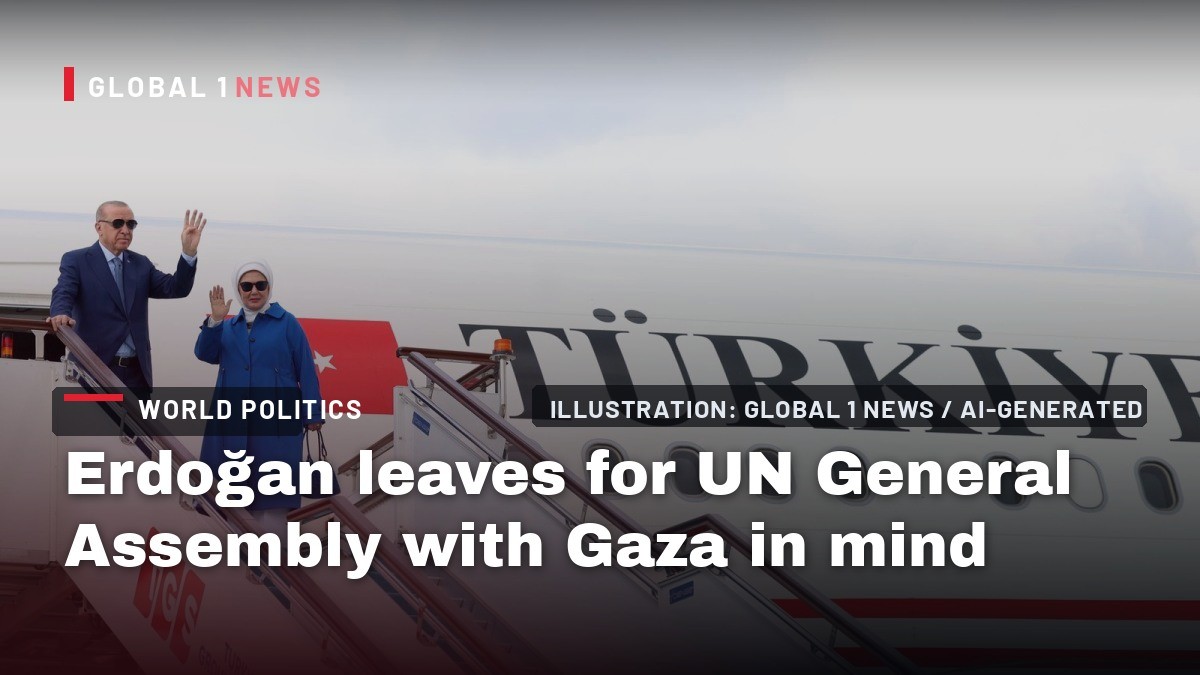
President Recep Tayyip Erdoğan’s departure for New York on 20 September 2026 marks another strategic use of the United Nations General Assembly (UNGA) platform to amplify Turkey’s diplomatic ambitions and to foreground the Gaza humanitarian crisis. Accompanied by First Lady Emine Erdoğan and a delegation of senior ministers, the Turkish president will address the 81st UNGA on 22 September as the fourth speaker on the inaugural day. His speech is expected to centre on Israel’s actions in Gaza, the push for Palestinian statehood and the broader critique of the United Nations’ structural limitations, themes that have defined his annual appearances since his first attendance as prime minister in 2005.
From Observer to Power Broker: Turkey’s UNGA Strategy
Over the past two decades, Turkey has transformed its role at the UN from a peripheral observer to a self‑styled “major power broker.” Erdoğan’s 16‑time presence on the General Assembly podium underscores a deliberate effort to shape global narratives, particularly on issues that intersect with Ankara’s regional aspirations. The current session’s theme – “Rebuilding Trust and Reigniting Global Solutions: Advancing the 2030 Agenda and Its Sustainable Development Goals” – provides a convenient backdrop for Turkey to argue that the existing UN architecture, dominated by five permanent Security Council members, is ill‑suited to address contemporary crises.
Erdoğan’s 2014 articulation that “the world is bigger than five” remains a recurring refrain. In that speech he warned that the veto power of the permanent members renders the United Nations ineffective when decisive action is required. By invoking this slogan again, he seeks to rally support for Security Council reform while simultaneously positioning Turkey as a champion of a more inclusive multilateral order.
Gaza as the Moral Pivot of the Speech
The primary focus of Erdoğan’s upcoming address will be the “genocide” he alleges Israel is committing in Gaza. Turkish media have reported that the president will condemn what he describes as “Israel’s atrocities” and call for immediate steps to halt the conflict. By foregrounding Gaza, Erdoğan aligns Turkey’s diplomatic narrative with a broader Arab and Muslim solidarity that has been a cornerstone of Ankara’s foreign policy since the early 2000s.
Erdoğan’s emphasis on Gaza also serves a dual purpose: it reinforces Turkey’s self‑image as a defender of oppressed peoples while casting the United Nations as a body that has repeatedly failed to protect civilians. He is likely to cite the UN’s inability to prevent the loss of “more than 2,000 innocent people” in Palestine, echoing the statistics he used in his 2014 speech, to underscore the urgency of reform.
Bilateral Engagements on the Margins: Trump, CAATSA and the F‑35
Beyond the public speech, Erdoğan’s itinerary includes one‑on‑one meetings with heads of state, most notably U.S. President Donald Trump. According to the Sabah report, the bilateral talks will cover a wide spectrum of issues: from the lingering impact of the Countering America’s Adversaries Through Sanctions Act (CAATSA) to the war in Ukraine, the $100 billion trade target, and the “war with Iran.” The inclusion of the F‑35 programme signals that Ankara continues to view the procurement of advanced fighter jets as a strategic priority.
Turkey’s F‑35 delivery process, suspended in 2019, remains a key bargaining chip. Erdoğan is expected to press for a restart of deliveries, while also seeking engine supplies for the domestically developed KAAN fighter. The broader aim is to secure a high‑technology partnership that would bolster Turkey’s defense industry and reduce reliance on Western arms imports, a goal that dovetails with his broader push for strategic autonomy.
Energy Cooperation and Regional Power Balances
Energy cooperation also features prominently in the expected dialogue with the United States. While the source does not detail specific projects, the mention of “energy cooperation” alongside trade and defense suggests Ankara will pursue joint initiatives that could deepen Turkey’s role as an energy transit hub linking the Middle East, the Black Sea and Europe. In the context of ongoing Sunni‑Shia competition and great‑power rivalry, such cooperation could serve as a lever to balance Russian and Iranian influence in the region.
Erdoğan’s broader diplomatic calculus appears to be to leverage Turkey’s geographic position and its growing economic clout to secure favorable terms in energy markets, thereby reinforcing Ankara’s claim to be an indispensable partner for both Western and regional powers.
Climate Diplomacy and the COP31 Co‑Host Role
On 23 September, Erdoğan will address a high‑level climate action event hosted by outgoing UN Secretary‑General Antonio Guterres. Turkey’s joint hosting of the upcoming COP31 summit with Australia highlights Ankara’s ambition to be seen as a responsible global actor on climate issues. This diplomatic overture serves to diversify Turkey’s international portfolio, presenting it not only as a security‑focused state but also as a participant in global environmental governance.
By linking climate action to its broader foreign policy narrative, Turkey can appeal to a wider array of partners, including European nations that prioritize green transitions. This strategy also helps mitigate criticism over Turkey’s domestic energy policies, which have historically leaned on coal and hydrocarbon imports.
Diaspora Outreach and Think‑Tank Engagements
Burhanettin Duran, head of the Turkish Presidency’s Communications Directorate, noted that Erdoğan will attend events organized by think tanks and meet with members of the Turkish diaspora and Turkish‑American business circles. Such engagements are designed to cultivate soft power assets abroad, reinforcing a narrative of Turkey as a modern, progressive nation while also mobilising economic and political support among expatriate communities.
The diaspora outreach aligns with a broader trend of leveraging overseas Turkish networks to influence host‑country policies, particularly in the United States and Europe. By coupling high‑level diplomatic meetings with grassroots engagements, Ankara seeks to create a multi‑layered diplomatic front that can sustain its strategic objectives beyond the UNGA week.
Implications for Regional Dynamics and the UN Reform Debate
Erdoğan’s UNGA appearance, framed around Gaza and UN reform, underscores the enduring relevance of Sunni‑Shia competition and great‑power rivalry in shaping Middle Eastern diplomacy. By casting the United Nations as paralyzed by the veto power of the five permanent members, Turkey positions itself alongside other regional actors—such as Saudi Arabia and the United Arab Emirates—who have similarly called for Security Council reform.
At the same time, Turkey’s simultaneous pursuit of advanced defense deals, energy cooperation and climate leadership illustrates a multi‑pronged strategy to augment its influence across security, economic and environmental domains. If successful, this approach could elevate Ankara’s standing as a mediator in regional conflicts and a pivotal partner for Western powers seeking reliable allies in a volatile neighborhood.
Ultimately, the effectiveness of Erdoğan’s diplomatic outreach will hinge on the willingness of other UN members to embrace his reform agenda and on the tangible outcomes of his bilateral talks—particularly the resumption of F‑35 deliveries and the lifting of CAATSA sanctions. As the 81st UNGA unfolds, the world will watch whether Turkey can translate its rhetorical commitments into concrete policy shifts that reshape both the Middle Eastern balance of power and the architecture of global governance.
This article was produced with AI-assisted research and editorial support. Reporting is based on the source material cited below. Sources: Daily Sabah Middle East; dailysabah.com; Global1.News (20 September 2026).
By Malik Hassan, Staff Writer
What's Your Reaction?
 Like
0
Like
0
 Dislike
0
Dislike
0
 Love
0
Love
0
 Funny
0
Funny
0
 Wow
0
Wow
0
 Sad
0
Sad
0
 Angry
0
Angry
0

Middle East Correspondent at Global1.News. Based in Beirut, covering politics, conflict, energy, and society across the Middle East. Brings context and depth to a region often reduced to headlines.










Comments (0)