
8 Nations Reject Israel's E1 Settlement Plan, Urge Sanctions
Eight nations reject Israel's E1 settlement plan, urge sanctions Istanbul — August 21, 2026 — In a rare display of collective Arab-Islamic diplomacy, eight nations have issued a categorical rejection of Israel's unlawful E1 settlement plan, warning that the project threatens the viability of an independent Palestinian state and calling for international sanctions against those responsible.
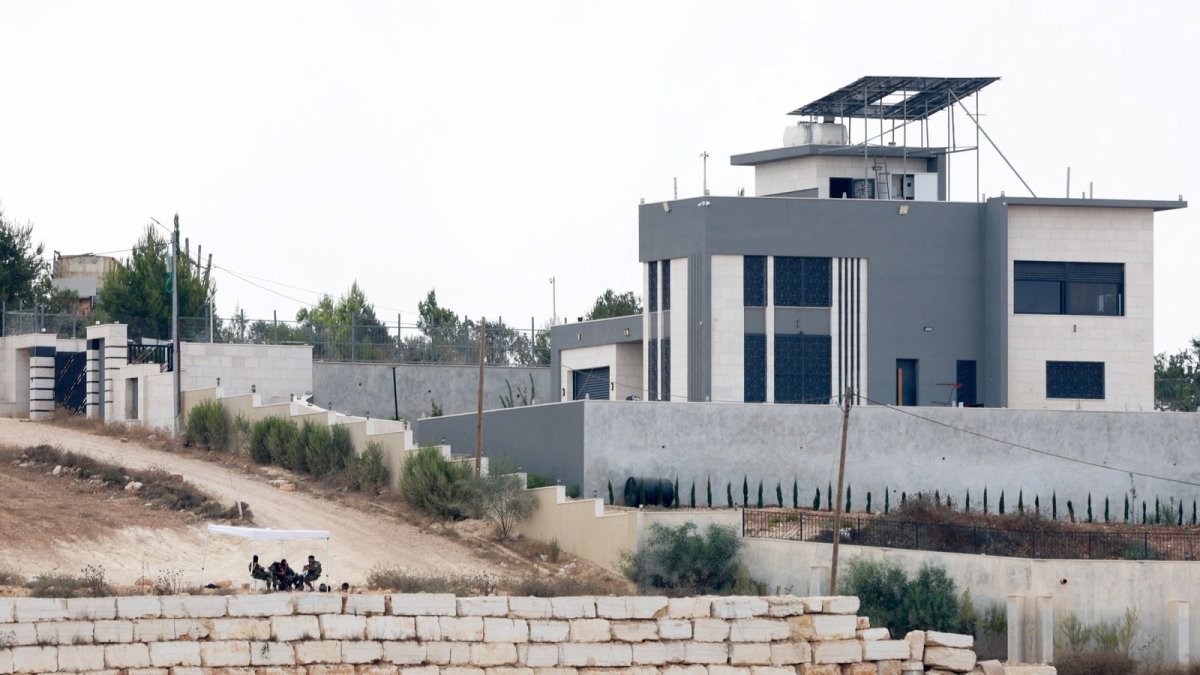
Eight nations reject Israel's E1 settlement plan, urge sanctions
Istanbul — August 21, 2026 — In a rare display of collective Arab-Islamic diplomacy, eight nations have issued a categorical rejection of Israel's unlawful E1 settlement plan, warning that the project threatens the viability of an independent Palestinian state and calling for international sanctions against those responsible. The joint statement, issued Friday, represents a significant convergence of interests between traditional Gulf powers and Ankara, signaling a hardening regional consensus against settlement expansion at a moment when the United States is attempting to broker a comprehensive peace.
The coordinated diplomatic push comes as Israel advances tenders for roughly 1,200 homes in the occupied West Bank, a project that rights groups warn will effectively sever Palestinian territory in two. The move directly challenges both international law and the framework of U.S. President Donald Trump's Comprehensive Plan, creating a potential flashpoint in regional diplomacy.
Eight-Nation Joint Statement: A Unified Front
The foreign ministers of Türkiye, the UAE, Indonesia, Qatar, Egypt, Pakistan, Saudi Arabia and Jordan issued a joint statement Friday categorically rejecting Israel's continued illegal settlement policies in the occupied Palestinian territories, including the E1 plan and related settlement activity east of occupied East Jerusalem. The eight ministers condemned violations and violence committed by settlers against Palestinians and their property, which they said occur with the support of Israeli occupation authorities.
The statement stressed that such actions cannot extinguish the inalienable rights of the Palestinian people and constitute violations of international law and relevant United Nations resolutions. The ministers warned that the E1 plan represents a dangerous escalation by further advancing settlement expansion and annexation, undermining the geographical contiguity of the occupied Palestinian territories, particularly between the West Bank and East Jerusalem.
Notably, the statement explicitly called for holding entities and individuals responsible for illegal settlement activity accountable through appropriate international measures and sanctions. It also urged an end to any support or financing that contributes to the establishment, expansion or entrenchment of illegal settlements — a direct appeal to international actors, including private investors and financial institutions, to cease engagement with settlement enterprises.
What Is the E1 Plan and Why It Matters Geographically
The E1 project, located east of Jerusalem and close to the Israeli settlement of Ma'ale Adumim, includes plans for around 3,400 homes overall. The area has been a flashpoint for decades because of its strategic location between Jerusalem and the wider West Bank. Building there would effectively cut the West Bank off from East Jerusalem, which Palestinians have long sought as the capital of their future state.
The tenders opened this week for roughly 1,200 homes represent a significant advancement of the broader E1 master plan. Rights groups say the construction will, in effect, sever Palestinian territory in two, destroying the geographical contiguity required for a viable independent state based on the 1967 borders. The ministers' statement specifically highlighted this concern, warning that the plan threatens the establishment and viability of an independent and geographically contiguous Palestinian state with East Jerusalem as its capital.
The geography is critical: E1 sits in the narrow "waist" of the West Bank, between the northern and southern Palestinian population centers. Any significant construction there would create a physical barrier between Ramallah and Bethlehem, and between the West Bank and East Jerusalem, fundamentally altering the territorial calculus of any future peace agreement.
Wider International Reaction: EU Condemnation and UN Framework
The eight-nation statement follows condemnation from France, Germany, Britain and Italy, which on Thursday rejected Israel's plans to open construction tenders for the E1 residential project. The European quartet's statement adds to mounting international pressure, though the EU's ability to translate condemnation into concrete consequences remains limited by the requirement for unanimous decision-making among member states.
The ministers' joint statement reiterated that a two-state solution in accordance with international law and relevant U.N. resolutions remains the only viable path toward a just, comprehensive and lasting peace. This language echoes UN Security Council Resolution 2334, adopted in December 2016, which declared Israeli settlements in the occupied Palestinian territories a "flagrant violation" of international law and a "major obstacle" to peace. That resolution also demanded that Israel "immediately and completely cease all settlement activities."
The reference to relevant U.N. resolutions in Friday's statement is significant, as it anchors the eight nations' position in established international legal frameworks rather than in ad hoc political declarations. This legal grounding strengthens the case for sanctions and accountability measures, providing a basis for action in international forums.
The US Angle: Trump's Comprehensive Plan and the Board of Peace
A striking element of the eight-nation statement is its explicit reference to U.S. President Donald Trump's Comprehensive Plan and the mechanisms established for its implementation, including the Board of Peace. The ministers said the Israeli violations directly challenge international efforts to achieve peace, particularly the Comprehensive Plan, which explicitly rejects annexation and forced displacement.
The statement also noted that the settlement push runs counter to Trump's strong commitment not to allow the annexation of the West Bank. This framing is strategically significant: by invoking the U.S. president's own stated positions, the eight nations are attempting to create a diplomatic contradiction between Washington's declared peace framework and Israel's on-the-ground actions.
The Board of Peace, established as part of the Comprehensive Plan's implementation mechanisms, represents a novel institutional approach to conflict resolution. The ministers' endorsement of this mechanism — while simultaneously criticizing Israeli actions that undermine it — suggests a calibrated approach designed to maintain engagement with Washington while pressuring Israel. The strategic calculus appears to be: align with the U.S. framework publicly, but use that alignment to hold Israel accountable to the plan's explicit rejection of annexation.
The Strategic Calculus of Arab States: Normalization Era and Saudi-Turkish Coordination
The joint statement's composition is itself a diplomatic development of note. The inclusion of Türkiye alongside Saudi Arabia and the UAE reflects the ongoing thaw in Ankara's relations with Gulf capitals following years of regional rivalry. The fact that these three powers — along with Egypt, Qatar, Jordan, Indonesia and Pakistan — could coordinate a unified statement on the Palestinian issue signals a potential realignment of regional diplomacy.
For Saudi Arabia and the UAE, the statement represents a delicate balancing act. Both nations have pursued normalization with Israel — the UAE through the Abraham Accords in 2020, and Saudi Arabia through ongoing discussions about potential recognition. Yet both also face domestic and regional pressure to maintain credibility on the Palestinian issue. By joining this collective statement, they signal to their populations and to the broader Arab world that normalization does not mean abandoning Palestinian rights.
Türkiye's role is equally significant. Ankara has positioned itself as a vocal defender of Palestinian rights under President Recep Tayyip Erdogan, often using sharper rhetoric than Gulf states. Its inclusion in this joint statement — alongside its recent diplomatic rapprochement with Egypt, Saudi Arabia and the UAE — suggests that the Palestinian issue may serve as a unifying platform for regional powers despite their other differences.
The strategic calculus for each nation differs: Saudi Arabia seeks to maintain leverage in its own normalization negotiations with Israel, the UAE aims to preserve the Abraham Accords while demonstrating principled positions, and Türkiye seeks to consolidate its role as a regional power broker. Yet all share a common interest in preventing settlement expansion from destabilizing the region and undermining the two-state solution.
Historical Context: E1 as a Decades-Old Flashpoint
The E1 project has been a point of contention for decades, long before the current tenders. Its location east of Jerusalem, adjacent to the Ma'ale Adumim settlement bloc, has made it a persistent flashpoint in Israeli-Palestinian negotiations. Successive Israeli governments have advanced plans for the area, and successive U.S. administrations — both Democratic and Republican — have raised concerns about the project's implications for a two-state solution.
The 1967 borders, often referred to as the Green Line, form the baseline for Palestinian territorial claims. East Jerusalem, occupied by Israel in 1967 and later annexed in a move not recognized by the international community, is central to Palestinian aspirations for statehood. The E1 plan directly threatens the contiguity between the West Bank and East Jerusalem, undermining the territorial basis for a Palestinian state.
UN Security Council Resolution 2334, adopted in December 2016 with the abstention of the United States under the Obama administration, remains the most recent comprehensive international statement on settlements. The resolution affirmed that the establishment of settlements in the Palestinian territory occupied since 1967, including East Jerusalem, has "no legal validity" and constitutes a "flagrant violation" of international law. Friday's eight-nation statement draws directly on this framework, reinforcing its continued relevance.
Regional Implications
The eight-nation statement carries significant implications for regional dynamics and the broader peace process. First, it demonstrates that the Palestinian issue retains mobilizing power in the region, even amid ongoing normalization efforts. The coordinated response suggests that Arab and Islamic states are prepared to take collective diplomatic action when they perceive Israeli actions as crossing red lines.
Second, the call for sanctions and accountability measures represents an escalation in diplomatic tactics. While the statement does not specify which sanctions or which entities would be targeted, the explicit language creates a framework for potential action in international forums, including the UN General Assembly and the International Criminal Court. This could increase pressure on Israel and on entities that finance or support settlement activity.
Third, the statement's reference to Trump's Comprehensive Plan and the Board of Peace creates a potential point of tension between Washington and Jerusalem. If the U.S. administration is serious about its stated commitment against annexation, it may need to take concrete steps to demonstrate that commitment — potentially including pressure on Israel to halt the E1 tenders. The eight nations have effectively called Washington's bluff, challenging the administration to align its actions with its declared framework.
Fourth, the coordination between Türkiye, Saudi Arabia and the UAE on this issue could have broader implications for regional alignment. If these powers can cooperate effectively on the Palestinian issue, it may create momentum for cooperation on other regional challenges, from Syria to Yemen to energy policy. The statement represents a potential template for collective Arab-Islamic diplomacy in an era of shifting alliances.
Finally, the statement underscores the fragility of the two-state solution. Each advancement of settlement construction — particularly in strategically located areas like E1 — makes the territorial basis for a Palestinian state more difficult to achieve. The ministers' warning that attempts to undermine the two-state solution risk further escalating tensions is not rhetorical; it reflects a genuine concern that the conflict could spiral into renewed violence if diplomatic pathways are foreclosed.
The coming weeks will reveal whether this collective diplomatic pressure translates into concrete consequences. The eight nations have made their position clear; the question now is whether Israel will adjust its course, whether the United States will enforce its own stated framework, and whether the international community will act on the call for sanctions. For the Palestinian people, and for the region as a whole, the stakes could not be higher.
By Malik Hassan, Staff Writer
This article was produced with AI-assisted research and editorial support. Reporting is based on sources cited in the article.
What's Your Reaction?
 Like
0
Like
0
 Dislike
0
Dislike
0
 Love
0
Love
0
 Funny
0
Funny
0
 Wow
0
Wow
0
 Sad
0
Sad
0
 Angry
0
Angry
0

Middle East Correspondent at Global1.News. Based in Beirut, covering politics, conflict, energy, and society across the Middle East. Brings context and depth to a region often reduced to headlines.













Comments (0)