
Maharashtra FDA Suspends 5 Pizza Outlets Over Food Safety Violations
The Maharashtra Food and Drug Administration (FDA) has suspended the food business licences of four Domino's Pizza outlets and one Pizza Hut outlet following a statewide inspection drive that concluded on August 11, 2026. The action, taken under the state government's "Safe Food, Safe Maharashtra" campaign, marks one of the most aggressive enforcement moves against international quick-service restaurant (QSR) chains in recent memory. Maharashtra FDA Suspends 5 Pizza Outlets: Food Safety Crackdow
The Maharashtra Food and Drug Administration (FDA) has suspended the food business licences of four Domino's Pizza outlets and one Pizza Hut outlet following a statewide inspection drive that concluded on August 11, 2026. The action, taken under the state government's "Safe Food, Safe Maharashtra" campaign, marks one of the most aggressive enforcement moves against international quick-service restaurant (QSR) chains in recent memory.
Maharashtra FDA Suspends 5 Pizza Outlets: Food Safety Crackdown
Mumbai, Maharashtra – August 14, 2026 — The suspensions are not symbolic. They represent a regulatory shift that franchise operators, food safety consultants, and consumer rights groups have been tracking since FDA Commissioner Tukaram Mundhe, an IAS officer who took charge in May 2026, signalled a zero-tolerance approach to Schedule 4 violations under the Food Safety and Standards (Licensing and Registration of Food Businesses) Regulations, 2011.
The Five Suspensions: A Breakdown of Violations
The FDA's inspection team, which fanned out across Mumbai and Satara district, found a pattern of systemic non-compliance rather than isolated lapses. The four suspended Domino's outlets — all operated by Jubilant FoodWorks Ltd., which runs approximately 1,900 Domino's stores across India — were cited for distinct but overlapping deficiencies.
At the Vile Parle West outlet in Mumbai, inspectors documented deficiencies in FSSAI licence display, potable water testing, food storage protocols, pest control measures, and hygiene facilities. Critically, the outlet showed inadequate temperature monitoring of frozen food and had identifiable entry points for rodents and pests. At the Borivali West outlet, the compliance score was a mere 54 per cent, with inspectors noting inadequate segregation of raw and cooked food, oily residue and food scraps on pizza-preparation surfaces, and gaps in pest-control measures.
The R-City Mall outlet in Ghatkopar West presented a different set of failures: no documented cleaning and sanitation schedule, missing food-grade certification records for food-contact materials, no records of medical examinations or vaccination of food handlers, and a failure to follow FIFO (First In, First Out) and FEFO (First Expired, First Out) inventory practices. The Malkapur outlet near Karad in Satara district scored just 47 per cent on compliance, with deficiencies in infrastructure, equipment maintenance, cleanliness, and pest control.
The Pizza Hut outlet in Karad, run by Sapphire Foods India Ltd., was suspended for a particularly concerning practice: the use of common ovens and baking trays for vegetarian and non-vegetarian pizzas. Inspectors also found sauce bottles and condiment packets without packing or expiry dates.
The Scale of the Crackdown: 104 Outlets, 95 Notices
The suspensions were part of a larger enforcement operation that ran from July 10 to August 11, 2026. The FDA inspected 104 establishments belonging to major brands including Domino's Pizza, Pizza Hut, KFC, McDonald's, Subway, Burger King, Starbucks, and Monginis. The results paint a troubling picture of compliance across India's organised food retail sector.
Of the 104 outlets inspected, two were shut down immediately, 95 were issued improvement notices, and five had their licences suspended with immediate effect. That means 91.3 per cent of inspected outlets required corrective action. Only a handful passed without any recorded deficiencies. The data suggests that non-compliance is not an outlier problem but a systemic feature of the current QSR operating model in Maharashtra.
The crackdown extended beyond international chains. In Mumbai, the FDA suspended the licences of Mumbai Metro Dhaba in Mulund and Gulshan-Da-Punjabi Dhaba in Bhandup. In Nashik district, five establishments were suspended: Hotel Sayali Restaurant and Bar in Satpur, Hotel Chhote Miyan on College Road, Mani Mark on Peth Road Panchavati, Abhishek Bakery and Sweets in CIDCO, and Mohanlal Namkeen in Dindori.
Regulatory Context: From Blinkit to Ayurvedic Manufacturers
This week's action against pizza chains did not occur in a vacuum. The FDA has been escalating enforcement across the food ecosystem for months. Days before the pizza crackdown, the FDA suspended the licence of a Blinkit facility in Mumbai's Malad West over cockroach infestation and improper food storage. Earlier, the FDA cancelled the manufacturing licences of 10 Ayurvedic drug manufacturers over Good Manufacturing Practice (GMP) violations and issued show-cause notices to 135 of 434 inspected units.
Commissioner Mundhe's approach reflects a broader national trend. The Food Safety and Standards Authority of India (FSSAI), operating under the FSS Act 2006, has been pushing state regulators to move beyond advisory compliance toward punitive enforcement. The "Safe Food, Safe Maharashtra" campaign is the state's most visible manifestation of this mandate, and the pizza suspensions are its highest-profile scalps yet.
Officials have clarified that suspension does not necessarily mean permanent closure. Establishments can apply for restoration of their licences after correcting deficiencies and undergoing verification. Fresh inspections and compliance hearings are expected in the coming weeks, meaning the affected outlets could reopen if they demonstrate genuine remediation.
What This Means for Jubilant FoodWorks and QSR Economics
The financial implications for Jubilant FoodWorks are significant. The company operates roughly 1,900 Domino's stores in India, making it the country's largest pizza chain operator. Four suspended outlets represent a small fraction of its network, but the reputational damage and the cost of remediation are not trivial. Each outlet will need to invest in pest-control contracts, equipment upgrades, staff training, and documentation systems to meet Schedule 4 requirements before reapplying.
More importantly, the suspensions signal that the FDA is willing to target well-known international brands, not just roadside vendors. This changes the risk calculus for franchise operators across India. Compliance with Schedule 4 — which covers sanitation, maintenance, pest control, staff hygiene, and record-keeping — is not optional. The cost of compliance is now lower than the cost of suspension, which includes lost revenue, remediation expenses, and brand damage.
For Sapphire Foods India, which operates Pizza Hut outlets across the country, the Karad suspension is a warning. The use of common ovens and trays for vegetarian and non-vegetarian food is a particularly sensitive issue in India, where a significant segment of consumers observes strict dietary preferences. The FDA's decision to flag this practice suggests that regulators are paying attention to cultural and religious sensitivities in food handling, not just microbiological safety.
The Debate: Enforcement or Overreach?
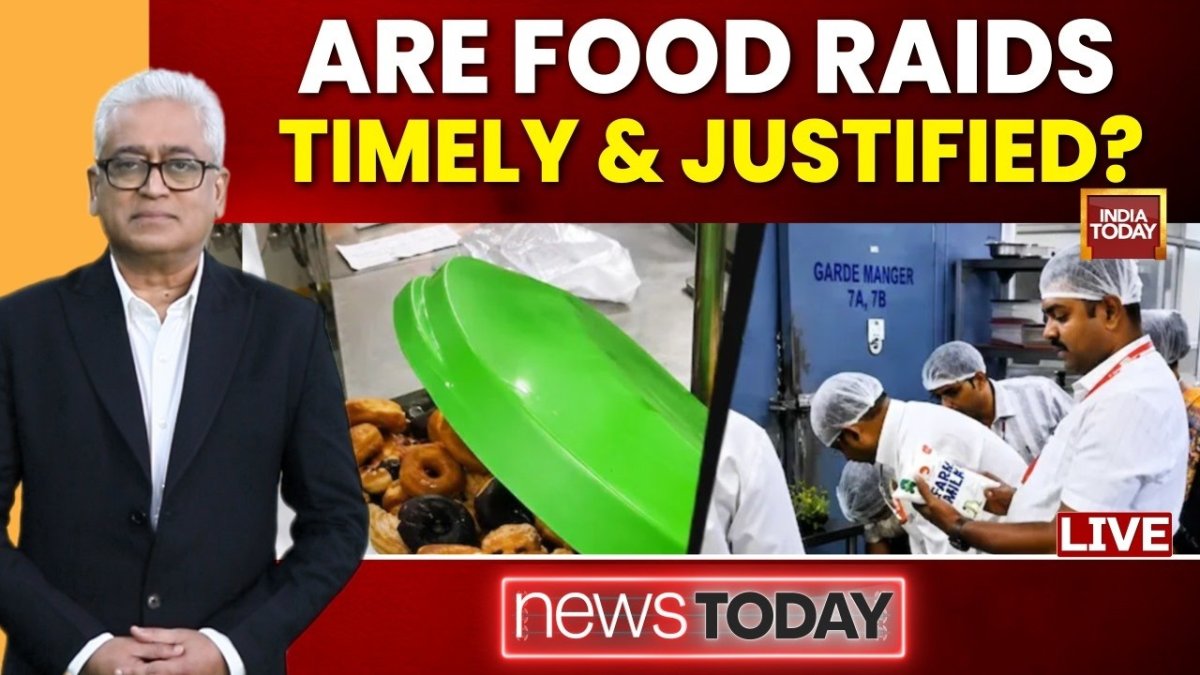
The crackdown has ignited a debate about the balance between strict enforcement and regulatory overreach. India Today's Rajdeep Sardesai devoted a full LIVE segment to the question: "Sudden Food Safety Raids Justified Or Abuse Of Power?" The debate reflects genuine public ambivalence. On one hand, consumers want assurance that the food they eat is safe. On the other, there is concern that aggressive enforcement could stifle business, particularly for small and medium enterprises that lack the compliance infrastructure of large chains.
The data, however, supports the enforcement approach. A 91.3 per cent non-compliance rate across 104 inspected outlets is not a sign of overreach; it is evidence of systemic failure. When two establishments had to be shut down immediately and five had licences suspended, the FDA was not manufacturing violations — it was documenting them. The fact that a Domino's outlet in Borivali scored only 54 per cent on compliance and another in Malkapur scored 47 per cent suggests that even well-capitalised international franchises are cutting corners.
India's food services market is one of the fastest-growing in the world, driven by urbanisation, rising disposable incomes, and the food delivery boom. Quick-service restaurant chains have expanded aggressively, often prioritising speed of service over rigorous hygiene protocols. The FDA's crackdown is a corrective measure, not a punitive one. It sends a clear message: growth cannot come at the expense of consumer safety.
Consumer Confidence and the Eating-Out Economy
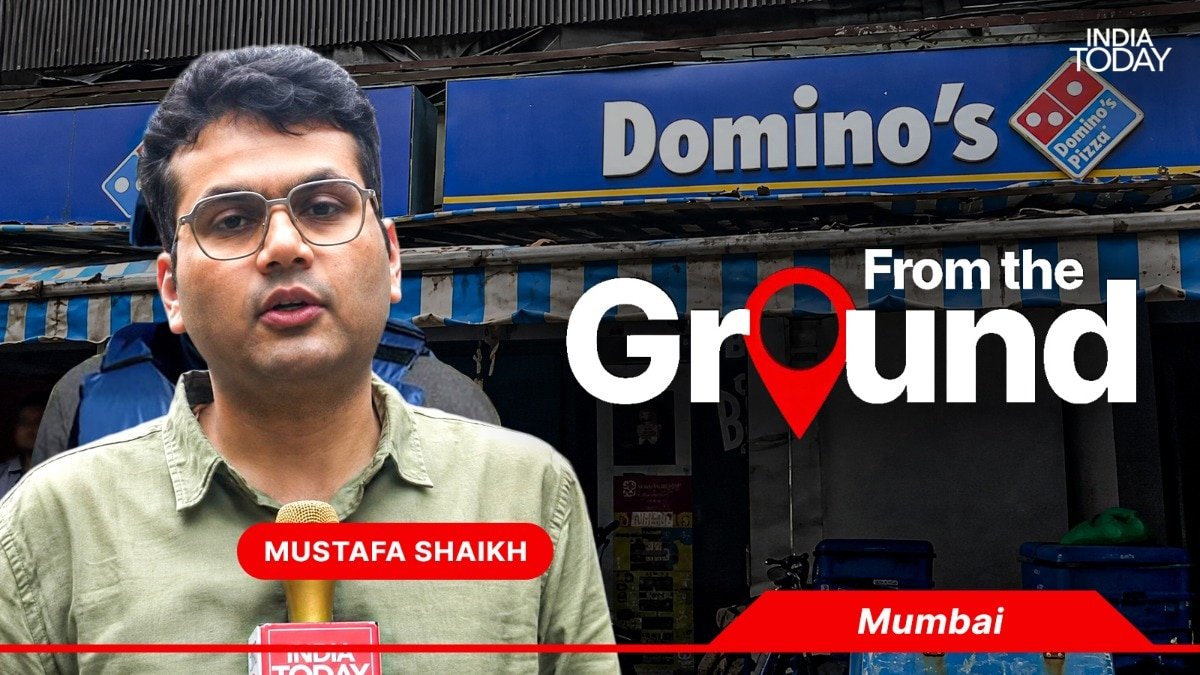
The immediate reaction from consumers, as reported by India Today's Mustafa Shaikh who visited one of the suspended Domino's outlets, was surprise. Many customers said they were shocked that a well-known international brand could be cited for such serious violations. This surprise is itself a problem — it reflects a trust gap between brand perception and actual operational standards.
For India's eating-out economy, which includes everything from street food to fine dining, consumer confidence is the foundation. The food delivery boom has made it easier than ever for consumers to order from hundreds of restaurants, but it has also made it harder for them to verify hygiene standards. Regulatory enforcement is the only mechanism that can bridge this information asymmetry.
The FDA's actions, including the suspension of the Blinkit facility in Malad West, signal that the regulator is extending its reach beyond restaurants to the entire food supply chain, including dark stores and cloud kitchens. This is a logical evolution. As more food is prepared in centralised facilities and delivered through platforms, the points of contamination multiply. Regulators must adapt accordingly.
The Bottom Line
The suspension of four Domino's outlets and one Pizza Hut outlet is not a story about pizza. It is a data point in India's evolving food-safety regulatory regime under the FSS Act 2006. The "Safe Food, Safe Maharashtra" campaign, led by Commissioner Tukaram Mundhe, has demonstrated that the FDA is willing to take on the biggest names in the QSR industry when they fail to meet Schedule 4 compliance standards.
The 104-outlet inspection, which resulted in 95 improvement notices and five suspensions, reveals systemic compliance gaps across the organised food retail sector. For Jubilant FoodWorks and Sapphire Foods India, the path forward is clear: invest in compliance infrastructure, document every process, and treat food safety as a core operational priority rather than an afterthought.
For consumers, the message is equally clear. The FDA is watching, and it is acting. The next time you order a pizza, the licence behind that outlet may have been earned through genuine compliance — or it may be the next one on the suspension list. The regulator's willingness to enforce the law is the strongest guarantee of food safety that Indian consumers have.
— By Dr. Raj Patel, Staff Writer
This article was produced with AI-assisted research and editorial support. Reporting is based on sources cited in the article.
What's Your Reaction?
 Like
1
Like
1
 Dislike
0
Dislike
0
 Love
0
Love
0
 Funny
0
Funny
0
 Wow
0
Wow
0
 Sad
0
Sad
0
 Angry
0
Angry
0

India/South Asia Correspondent at Global1.News. Analytical voice with a background in science and health journalism. Based in New Delhi, covering Indian politics, education, healthcare, technology, and policy. Breaks down complex data into clear, actionable reporting.












Comments (0)