
Israeli raids, occupier attacks target 5 Palestinian communities across occupied West Bank
Israeli Forces Target Five West Bank Communities in Coordinated Raids Israeli forces and settlers carried out raids and attacks on five Palestinian communities across the occupied West Bank on Friday, striking villages in the governorates of Nablus, Ramallah and Al-Bireh, Jenin, and Hebron. Local sources reported arrests, detentions, a demolition notice, and direct assaults on residents and property during the operations.
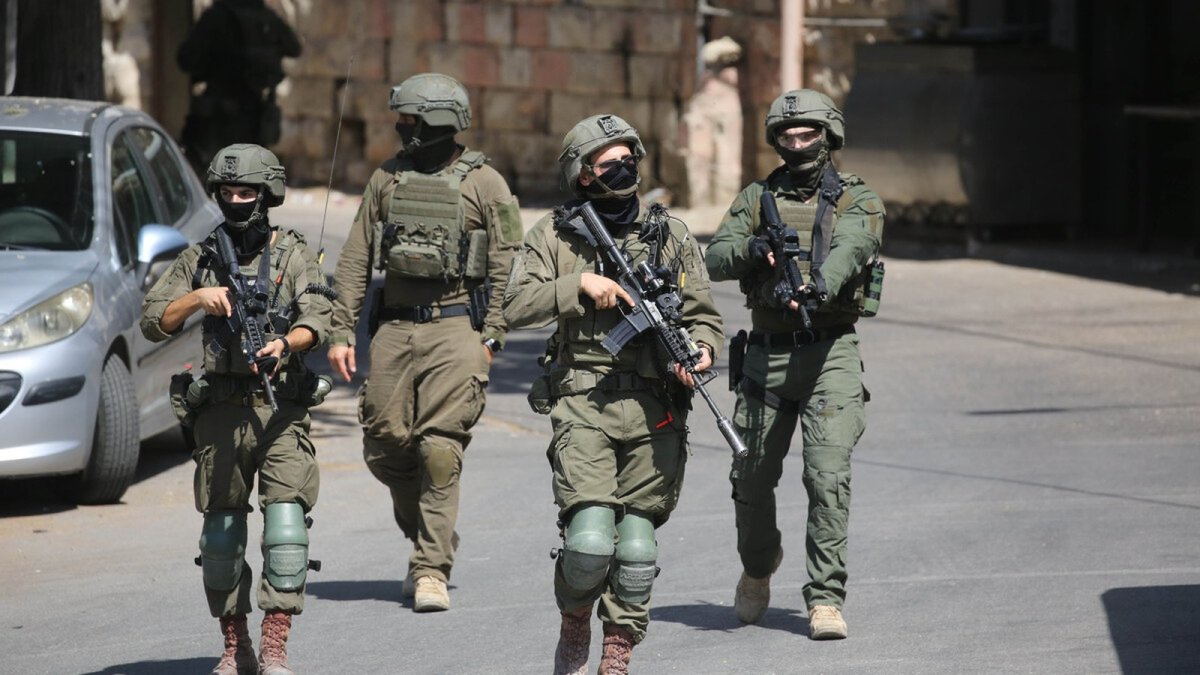
Israeli Forces Target Five West Bank Communities in Coordinated Raids
Israeli forces and settlers carried out raids and attacks on five Palestinian communities across the occupied West Bank on Friday, striking villages in the governorates of Nablus, Ramallah and Al-Bireh, Jenin, and Hebron. Local sources reported arrests, detentions, a demolition notice, and direct assaults on residents and property during the operations.
The incidents occurred amid a documented pattern of intensified pressure on Palestinian areas. Residents described soldiers firing live ammunition in one location and settlers erecting structures on privately owned land in another. Palestinian officials recorded the events as part of ongoing restrictions that affect daily movement and access to farmland.
In the Nablus governorate villages of Iraq Burin and Beit Furik, confrontations erupted when forces entered residential zones, while similar operations in Al-Mughayyir led to detentions and the placement of a tent on farmland west of the community. These events occurred within days of each other, showing how operations in multiple governorates can unfold simultaneously and strain local resources for response and recovery.
The targeting of Tuba in the Masafer Yatta area two days after arson attacks on homes there highlights the cumulative pressure on herding communities already facing property damage. Residents noted that repeated visits narrow usable grazing routes and heighten concerns for children and elders who must navigate the aftermath of each incident.
Clashes Erupt During Raid on Iraq Burin Village
In the Nablus governorate, Israeli forces entered the village of Iraq Burin south of the city and triggered confrontations with local youths. Soldiers discharged live rounds during the incursion, according to accounts gathered by Anadolu Agency. The raid disrupted normal activities in the community and left residents concerned about further incursions.
Residents of the nearby town of Beit Furik also faced settler attacks on the eastern side of their community. Palestinian residents organized to confront the intruders, preventing deeper penetration into residential zones. These events reflect recurring friction in the area where villages sit close to settlement infrastructure.
Arrests and Land Seizure Reported in Al-Mughayyir
Israeli forces conducted a raid on the village of Al-Mughayyir northeast of Ramallah in the Ramallah and Al-Bireh governorate. They detained one young Palestinian and held several other residents, subjecting some to mistreatment during the operation. Witnesses stated that soldiers also set up a tent on Palestinian-owned land west of the village.
The placement of the tent has raised fears among farmers that additional land could be cordoned off. Families in Al-Mughayyir rely on these plots for agriculture and grazing, and any restriction directly reduces household income in an economy already strained by movement limitations.
Demolition Notice Forces Evacuation of Qabatiya Poultry Farm
In the Jenin governorate, Mohammed Abu Mualla and his family received a demolition order for their poultry farm in the town of Qabatiya. The Israeli army delivered the notice, compelling the family to leave the property immediately. The farm had provided a stable source of livelihood for the household and supplied eggs to local markets.
Loss of the facility threatens both the family's economic stability and the availability of affordable protein in surrounding communities. Similar notices have previously led to the removal of agricultural structures across the northern West Bank, reducing productive capacity for small-scale producers.
Settler Raid Follows Earlier Arson in Tuba Village
Settlers entered the village of Tuba in the Masafer Yatta area of the Hebron governorate two days after homes in the same community were set ablaze. The latest incursion added to the sequence of attacks that have displaced residents and damaged property in this southern West Bank region.
Masafer Yatta has experienced repeated settler activity that targets herding communities. Families there maintain traditional livestock practices that require open access to grazing land, yet repeated raids have narrowed the usable territory and increased security concerns for children and elders.
Commission Documents 3,488 Attacks in First Half of 2026
The Palestinian Wall and Settlement Resistance Commission recorded 3,488 attacks by settlers and Israeli forces across the occupied West Bank during the first half of 2026. These incidents resulted in the deaths of 17 Palestinians and the full or partial displacement of 26 Bedouin and herding communities. The commission also documented the establishment of 42 illegal settlement outposts, the majority of them pastoral in character.
Officials from the commission stated that pastoral outposts often serve as the initial step toward larger settlement expansion. The data covers incidents ranging from property damage to direct assaults on individuals attempting to reach their fields or water sources.
These figures provide a running tally that connects discrete incidents to territorial changes, with the commission tracking how attacks affect access to fields and water sources. Compared with prior reporting periods, the 3,488 incidents reflect sustained activity across the occupied West Bank.
Escalation Since October 2023 Claims Over 1,182 Lives
Since October 2023, Israeli army operations and settler actions have killed more than 1,182 Palestinians in the occupied West Bank, injured approximately 13,000 others, and led to the arrest of nearly 25,000 people, according to official Palestinian figures. The Wall and Settlement Resistance Commission has tracked these developments as part of its mandate to monitor land confiscation and settlement growth.
The commission's work provides a continuous record that links individual incidents to broader territorial changes. Its reports detail how repeated raids and outpost construction alter access routes and fragment traditional grazing areas used by Bedouin families for generations.
Settler violence and military raids operate in tandem, as seen in the sequence of events in Tuba and other listed communities, where incursions follow property damage and contribute to the displacement of 26 Bedouin and herding groups. International observers have recorded how such interlocking actions restrict movement and reduce available land for traditional livelihoods.
The 42 new outposts established in the first half of 2026 add to existing settlement infrastructure that already limits access routes for residents of villages such as Al-Mughayyir and Masafer Yatta. Humanitarian consequences include narrowed grazing territory and heightened security concerns for families attempting to maintain daily herding practices.
Under international humanitarian law, settlement activity in occupied territory carries specific legal implications that observers cite when documenting the cumulative effects on Palestinian communities. The human cost since October 2023, including 1,182 killed and 25,000 arrested, underscores the scale of impact on ordinary residents caught between raids and outpost expansion.
Daily Realities for Families Under Sustained Pressure
Communities such as Iraq Burin, Beit Furik, Al-Mughayyir, Qabatiya, and Tuba illustrate the cumulative effect of these operations on ordinary routines. Farmers lose access to fields during raids, students face delays at checkpoints, and households must rebuild after property damage. The poultry farm operated by Mohammed Abu Mualla represents one of many small enterprises now at risk of removal.
Residents continue to document each event through local committees and international observers. Their accounts emphasize the need for consistent monitoring to record both immediate harm and longer-term displacement trends affecting herding and agricultural livelihoods across the West Bank.
By Fatima Al-Rashid, Staff WriterThis article was produced with AI-assisted research and editorial support. Reporting is based on sources cited in the article.
What's Your Reaction?
 Like
0
Like
0
 Dislike
0
Dislike
0
 Love
0
Love
0
 Funny
0
Funny
0
 Wow
0
Wow
0
 Sad
0
Sad
0
 Angry
0
Angry
0

Gulf/MENA Correspondent at Global1.News. Based in Doha, covering Gulf politics, energy markets, diplomacy, and development across the Middle East and North Africa. Tracks the economic transformation of the Gulf states.













Comments (0)