
Drone Strike on Russian Resort Highlights Deepening Attrition in Ukraine Conflict
In a recent CGTN report hosted by Anand Naidoo, panelists Andrey Kortunov, Peter Zalmayev and Anton Fedyashin examined how intensified drone operations and infrastructure strikes are reshaping the Russia-Ukraine conflict as it enters its fifth year. Their discussion provides a useful starting point for assessing the August 3 incident at Arkhipo-Osipovka and its wider ramifications for escalation, diplomacy and great-power positioning.
The Beach Incident and Verified Casualties
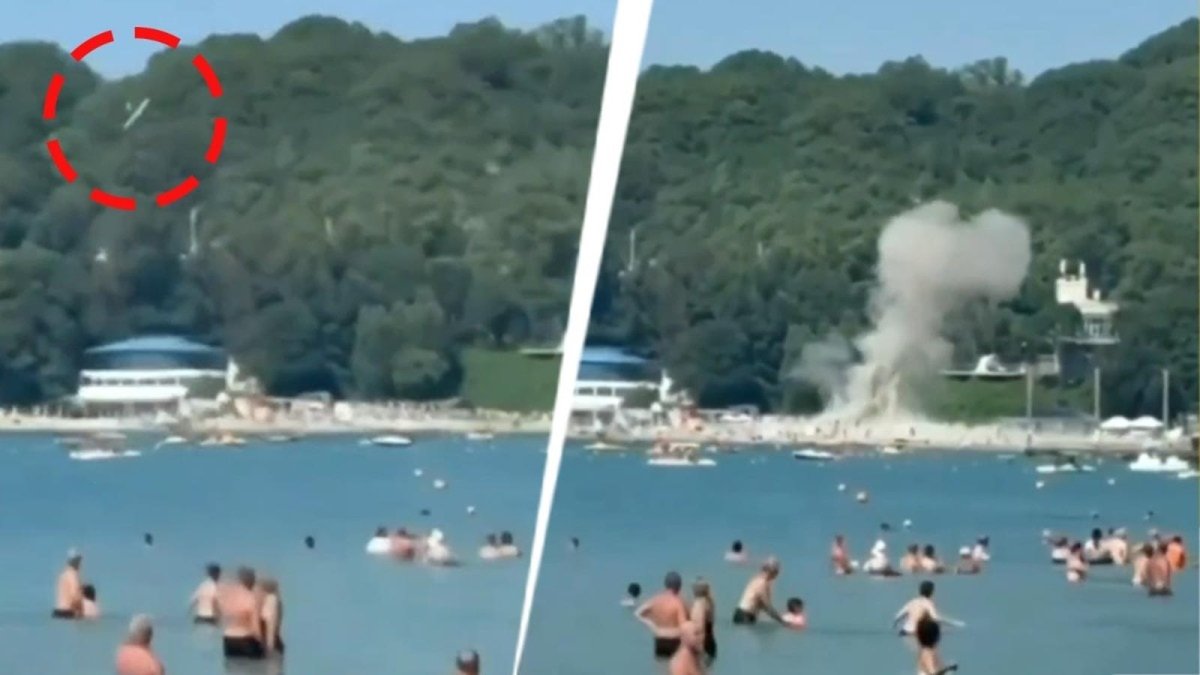
On August 3, 2026, a drone struck a crowded beach at Arkhipo-Osipovka within the Gelendzhik resort area of Krasnodar Krai. Russian authorities reported at least seven deaths, including three children, and approximately 40 injuries, with 21 people hospitalized and nine in serious condition according to the Russian Health Ministry. Social-media footage captured apparent gunfire seconds before the blast, consistent with air-defense engagement. Analysts have noted the possibility that the drone was intercepted short of a different target or diverted by electronic countermeasures, though no independent verification of its intended destination exists. The site lies near the Rassvet recreation base linked to a branch of Russia’s defense industry and roughly 27 kilometers from the Praskoveyevka property sometimes referred to as “Putin’s Palace.” Gelendzhik Airport had resumed operations only in July 2025 after an extended closure.
The strike on a crowded Black Sea resort beach during peak summer season underscores the growing exposure of Russian civilians to long-range Ukrainian operations, raising questions about the effectiveness of layered air defenses in protecting even symbolically sensitive coastal zones. Footage of apparent defensive gunfire prior to the explosion suggests possible interception or electronic disruption that may have altered the drone’s trajectory, yet the absence of independent verification leaves open whether the intended aim was a nearby defense-industry recreation facility or another military-related site. This incident fits an emerging pattern of strikes reaching deeper into Russian territory, where the distinction between civilian and military-adjacent infrastructure becomes increasingly blurred under wartime conditions.
Proximity to the Praskoveyevka property and the Rassvet recreation base amplifies the symbolic resonance of the attack, illustrating how Ukrainian deep-strike capabilities can reach areas associated with both elite interests and defense-sector logistics. Russian authorities have framed such events as deliberate terrorism targeting non-combatants, while Ukrainian statements continue to emphasize that operations avoid civilian sites, creating a contested information space where each side seeks to shape international perceptions. Without corroborated evidence of intent, the episode highlights the challenges of attribution in drone warfare and the risk that civilian casualties accelerate mutual accusations rather than clarifying operational objectives.
Russian Official Response and Terrorism Framing
Krasnodar Governor Veniamin Kondratyev described the event as a tragedy and stated that 17 people were initially taken to hospital. He accused Ukraine of conducting a deliberate attack on civilians. Foreign Ministry spokeswoman Maria Zakharova charged that Ukraine had turned to terrorism and extended the criticism to Western capitals, noting that NATO and the EU had previously proclaimed zero tolerance for terrorism yet now participated in what she termed international terrorist activity, according to TASS reporting. Moscow has increasingly applied the terrorism label to Ukrainian drone strikes on civilian sites inside Russia, citing a similar attack last month on a holiday camp in Russian-controlled Zaporizhzhia that killed 11 people, including four children.
Ukraine’s Position and Long-Range Campaign
Kyiv had issued no official comment on the Gelendzhik strike at the time of reporting. Ukrainian policy continues to maintain that it does not deliberately target civilians. Hours before the incident, President Volodymyr Zelenskyy told Ukrainian diplomats that Russia showed no genuine interest in ending the conflict and sought to prolong it. He emphasized that Ukraine alone sought peace and had never desired the war, expressing hope that sustained sanctions, diplomatic pressure and long-range strikes could compel negotiations possibly as early as autumn. Ukrainian forces have meanwhile expanded drone operations against oil refineries, logistics hubs and shadow-fleet vessels, including confirmed strikes on the Ilsky refinery in Krasnodar Krai and multiple Wildberries warehouses, one of them in Ekaterinburg more than 2,000 kilometers from the border.
Drone Warfare and Shifting Military Balance
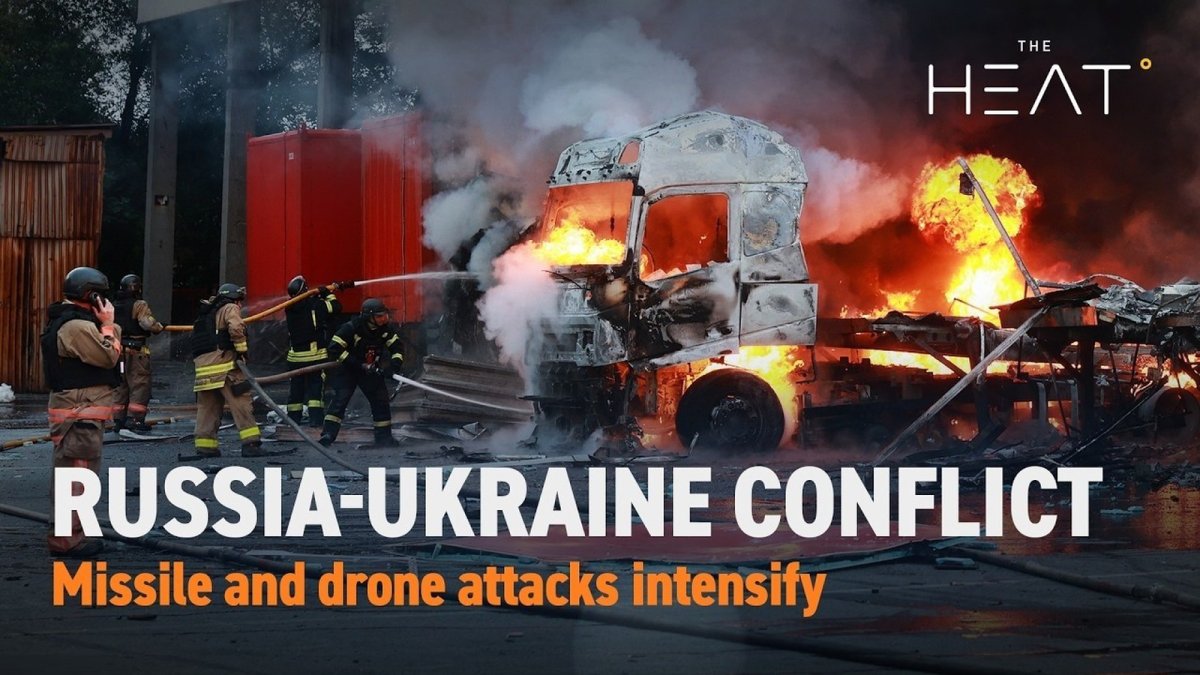
The panelists on the CGTN broadcast highlighted how new drone technologies are altering modern warfare and accelerating a war of attrition. Ukraine’s Unmanned Systems Forces reported striking 12 Russian shadow-fleet vessels in the Black and Azov Seas on August 8. These operations complement earlier hits on two oil refineries hundreds of kilometers from the border and illustrate Kyiv’s growing capacity to project force deep into Russian territory. Russia, for its part, has responded with intensified strikes on Ukrainian civilian infrastructure. The resulting dynamic raises questions about sustainability for both sides and about the second-order effects on global energy markets and European security.
Ukraine’s sustained campaign against Russian oil refineries, logistics warehouses, and shadow-fleet vessels reflects a calculated strategy of economic attrition designed to impose cumulative costs on Moscow’s war effort through fuel shortages and disrupted supply chains. Strikes on facilities hundreds of kilometers from the border, including the Ilsky refinery and multiple Wildberries sites, demonstrate an evolution in drone range and coordination that complicates Russian attempts to safeguard critical energy infrastructure. This approach also affects global energy markets by threatening export volumes and raising insurance premiums for Black Sea and Azov Sea shipping, thereby extending the conflict’s economic ripple effects beyond the immediate theater.
The competition between increasingly sophisticated Ukrainian unmanned systems and Russian air-defense adaptations illustrates a broader technological arms race in which both sides adjust tactics in near real time. Ukrainian forces can strike dispersed targets across wide geographic areas, forcing Russia to allocate defensive resources more thinly and exposing rear-area vulnerabilities. Over time, such pressure may affect Russia’s fuel availability for military operations while testing the resilience of its maritime logistics.
Russian Domestic Politics and Electoral Timing
Russia’s next State Duma elections are scheduled for September 20, 2026, following a decree signed by President Putin on June 16. The Supreme Court is considering a lawsuit that could bar the Yabloko party—the only officially registered party opposing the war—from participating. Some analysts, including Ukrainian officials and Western observers, suggest the Kremlin may be preparing a further round of mobilization after the vote.
The vote comes as the Kremlin balances domestic consolidation with the demands of an extended conflict, creating incentives to manage escalation risks until after balloting. The Supreme Court’s consideration of measures against the sole registered party opposing the war signals an effort to narrow permissible dissent. Analysts note that wartime electoral cycles in Russian history have sometimes preceded renewed mobilization drives, suggesting post-election adjustments could include expanded conscription if the leadership judges the domestic environment sufficiently stabilized.
These electoral dynamics shape the window for any diplomatic initiatives, as the Kremlin may prefer to project strength and unity before contemplating negotiations that could be portrayed as concessions. The timing also intersects with Ukrainian hopes that sustained military and economic pressure might prompt Moscow to engage seriously by autumn, yet the domestic political calendar introduces uncertainty about when Russian decision-makers would view talks as advantageous rather than risky. Historical precedents indicate that elections under wartime conditions often reinforce rather than moderate existing policy trajectories, limiting near-term flexibility on core security issues.
China’s Strategic Calculus and Prospects for Settlement
Beijing’s framework for the conflict, set out in its February 2023 twelve-point position paper, stresses political settlement, de-escalation and respect for territorial integrity while declining to join Western sanctions. The Gelendzhik incident and the broader drone campaign test those principles by raising the risks of uncontrolled escalation. China’s interest lies in preventing a prolonged war that disrupts energy supplies, complicates relations with both Moscow and the West, and draws additional Global South states into competing alignments.
Russia’s deepening energy and trade ties with China provide economic ballast against Western sanctions, allowing Beijing to maintain a posture of non-interference while appealing to Global South audiences wary of NATO expansion narratives. Yet the expanding drone campaign complicates Beijing’s de-escalation message, since strikes that kill civilians test the credibility of calls for restraint without appearing to endorse either side’s tactics. Chinese observers also remain attentive to the possibility that unchecked escalation could draw additional external actors into the conflict, threatening stability along Eurasia’s periphery.
The September elections and the autumn diplomacy that follows are focal points for Chinese assessments of whether Moscow’s risk tolerance might shift, particularly if a new mobilization follows the vote. Beijing also watches the evolving U.S. role for signs that a negotiation framework could accommodate Russia’s security guarantees alongside Ukraine’s stalled NATO aspirations. The drone war’s momentum tests China’s preference for managed outcomes, highlighting how battlefield realities can outpace diplomatic messaging centered on restraint and political resolution. Whether the current trajectory of attrition can be redirected toward negotiation — or will continue expanding its geographic and economic footprint — will become clearer in the coming months.
By Prof. Marcus Chen, Staff WriterThis article was produced with AI-assisted research and editorial support. Reporting is based on sources cited in the article.
What's Your Reaction?
 Like
0
Like
0
 Dislike
0
Dislike
0
 Love
0
Love
0
 Funny
0
Funny
0
 Wow
0
Wow
0
 Sad
0
Sad
0
 Angry
0
Angry
0

World Politics Analyst at Global1.News. Based in Beijing, covering US-China relations, global trade, and geopolitical strategy. Brings deep analytical perspective to the power dynamics shaping international affairs.














Comments (0)