
DR Congo Fashion Week 2026: La Sape Unites Two Congos in a Celebration of Style
In Kinshasa this month, fabric became a statement of unity. The sixth edition of DR Congo Fashion Week turned the city's Galerie La Fontaine into a runway where designers, stylists and sapeurs from the Democratic Republic of Congo and neighbouring Republic of Congo came together to honour a cultural movement born on the banks of the Congo River — La Sape, the art of elegant dressing that has defined Congolese identity for more than six decades.
In Kinshasa this month, fabric became a statement of unity. The sixth edition of DR Congo Fashion Week turned the city's Galerie La Fontaine into a runway where designers, stylists and sapeurs from the Democratic Republic of Congo and neighbouring Republic of Congo came together to honour a cultural movement born on the banks of the Congo River — La Sape, the art of elegant dressing that has defined Congolese identity for more than six decades.
DR Congo Fashion Week 2026: La Sape Unites Two Congos in a Celebration of Style
Kinshasa, DR Congo — The two Congos walked one runway this week, dressed in the red, yellow, green and blue of their shared flags, as fashion week organisers placed the Sape movement at the heart of the sixth edition. The event gathered rising and established designers from both banks of the river, and ministers, musicians and style icons joined a celebration that organisers say is about far more than clothing.
Kinshasa's Fashion Week Puts La Sape Center Stage
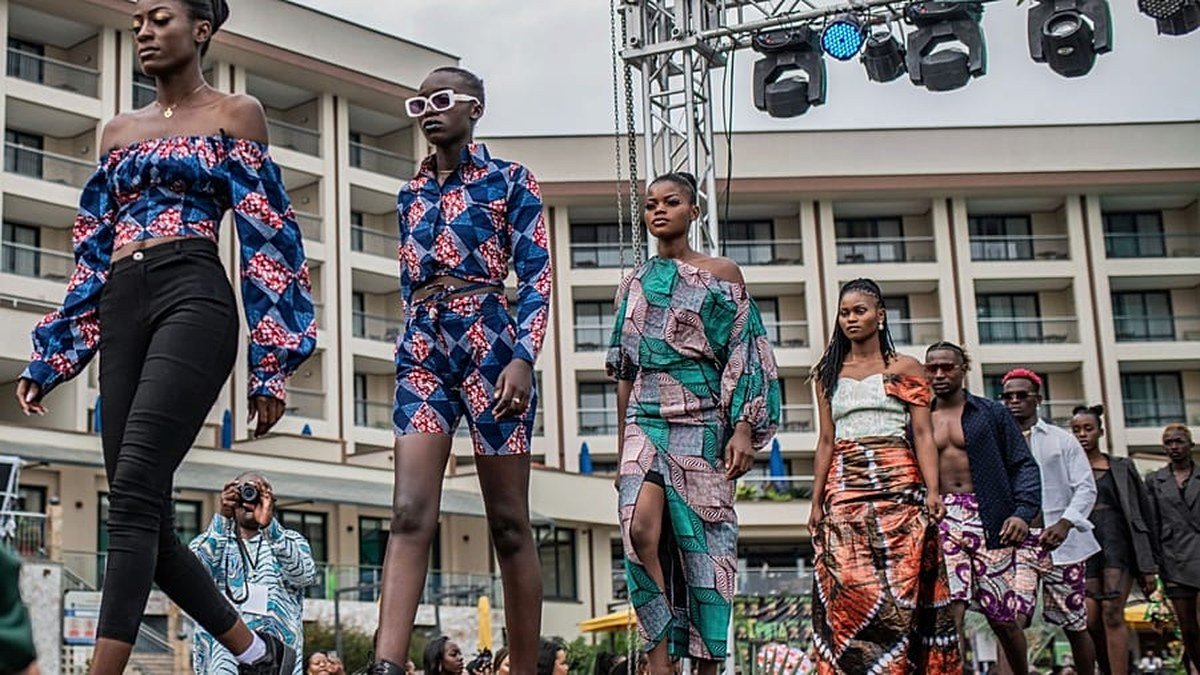
On Saturday, August 15, 2026, the Galerie La Fontaine de Kinshasa transformed into a cathedral of colour and cut. The sixth edition of DR Congo Fashion Week opened with a theme that needed no translation: La SAPE, and the cultural rapprochement between the DRC and the Republic of Congo. From the first look to the final bow, the podium became a stylistic bridge between the two banks of the Congo River, a living link between sisters separated by water but joined by cloth.
The dress code was a statement in itself. The public, the models and the organisers wore the colours of the flags of the two sister nations — red, yellow, green and blue — turning the audience into a human tapestry of shared heritage. It was a sight that warmed the heart: young Kinshasa fashionistas in tailored blazers of deep green, Brazzaville stylists in flowing yellow boubous, and everywhere, the red of courage and the blue of the river that binds them.
On the runway, the designs on display were a fusion of tradition and modernity. Bold prints danced with bright colours, and tailored silhouettes spoke of a discipline that goes back generations. This was not fashion for fashion's sake; it was fashion as memory, as identity, as a declaration that the Congolese people, on both sides of the river, know exactly who they are and where they come from.
The event brought together local stylists, fashion designers and sapeurs from DRC and Congo-Brazzaville, creating a rare moment of creative exchange. In the aisles of the Galerie La Fontaine, one could hear the mingled accents of Kinshasa and Brazzaville, the two capitals that face each other across the river like mirrors. Designers compared notes, sapeurs exchanged tips on the perfect lapel, and the younger generation watched the elders with reverence.
For the organisers, this was the edition they had been building toward since the first show six years ago. The theme of La Sape was not a nostalgic nod to the past but a deliberate choice to anchor the future of Congolese fashion in the soil of its own history. In a city that never sleeps, where music and style are as essential as air, the message was clear: our elegance is our heritage, and our heritage is our strength.
A Movement Born of Dignity: The Sapeur Legacy
To understand what unfolded in Kinshasa this week, one must understand La Sape. The name stands for Societe des Ambianceurs et des Personnes Elegantes — the Society of Tastemakers and Elegant People. It is a movement born in the 1960s, when Congolese men, inspired by colonial-era European fashion, reclaimed their dignity through impeccable dress. What began as an act of mimicry became an act of defiance, a way of saying: we may have been colonised, but our spirit is unbroken, and our style is our own.
At the movement's core is dandyism as a cultural statement. The sapeur does not simply wear clothes; he performs them. Every crease is a sentence, every accessory a paragraph, every outfit a full declaration of self. In the streets of Kinshasa and Brazzaville, the sapeur walks with the confidence of a king, knowing that his appearance is a form of resistance against poverty, against despair, against any force that would diminish him.
The legacy is carried by legendary figures whose names echo through the generations. Papa Wemba, the great musician and style icon, was the movement's most famous ambassador, taking La Sape to the world stages of Paris and beyond. Alongside him stand the sapeur icons of Kinshasa and Brazzaville — men like Rafa Bounzeki, whose name is spoken with reverence in the bars and ateliers of both cities. These are not merely fashionable men; they are cultural heroes who proved that elegance could be a path to dignity.
Why does this movement remain so powerful across the continent? Because La Sape speaks to a universal truth: that how we present ourselves to the world matters. In a continent that has too often been defined by others, the sapeur reclaims the right to define himself. The movement has spread beyond the Congo, inspiring style communities in Dakar, Abidjan, Lagos and Nairobi, but its heart remains here, on the banks of the great river.
This week in Kinshasa, the sapeur legacy was not a museum piece. It was alive, breathing, walking the runway in the form of young designers and models who have taken the lessons of their elders and translated them into a contemporary language. The tradition is not dying; it is evolving, and the sixth edition of DRC Fashion Week proved that it has a vibrant future.
Two Congos, One Runway: Fashion as Unity
The runway at the Galerie La Fontaine featured designers from both countries, a deliberate curation that turned fashion into diplomacy. From Brazzaville came Dimi Couture and Invisible Design, bringing the particular flair of the Republic of Congo's capital. From Goma, in the east of the DRC, came KEPA Fashion Collection, a reminder that Congolese creativity extends far beyond the capital. And from Kinshasa itself, Créateurs de Mode en Lumière, Merveille Couture and Moussa Style represented the host city's vibrant ateliers.
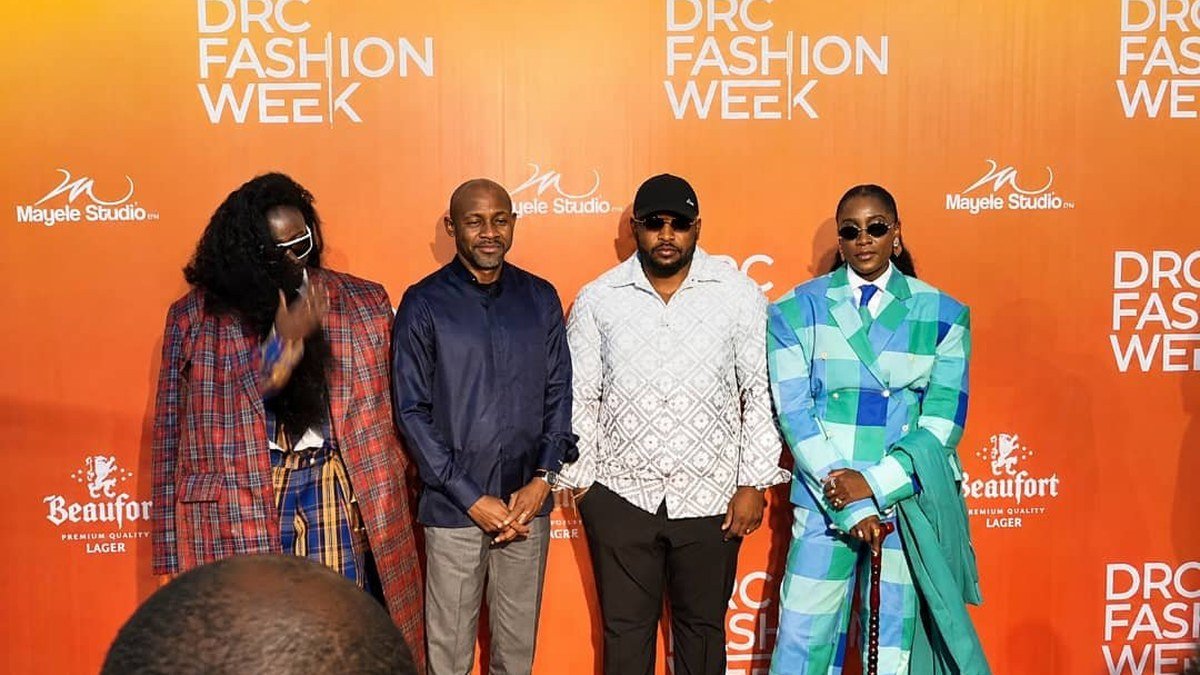
Yves Mayele, one of the organisers of DRC Fashion Week, put the vision into words with striking clarity. "La SAPE has an identity, because when you see 'sapeur', you see 'Congolese'. It really is our identity. That's why we wanted to revisit this identity for the 6th edition of DRC Fashion Week, and at the same time bring in the colours of our two countries to say that this is where La SAPE comes from: Congo-Brazzaville and Congo-Kinshasa." His words captured the essence of the event: not a competition between the two Congos, but a shared celebration of a common inheritance.
Grâce Bundu, a fashion designer and dressmaker who presented her work at the event, spoke of the deeper meaning behind the clothes. "It's not just about getting dressed, it's not just a simple movement, but a legacy, a legacy that we must bring back to life year after year." Her words resonated with the young designers in the audience, many of whom see themselves as custodians of a tradition that must be nurtured and passed on.
The co-founders of the event, Nathalie Eoma and Bénie Nyota, have long seen fashion as a tool for dialogue and unity between the two nations. In their vision, the runway is not a divider but a bridge, a space where the historical and cultural ties between the DRC and the Republic of Congo can be celebrated rather than ignored. This year's edition was the fullest expression yet of that vision.
For the audience, the effect was profound. To see designers from both countries presenting side by side, to hear the names of Brazzaville and Kinshasa spoken in the same breath, was to witness a healing. The two Congos share a river, a history, a musical heritage and now, unmistakably, a fashion identity. The runway this week was a reminder that what unites them is far greater than what divides them.
Designers Pay Tribute to the Great Figures of La Sape
Among the most moving moments of the evening came from fashion designer Kevin Toundwa, whose collection was a direct homage to the giants of the movement. "So, with my creation today, I'm celebrating the SAPE with a burst of colours, a journey," he said, his voice carrying the excitement of a man who knows he is part of something larger than himself. "Today, I'm proud, as a Congolese — I like to affectionately call it 'Congolais with a K', from the two Congos — to present my skills today through Congo Create, the competition I took part in that has brought me here."
Toundwa's collection was a journey through the pantheon of La Sape. He paid tribute to Papa Wemba, the musical genius whose style was as influential as his voice. He honoured Rafa Bounzeki, the sapeur whose name is synonymous with elegance in both capitals. And he included Alpha Blondy, the Ivorian reggae star who, while not Congolese, embodies the pan-African spirit of the movement. Each look was a prayer, a thank-you to the ancestors of style who paved the way.
The Congo Create competition, through which Toundwa earned his place at the fashion week, is proving to be a vital incubator for young Congolese talent. It provides a platform for designers who might otherwise be overlooked, giving them the opportunity to present their work to a wider audience and to learn from established figures in the industry. Toundwa's journey from competition participant to runway presenter is a testament to the power of such initiatives.
What does it mean to pay homage through fabric and tailoring? It means understanding that every stitch carries history, every colour choice is a reference, every silhouette is a conversation with the past. Toundwa's collection was not merely inspired by the great figures of La Sape; it was in dialogue with them, a young artist speaking to his elders through the medium they loved best.
The audience responded with warmth and enthusiasm, recognising in Toundwa's work the same passion that drove Papa Wemba to wear his famous three-piece suits on stages around the world. The torch, it was clear, is being passed. The new generation of Congolese designers is not content to simply admire the legacy; they are determined to extend it, to make it their own, to ensure that La Sape remains a living, breathing force in African fashion.
Government Support and the Power of Congolese Fashion
The presence of Patrick Muyaya Katembwe, the DRC Minister of Communication and Media, at the event signalled the growing recognition of fashion as a serious cultural and economic force. Muyaya did not merely attend; he engaged, walking through the exhibition spaces, speaking with designers, and taking the measure of an industry that is increasingly impossible to ignore. His presence was a statement that the government sees the creative economy as a priority.
In his remarks, Muyaya congratulated co-founders Nathalie Eoma and Bénie Nyota for their exceptional mobilization of the fashion community. He spoke of the DRC's growing cultural power "from Kinshasa to Lualaba," a phrase that captured the ambition of a nation that is finally claiming its place on the continental stage. The minister's words were not empty rhetoric; they reflected a genuine shift in how the state views its creative industries.
Perhaps most striking was Muyaya's comparison of sartorial pride to the fervour that surrounds the Leopards, the DRC national football team. In a country where football is a religion, this was no small compliment. The minister was saying that fashion, like sport, has the power to unite the nation, to inspire pride, to put the DRC on the map. It was a recognition that elegance is not frivolous; it is a form of national strength.
The government's reaffirmed commitment to stand alongside local creators was welcomed by the fashion community, which has long called for greater state support. From infrastructure to international promotion, there is much that can be done to help Congolese designers compete on the global stage. The minister's words suggested that the political will is there, and the fashion week provided a tangible demonstration of what that support can achieve.
Fashion is emerging as a growing creative-economy force in Central Africa and the Great Lakes region, and the DRC is positioning itself at the centre of this movement. With its rich cultural heritage, its vibrant urban centres and its deep pool of creative talent, the country has every ingredient needed to become a regional fashion capital. The sixth edition of DRC Fashion Week was a powerful argument that this future is not distant; it is already arriving.
What to Watch For
DRC Fashion Week is establishing itself as a fixture of Kinshasa's cultural calendar, a date that designers, stylists and fashion lovers mark well in advance. The sixth edition has raised the bar, and the expectation is that future editions will continue to grow in scale and ambition. The event has found its identity, and that identity is rooted in the rich soil of La Sape.
The potential for cross-Congo fashion collaboration is immense. This year's edition demonstrated the creative chemistry between designers from the DRC and the Republic of Congo, and there is every reason to believe that this partnership will deepen. A shared regional fashion industry, with Kinshasa and Brazzaville as twin hubs, could become a powerful force in African fashion, combining the strengths of both cities.
African fashion's global rise shows no signs of slowing, and Congolese style is uniquely positioned within this movement. The bold prints, the tailored silhouettes, the fearless use of colour — these are not trends but enduring characteristics of a tradition that has been honed over decades. As the world looks to Africa for inspiration, the Congo has a story to tell that is unlike any other.
Across the continent, upcoming events and festivals are creating a network of creative exchange. FESPACO in Ouagadougou continues to celebrate African cinema, the Lagos fashion scene in Nigeria is a powerhouse of innovation, and Dakar's creative economy is thriving with its own distinctive energy. DRC Fashion Week now takes its place in this constellation, a bright star in the firmament of African creativity.
The message from this year's edition is clear: Kinshasa didn't just parade, it united. The sixth edition of DR Congo Fashion Week was more than a showcase of beautiful clothes; it was a declaration of identity, a celebration of heritage, and a bridge between two nations that share a river and a soul. In the colours of the flags, in the tribute to the great sapeurs, in the words of the designers and the presence of the minister, the message was unmistakable: the Congo is elegant, the Congo is proud, and the Congo is one.
As the lights dimmed at the Galerie La Fontaine and the last model left the runway, the feeling in the air was one of hope. The legacy of La Sape is in good hands, the future of Congolese fashion is bright, and the two Congos have found, in their shared love of elegance, a path to unity. This was not just a fashion week; it was a homecoming.
By Amara Diop, Staff Writer
This article was produced with AI-assisted research and editorial support. Reporting is based on sources cited in the article.
What's Your Reaction?
 Like
0
Like
0
 Dislike
0
Dislike
0
 Love
0
Love
0
 Funny
0
Funny
0
 Wow
0
Wow
0
 Sad
0
Sad
0
 Angry
0
Angry
0

West Africa/Sahel Correspondent at Global1.News. Dakar-based journalist covering politics, security, climate, and development across Francophone and Anglophone West Africa. Tells the stories of a region undergoing profound transformation.










Comments (0)