
DoorDash Agrees to Buy Instacart for $17 Billion - and Your Grocery Bill Is the Real Question
DoorDash has signed a definitive agreement to buy Instacart for $65 a share, about $17 billion, in a deal that would reshape online grocery delivery in the United States. It still needs antitrust clearance and may not close until 2028.
Folks, the grocery aisle just got a lot smaller. DoorDash and Instacart signed a definitive agreement Thursday morning that would fold Instacart's grocery business into the company that handles roughly two-thirds of US food-delivery volume. The price tag: $65.00 a share, roughly $17 billion in equity value. And if you shop, if you drive, if you pick the avocados, this one lands on you.
DoorDash Agrees to Buy Instacart for $17 Billion - and Your Grocery Bill Is the Real Question
San Francisco — The two companies announced the deal before the market opened, and Instacart's board of directors approved it unanimously. But read the fine print: this is an agreement to acquire, not a completed takeover. Until closing, the companies say they will continue to operate as separate and independent businesses.
The Deal on Paper: $65 a Share, $17 Billion
Here is the structure, plain. DoorDash would pay $65.00 for each Instacart share, an equity value of approximately $17 billion, under an Agreement and Plan of Merger signed with a wholly owned DoorDash subsidiary called Ibiza Merger Sub, Inc.
Stockholders get a choice. At least 75% of the consideration is cash, and holders may elect all cash at $65.00, all stock at 0.3372 DoorDash shares, or a mix of $48.75 in cash and 0.0843 shares. There is a cap on total stock consideration at 25% of the aggregate, with proration mechanics if the stock option is oversubscribed.
DoorDash says it expects to keep Instacart's brand, its enterprise technology products and its app. It expects to fund the cash portion with cash on hand and debt, and the transaction is not subject to a financing condition. That last detail matters - it means the money is not the open question. The regulators are.
A Premium That Shrank Before Anyone Signed
Now the number DoorDash wants you to hear: 26%. That is the premium to Instacart's closing price on 22 October, which the releases call the last trading day before media reports about a possible transaction.
But look at what happened in between. Instacart closed at $51.68 on 22 October, then $56.44 on 23 October, then $60.88 on 26 October on volume of 32.2 million shares against 3.0 million on 22 October. It closed Wednesday at $58.42. So $65.00 is only about 11% above Wednesday's close, about 8% above Tuesday's $60.08 and about 7% above Monday's $60.88. The stock ran on the leaks before the deal existed.
The reporting trail is not a mystery. The Information and The Wall Street Journal had it first, with the Journal reporting advanced talks on 26 October at around $17 billion. CNBC reported sources saying an announcement could come Thursday morning. It did. DoorDash shares jumped more than 8% in premarket trading on the news, while Instacart traded near the flatline. And for the long view: Instacart priced its IPO at $30.00 on 18 September 2023. This offer sits about 117% above that.
The Two Sets of Numbers Behind the Price
Put the two quarters side by side, because both landed Thursday. DoorDash reported third-quarter Total Orders of 993 million, up 28% year over year, Marketplace GOV of $33.941 billion, up 36%, and revenue of $4.616 billion, up 34%. GAAP net income attributable to common stockholders was $466 million, or $1.06 per diluted share, and adjusted EBITDA was $1,060 million.
Instacart reported GTV of $10,528 million, up 15%, orders of 91.4 million, up 10%, and total revenue of $1,095 million, up 17%. GAAP net income was $147 million and adjusted EBITDA was $342 million, up 23%.
Then Instacart did something you do not do if everything is normal. It cancelled its earnings conference call previously scheduled for 5 November, suspended its financial guidance and withdrew its previously issued long-term guidance. Chris Rogers, Instacart's CEO, called it "our best quarter as a public company" and said the fundamentals "keep getting stronger." The guidance is gone anyway.
Five Hundred Million Dollars of Promises
DoorDash says it sees a multi-year path to $500 million or more of annual synergies, net of investments. Those are DoorDash's expectations, not a guarantee, and the timeline is the tell.
DoorDash expects to invest more than 100% of total synergies in the first year after close. Positive net synergies arrive in year two and beyond. Translation: year one costs money, not saves it.
The financing runs through a 364-day senior unsecured bridge loan facility from JPMorgan Chase Bank, N.A., which acted as sole lead arranger and bookrunner, with J.P. Morgan Securities LLC also a financial adviser to DoorDash. DoorDash says it is targeting a capital structure that maintains investment-grade ratings. Centerview Partners LLC is lead financial adviser to DoorDash, with Latham & Watkins LLP as legal counsel.
Why the Avocado Is the Hardest Part
Tony Xu, DoorDash's co-founder and CEO, put the problem in a sentence: "Grocery is one of the hardest things to get right online. Someone has to pick a ripe avocado, find a substitute you'd choose yourself, and get the ice cream to you before it melts."
He also did not pretend the product is finished. DoorDash's own release says grocery delivery is still early in its adoption and that, as the company has said many times, the product "still isn't there." Consumers, it says, are still asked to pay a premium for imperfect delivery.
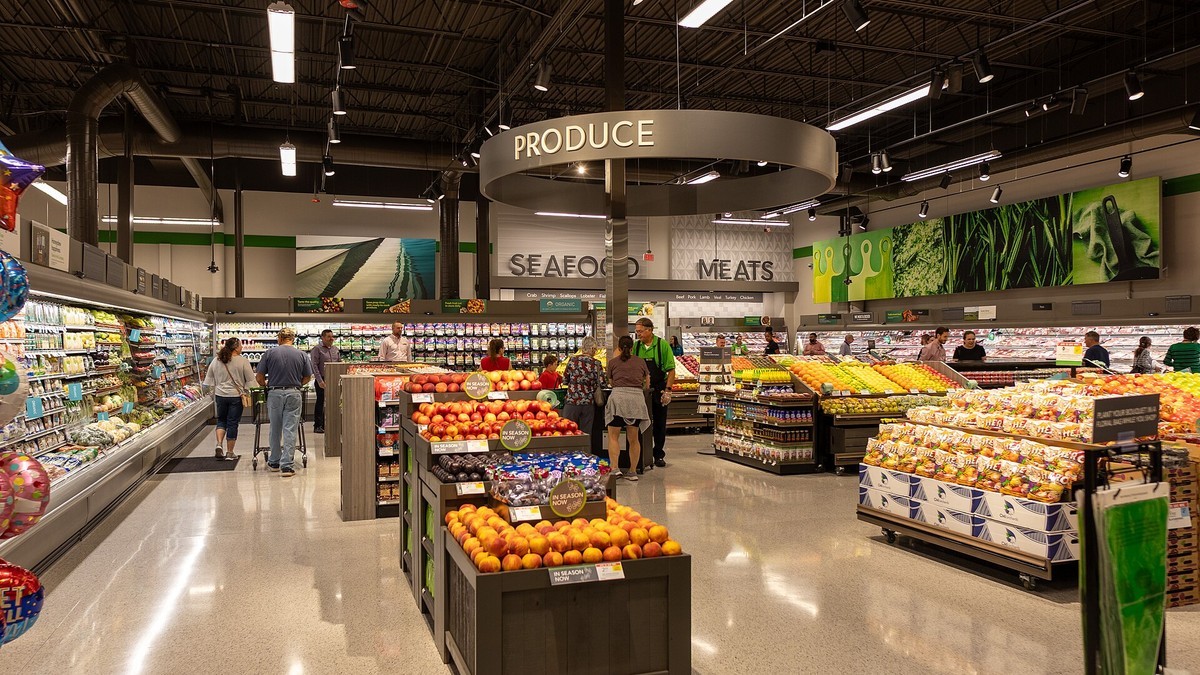
The argument for scale is fulfillment. DoorDash says managing inventory itself through DashMart achieves 99%+ fulfillment accuracy and delivers more than 10 minutes faster on average, because a warehouse is optimised for delivery and a grocery store was never set up for it. DashMart started five years ago and manages products for Giant Eagle, Albertsons and others. Xu's case: "Instacart has spent years learning to do that well for grocers, while DoorDash has built a delivery network and technology that local stores rely on every day."
Two Memberships, One Bill
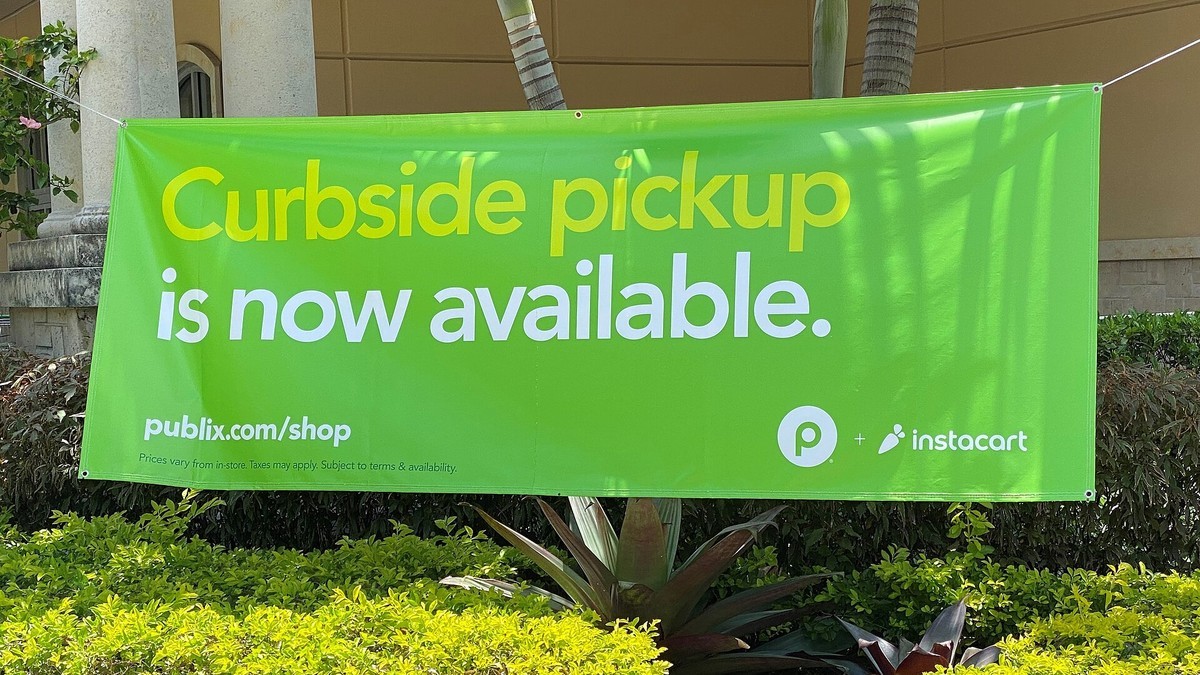
Here is the consumer pitch. Instacart customers could shop at more than 50,000 additional stores, on top of the nearly 100,000 stores on the Instacart platform today. Instacart already partners with more than 2,200 retail banners.
And the memberships: DashPass and Instacart+ members would pay one membership fee instead of two, which DoorDash estimates would save them $100 million per year on membership fees alone. That is an estimate from the company, not a promise on your statement.
Xu's closing line is about local money: "It's still early innings, but we know that when more people shop local, more dollars stay local." Rogers framed it as combining Instacart's "purpose-built grocery technology and trusted retailer and brand relationships" with DoorDash's "global consumer reach and logistics capabilities."
The Shoppers, the Dashers and the Fine Print
Now the part that gets buried. DoorDash made two post-close commitments. Under "Open Platform, No Grocery Exclusivity," local grocers can work with any delivery platform they choose. Under "Shoppers Keep What They Love," Instacart Shoppers keep flexibility over how much they work and the information they need to decide which batches to accept, and can choose whether to take DoorDash orders or keep shopping only on Instacart.
Read those again. They promise choice and flexibility. They do not promise a rate, a minimum, a benefit or a job. No job-cut figure has been disclosed.
And the record is not clean. DoorDash settled with New York City regulators for $131.5 million to resolve charges it deprived workers of millions of dollars in tips, as NBC News noted in its reporting on the deal. DoorDash's statement: "Simply put, we screwed up. Our mistakes meant some Dashers were underpaid or paid late. While these mistakes weren't intentional, that doesn't make them okay."
The Regulators Were Already in the Room
One day before this deal, the Federal Trade Commission ordered nine companies to explain how they use personal data, algorithms and loyalty programmes to set prices and pay. DoorDash and Instacart are both on the list, alongside Delta, United, JetBlue, Lyft, Uber, Target and Walmart.
This is an inquiry, not a finding of wrongdoing. FTC Chairman Andrew Ferguson said: "We intend to scrutinize the opaque methodology that some companies in these industries may be using to determine how much consumers pay or how much gig workers are paid for the same product or service." Companies have 45 days to respond, and the FTC said failure could bring legal action to compel compliance.
Instacart says it "does not and will not engage in surveillance pricing" and that it does not use personal information to set prices. Rohit Chopra, former FTC commissioner and now head of California's Business and Consumer Protection Agency, is unimpressed: "What we have seen so far is that they have not been using these studies that produce meaningful reports that ultimately lead to any rule-making changes."
On the merger itself, a Wedbush research note published on 26 October said third-party delivery platforms "remain a minority of total grocery consumption, but slicing and dicing the online market more narrowly or from a perspective of the grocers as enterprise customers can make approvals more challenging." The releases name Hart-Scott-Rodino clearance plus approvals in Canada and Israel.
What Has to Happen Before It Closes
The timetable is long, and that is the story. DoorDash expects closing at the end of 2027 or the first half of 2028. That is subject to Instacart stockholder approval, expiration or termination of the Hart-Scott-Rodino waiting period, the other regulatory approvals including Canada and Israel, and customary conditions.
Stockholders holding about 19% of Instacart's outstanding shares have agreed to vote in favour. DoorDash intends to file a Form S-4 registration statement containing an Instacart proxy statement that also serves as a DoorDash prospectus.
Goldman Sachs & Co. LLC is financial adviser to Instacart, with Cravath, Swaine & Moore LLP and Cooley LLP as legal counsel. A gap like that is not a formality. It is a year or more of uncertainty for workers, for grocers and for shoppers deciding what to pay for.
What This Actually Changes for Your Grocery Bill
DoorDash's fourth-quarter outlook: Marketplace GOV of $35.4 billion to $36.4 billion, and adjusted EBITDA of $900 million to $1,100 million. At the midpoint, that is below the $1,060 million adjusted EBITDA the company just reported.
So here is the honest answer on your grocery bill. Nothing in this announcement promises you a lower price on groceries. The documented savings are $100 million a year across membership fees, estimated, and $500 million or more in annual synergies, net of investments, expected over multiple years - with DoorDash spending more than 100% of those synergies in year one. None of that is a price cut at the checkout.
What to watch: the S-4 filing, the stockholder vote, the antitrust reviews in the United States, Canada and Israel, and whether the FTC's pricing inquiry turns into anything with teeth. Watch the shoppers too - the ones picking your avocado. Folks, the press release is written. The bill is not.
By Jessica Ali, Staff Writer
This article was produced with AI-assisted research and editorial support. Sources: DoorDash and Instacart press releases and investor materials, Instacart Q3 2026 results, CNBC, NBC News, the Associated Press, The Guardian, FOX Business, TechXplore and S&P Global Market Intelligence price data. Photographs: Yuki Iwamura/Bloomberg via Getty Images, via NBC News; Phillip Pessar (CC BY 2.0); Nielsoncaetanosalmeron (CC BY 4.0).
What's Your Reaction?
 Like
0
 Dislike
0
 Love
0
 Funny
0
 Wow
0
 Sad
0
 Angry
0

Editor-in-Chief at Global1.News. Atlanta-based journalist who cuts through the BS and tells it like it is. Lead anchor, host, and the voice you hear when the spin stops and the truth starts.












Comments (0)