
Dolores Huerta, Who Built a Union and a Slogan a President Borrowed, Dies at 96
Dolores Huerta, who co-founded the union that became the United Farm Workers and coined “Sí, se puede,” has died at 96. Her family said she died at home on Wednesday, seven months after she accused César Chávez of sexually abusing her.
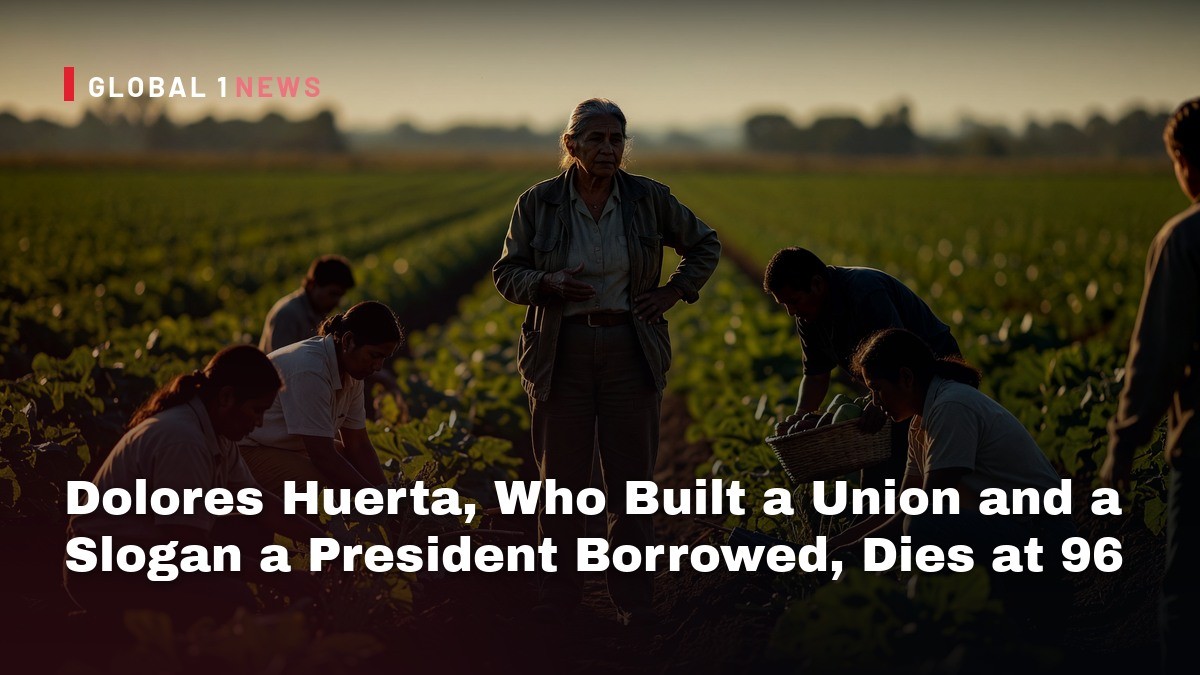
Dolores Huerta, who co-founded the union that became the United Farm Workers and coined the phrase a future president would borrow, has died at 96. Her family announced the death Wednesday.
Dolores Huerta, Who Built a Union and a Slogan a President Borrowed, Dies at 96
Bakersfield, California — She was born Dolores Clara Fernandez on April 10, 1930, in Dawson, New Mexico, and died at home, her family said, leaving behind a movement, a slogan and a reckoning she set in motion herself.
The Statement From Her Family
The family announced the death in a statement posted to social media by her foundation. "We are deeply saddened to announce that our beloved mother, Dolores Huerta, has passed away today at the age of 96," the statement read. "As you can imagine, this is an incredibly difficult time for us, and we ask for privacy as we grieve this incredible loss to our family." It went on: "We know that many of you around the world share in our mourning, and we will be following up on plans to recognize and celebrate her incredible life and legacy." No cause of death was disclosed, and no funeral or memorial date has been announced. The family said plans will follow.
A Teacher Who Chose the Fields
Her father was a miner and union activist who won a seat in the New Mexico Legislature. Her parents divorced when she was 3, and her mother Alicia took her and her brothers to California, working as a waitress and a cannery worker before saving enough to buy a small hotel and restaurant in Stockton. Huerta grew up in the San Joaquin Valley among Mexican, Filipino, African American, Japanese and Chinese working families. She earned an associate teaching degree from University of the Pacific's Delta College and taught elementary school in the farm-rich valley in the 1950s. Then she quit. "I couldn't stand seeing kids come to class hungry and needing shoes," she said in the 2017 PBS documentary "Independent Lens." "I thought I could do more by organizing farmworkers than by trying to teach their hungry children."
What She Actually Built
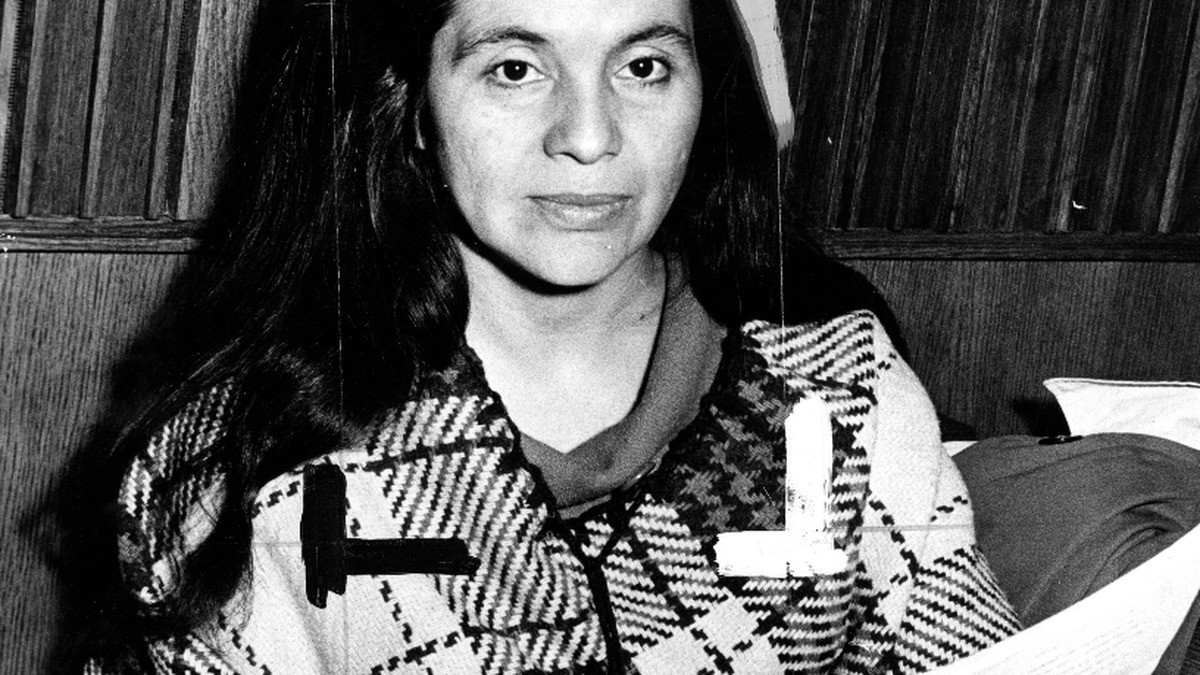
She met César Chávez through her work with a Latino civil rights group in Stockton. Both were drawn into organizing by Community Service Organization founder Fred Ross Sr. In 1962 the two started the National Farm Workers Association in Delano, California, the forerunner of the United Farm Workers, and she served as its vice president until 1999. She walked the picket line with Filipino grape pickers through the five-year Delano Grape Strike, recruited members door to door, built union hiring halls, formed ranch committees and moved to the East Coast for months at a time to run the national grape boycott. In 1966 she negotiated a contract with the Schenley Wine Co. that the union's history calls the first labor agreement won by farmworkers themselves from an agricultural company. In 1973 she led a consumer boycott of grapes credited with helping produce the California Agricultural Labor Relations Act of 1975, the first state law recognizing farmworkers' right to bargain collectively.
Sí, Se Puede, and the President Who Borrowed It
She coined "Sí, se puede" — "Yes, it can be done" — in 1972, bringing farmworkers together in Arizona to fight a law that prohibited boycotts and strikes. Told that organizing there was impossible, she answered in three words that became the movement's chant. Chávez called her "totally fearless, both mentally and physically." Barack Obama used the English translation, "Yes, we can," in his 2008 campaign, and when he gave her the Presidential Medal of Freedom in 2012 he joked that he had stolen her slogan. The phrase had traveled before that: immigration reform advocates used it in 2006. She also pushed for unemployment aid and disability insurance for California farmworkers, campaigned against toxic pesticides, sought amnesty for immigrants and fought federal guest-worker programs.
The Baton in San Francisco
In 1988, protesting Republican presidential candidate George H.W. Bush's opposition to the UFW grape boycott in San Francisco, she was caught in a crowd and struck by a police officer's baton. The blows broke three ribs, pulverized her spleen and required more than a dozen blood transfusions; she later reached a settlement with the city. The cost ran through her family too. She was the mother of 13 children, counting the two fathered by Chávez — an accounting NBC News renders as 11, the children of her two marriages and her long partnership with Chávez's brother Richard. "We understood very quickly she wasn't ours to have," her son Emilio, a lawyer, told the Los Angeles Times. "She sort of belonged to the farmworker movement. And it was our job to support her." Accounts of how often she was arrested also differ: the Associated Press and NPR put it at 22 times, NBC News at more than 25. At 89 she was arrested again, joining a union protest for better pay for home health care workers.
The Secret She Carried for Sixty Years
In March 2026 the New York Times published an investigation in which Huerta said Chávez sexually abused her. She told the Times that in 1966, at the height of the UFW boycott, he drove her to a secluded grape field in Delano and raped her, and that in 1960 he had pressured her into sex during a work trip. She said she reported neither, because of how police treated their movement and because she feared no one in the union would believe her. Two children resulted, and she arranged for both to be raised by other families. "Only in 2026 did she acknowledge having two other daughters, given to others to raise, fathered by César Chávez," the Los Angeles Times wrote. Chávez was never charged. He died in 1993.
I Am a Survivor
She spoke in her own words. "I am nearly 96 years old, and for the last 60 years have kept a secret because I believed that exposing the truth would hurt the farmworker movement I have spent my entire life fighting for," she said in a 2026 statement. "I carried this secret for as long as I did because building the movement and securing farmworker rights was my life's work. The formation of a union was the only vehicle to accomplish and secure those rights and I wasn't going to let Cesar or anyone else get in the way." In a second statement she said: "I have never identified myself as a victim, but I now understand that I am a survivor — of violence, of sexual abuse, of domineering men who saw me, and other women, as property, or things to control. My heart aches for everyone who suffered alone and in silence for years." She added: "Cesar's actions do not diminish the permanent improvements achieved for farmworkers with the help of thousands of people."
What the Revelation Did to a Saint's Name
The fallout was immediate. The UFW cancelled its annual celebrations honoring Chávez one day before the Times published, and organizers in San Francisco, Los Angeles, Texas and Arizona cancelled or declined to mark his birthday. Two other women also came forward to say Chávez sexually assaulted them when they were teenage girls, part of an investigation in which the Times interviewed 60 people who corroborated findings that he groomed and assaulted women, including minors. Gov. Gavin Newsom said he would be open to changing the March 31 state holiday marking Chávez's birthday, and estimated roughly three dozen California schools use the labor leader's name. "The farmworkers movement and labor movement are much bigger than one man," his office said. "We're for justice, truth, and transparency — and we will have the backs of our friend Dolores and all victims." In San Francisco the Board of Supervisors moved to remove the Chavez name, with Council President Mike Karbassi citing Huerta's statement as grounds for swift action. That reporting describes a move, not a final outcome.
The Honors, and the Work in Her Nineties
In 1993 she became the first Latina inducted into the National Women's Hall of Fame. In 1998 she received the Eleanor Roosevelt Human Rights Award from President Bill Clinton; in 2012 Obama gave her the Presidential Medal of Freedom; in 2013 she entered the California Hall of Fame. She held nine honorary doctorates, and schools in California, Texas and Colorado carry her name, along with murals, streets and Dolores Huerta Square in Los Angeles' Boyle Heights. In May 2026 she attended the dedication of a new downtown Los Angeles mural of her, "Walking into History," by artist Robert Vargas. Her foundation — founded in 2003, or 2002 by one accounting — registered voters, mentored students and distributed food to victims of the 2023 Central Valley floods. In 2025 one of her nonprofits broke ground on the Dolores Huerta Peace & Justice Cultural Center in Bakersfield, a $35-million project paid for largely by the state of California.
What She Asked to Be Remembered For
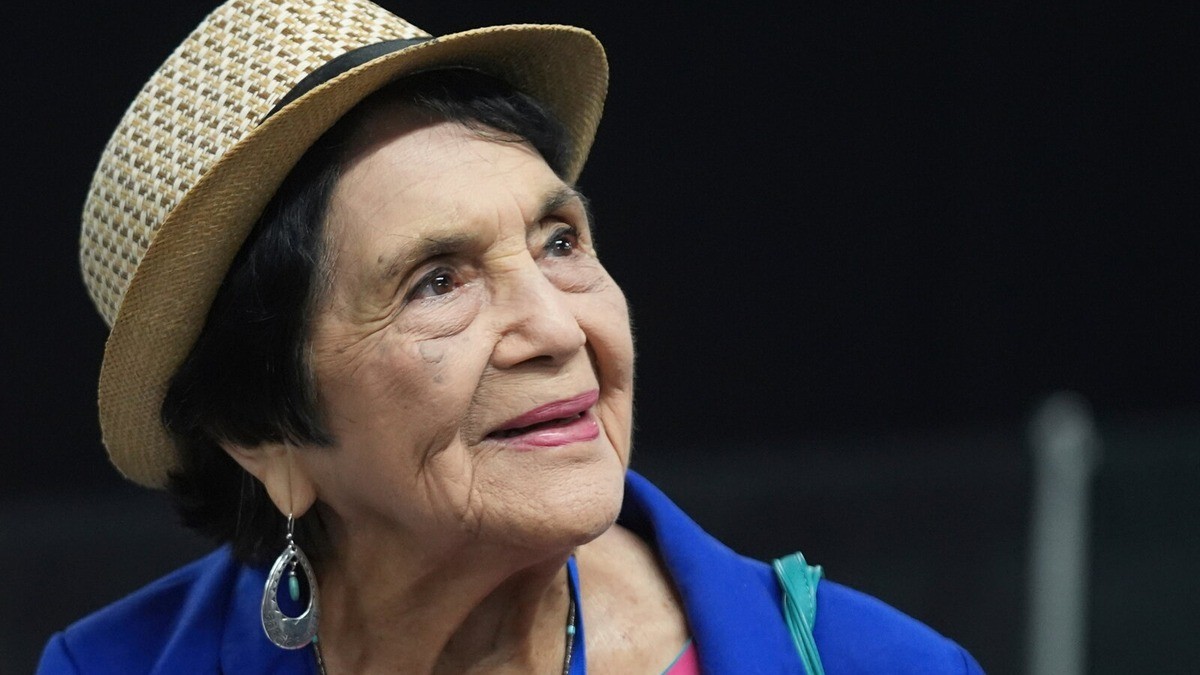
California Assembly Speaker Robert Rivas said the state had lost a giant. "Dolores Huerta gave voice to the voiceless, dignity to the fields and hope to generations," he said. "She showed us that even in the face of injustice, together we can. Sí, se puede." Domingo Garcia, former national president of the League of United Latin American Citizens, called her "an unsung hero in many parts of the U.S., and in our history." "Dolores stood for courage," he said. "She stood for righteousness and justice when it was unpopular to do so." Huerta's own answer was simpler. "I hope that my legacy will be one of an organizer that organized to fight injustice," she said in the 2025 documentary "Seeds of Change: The Life and Legacy of Dolores Huerta." "We want to give our children an inheritance of justice, right, not jewels or property or money because they'll just fight over it. So the main thing to do is to give them this love for justice — and that is the greatest gift I think that any of us can have."
By Jessica Ali, Staff Writer
This article was produced with AI-assisted research and editorial support. Photographs: Court Mast/AP (file, 1988), Getty Images via ABC7 Eyewitness News, and The Associated Press. Sources: The Associated Press (via NPR, 10TV/WBNS and KSAT), NPR, CNN, the Los Angeles Times, NBC News, NBC Los Angeles, KCRA, ABC7 Eyewitness News, the Office of the Governor of California, the Sacramento Bee and the SF Standard.
What's Your Reaction?
 Like
0
 Dislike
0
 Love
0
 Funny
0
 Wow
0
 Sad
0
 Angry
0

Editor-in-Chief at Global1.News. Atlanta-based journalist who cuts through the BS and tells it like it is. Lead anchor, host, and the voice you hear when the spin stops and the truth starts.











Comments (0)