
Dengue Deaths Top 300 as Experts Urge Marcos to Fast-Track Vaccine Approval
Dengue deaths top 300 in 2026 despite lower national cases. Experts urge Marcos to fast-track Qdenga vaccine approval as Zamboanga declares epidemic and Cebu cities cross thresholds. DOH pushes 4 O'Clock Habit cleanup.
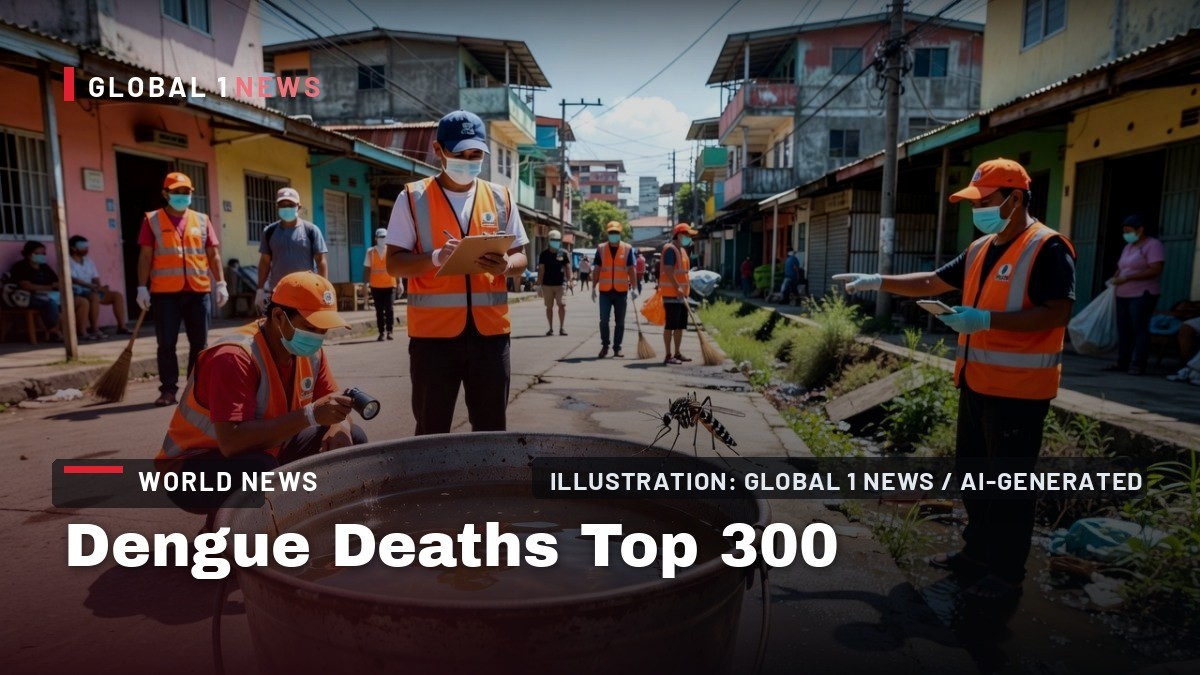
MANILA — The numbers are stark: 386 Filipinos have died from dengue in the first seven months of 2026, and while the national case count has dropped significantly compared to last year, health experts are sounding the alarm that the fight is far from over. They are now pressing the Marcos administration to expedite the approval of a second-generation dengue vaccine that has been pending with the country’s Food and Drug Administration (FDA) since 2023.
Department of Health (DOH) data showed 93,155 dengue cases recorded from January 4 to August 1, 2026 — a 46 percent decline from the 174,077 cases logged during the same period in 2025. Deaths also fell, from 699 to 386. But these national figures mask a troubling reality on the ground: several cities and regions are experiencing epidemic-level outbreaks, and the rainy season (habagat) is only beginning to peak.
“We have already lost over 300 Filipinos this year alone to this disease, while communities in different parts of the country are experiencing outbreaks,” said Dr. Lulu Bravo, executive director of the Philippine Foundation for Vaccination, in a statement echoed by public health groups. The urgency is palpable, especially for families in Zamboanga City, where the local government has declared a dengue epidemic, and in the Visayas, where Cebu’s major cities are crossing critical thresholds.
Epidemic Declared in Zamboanga, Alert Raised in Cebu
The most acute situation is unfolding in Zamboanga City, where cases have surged past 1,200 with 12 deaths and active transmission clusters reported across 39 barangays. The city government’s declaration of an epidemic is not a mere formality — it unlocks emergency funding and allows for intensified vector control operations, but it also signals that the local health system is under significant strain.
In the Visayas, Lapu-Lapu City has breached the dengue epidemic threshold, while neighboring Cebu City and Mandaue City have crossed the alert threshold, according to DOH regional data from early August 2026. For residents of Metro Cebu, this means heightened vigilance: barangay captains are being mobilized for cleanup drives, and public schools are being asked to check for stagnant water in their premises.
Down south, the Davao Region (Region 11) has recorded 4,345 cases with 21 deaths from January to August 5, 2026. While the numbers are lower than in previous years, the DOH notes that the region’s mountainous terrain and urban poor communities in Davao City remain vulnerable, particularly in areas where water storage is a daily necessity.
For ordinary Filipinos, the message from health authorities is clear: dengue is not just a statistic. It is the kapitbahay who develops a sudden high fever, the child who misses a week of school, or the OFW family that drains their savings on hospital bills. The DOH has repeatedly urged early consultation for fever, but for many, the cost of a private hospital stay — which can run to tens of thousands of pesos — remains a barrier.
The Vaccine Question: Qdenga’s Long Wait
At the center of the experts’ appeal is Qdenga (TAK-003), a dengue vaccine manufactured by Japan’s Takeda Pharmaceutical Company. The vaccine has been recommended by the World Health Organization (WHO) for children aged 6 to 16 in settings with high dengue transmission intensity, with a two-dose regimen given three months apart.
But in the Philippines, Qdenga’s registration application has been pending with the Philippine FDA since 2023. Health experts, including members of the Philippine Medical Association’s “End Dengue Now” coalition, have urged President Ferdinand Marcos Jr. to expedite the approval process, arguing that every month of delay translates to preventable deaths.
Dr. Bravo pointed to the WHO recommendation and the rollout of the vaccine in neighboring Southeast Asian countries as evidence that the science is settled, warning that every month of delay translates to preventable deaths.
The historical context adds weight to the appeal. In 2019, the Philippines declared a national dengue epidemic after more than 600 deaths were recorded. In 2025, the DOH logged 102,562 confirmed cases and 412 deaths for the full year. While 2026 is tracking lower, the pattern of cyclical outbreaks — dengue tends to spike every three to four years — suggests that complacency now could lead to a devastating surge in 2027 or 2028.
There is also the lingering shadow of the Dengvaxia controversy, which has made both the public and policymakers cautious about dengue vaccines. The previous administration’s school-based immunization program using Dengvaxia was linked to severe reactions in some children, leading to a crisis of confidence. Health experts acknowledge this history but argue that Qdenga is a different product with a different safety profile, and that the WHO’s endorsement should carry weight.
Government Response: Cleanup Drives and the 4 O’Clock Habit
The Marcos administration has responded to the current outbreak not with vaccine procurement, but with a renewed push for environmental sanitation. The DOH’s “4 O’Clock Habit” campaign encourages families and communities to spend ten minutes each day searching for and destroying mosquito breeding sites — from flower pots and discarded tires to roof gutters and uncovered water drums.
In many barangays, this has become a daily ritual. Sari-sari store owners are being reminded to check their soft drink bottles; tricycle drivers are urged to drain water from their vehicles’ rain covers; and public school teachers are incorporating the habit into their morning routines. The campaign is a classic public health intervention — low-cost, community-driven, and effective when consistently applied.
But critics argue that cleanup drives alone are insufficient, especially in urban poor communities where water storage is unavoidable and waste collection is irregular. Public health workers acknowledge that the campaign is harder to sustain in urban poor communities, where families often have no choice but to store water in open containers because piped supply is intermittent.
The DOH has also emphasized the importance of early consultation. The agency’s guidance is straightforward: if a family member develops a fever that lasts for two days or more, especially with headache, muscle pain, or a rash, they should seek medical attention immediately. In severe cases, dengue can progress to plasma leakage, shock, and death within 24 to 48 hours.
Regional Disparities and the Burden on LGUs
One of the challenges in the Philippines’ response to dengue is the decentralized nature of health governance. Local government units (LGUs) are primarily responsible for vector control and outbreak response, but their capacities vary widely. Wealthier cities like Makati or Cebu City can afford fogging operations and larvicide purchases, while poorer municipalities in the Visayas and Mindanao often rely on DOH support.
The Zamboanga City epidemic illustrates this disparity. With 39 barangays reporting active transmission, the city’s health office is stretched thin. The declaration of an epidemic allows the city to tap into national emergency funds, but the process takes time — time that patients may not have.
In the Davao Region, the DOH has deployed additional epidemiologists and entomologists to support local response teams. But the region’s geography — with its coastal areas, agricultural lowlands, and mountainous interiors — makes comprehensive vector control a logistical challenge.
For overseas Filipino workers (OFWs) and their families, the dengue burden has a transnational dimension. Many OFWs send remittances to cover medical expenses for relatives back home, and a severe dengue case can wipe out months of savings. Health experts have called on the Department of Foreign Affairs and the Overseas Workers Welfare Administration to include dengue prevention information in their pre-departure orientation seminars, so that families abroad are aware of the risks and the importance of early consultation.
What Families Can Do Now
For Filipino families, the first line of defense remains prevention at home. The DOH's 4 O'Clock Habit asks every household to spend ten minutes each day searching for and destroying mosquito breeding sites — checking flower pots, discarded tires, roof gutters, and uncovered water drums. Keeping water containers sealed, using mosquito repellent, and installing screens on windows can all reduce the risk of bites.
The agency's guidance on early consultation is equally important: if a family member develops a fever lasting two days or more, especially with headache, muscle pain, or a rash, they should seek medical attention immediately at the nearest barangay health station or hospital. In severe cases, dengue can progress to plasma leakage, shock, and death within 24 to 48 hours — which is why prompt care saves lives.
Neighbors can also help in the spirit of bayanihan: checking on elderly relatives, helping families with young children clear breeding sites, and reporting suspected cases early so barangay health workers can respond quickly.
What Lies Ahead: Zero Deaths by 2030
The public health community in the Philippines has rallied around the WHO’s target of zero dengue deaths by 2030. The “End Dengue Now” coalition, which includes the Philippine Medical Association and various professional societies, argues that this target is achievable with a combination of vaccination, vector control, and improved clinical management.
But achieving zero deaths will require political will. The FDA’s review of Qdenga’s registration application has been ongoing for over three years, and there is no clear timeline for a decision. Health experts have urged President Marcos to issue a directive to the FDA to prioritize the review, given the public health emergency in several regions.
Dr. Bravo stressed that experts are not asking for shortcuts on safety, but for urgency — noting that the data has been under review for years and that lives are being lost while the country waits.
For now, the immediate focus remains on the 4 O’Clock Habit and early consultation. The DOH has also reminded the public that dengue is preventable and that community cooperation is essential. In the spirit of bayanihan, neighbors are being encouraged to look out for each other — to check on the elderly, to help families with young children, and to report suspected cases to their barangay health stations.
The rainy season will continue for several more weeks, and the peak of the dengue season typically occurs in August and September. The next few months will be a test of the country’s preparedness — and of its ability to translate expert recommendations into timely action.
The message from health workers is consistent: the country has the tools and the knowledge — the test now is whether it can act before it is too late.
This article was produced with AI-assisted research and editorial support. Sources: Philstar.com, Philippine News Agency, Philippine Daily Inquirer, Department of Health (Philippines), World Health Organization.
By Bella Reyes, Staff Writer
What's Your Reaction?
 Like
0
Like
0
 Dislike
0
Dislike
0
 Love
0
Love
0
 Funny
0
Funny
0
 Wow
0
Wow
0
 Sad
0
Sad
0
 Angry
0
Angry
0

Philippines/Southeast Asia Correspondent at Global1.News. Manila-based journalist covering Philippine politics, environment, maritime security, and social issues. Passionate about marine conservation and the communities protecting the Philippines' natural heritage.











Comments (0)