
Delhi Crosses August Rainfall Average in First 8 Days; 230.1 mm Recorded at Safdarjung
Delhi crossed its August rainfall average in just eight days as Safdarjung Observatory recorded 230.1 mm against the 226.8 mm monthly norm. A red alert, waterlogging and rising dengue risk expose the capital's urban flooding vulnerabilities.
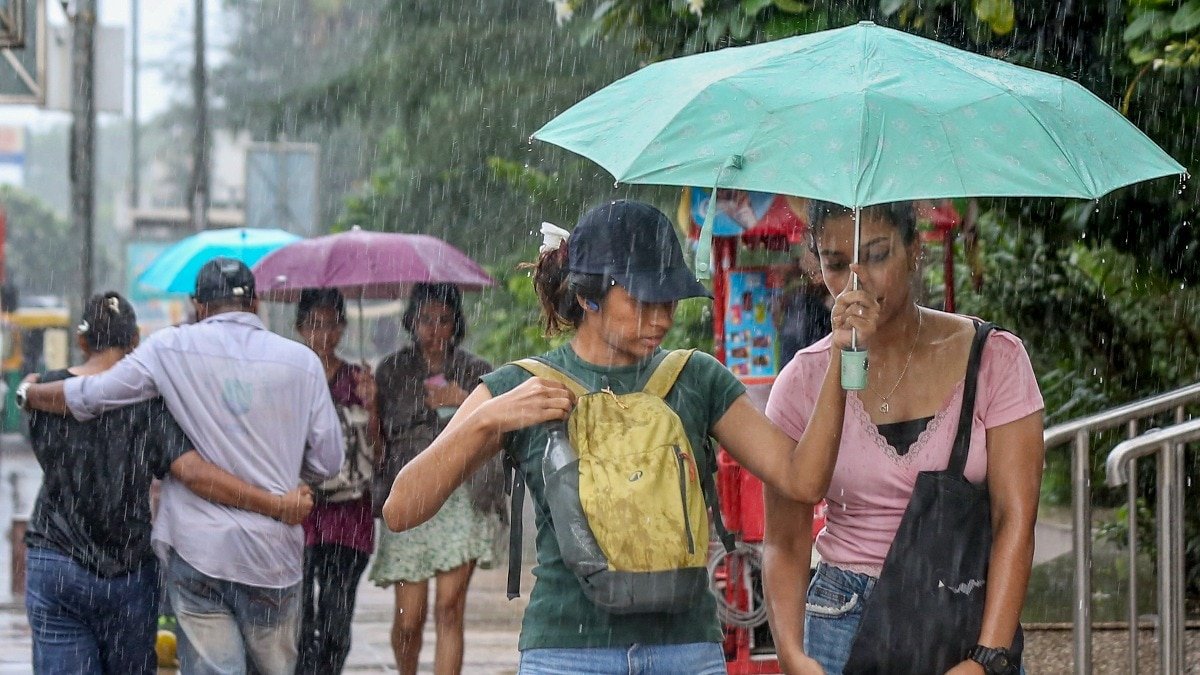
Safdarjung Observatory, Delhi's base weather station, recorded 230.1 mm of rain between August 1 and 8, 2026 — crossing the India Meteorological Department's (IMD) long-period average (LPA) of 226.8 mm for the entire month of August, based on the 1991-2020 climatological period. The capital consumed its full month's rainfall allocation in eight days, and the consequences were visible across every waterlogged intersection, inundated colony, and stranded commuter route.
Delhi's Monsoon Arithmetic is Broken: 230 mm in 8 Days, a Red Alert, and the Cost of Unplanned Urban Hydrology
New Delhi, August 10 — The numbers should not be possible, yet they are now a matter of official record. Delhi crossed its August rainfall average before the month was even a third complete, with 225.7 mm accumulated from August 1 through 8:30 am on Saturday, August 8, and a further 4.4 mm recorded between 8:30 am and 5:30 pm the same day, taking the month-to-date total to exactly 230.1 mm. The fact that the capital has now seen rain for four consecutive days, with Saturday delivering 98.7 mm in the 24 hours ending 8:30 am — the wettest August day in two years — has transformed a routine monsoon forecast into a civic emergency that speaks directly to Delhi's vulnerabilities in drainage, urban planning, and public health preparedness.
The Numbers: A Full Month in Eight Days
The arithmetic of this monsoon burst deserves close scrutiny. Saturday's 98.7 mm at Safdarjung represents the heaviest August rainfall since August 1, 2024, when the observatory recorded 107.6 mm. But the spatial distribution tells an even more striking story. For the 24 hours ending 8:30 am on Saturday, Ayanagar recorded 115.0 mm, Palam 104.6 mm, Safdarjung 98.7 mm, Ridge 89.8 mm, and Lodhi Road 86.8 mm. Every major monitoring station in the capital exceeded 85 mm in a single day, a signature of a deep, organised weather system rather than isolated convective activity.
The first week of August alone brought approximately 127 mm — described as Delhi's wettest start to August in 13 to 15 years, depending on the climatological dataset used. That the capital has now exceeded its entire monthly LPA of 226.8 mm with 230.1 mm before August 10 is not merely a statistical curiosity; it places immense strain on a drainage network already known to fail under far lighter loads.
A City Under Water
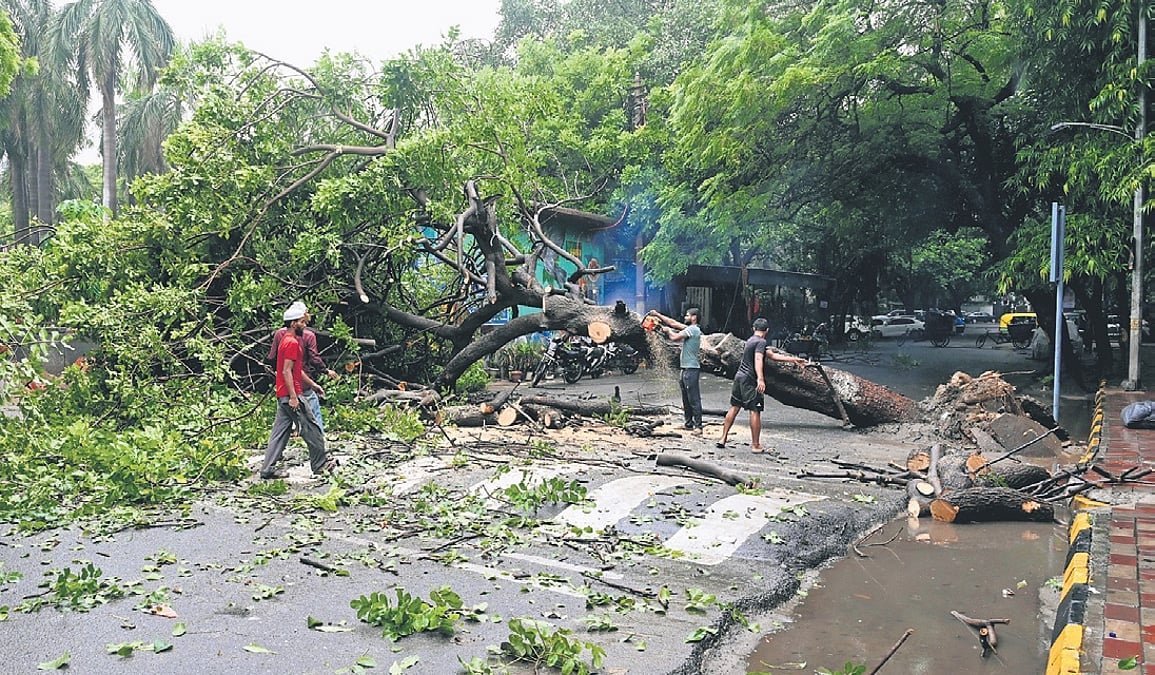
The IMD's red alert, issued on Friday, August 7, was not theoretical. Ground reports through the weekend documented massive traffic snarls on major arterial roads, waterlogging at critical intersections, and inundated residential colonies including Pushp Vihar and ITO, with parts of NCR such as Gurugram reporting waterlogging up to four feet in some low-lying stretches. Commuters faced multi-hour delays; two-wheelers were abandoned on flooded stretches; and essential services, from ambulance movement to last-mile connectivity, were severely compromised.
The forecast moving forward offers limited comfort. IMD projections indicate light to very light rain at some places in Delhi over the next two days, with showers expected to ease. But the damage to daily life has already been done, and the city's capacity to absorb another such burst in the remaining weeks of the monsoon season remains fundamentally untested.
Why Delhi Floods: Three Agencies, One Problem
The recurring nature of urban flooding in the capital is not a meteorological failure but an administrative one. Delhi's drainage network is split across multiple authorities — the Municipal Corporation of Delhi (MCD), the Public Works Department (PWD), and the Delhi Jal Board (DJB) — each responsible for different stretches, different pipe sizes, and different maintenance schedules. When intense rainfall arrives, the seams between these jurisdictions become the failure points.
The National Disaster Management Authority (NDMA) issued comprehensive urban flooding guidelines in 2016, but implementation has been piecemeal. The guidelines called for catchment-area planning, desilting of drains before the monsoon, regulation of construction in flood-prone zones, and integrated command-and-control systems for real-time flood response. Nearly a decade later, Delhi still lacks a unified drainage authority capable of responding to a 115 mm day at Ayanagar and an 86.8 mm day at Lodhi Road with coordinated, citywide action. The result is a repeating cycle: heavy rain, waterlogging, traffic paralysis, and the inevitable political blame game while residents wade through knee-deep water.
The Climate Signal: Concentrated Bursts in a Below-Normal Season
What makes this episode scientifically significant is its relationship to the broader seasonal forecast. IMD's 2026 southwest monsoon outlook projected a below-normal season at roughly 92 percent of the LPA — some reports cite approximately 90 percent — with below-normal rainfall expected in August and September. The April forecast flagged potential El Nino conditions, while July outlooks noted a positive Indian Ocean Dipole (IOD) that could partially offset El Nino's drying influence.
Yet Delhi's experience contradicts the seasonal narrative. A below-normal monsoon does not mean uniformly weak rainfall; it means fewer rain days, but with the rain that does fall increasingly concentrated in intense, short-duration bursts. This is precisely the pattern observed in the capital: 230.1 mm in eight days, followed by an easing forecast. The city is not receiving more monsoon rain in aggregate — it is receiving the same or less rainfall packed into fewer, more violent episodes. For urban infrastructure designed around historical rainfall intensities, this is the most dangerous possible configuration.
The Health Fallout: A Dengue Calendar Accelerated
For Delhi's public health system, the waterlogging is not merely a commuting inconvenience — it is a biological trigger. Standing water in residential colonies, construction sites, and discarded containers provides ideal breeding conditions for Aedes aegypti mosquitoes, with dengue, chikungunya, and malaria transmission risk climbing sharply in the weeks following heavy rainfall. Delhi typically sees its dengue case curve rise in August and September, and the current inundation has effectively accelerated that calendar.
Residents in waterlogged areas such as Pushp Vihar and ITO should be alert for symptoms including sudden high fever, severe headache, retro-orbital pain, joint pain, and rash — particularly in the two to three weeks following exposure. Municipal authorities must prioritise larvicidal spraying in affected zones, and citizens should eliminate standing water around homes. There is also a secondary risk of water contamination from flooded drainage systems, especially where sewage and stormwater networks are not fully separated, raising the spectre of waterborne gastrointestinal illness in vulnerable populations.
What This Means for India: A Template for Urban Monsoon Risk
Delhi's experience is a case study for every Indian city confronting monsoon extremes. The 2016 NDMA urban flooding guidelines were never intended to sit on a shelf; they called for every city to map its flood-prone zones, assess drainage capacity against historical rainfall intensity, and establish emergency response protocols. Very few cities have done so comprehensively. The disconnect between IMD's seasonal outlook — which accurately predicted a below-normal season — and the intensity of this August burst highlights the need for impact-based forecasting that communicates not just how much rain will fall, but where it will accumulate and what it will flood.
IMD's red alert system worked in the sense that the warning was issued in advance. What failed was the urban response. A red alert that cannot mobilise pumps, deploy rescue teams, divert traffic, or protect vulnerable colonies is merely a notice — not protection.
The Bottom Line
Delhi has crossed its August rainfall average in eight days, and the city has been found wanting. The meteorological record is clear, the infrastructure deficit is documented, and the public health timeline is predictable. The question is whether the administrative response will finally match the severity of the rainfall — or whether Delhi will wait for the next 115 mm day to relearn the same lesson. The monsoon season is not over; August and September have substantial rain potential remaining, even in a below-normal seasonal context. The city's drainage agencies, health authorities, and disaster management systems must treat the coming weeks as an extended state of preparedness, because the rain will not wait for coordination.
The 230.1 mm at Safdarjung is a number behind which lies a full accounting of urban India's monsoon vulnerability — and a warning that cannot be ignored.
— By Dr. Raj Patel, Staff Writer
This article was produced with AI-assisted research and editorial support. Reporting is based on sources cited in the article.
What's Your Reaction?
 Like
0
Like
0
 Dislike
0
Dislike
0
 Love
0
Love
0
 Funny
0
Funny
0
 Wow
0
Wow
0
 Sad
0
Sad
0
 Angry
0
Angry
0

India/South Asia Correspondent at Global1.News. Analytical voice with a background in science and health journalism. Based in New Delhi, covering Indian politics, education, healthcare, technology, and policy. Breaks down complex data into clear, actionable reporting.












Comments (0)