
El Niño Threatens to Push 49 Million More Into Hunger
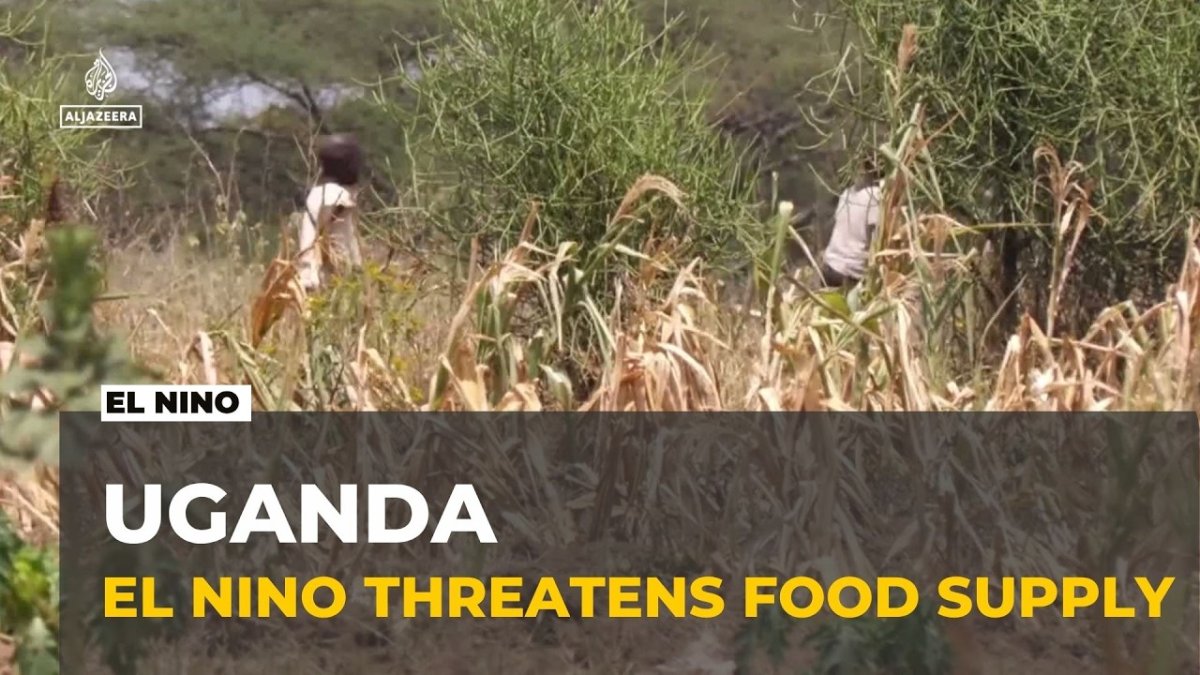
The World Food Programme issued one of its starkest warnings in years on August 5, 2026: a strengthening El Niño could push nearly 49 million additional people worldwide into acute hunger beginning in September, with Latin America and the Caribbean projected to record some of the steepest increases on the planet.
The World Food Programme issued one of its starkest warnings in years on August 5, 2026: a strengthening El Niño could push nearly 49 million additional people worldwide into acute hunger beginning in September, with Latin America and the Caribbean projected to record some of the steepest increases on the planet. For the subsistence farmers of the Central American Dry Corridor, the families who draw water from the Amazon's shrinking tributaries, and the mothers in dengue-weary cities from Tegucigalpa to Recife, the coming months will test every layer of resilience built since the last catastrophic event.
El Niño's Gathering Storm: WFP Warns 49 Million Face Hunger as Latin America Braces
Brasília, Brazil – August 10, 2026 — The warning arrives with unusual precision. The United Nations World Food Programme says there is an 81 percent probability of a "very intense" El Niño episode, one that could rank among the strongest recorded since 1950. The agency's acting executive director, Carl Skau, put it bluntly: "El Niño represents a huge threat to food security for millions who are already vulnerable. The earlier we act to help families prepare for these climate shocks, the more lives and livelihoods we can save."
The WFP's Dire Warning
The numbers behind Skau's statement are sobering. The WFP estimates that nearly 49 million additional people could face acute hunger starting in September 2026, driven by the climate phenomenon's disruption of rainfall, temperature, flooding, and drought patterns across 45 countries already experiencing food insecurity. Global acute food insecurity could rise by 22 percent — from 225 million to 274 million people unable to meet their daily nutritional needs.
The agency's confidence in that trajectory is grounded in both modeling and history. The 2015-2016 El Niño, the last comparable event, affected the food security of between 60 and 100 million people. The current event is expected to peak between September and December 2026, but its effects will ripple through 2027 as future harvests fail or flourish under altered skies. The WFP and the Food and Agriculture Organization have jointly called for increased support to at-risk countries, warning that drought, flooding, and extreme temperatures are already putting communities at risk before the phenomenon reaches full strength.
Latin America on the Front Line
Nowhere is the projected impact more concentrated than in the hemisphere Elena calls home. The WFP's analysis found that Latin America and the Caribbean could see one of the largest increases in food insecurity of any region — with more than 16 million people potentially pushed into hunger. Central America is projected to record the highest relative increase among all regions covered by the analysis: up to 83.1 percent.
The structural vulnerability behind those figures is decades in the making. The International Fund for Agricultural Development notes that the Americas account for 22 percent of global agricultural disaster losses, estimated at USD 713 billion. The FAO reported that 645 million people — 7.8 percent of the world's population — still suffered from chronic undernourishment in 2025, an improvement of about 14 million people from 2024 driven largely by gains in Asia, Latin America, and the Caribbean. El Niño threatens to erase that hard-won progress in a single season.
The Dry Corridor's Gathering Storm
At the epicenter of the Latin American threat sits the Central American Dry Corridor, a semi-arid band stretching from the Pacific lowlands of Guatemala through El Salvador, Honduras, Nicaragua, and parts of Costa Rica — covering nearly one-third of Central American territory. It is a region where a delayed rainy season has historically ruined up to 70 percent of subsistence farmers' first harvest, and where too much rain has damaged up to 50 percent of the second.
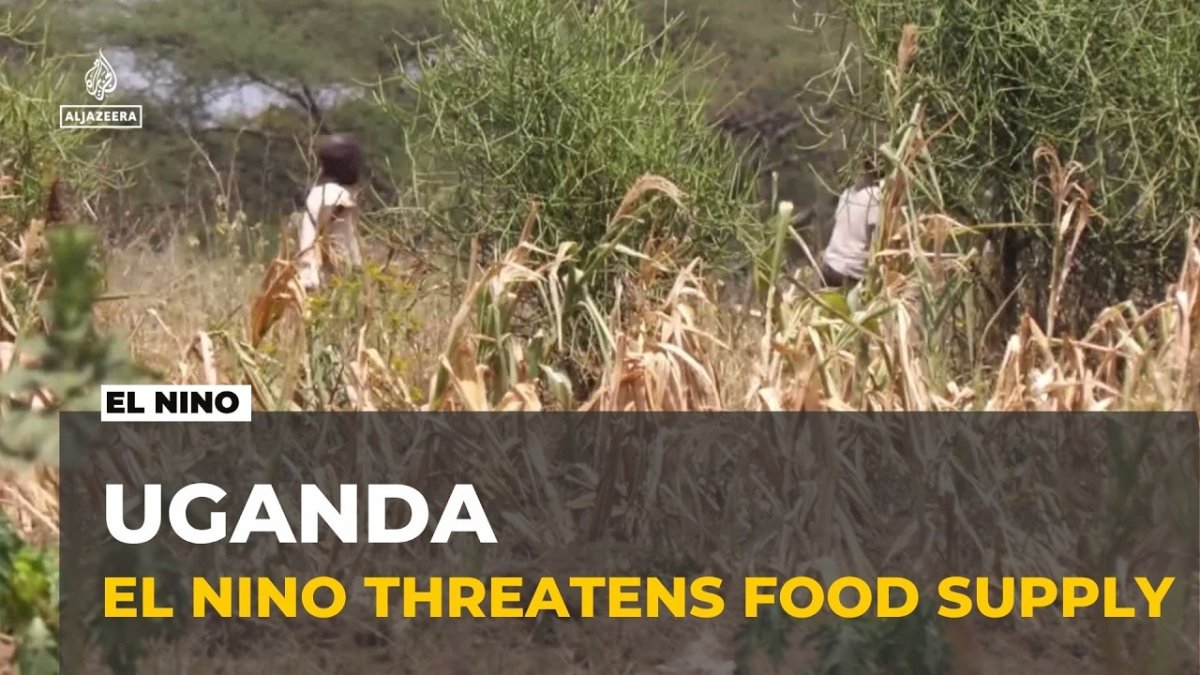
The Pan American Health Organization's Public Health Situation Analysis for El Niño 2026-2027, published June 24, 2026, projects drier-than-average conditions across the Dry Corridor, the Greater Antilles, and portions of northern South America, with reduced precipitation expected to deepen drought conditions, water scarcity, and agricultural losses. The World Meteorological Organization has warned that drought and heat could threaten food security across the corridor while increasing wildfire risks in several countries. For the smallholder families who plant maize and beans on rain-fed plots, the forecast is not an abstraction — it is the difference between a harvest and a crisis.
Health Systems Bracing for Impact
El Niño is not only an agricultural emergency; it is a public health emergency in waiting. PAHO's analysis, prepared with the World Health Organization, flags malnutrition, cholera and other waterborne diseases, arboviral diseases such as dengue, Zika, chikungunya, Oropouche, and yellow fever, and heat stress as "very high risk" threats across the region. Malaria, measles, and respiratory diseases are rated high risk, along with disruptions to maternal and child health services.
The mechanisms are well understood. Drought concentrates people around shrinking water sources, amplifying waterborne transmission; heat and erratic rainfall expand the breeding range of Aedes aegypti mosquitoes; wildfire smoke compounds respiratory illness in communities already struggling with access to care. PAHO warns that El Niño-related impacts — food insecurity, displacement, and disruptions to health services — will fall hardest on populations already affected by poverty, migration, and limited access to essential services. The WHO's EPI-WIN webinar on August 12, 2026, "Preparing for El Niño and climate-related health risks," will convene country experiences from across the Americas to map the response.
Floods, Landslides and the Wet Side of El Niño
El Niño is not a single disaster — it is a mosaic of them. While the Dry Corridor and northern South America brace for drought, the Pacific coast of Ecuador, northern Peru, and western Colombia face enhanced probabilities of above-normal rainfall, elevating the risk of flooding, landslides, infrastructure damage, and population displacement. Portions of southern South America — Argentina, Paraguay, southern Brazil, and Chile — also lean wetter, a pattern consistent with historical El Niño events.
PAHO's forecast notes drier conditions may persist across Guyana, Suriname, Venezuela, northern Brazil, eastern Peru, and parts of the Amazon basin, threatening river levels, hydropower, and the fisheries that sustain riverside communities. There is one moderating note: El Niño conditions are generally associated with suppressed Atlantic tropical cyclone activity, and NOAA forecasts a higher likelihood of a below-normal Atlantic hurricane season in 2026. For the Caribbean, that is a reprieve — but not a solution to the drought pressing on its reservoirs.
Why Early Action Saves Lives
The WFP's message is not purely doom. The agency is already strengthening anticipatory response in eight countries, preparing for floods, droughts, and storms before they occur rather than after they strike. The economic case is overwhelming: every dollar invested in early action saves between three and seven dollars in future response and losses.
Across Latin America, governments are moving. The WMO has been coordinating with national meteorological services since the first El Niño signals emerged, and Latin American governments were preparing as early as July 17, 2026 for the drought, floods, and heat to come. PAHO is urging health ministries to pre-position supplies, strengthen epidemiological surveillance for arboviral and waterborne diseases, and protect maternal and child health services. For Indigenous communities and smallholder cooperatives, early warning systems and seed banks may be the difference between riding out the season and losing everything.
The Bottom Line — What Comes Next
September is the pivot. As the El Niño peaks between now and December, the hemisphere will watch harvests, rivers, and hospital wards with a new kind of attention. The WFP's projection of 274 million people in acute food insecurity globally — 49 million more than today — is not a prediction of inevitability; it is a calculation of what happens if the world waits.
For Latin America, the stakes are existential in a very concrete way. A region that spent 2025 clawing back gains against undernourishment now faces the prospect of losing them in a single climate shock, in the Dry Corridor where 83 percent more people could go hungry, and in the dengue corridors where hospitals are already stretched. The choice facing governments from Brasília to Guatemala City is the same one the WFP has put to the world: act early, spend the three dollars now, or pay the seven later — in hunger, in disease, and in lives.
By Elena Vasquez, Staff Writer
This article was produced with AI-assisted research and editorial support. Sources: World Food Programme (Aug 5, 2026), PAHO/WHO Public Health Situation Analysis: El Niño in the Americas 2026-2027 (June 24, 2026), IFAD, FAO, World Meteorological Organization, Al Jazeera English.
What's Your Reaction?
 Like
0
Like
0
 Dislike
0
Dislike
0
 Love
0
Love
0
 Funny
0
Funny
0
 Wow
0
Wow
0
 Sad
0
Sad
0
 Angry
0
Angry
0

Latin America Correspondent at Global1.News. Based in Mexico City, covering politics, economics, energy, and culture across the region. Brings an on-the-ground perspective to stories spanning from the Rio Grande to Patagonia.












Comments (0)