
C'River moves to end 20-year Ebom-Ebijaghara crisis
In a decisive step toward ending a two‑decade‑long communal clash, the Cross River State government has begun to act on a series of recommendations aimed at reconciling the Ebou m and Ebijaghara communities in Abi Local Government Area.
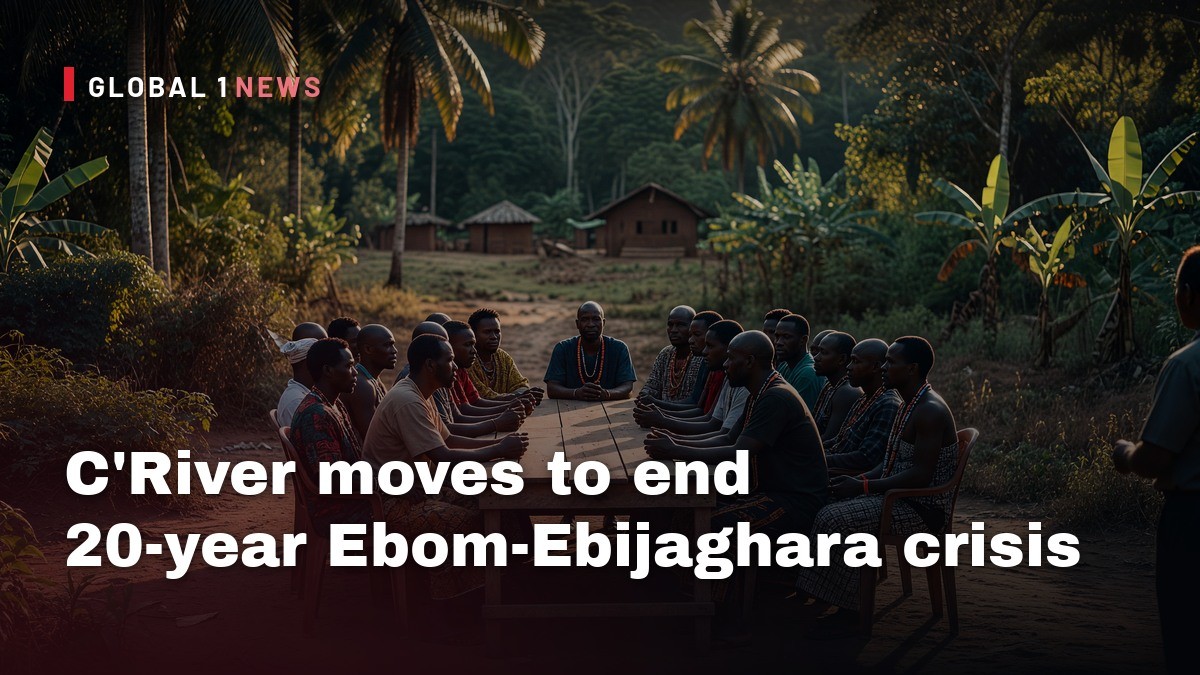
In a decisive step toward ending a two‑decade‑long communal clash, the Cross River State government has begun to act on a series of recommendations aimed at reconciling the Eboum and Ebijaghara communities in Abi Local Government Area. The initiative, unveiled at a high‑level meeting in Calabar, marks the most concerted effort yet by state authorities to halt the spiralling loss of life and the relentless destruction of property that has scarred the region for over twenty years.
Backdrop of a protracted crisis
The Ebom‑Ebijaghara dispute, rooted in contested boundaries and competing claims over land, has endured for more than two decades. Over that period, the conflict has claimed lives, displaced families and left a trail of burnt homes, abandoned farms and shattered livelihoods. While the exact death toll remains undocumented, the persistent violence has been described as an “increasing death toll” and a source of “destruction of properties,” underscoring the human cost that has weighed heavily on the local populace.
For many displaced Ebijaghara residents, the crisis has meant living in temporary shelters far from their ancestral lands, often relying on humanitarian aid and the goodwill of host communities. The prolonged nature of the dispute has also strained relations between traditional rulers, local officials and security agencies, creating a complex web of mistrust that has hampered earlier attempts at peace.
The government’s renewed push for peace
Deputy Governor Peter Odey, who chairs the State Boundary Committee, announced the commencement of the new peace drive during a meeting at the Government House in Calabar. He emphasized that the state’s actions would be guided by a “reviewed report and White Paper” prepared by a committee chaired by Senator Victor Ndoma‑Egba. This document, though not released publicly, is said to contain a set of actionable recommendations designed to address the root causes of the dispute.
Odey highlighted the construction of the Bahumono road network as a concrete step already underway. By improving connectivity in the region, the road project is expected to facilitate the safe return of displaced residents, enable quicker deployment of security forces and promote economic activity that can help mend the social fabric torn by years of conflict.
Key stakeholders rally behind the initiative
The meeting brought together a broad coalition of officials, traditional leaders and security personnel, signalling a unified front. Senior State Security Adviser, Major General Obono Ubi (retired), underscored the urgency of addressing the “prolonged displacement of Ebijaghara residents” and affirmed the state’s commitment to safeguarding returning families.
Local leadership also voiced strong support. Chief Egbala Bassey, Chairman of Abi Local Government Area, along with Davies Ettah, the member representing Abi State Constituency, pledged to facilitate the reconciliation process. Solomon Osim Edward, Chairman of the Cross River State Traditional Rulers Council, echoed this sentiment, promising the cooperation of traditional institutions in the rehabilitation of the affected communities.
Security measures and the role of the State Boundary Committee
Security considerations remain paramount. The presence of senior security officials, including Major General Obono Ubi, at the Calabar meeting reflects the state’s determination to prevent a resurgence of violence. The State Boundary Committee, chaired by Deputy Governor Odey, is tasked with overseeing the implementation of the White Paper’s recommendations, monitoring compliance and coordinating with security agencies to maintain order during the transition period.
While specific security deployments were not detailed, the emphasis on “preventing further loss of lives and destruction of property” suggests that the government intends to maintain a robust security posture, likely involving joint patrols, community policing initiatives and rapid response teams ready to intervene should tensions flare.
Rehabilitation and the return of displaced families
One of the most pressing challenges is the safe and dignified return of Ebijaghara families to their ancestral homes. Deputy Governor Odey called on community leaders to “embrace dialogue and make compromises” to facilitate this process. The government’s rehabilitation plan, though still in early stages, is expected to include the reconstruction of destroyed homes, the provision of basic amenities such as water and electricity, and the restoration of farmland to enable livelihoods to resume.
Traditional rulers, represented by the Cross River State Traditional Rulers Council, have pledged to support these rehabilitation efforts. Their involvement is crucial, as they command significant influence over local customs and can help mediate disputes that may arise during the resettlement phase.
Economic implications of peace and infrastructure development
The construction of the Bahumono road network, highlighted by Deputy Governor Odey, carries broader economic significance. Improved road connectivity can lower transport costs, open up markets for agricultural produce and attract investment to a region that has long been hampered by insecurity. In the longer term, a stable environment could encourage private sector participation in sectors such as agro‑processing, tourism and small‑scale manufacturing, fostering job creation and reducing the poverty that often fuels communal tensions.
Moreover, the cessation of hostilities would allow displaced families to return to farming, reviving agricultural output that has been stunted by the conflict. This revival could contribute to Cross River State’s overall food security and bolster its contribution to the national economy, aligning with broader national goals of agricultural diversification and rural development.
Looking ahead: prospects and challenges
While the government’s renewed commitment offers a hopeful outlook, the path to lasting peace remains fraught with challenges. Decades of mistrust cannot be erased overnight, and the success of the reconciliation process will hinge on the willingness of community leaders to compromise and the effectiveness of the State Boundary Committee in translating the White Paper’s recommendations into tangible actions.
Continued monitoring by civil society, media and international partners will be essential to ensure that the peace process remains transparent and inclusive. The involvement of the Cross River State Traditional Rulers Council and local elected officials provides a strong foundation, but sustained engagement, coupled with concrete rehabilitation measures, will determine whether the 20‑year crisis finally draws to a close.
This article was produced with AI-assisted research and editorial support. Reporting is based on the source material cited below. Sources: Daily Post Nigeria; dailypost.ng; Global1.News (28 October 2026).
By Sarah Okafor, Staff Writer
What's Your Reaction?
 Like
0
 Dislike
0
 Love
0
 Funny
0
 Wow
0
 Sad
0
 Angry
0

Africa Correspondent at Global1.News. Based in Lagos, covering politics, business, technology, and culture across the continent. Focused on telling African stories beyond the headlines — the innovation, entrepreneurs, and communities shaping the region's future.














Comments (0)