
Pitbull Mauls House-Hunting Couple in Patiala, Reigniting India’s Dangerous Breed Ban Debate
A Patiala couple’s routine house-hunting visit turned into a nightmare on Wednesday when a pitbull launched a sustained, brutal attack, leaving the woman with deep wounds requiring surgery.
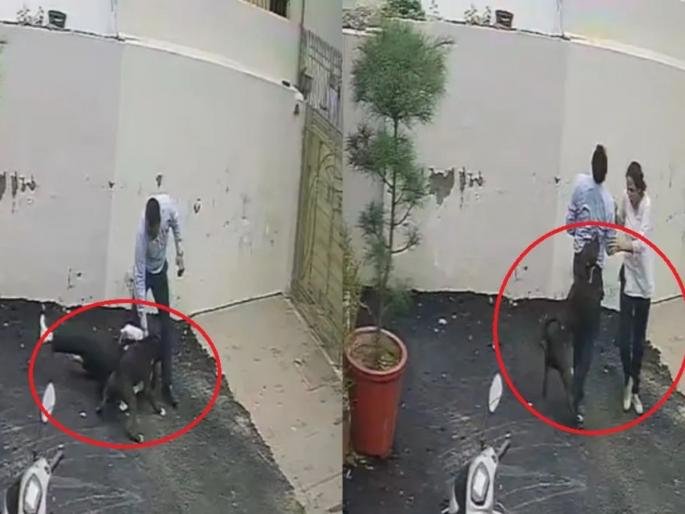
A Patiala couple’s routine house-hunting visit turned into a nightmare on Wednesday when a pitbull launched a sustained, brutal attack, leaving the woman with deep wounds requiring surgery. The incident, captured on CCTV and now viral, has reignited a fierce national debate over the regulation of dangerous dog breeds and the adequacy of India’s municipal animal control frameworks. With India bearing a staggering 30-36% of the global rabies burden, this attack underscores a public health and safety crisis that policy has so far failed to contain.
Pitbull Mauls House-Hunting Couple in Patiala, Reigniting India’s Dangerous Breed Ban Debate
Patiala, Punjab – August 12, 2026 — A CCTV clip from a residential property in Ghuman Nagar, Patiala, shows a pitbull terrier charging without warning at a couple standing in the verandah. The dog darted into the compound through the gate as a third man opened it, locked its jaws onto the woman’s right arm and did not relent, even as an elderly neighbour struck it with a stick. It took two more men wielding sticks to finally pry the animal loose. The woman, bleeding profusely, was rushed to a private hospital in Patiala where she underwent emergency surgery for deep lacerations to her arm and torso; her husband sustained bite wounds to his back. The couple, accompanied by a real estate dealer, were merely inspecting a property for sale.
The Attack: A Sequence of Unchecked Aggression
The attack unfolded in a matter of seconds but left a trail of severe trauma. According to CCTV footage widely shared on social media, the pitbull entered the gated property as the couple and the dealer arrived. As the trio stood in the verandah, the dog, without any audible provocation, sprinted towards the woman and initiated a bite-and-hold attack. The elderly woman’s attempt to intervene with a stick proved futile; the dog’s grip on the victim’s arm was unyielding. It was only when two additional men arrived with sturdier sticks and struck the animal repeatedly that it released its hold and retreated.
Local residents in Ghuman Nagar, a densely populated residential colony in Patiala district, expressed outrage, demanding stricter penalties for owners who allow dangerous animals to roam in residential areas. The victims, whose identities have not been released, are receiving treatment at a private hospital in Patiala; the woman, who has undergone surgery for deep lacerations to her arm and torso, remains in serious condition. The dog’s owner has not yet been publicly identified, and residents have called on the authorities to act against the owner and introduce preventive measures to protect families and children.
India’s Dog-Bite and Rabies Burden: A Public Health Emergency
This attack is not merely a case of animal cruelty; it is a public health data point. The World Health Organization (WHO) estimates that approximately 59,000 people die from rabies globally each year, and India accounts for a disproportionate 30-36% of those deaths. With an estimated 60 million stray or free-ranging dogs, India faces a dual challenge: managing the stray population and regulating the ownership of high-risk breeds. The National Rabies Control Programme (NRCP) and the National Action Plan for Dog Mediated Rabies Elimination (NAPRE) have set an ambitious target of a rabies-free India by 2030, aligned with the WHO’s ‘Zero by 30’ framework. Yet, incidents like the Patiala mauling highlight a critical gap: the programme focuses on stray dog vaccination and post-exposure prophylaxis, but does little to address the threat posed by privately owned, aggressive breeds.
Estimates widely cited by public health agencies put India’s annual dog-bite count at more than 20 million, with a significant proportion involving owned animals. The economic burden is equally severe—post-exposure rabies vaccines, immunoglobulin, and wound management cost the public health system crores of rupees each year. For a family in Patiala, the immediate cost of surgery and anti-rabies treatment can run into lakhs, a financial shock compounded by the physical trauma.
The Breed Ban Debate: A Circular Quashed, A Vacuum Left
The Patiala attack has brought the contentious issue of breed-specific legislation back into sharp focus. On March 12, 2024, the Union Ministry of Animal Husbandry and Dairying issued a circular recommending a ban on the import, sale, and breeding of Pitbull Terriers and 22 other breeds classified as ‘dangerous and ferocious.’ The list included breeds like the Rottweiler, Doberman, and Japanese Tosa. However, in April 2024, a Delhi High Court division bench, comprising Acting Chief Justice Manmohan and Justice Manmeet Pritam Singh Arora, quashed the circular, ruling that the central government lacked the statutory authority to impose such a ban. The court directed that regulation of dog breeds falls within the legislative competence of states and municipal bodies.
This judicial intervention created a regulatory vacuum. While the Ministry of Animal Husbandry has since appealed, and fresh pleas are pending before the Delhi High Court following subsequent pitbull attacks in the National Capital Region, the legal status quo remains ambiguous. States have been left to fend for themselves. Kerala has moved proactively, imposing restrictions on the ownership of certain breeds, but Punjab has yet to enact any comparable legislation. The result is a patchwork of inconsistent rules across the country, leaving citizens in Patiala, Ludhiana, and Amritsar with little legal recourse against negligent owners.
Municipal Governance and the ABC Framework: Where the System Fails
The management of both stray and owned dogs in India falls under the Prevention of Cruelty to Animals Act, 1960, and the Animal Birth Control (ABC) Rules, 2001, which mandate that municipal corporations sterilise and vaccinate stray dogs. However, these rules are routinely flouted. Municipal bodies in Punjab, including the Patiala Municipal Corporation, have been criticised for their lax enforcement of licensing norms and microchipping requirements for pet dogs. The ABC programme, designed to stabilise stray populations, does not extend to privately owned animals, meaning a pitbull with a history of aggression can be kept without any behavioural assessment or mandatory liability insurance.

The Patiala incident exposes a systemic failure: there is no centralised registry of dangerous dogs, no mandatory reporting of bite incidents by private veterinarians, and no clear protocol for the confiscation or euthanasia of animals that have attacked humans. The Delhi High Court’s 2024 ruling, while legally sound, has inadvertently stalled progress. Municipal authorities, unsure of their powers, have defaulted to inaction. For Indian families, this means that the risk of a fatal or disfiguring dog attack is not merely a stray-dog problem—it is a failure of urban governance.
What This Means for Indian Families and Public Policy
For the average Indian citizen, the Patiala attack is a stark reminder that the safety of our streets and residential colonies is not guaranteed. The victims were not trespassing; they were lawfully visiting a property. The dog’s owner, who allowed a known aggressive breed to roam freely within a residential compound, bears primary responsibility. But the state must share the blame for failing to create a deterrent framework. The absence of strict penalties for owners who let dangerous animals roam means that the cost of negligence is externalised onto innocent victims.
Public policy must pivot from a reactive to a proactive stance. First, the Union government should re-issue a revised circular, this time grounded in the powers conferred by the Prevention of Cruelty to Animals Act, to create a national baseline for breed regulation. Second, states like Punjab must enact bye-laws that mandate microchipping, sterilisation, and liability insurance for owners of high-risk breeds. Third, municipal corporations must be empowered and funded to enforce these rules, including the power to seize animals and impose fines of up to ₹50,000 for first-time violations. Finally, the NRCP and NAPRE must be expanded to include a component on owned-dog behaviour management, integrating veterinary and public health data to track bite incidents and identify repeat offenders.
The Bottom Line: A Preventable Tragedy
The woman lying in a Patiala hospital with a surgically repaired arm is a victim of a preventable tragedy. Her injuries are not just physical; they are a symptom of a policy paralysis that has persisted since the Delhi High Court quashed the 2024 circular. India cannot claim to be serious about rabies elimination or public safety while allowing unregulated ownership of breeds with a documented propensity for aggression. The 60 million stray dogs are a challenge, but the 10-15 million privately owned dogs in urban India, including thousands of pitbulls, are a more immediate and manageable threat. The Patiala attack must serve as the catalyst for a comprehensive, enforceable national policy—one that protects citizens without resorting to the wholesale culling of animals. The clock is ticking, and the next victim may not be as fortunate.
— By Dr. Raj Patel, Staff Writer
This article was produced with AI-assisted research and editorial support. Sources: NDTV, Lokmat Times, WHO, Ministry of Health and Family Welfare.
What's Your Reaction?
 Like
0
Like
0
 Dislike
0
Dislike
0
 Love
0
Love
0
 Funny
0
Funny
0
 Wow
0
Wow
0
 Sad
0
Sad
0
 Angry
0
Angry
0

India/South Asia Correspondent at Global1.News. Analytical voice with a background in science and health journalism. Based in New Delhi, covering Indian politics, education, healthcare, technology, and policy. Breaks down complex data into clear, actionable reporting.















Comments (0)