
China's Traffic Law Rewrite Puts Automakers on the Hook for Self-Driving
Chinese lawmakers began a first reading of China's amended Road Traffic Safety Law, adding a dedicated autonomous-vehicle chapter that would make automakers handle traffic violations in fully self-driving mode.
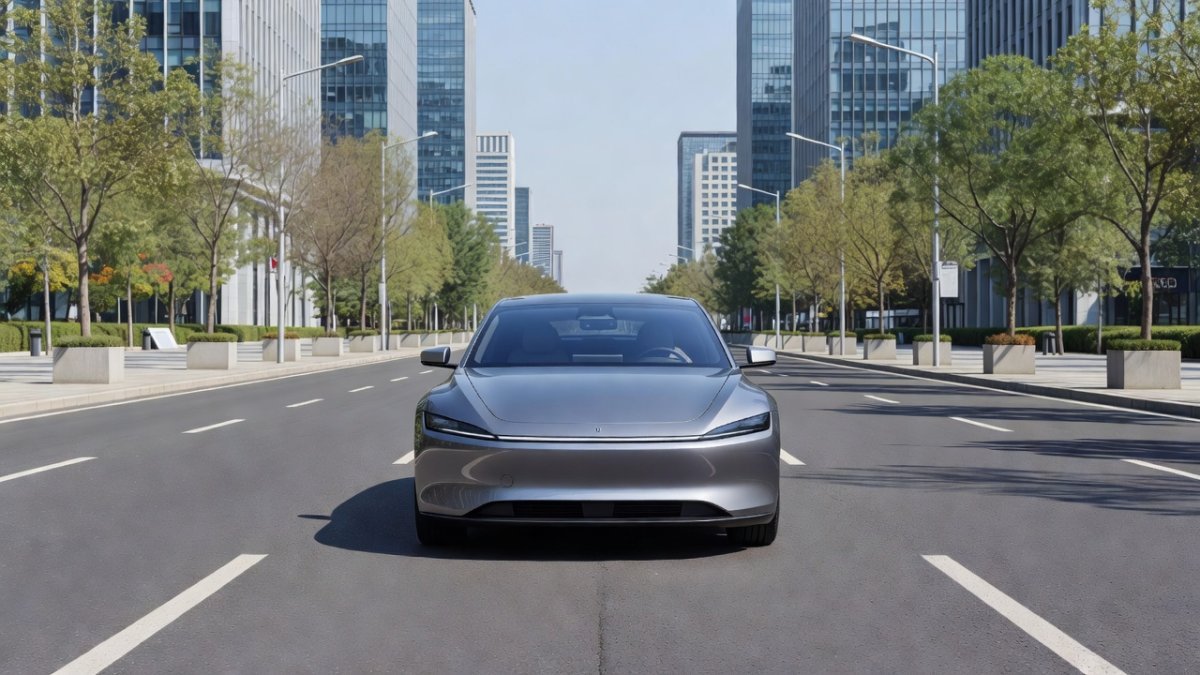
Beijing's Legal Milestone for the Self-Driving Era
Chinese lawmakers on Tuesday began a first reading of a long-awaited amendment to the Road Traffic Safety Law that would create the country's first dedicated legal framework for autonomous vehicles - including a proposal that automakers and importers handle traffic violations committed while fully self-driving systems are in operation.
The draft was submitted to the Standing Committee of the National People's Congress, China's top legislature, at a session running from Tuesday to Friday, state news agency Xinhua reported. It contains nine chapters and 170 articles and adds a chapter titled "Special Provisions for Autonomous Vehicles," according to China Central Television's account of the submission.
Tags: China autonomous driving law, Road Traffic Safety Law amendment, NPC Standing Committee, automaker liability, self-driving regulation, Level 3 Level 4, Tesla FSD China, MIIT autonomous standard, BYD God's Eye, Japan Level 4, Changan Deepal, BAIC Arcfox, Chinese EV industry
What the Draft Would Do
Xinhua said the amendment clarifies the conditions under which autonomous vehicles may operate on public roads, sets principles for handling traffic violations and lays out insurance arrangements for such vehicles. Under the draft, manufacturers or importers would be responsible for handling road-traffic-safety violations committed while fully autonomous driving functions are activated.
The arrangement is narrower than it first appears. CnEVPost, citing the publicly available summary, noted that it applies to the entity responsible for handling violations and does not automatically shift compensation liability for all accidents to automakers. Vehicles whose autonomous functions are not activated - and vehicles equipped only with assisted-driving features - would continue to be regulated as non-autonomous vehicles.
That distinction matters in a market where most "smart" cars still rely on Level 2 or Level 2+ assistance. The Ministry of Industry and Information Technology said last month that Level 2 combined driver-assistance features had reached a penetration rate of 70.5 per cent in new passenger vehicles this year, while navigation-on-autopilot features had reached 34.2 per cent. Drivers using such systems remain responsible for traffic accidents and violations, with their hands on the wheel.
The Enforcement Question Nobody Has Answered
Determining whether an autonomous driving function was actually activated will be critical to enforcement, and the publicly available summary does not explain how vehicle operating data would be accessed or what evidentiary rules would apply in disputes. That gap is likely to become the focus of intense negotiation between automakers, insurers and regulators before the law takes final shape.
Lawmakers and industry analysts expect the clarity to unlock commercial momentum regardless. "As they are required to shoulder the responsibilities for the cars' operations on the roads, automotive companies will also be allowed to build and sell cars of this kind to attract consumers," said Gao Shen, an independent analyst in Shanghai. "When the amended law is promulgated, dozens of new autonomous models will hit the streets."
Beyond the Law: The July 2027 Safety Standard
The amendment complements a mandatory technical standard announced by the MIIT on August 4. The Safety Requirements for Autonomous Driving Systems of Intelligent Connected Vehicles, which takes effect on July 1, 2027, requires autonomous driving systems to achieve a level of safety at least equivalent to that of a qualified and attentive driver, and demands that Level 3 systems monitor whether a driver is capable of taking control.
China granted its first Level 3 market-access approvals for conventional passenger vehicles in December, to Deepal, a brand of Changan Automobile, and Arcfox, a brand of BAIC Group. Carmakers have already begun offering liability guarantees ahead of the legal changes: in May, BYD, the world's largest EV maker, said it would cover costs from traffic accidents when its "God's Eye" advanced driver-assistance system is in operation. Founder Wang Chuanfu told a Shenzhen press conference that BYD aimed for zero traffic accidents through its self-developed technology, without giving a timetable.
Even entry-level models now ship with automation that would have been unthinkable a few years ago. Electric vehicles priced as low as 60,000 yuan (US$8,926) come equipped with basic automated features classified as Level 2 or Level 2+, according to analysts tracking the market.
Japan's Parallel Path: Zones and Permits, Not a National Law
For Tokyo, the legislative debate in Beijing is a reminder of how differently Japan has chosen to regulate the same technology. Japan amended its Road Traffic Act in 2022, with the changes taking effect on April 1, 2023, to authorize Level 4 "specified automated operation" - driverless, remotely supervised services with no driver in the vehicle. Operators must obtain permission from prefectural public safety commissions, and the first approved services were low-speed shuttles in areas such as Fukui Prefecture, followed by Level 4 robotaxi pilots in Tokyo's waterfront district.
Japan's approach is zone-based and permit-driven: each service is certified case by case. China's approach is a national legislative framework layered on top of a uniform technical standard - a structural difference that analysts say could give Chinese automakers a more scalable path to deployment, while Japan keeps tighter local control over safety.
The contrast matters for Japanese manufacturers, who compete with Chinese rivals at home and in the world's largest auto market. Honda was the first automaker in the world to receive certification for a Level 3 system, for its Legend sedan in 2021, yet Japan's commercial deployment of higher-level automation has remained cautious. In China, Toyota, Honda and Nissan now sell vehicles with Chinese-developed assisted-driving features, and any change to liability rules will directly affect how those systems are marketed and insured.
What the Draft Means for Tesla and the Global Race
The amendment also sharpens the question of when Tesla's Full Self-Driving software can operate in China. Tesla has yet to receive approval for higher-level autonomous functions in the country, and the new legal framework would define - for the first time at the level of national law - what happens when a fully autonomous system is at fault. That clarity is exactly what foreign automakers and software providers have been waiting for, even as it raises their exposure.
For Japanese and other Asia-Pacific investors, the legislative push reinforces a broader trend: China is now treating autonomous driving not as a novelty to be permitted piecemeal, but as a mainstream industry to be legalized at scale. Insurance products tailored to autonomous vehicles, which the draft explicitly addresses, would be a new market in their own right - one that Japanese insurers with experience in mobility services are watching closely.
What to Watch For
The draft is only at first reading. Provisions can be amended during subsequent deliberations, and the final text is not expected to take effect for months. The key questions are how lawmakers resolve the data-access and evidentiary rules for proving whether a system was activated, how insurers price policies for vehicles that can drive themselves, and whether Tesla - or Japan's automakers - can turn the new clarity into approvals.
For Japan, the more interesting signal is timing. China is moving from technical standards to full legal status in under a year, while Japan's careful, case-by-case system is being tested by its own Level 4 pilots and a nationwide push for mobility services. If China's framework works, the pressure on Tokyo to accelerate its own rule-making - and on Japanese manufacturers to export their systems with clearer liability terms - will only grow.
The race to define who is responsible when the car drives itself is now a matter of national law, and Asia's two largest economies are taking very different roads to the same destination.
By Kenji Tanaka, Staff Writer
This article was produced with AI-assisted research and editorial support. Sources: South China Morning Post, Xinhua, CnEVPost, Reuters.
What's Your Reaction?
 Like
0
Like
0
 Dislike
0
Dislike
0
 Love
0
Love
0
 Funny
0
Funny
0
 Wow
0
Wow
0
 Sad
0
Sad
0
 Angry
0
Angry
0

Japan Correspondent at Global1.News. Tokyo-based voice covering Japanese politics, technology, economy, and culture. Tracks the intersection of tradition and innovation in one of the world's most dynamic societies.














Comments (0)