
Millions of women in England to receive 'game-changing' free screening kits
Free at-home HPV self-testing kits are being offered to millions of women in England who have missed cervical screening, in an NHS rollout aimed at closing the uptake gap and eliminating cervical cancer by 2040.
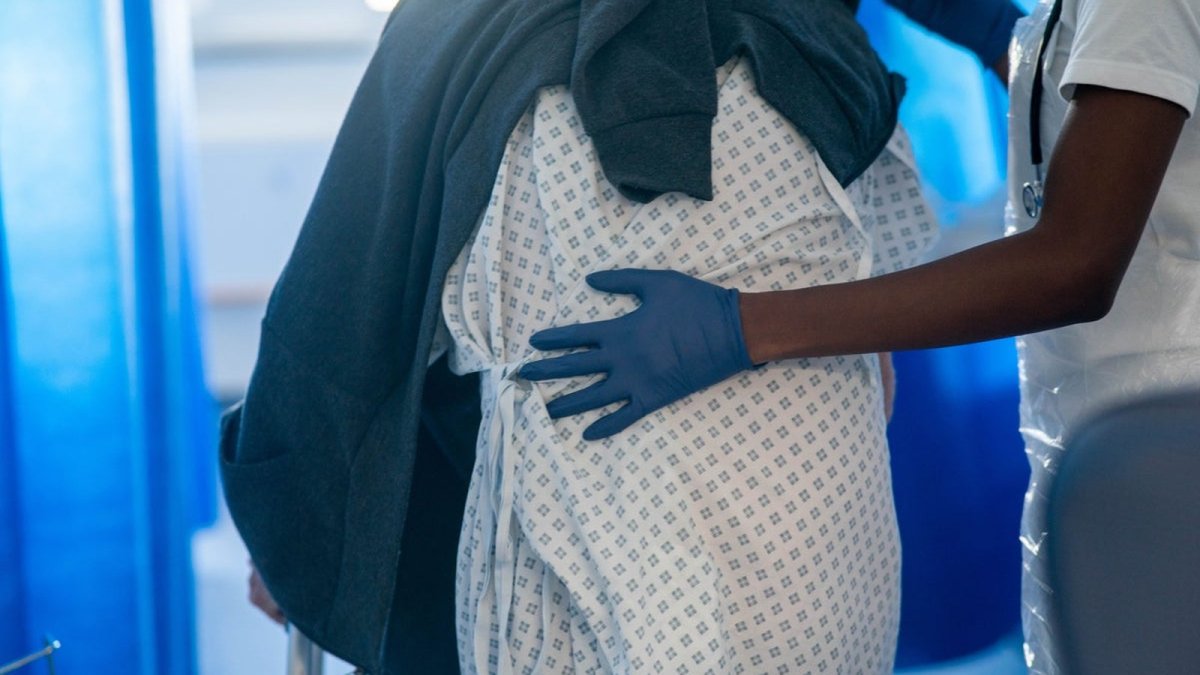
Millions of women in England who have fallen behind on their cervical screening appointments will from today be offered free at-home HPV self-testing kits, in what NHS England is hailing as a potential "gamechanger" in the fight against cervical cancer. The phased rollout, which begins with invitations sent by letter, email, text message or through the NHS app, is aimed squarely at the estimated four million women currently not up to date with their screenings — a figure that has long troubled clinicians and public health officials alike.
How the new at-home testing scheme works
The kits, which can be ordered through the NHS app or online once an invitation has been received, contain a simple vaginal swab that women can use in the privacy of their own homes. Once the sample is collected, it is posted back to NHS laboratories free of charge, where scientists test it for the presence of high-risk human papillomavirus (HPV) — the group of viruses responsible for the overwhelming majority of cervical cancer cases.
For those who receive a positive result for high-risk HPV, the next step will be an invitation to attend a traditional cervical screening appointment with a clinician for further investigation. The scheme is not designed to replace existing screening methods but to offer an alternative route for those who have, for whatever reason, not taken up their invitations. Women aged between 24 and 64 are ordinarily invited for cervical screening every five years, or more frequently if HPV is detected.
Why the uptake figures are causing concern
The scale of the problem is stark. Latest figures from NHS England show that just 68.8% of eligible women are up to date with their cervical screening — significantly below the 80% target that the health service has long aspired to. In practical terms, that means roughly four million women across England are currently behind on their screenings, leaving them potentially vulnerable to a cancer that is almost entirely preventable when caught early.
The stakes could hardly be higher. Approximately 13 high-risk forms of HPV — a group of viruses passed on through sexual contact that typically cause no symptoms at all — are known to be responsible for 99.7% of all cervical cancer cases. Dr Sue Mann, national clinical director for women's health at NHS England, acknowledged the barriers that keep women away: "There are lots of reasons that may stop women from getting their cervical screening — embarrassment, lack of time, or worries about discomfort — and these kits provide a discreet and convenient option we hope will encourage more women to take up the life-saving test."
A survivor's story: "Screening saved my life"
Among those welcoming the announcement is Gem Sofianos-Boorman, who was diagnosed with cervical cancer at the age of 28 after taking up her screening invitation. Now 39, she recalls that the diagnosis came as a complete shock — she was "young, healthy, and had no symptoms" — and she credits that routine appointment with saving her life.
"Looking back, I truly believe that going to my screening appointment saved my life," she said. "My cancer was found early, which allowed me to have treatment before it spread. That's why it's great news that the NHS is making it more accessible for some people to take part in screening. Cervical cancer often doesn't cause symptoms in its early stages, so screening plays a really important role in finding something before it might become serious." Her story underscores the fundamental reality that cervical cancer is frequently silent in its early stages — which is precisely why proactive screening matters so much.
Political response: "The future NHS we are building"
Health Secretary Yvette Cooper was quick to frame the initiative within the government's broader health agenda, describing the free self-testing kits as a practical step towards making prevention as convenient as possible. "Cervical cancer is preventable — but that's why we want to make it as easy and convenient as possible for women to keep up with their screening," she said. "These free self-testing kits will be offered to four million women who are currently behind on their screening to make it easier for as many women as possible to keep themselves healthy and safe."
Cooper's language — "This is the future NHS we are building — there for all of us when we need it, and acting as early as possible to stop preventable deaths" — reflects a wider political push to reposition the health service around prevention rather than treatment. The rollout forms part of the NHS's stated ambition to eliminate cervical cancer entirely by 2040, a target that will require a significant improvement in screening uptake across the country.
Charities and experts welcome the move
Women's health charities have broadly welcomed the announcement, though with some caveats. Athena Lamnisos, chief executive at The Eve Appeal, noted that attending a clinic "requires people to actively prioritise an appointment among the many competing demands of everyday life" — a reality that self-testing directly addresses. "Self-testing which can be done at home will be a step-change for many," she said. "We have the incredible opportunity to see the back of cervical cancer. How brilliant would that be? But to achieve this, we need to support everyone eligible to attend screening."
Lamnisos was also careful to stress that the home kits are "not a replacement for clinician screening" and that her organisation will continue working to make traditional appointments "more comfortable and accessible" for those who prefer them. Michelle Mitchell, chief executive of Cancer Research UK, echoed that sentiment, describing the kits as a way to "help more people take part in a way that works for them." She added: "If people receive their cervical screening or self-testing kit invitation, please consider taking up the offer and encourage loved ones to do the same. Beating cervical cancer means beating it for everyone, and this move brings us closer to that goal."
The misinformation backdrop
The announcement comes against an unsettling backdrop of social media misinformation targeting cervical screening. Last week, experts were forced to respond to claims circulating online suggesting that the brush used in cervical cancer smear tests is sterilised in a "cancer-causing" chemical — a suggestion that flies in the face of decades of clinical evidence showing the test saves thousands of lives every year.
Researchers from University College London and the Medicines and Healthcare products Regulatory Agency have both pushed back firmly against the claims, which threaten to undermine public confidence in a procedure that remains one of the most effective cancer prevention tools available. The timing of the NHS's new home-testing initiative is therefore doubly significant: it not only offers a more convenient route to screening but also provides an opportunity to re-engage women who may have been swayed by misleading content online.
Analysis: what this means for the NHS and women's health
Look beneath the surface of today's announcement and it becomes clear that this is about more than just convenience. The NHS has been grappling with stubbornly flat screening uptake for years, and the traditional invitation-and-remind model has clearly reached its limits. By shifting the default from "attend a clinic" to "do a swab at home," the health service is effectively acknowledging that the barriers to screening are not just logistical but deeply personal — embarrassment, anxiety, time pressures, and fear of discomfort.
There are, of course, questions that remain unanswered. The phased nature of the rollout means not every eligible woman will receive an invitation immediately, and the success of the scheme will ultimately depend on whether those who have ignored previous reminders actually order and return the kits. There is also the matter of follow-through: women who test positive for high-risk HPV will still need to attend a clinic for further investigation, and that transition from home testing back into the clinical pathway will be critical.
Yet the direction of travel is unmistakable. With the 2040 elimination target looming, the NHS is betting that meeting women where they are — rather than expecting them to come to it — is the only viable route to closing the screening gap. For the four million women currently behind on their screenings, the offer of a discreet, free, at-home test may well be the nudge that makes the difference. As Dr Mann put it: "If you're invited to take part, please order a test — it's a simple swab you can do at home in minutes."
This article was produced with AI-assisted research and editorial support. Sources: The Independent.
By Erica Thornton, Staff Writer
What's Your Reaction?
 Like
0
Like
0
 Dislike
0
Dislike
0
 Love
0
Love
0
 Funny
0
Funny
0
 Wow
0
Wow
0
 Sad
0
Sad
0
 Angry
0
Angry
0

US Politics and Policy Correspondent at Global1.News. Based in Washington DC, covering American politics, policy, elections, and the courts. Knows how the system works and tells you what it actually means.














Comments (0)